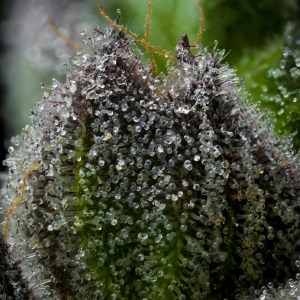
Cannabis connoisseurs know that the frostier the bud, the better the high. Those shimmering, crystal-like structures covering your favorite strain aren’t just for show—they’re the powerhouse behind everything that makes cannabis great. These tiny, sticky glands, known as trichomes, are the unsung heroes responsible for the potency, flavor, and overall quality of your weed. But what exactly are trichomes, and why are they so crucial to the cannabis experience?
What Are Trichomes?
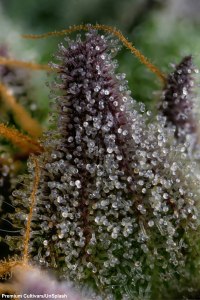
At first glance, trichomes might seem like just a pretty layer of frost on cannabis buds, but they’re much more than that. Trichomes are microscopic, hair-like structures that appear on the surface of cannabis flowers, leaves, and stems. These structures are most concentrated on the female flowers and are the primary site for the production of cannabinoids like THC (tetrahydrocannabinol) and CBD (cannabidiol), as well as aromatic terpenes.
There are different types of trichomes, including bulbous, capitate-sessile, and capitate-stalked trichomes, with the latter being the most significant in terms of potency. Capitate-stalked trichomes are the largest and most abundant in cannabis flowers, making them the most important for cannabinoid production.
The Role of Trichomes in Potency
If you’ve ever wondered why some strains hit harder than others, the answer lies in the trichomes. These tiny glands are where the magic happens—they produce the cannabinoids that give cannabis its psychoactive and therapeutic effects. THC, the compound responsible for the high, and CBD, known for its medicinal properties, are both synthesized within the trichomes. The more trichomes a plant has, and the better their quality, the more potent the cannabis.
But it’s not just about cannabinoids. Trichomes also produce terpenes, the compounds that give cannabis its distinctive aroma and flavor. Terpenes play a crucial role in the entourage effect, where different cannabinoids and terpenes work together to enhance the overall experience. This means that the richness of flavors and the complexity of the high are also tied to the density and quality of trichomes.
How Trichomes Influence Quality
When you’re examining a bud, those glistening trichomes are one of the first indicators of quality. Well-formed, dense trichomes signal a potent, high-quality product. This is why top-shelf cannabis often has a frosty appearance—those trichomes are packed with cannabinoids and terpenes that elevate the experience.
Cannabis consumers have come to expect a certain level of frostiness in their buds, and the appearance of trichomes has become a benchmark for quality. A bud covered in milky-white trichomes is often seen as a sign of maturity and potency, while clear trichomes might indicate that the plant was harvested too early, resulting in a less intense high.
Advertisement

Advertisement
Trichomes and Harvesting
For growers, trichomes are more than just an indicator of quality—they’re also a vital tool for determining the perfect time to harvest. The color and opacity of trichomes can tell a grower a lot about the plant’s maturity. Clear trichomes suggest that the plant is still maturing and not ready for harvest. When trichomes turn milky or cloudy, it indicates that the plant has reached its peak potency. Amber-colored trichomes suggest a more sedative effect, which some growers may prefer for specific strains.
Timing the harvest based on trichome development is crucial for maximizing the potency and desired effects of the cannabis. A premature harvest can result in a weaker product, while waiting too long can alter the high, making it more sedative due to the degradation of THC into CBN (cannabinol).
The Future of Trichomes in Cannabis Breeding
As the cannabis industry evolves, so does the science of trichome production. Modern cannabis breeding is increasingly focused on enhancing trichome density and quality to create more potent strains. Breeders are selecting plants with superior trichome production, leading to new strains that offer higher levels of THC, more complex terpene profiles, and ultimately, a better consumer experience.
Advances in cultivation technology, such as controlled environment agriculture and precision growing techniques, are helping growers maximize trichome production. These innovations ensure that each plant reaches its full potential, producing the highest quality cannabis possible.
Trichomes are not just a superficial feature—they are the lifeblood of cannabis potency and quality. Their presence, density, and development dictate everything from the intensity of the high to the flavor of the smoke. Next time you admire a frosty bud, remember that those tiny trichomes are doing all the heavy lifting.
What are your thoughts on trichomes? Have you noticed the difference they make in your cannabis experience? Share your insights in the comments below.
© 2024 Pot Culture Magazine. All rights reserved. This content is the exclusive property of Pot Culture Magazine and may not be reproduced, distributed, or transmitted in any form or by any means, including photocopying, recording, or other electronic or mechanical methods, without the prior written permission of the publisher, except in the case of brief quotations in critical reviews or analyses.
F O R T H E C U L T U R E B Y T H E C U L T U R E

Zurich’s Black Market Problem
Zurich’s Züri Can pilot is giving cannabis reformers something stronger than slogans. New interim findings show regulated, nonprofit access reduced several reported health problems while pulling demand away from the illegal market, giving Switzerland fresh evidence for national cannabis reform and putting prohibition panic on weaker ground.


Vegas Knew, Vegas Looked Away
Las Vegas sold tourists the illusion of legal cannabis while fake dispensary style hemp shops operated near the Strip. Vegas Knew, Vegas Looked Away exposes how Nevada’s casino separation rules, weak hemp oversight, delayed Clark County action, and tourist confusion created a loophole economy hiding in plain sight.

CANNABIS LIES Vol. 10: The Medical Lie
For decades, federal policy claimed cannabis had no accepted medical use while opioid prescriptions moved through the health care system by the tens of millions. Cannabis Lies Vol. 10 exposes the contradiction behind Schedule I, blocked research, medical cannabis patients, and the institutions that spent years pretending politics was medicine.
Discover more from POT CULTURE MAGAZINE
Subscribe to get the latest posts sent to your email.

Trichomes are the most important part of cannabis and the most overlooked. Their size is the biggest determining factor in how good it Is to the consumer. Weve gone from low percentage big trichome weed and it being able to knock your socks off to crazy high percentage stuff that does nothing because the trichomes now are so miniscule.
LikeLike