Filed Under: Same Old Shit, Local Edition
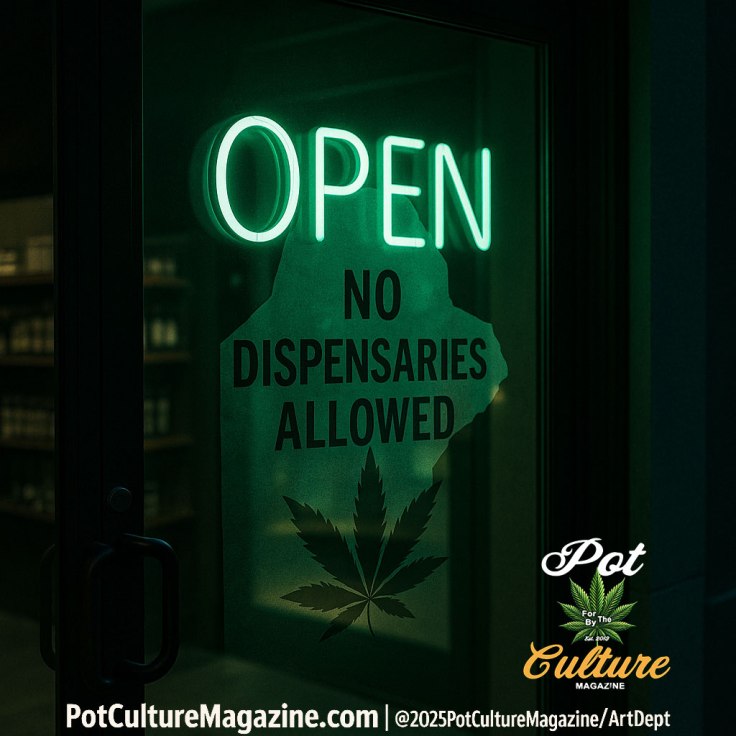
The story most people hear about cannabis reform is simple. A state legalizes, the market opens, dispensaries appear, and life moves on. Politicians repeat that version because it sounds orderly and complete. The truth is not nearly as clean. Legalization can pass by a wide margin, yet entire counties remain dead zones where people have no access at all. Stores exist on paper but not in real life. The public thinks they’ve won something, only to find out later that the victory is symbolic. That is the legalization mirage, a system that promises availability but leaves communities stranded.
The gap starts at the local level. State lawmakers often write legalization bills that allow cities and counties to decide whether they want dispensaries. They call it local control. It sounds democratic and harmless, but it rarely works that way. The opt-out clause becomes a weapon for city councils that treat cannabis like a threat, not a product. Residents vote for legalization, then watch their own elected officials block stores. The public supports the plant, yet the people in charge hold the door shut.
The result is predictable. A legal state ends up with entire regions that have no dispensaries for miles. Millions of Americans live in these pockets. They vote for reform and get a half-finished version of it. They are still forced into long drives, inflated prices, or unregulated sellers. The law says cannabis is legal, yet the lived reality is the opposite. The distance between the rule and the road is wide.
States like California, Michigan, New York, New Jersey, and Illinois all share the same problem. They showcase legalization as a success while local governments carve out blackout zones. California remains the clearest example. The state has the largest legal cannabis market in the world, with billions in sales each year, yet a majority of its cities and counties still ban cannabis retailers. That figure comes straight from the California Department of Cannabis Control. The state legalized in 2016, but nearly a decade later, much of the map remains blank. Residents in those areas drive across county lines the same way they did before legalization. Nothing has changed except the marketing.
Michigan tells a different version of the same story. When voters legalized in 2018, the win was large, but the number of towns that opted out was larger. In the first three years, over one thousand municipalities banned adult-use stores. Some have slowly shifted, but many remain closed. The public assumed legalization meant availability, yet the presence of a legal market still depends on a city council agenda meeting. In practice, ten people in a room have more power than millions of voters.
New York attempted to avoid this by designing a centralized retail plan, but that plan collapsed in slow motion. Lawsuits, bureaucratic delays, and political hesitation turned the opening years into a one-step-forward, two-steps-back routine. While the state did not use traditional opt-out laws, the effect has been the same. Entire regions have only a few licensed stores. Illicit sellers outnumber licensed dispensaries by enormous margins, a reality acknowledged by the state itself. A reform that lives only on paper cannot compete with a market that has been operating for decades.
Local control plays another role that rarely gets discussed. Wealthy suburbs use it to keep dispensaries out, not because they fear cannabis, but because they fear their own assumptions about who they believe will show up. They say they are protecting community character or maintaining order. The coded language is obvious. If they could use zoning to keep liquor stores out, they would. They cannot do that, so they use it on cannabis instead. The stigma becomes policy, and the public pays for it.
Counties often take the same path. Rural regions block dispensaries to signal cultural opposition. They frame it as morality or tradition. They speak about youth safety and family values. What they avoid mentioning is that residents in those counties still use cannabis like everyone else. Their bans do not prevent use or reduce demand. They only create a shadow market that grows stronger every year. Demand does not disappear because a county says no. It simply moves elsewhere.
advertisement
F O R T H E C U L T U R E B Y T H E C U L T U R E
CANNABIS LIES Vol. 5: The Gateway Lie
For decades, politicians have claimed marijuana is a gateway to heroin and harder drugs. Federal youth surveys, NSDUH data, and NIDA’s own language tell a different story. Cannabis use is widespread, hard drug use remains rare, and most users do not progress. The data dismantles one of prohibition’s most durable fear narratives.

The Study That Pretends Cannabis Does Nothing
A new cannabis study claims marijuana does nothing for anxiety, depression, or PTSD. The reality is far more complicated. Decades of federal restrictions, limited research access, and synthetic substitutes have shaped the science. This breakdown exposes how incomplete data and selective interpretation continue to drive misleading headlines about cannabis and mental health.
advertisement
The strangest part of the legalization mirage is how officials justify it. They claim they are being cautious. They say the rules are still new. They talk about waiting to see how other towns handle the rollout. They repeat phrases about moving slowly and avoiding mistakes. Meanwhile, the same towns have no issue approving liquor stores, vape shops, smoke shops, casinos, strip malls, gun retailers, and massive alcohol distribution centers. The caution is selective. The harm narrative is inconsistent. The plant is legal, yet treated like a public threat.
Some counties rely on zoning tricks. They claim there is no suitable commercial zone. They say there are too many sensitive use buffers, even when the buffers are designed specifically to block stores. They rezone parcels to avoid creating viable locations. They do not say no directly. They say it through the map. A city can appear friendly to legalization while burying dispensaries under impossible conditions.
Church corridors are another block point. Cities draw wide protective circles around churches. They say it is about shielding youth. The logic falls apart under scrutiny. Alcohol is sold across from churches every day. Tobacco sits at the checkout counter in stores next door. Cannabis is singled out because the old stereotypes still influence zoning boards.
Vacancy restrictions add to the hurdle. Some towns only permit dispensaries in commercial zones that are already fully occupied. They claim it is about keeping cannabis out of residential areas. In practice, it becomes a permanent ban because those zones rarely open. If a town wanted dispensaries, it would create more space. Instead, it leaves the map frozen.
There is also the phenomenon of political self-preservation. Some officials support legalization privately but avoid supporting dispensaries publicly. They fear losing their seat. They fear backlash from vocal minority groups. They fear being labeled soft on drugs. They fear the headlines more than they fear the consequences of denying access. They hide behind procedure and claim neutrality.
All of this adds up to a system where legalization is not a unified win. It is a patchwork built around old prejudices and new excuses. Voters think they have crossed the finish line, yet the reality on the ground does not match the ballot measure. They celebrate a victory that officials slowly chip away. It is a hollow win dressed as progress.
The people most affected are the ones least visible. Patients in rural counties still rely on unlicensed sellers because the nearest dispensary is hours away. Disabled adults who cannot drive remain stuck. Workers without flexible schedules cannot take long trips. Older adults who turn to cannabis for sleep or pain relief cannot access it at all. These are not minor inconveniences. They are barriers that contradict the very point of legalization.
The economic fallout is another overlooked piece. Towns that opt out lose tax revenue that could support public services. They lose local jobs. They lose commercial activity. The choice to opt out is often justified as a protective measure, yet it harms the same towns that claim to value stability.
Cannabis opponents argue that people can simply travel to the next town. Legally, that is true. Practically, it ignores the reality of modern life. The same people who make that claim would never accept that solution for pharmacies or grocery stores. A product that is legal but unreachable is not legal in any meaningful way.
Another layer of the legalization mirage is how it distorts data. States publish tax figures that make the market look strong, but those numbers often mask the gaps. A handful of urban centers carry the entire state. Los Angeles, Oakland, San Francisco, Detroit, Chicago, Ann Arbor, Boston, and Denver produce enormous tax revenue because they allow stores. Meanwhile, the surrounding regions have nothing.
These gaps also fuel illegal markets. When people cannot buy licensed products near home, they turn to what is available. That could mean an underground seller. It could mean a storefront that looks legal but operates without a license. These sellers do not check IDs or test products. Regulated access is the foundation of safety, yet some states undermine their own framework by allowing massive deserts to persist.
Opponents claim the illicit market exists because taxes are too high. There is truth in that, but it is not the only truth. Access matters just as much as price. A store that is thirty minutes away will not compete with a seller who is five minutes away. Geography beats taxes every time.
The legalization mirage also shapes how the media covers cannabis. Journalists often focus on big city openings and ribbon cuttings. Those stories are real, but they represent a small part of the landscape. The places without dispensaries rarely get covered, even though they represent the majority of the map.
Meanwhile, counties that block dispensaries do not hesitate to allow police to enforce cannabis laws. They lean on odor claims. They use possession as a pretext for charges unrelated to cannabis. They treat the plant as legal only when it is convenient.
The public rarely realizes how much of this is intentional. Local officials know exactly what they are doing. They know that opting out does not stop use. They know it does not protect youth. They know cannabis is already in their communities. What they care about is control.
The irony is that resistance weakens over time. Towns that blocked stores in the first years slowly shift. Budgets tighten. Empty strip malls stay empty. Neighboring towns cash in. Local officials see the difference and change their tune.
States could fix this. They could remove opt-out laws. They could require towns to allow at least one dispensary. They could create automatic permissions. They could tie state funding to access. They could map access deserts publicly.
©2025 Pot Culture Magazine. All rights reserved. This content is the exclusive property of Pot Culture Magazine. It may not be reproduced, distributed, or transmitted in any form or by any means without prior written permission from the publisher, except for brief quotations in critical reviews.
F O R T H E C U L T U R E B Y T H E C U L T U R E
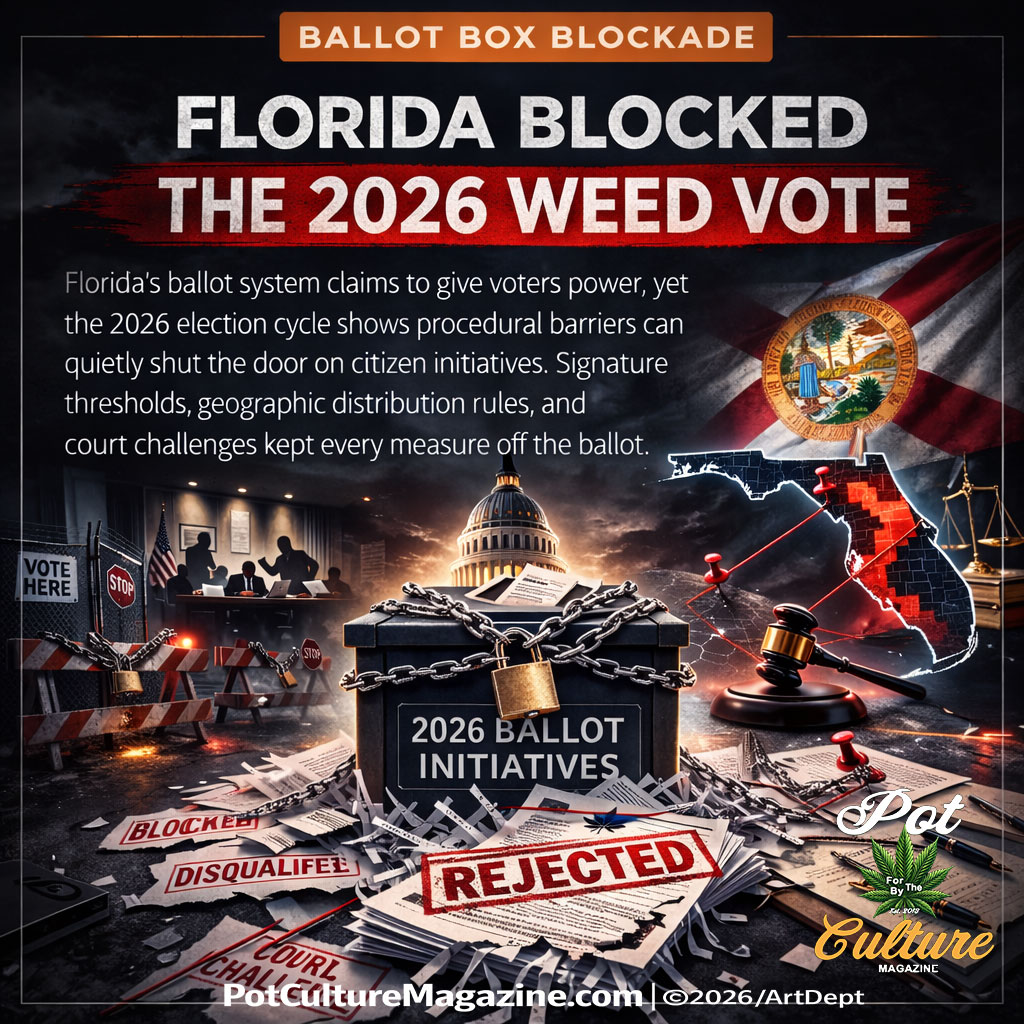
Florida Blocked the 2026 Weed Vote
Florida’s ballot system claims to give voters power, yet the 2026 election cycle shows how procedural barriers can quietly shut the door on citizen initiatives. Signature thresholds, geographic distribution rules, and court challenges blocked every measure from reaching voters, revealing how cannabis legalization fights are often decided by bureaucratic design long before election day.

The Cannabis Lie: Vol. 4 — The Crime Wave Lie
Politicians and pundits warned that legal cannabis would unleash a crime wave. The data tell a different story. From Colorado’s violent crime trends to DOJ time-series research and statewide arrest declines, the evidence shows no consistent long-term surge tied to legalization. The numbers never matched the panic.

South Africa Legalized Weed, But Not the Market
South Africa recognized private adult cannabis use and home cultivation, but never built a legal domestic market around them. With buying and selling still largely outside the law, the illicit trade remains dominant while regulators scramble to set limits, draft rules, and prepare a broader Cannabis Bill that could finally address commerce.
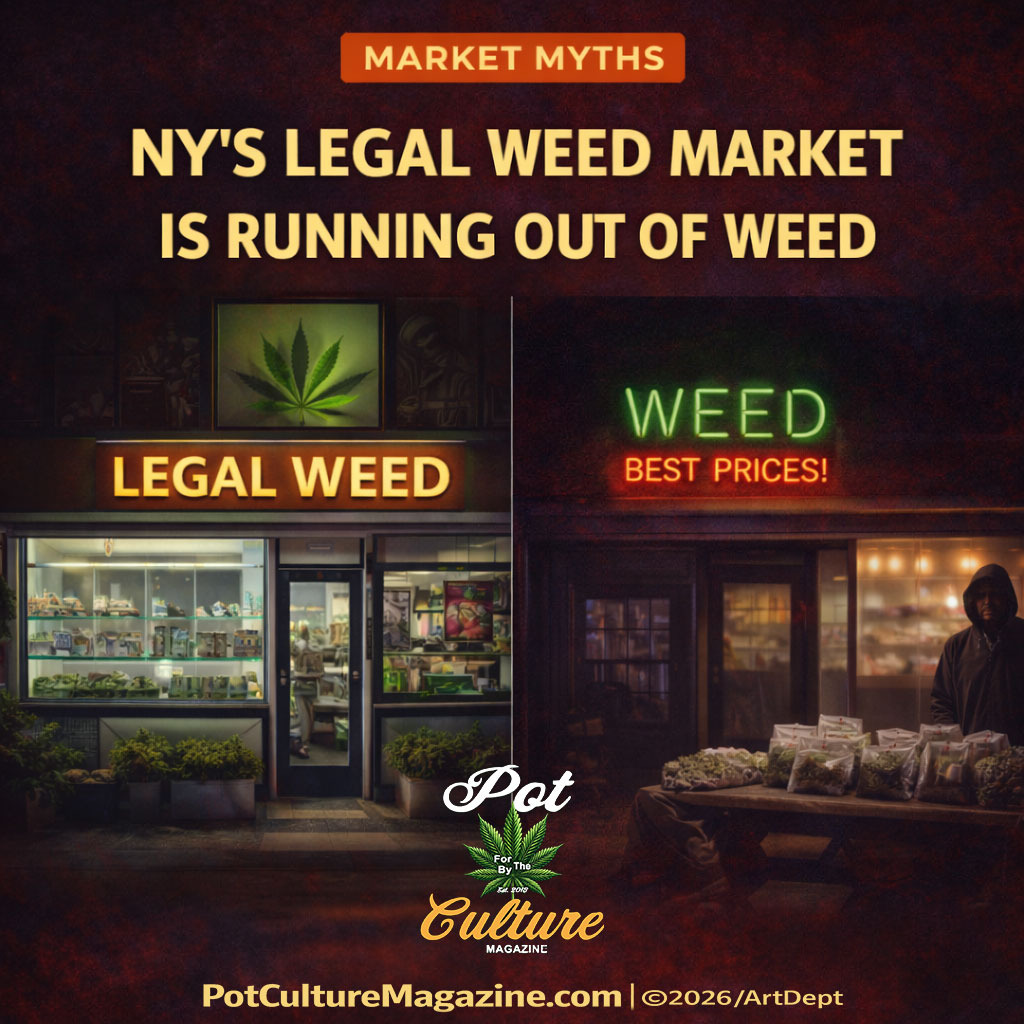
NY’s Legal Weed Market Is Running Out of Weed
New York legalized cannabis and opened hundreds of stores, but regulators now warn the legal market may not produce enough weed to keep them stocked. With nearly 600 stores open and sales nearing $3 billion, the state is discovering that legalization alone does not guarantee a functioning market.

Cannabis Lie Vol. 4: The Legalization Design Lie
Cannabis legalization was sold as the end of the illicit market. Instead, stacked taxes, licensing limits, and local bans created price gaps that allowed underground sales to survive. From California’s cultivation tax to Illinois pricing and Michigan’s price compression, this installment of Cannabis Lie examines how policy design, not the plant, determines who wins and…
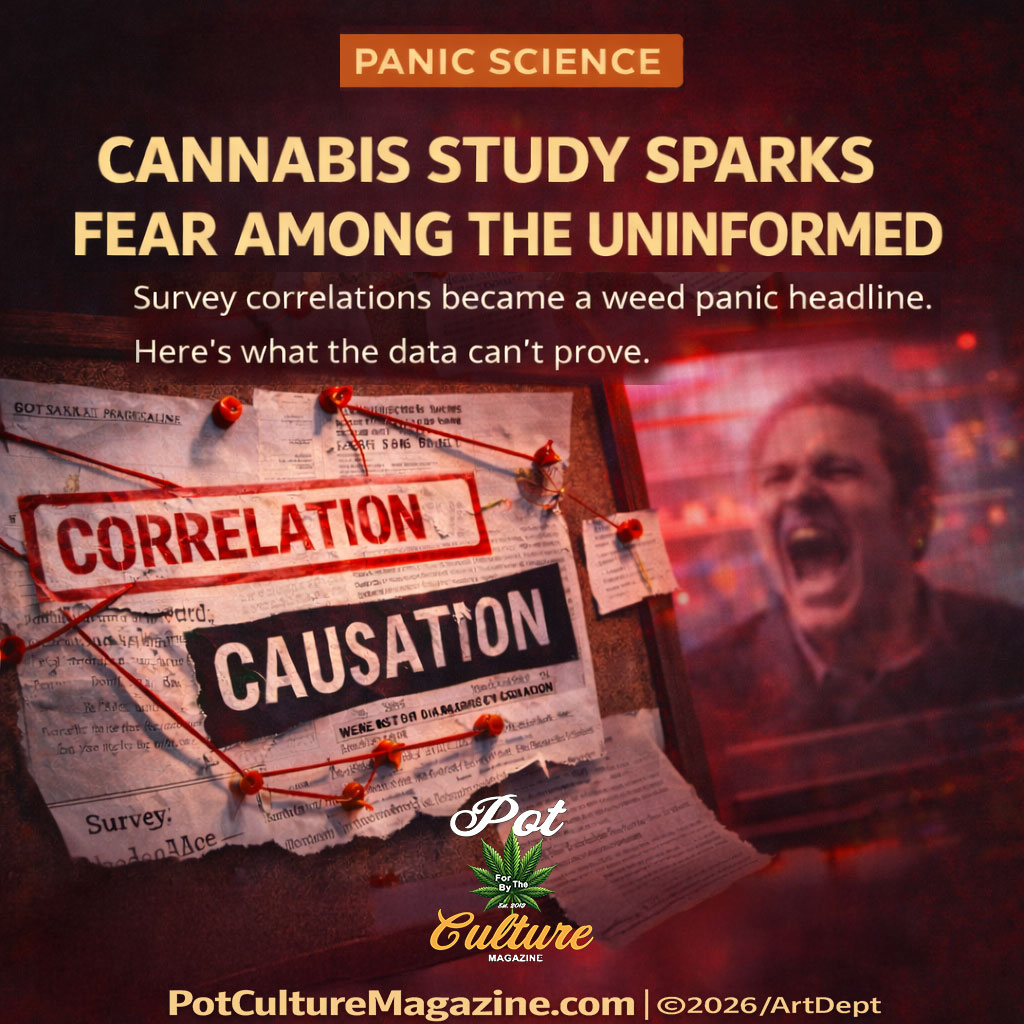
Cannabis Study Sparks Fear Among the Uninformed
A McMaster led analysis of two Canadian mental health surveys is getting recycled as a weed panic story, even though the design can only show association. This piece breaks down what the data can actually support, what it cannot prove, and how headlines turn survey correlations into causal claims that fuel stigma, bad policy, and…
Discover more from POT CULTURE MAGAZINE
Subscribe to get the latest posts sent to your email.

Leave a comment