Filed Under: Policy Fiction

The state of California is celebrating another high-priced bust, as if it had actually done something noble. According to a press release from Governor Gavin Newsom’s office on October 21, 2025, the state’s Unified Cannabis Enforcement Taskforce (UCETF) seized and eradicated $222 million worth of “illegal” cannabis between July and September. That haul included 66.5 tons of processed product, 234,198 plants, 22 firearms, and 18 arrests across 17 operations in 15 counties. The state refers to it as “protecting public safety” and “supporting the regulated market.” What it really is is prohibition with better PR and taxpayer funding.
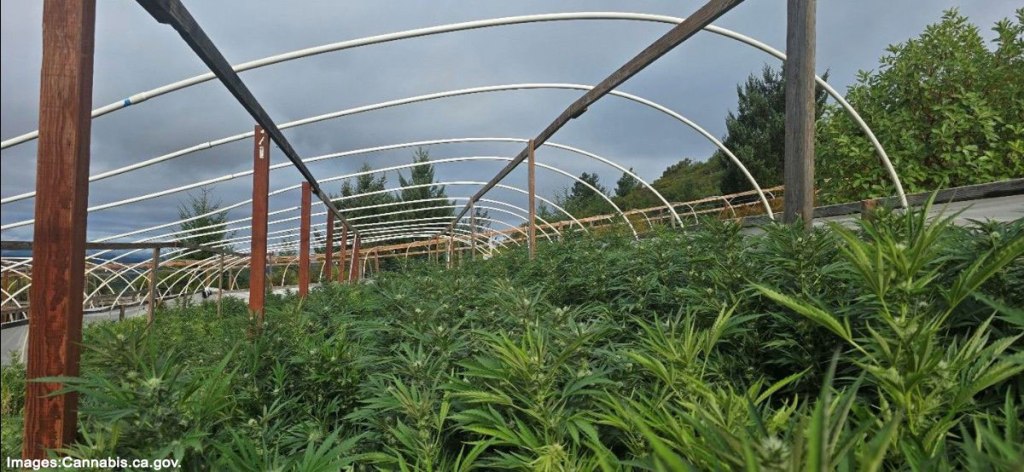
In three months, California sent armed teams into rural hills, suburban warehouses, and old barns to destroy crops grown by people locked out of the very system the state created. The licensing maze remains an obstacle course designed for failure. Fees climb into five figures, local bans cover most of the map, and compliance costs bury anyone who doesn’t have corporate money behind them. So, growers go underground, and when they do, the state storms in and burns their work to the ground while pretending it is justice.
UCETF launched in 2022 as a partnership between the Department of Cannabis Control (DCC), the California Department of Fish and Wildlife, and local sheriffs. Since then, it has run over 250 operations statewide and claimed hundreds of millions in seizures. Every quarter, the numbers arrive like victory parades: thousands of plants, tons of flower, a handful of arrests. The press release language never changes. Words like “eradicated,” “illegal,” and “protecting the environment” make it sound like a public health campaign instead of what it is: state-sponsored whack-a-mole.
What you never see is who gets hit. The reports don’t break down race, income, or community impact. They don’t mention how many of these so-called criminals were small farmers who used to operate legally before being zoned out. They don’t say what happens to the seized product, whether it’s destroyed or quietly diverted to “research.” The public just gets dollar signs and photos of cops with plants. Everyone is supposed to clap.
Nathaniel Arnold, Acting Chief of the DCC, said the enforcement “helps support the regulated market.” That’s laughable. The regulated market is hanging by a thread. Dispensaries are closing every month. Farmers are quitting. Consumers are returning to street dealers because prices inside the system are nearly double. Legal weed has become luxury weed. The underground never stopped; it adapted.
advertisement
F O R T H E C U L T U R E B Y T H E C U L T U R E

Zurich’s Black Market Problem
Zurich’s Züri Can pilot is giving cannabis reformers something stronger than slogans. New interim findings show regulated, nonprofit access reduced several reported health problems while pulling demand away from the…

Vegas Knew, Vegas Looked Away
Las Vegas sold tourists the illusion of legal cannabis while fake dispensary style hemp shops operated near the Strip. Vegas Knew, Vegas Looked Away exposes how Nevada’s casino separation rules,…

CANNABIS LIES Vol. 10: The Medical Lie
For decades, federal policy claimed cannabis had no accepted medical use while opioid prescriptions moved through the health care system by the tens of millions. Cannabis Lies Vol. 10 exposes…
advertisement
Even state officials admit the underground is bigger. A UC Berkeley Cannabis Research Center analysis estimated only 38 percent of California cannabis consumption comes from licensed sources. The rest moves through informal networks worth nearly $12 billion a year. That is not a black market; it is the market. It exists because people still want weed but can’t afford to play by Sacramento’s rules.
California’s retail rules help drive the divide. State law allows cannabis sales between 6 a.m. and 10 p.m., but local governments can set tighter limits. Most major cities, including Los Angeles, stop sales at ten. After that, the lights go out on the legal side, but the smell keeps drifting. Scroll through Weedmaps or Telegram at midnight, and you’ll find countless “delivery services” operating in the shadows, some genuine, some scams, all part of the culture the state refuses to understand.
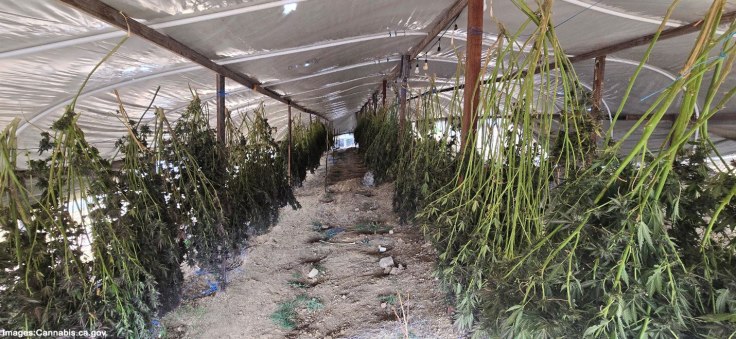
Officials say these raids protect the environment. That line plays well on camera, but it rings hollow in the dirt. Yes, some illegal grows divert water or dump chemicals, but plenty more use solar power, collect runoff, and grow cleaner than corporate farms. Meanwhile, many licensed operators run diesel generators and drain creeks to keep their lights on. If this were about sustainability, the state would subsidize regenerative farming, not criminalize those who do it without paperwork.
The law-and-order victory lap looks even weaker up close. Eighteen arrests out of 17 operations in a full quarter. That is what California calls public safety. The cost of those raids likely dwarfs the fines they’ll ever collect. It’s a spectacle, not a solution. The cops raid, the governor smiles, and the press releases go out. Nothing changes except the spin.
The hypocrisy is baked in. California was supposed to be the model for post-prohibition cannabis. When voters passed Proposition 64 in 2016, they thought it meant freedom. Instead, they got a paywall. To sell weed legally, you need a lawyer, an accountant, and a miracle. To grow it, you need to live in a county that hasn’t banned cultivation and survive the paperwork marathon. For everyone else, there’s still the underground and a good chance the state will burn your crop and call it progress.
The so-called $222 million in seizures is fantasy accounting. That number is based on inflated street values, not real market prices. Wholesale outdoor flower in California can drop below $200 a pound. But using inflated math makes the busts look impressive and keeps the press releases shiny. It’s cooked weed economics: exaggerate the value, sell the story, ignore the cause.
California’s cannabis system doesn’t need more helicopters or press conferences. It needs honesty. It needs to stop pretending enforcement fixes anything. Until the state lowers taxes, opens access, and treats small growers as part of the solution instead of the enemy, the real business of cannabis will keep happening in driveways, garages, and hillsides long after the cops go home.
Because the war didn’t end. It just rebranded.
©2025 Pot Culture Magazine. All rights reserved. This content is the exclusive property of Pot Culture Magazine and may not be reproduced, distributed, or transmitted in any form or by any means without prior written permission from the publisher, except for brief quotations in critical reviews.
F O R T H E C U L T U R E B Y T H E C U L T U R E

Jersey’s New Cash Crop
Jersey reinvented itself. A forty-five square mile island once known for offshore finance is now exporting pharmaceutical-grade cannabis into Germany’s booming medical market. With strict regulation, heavy investment, and a government eager for diversification, Jersey has become an unlikely European powerhouse. The contradiction between local policing and global commerce tells the real story.


A State of the Union on the State of Cannabis Media
Cannabis media is undergoing a predictable institutional decay. The movement’s original architects have transformed from revolutionary contributors into defensive gatekeepers, protecting their legacy rather than fostering future growth. This manifesto examines the four archetypes of decay: the Gatekeeper, the Mercenary, the Scavenger, and the Shill, that currently stifle the industry’s independent voice and threaten the…

Cannabis Lies Vol. 9: The Reform Lie
The federal move to Schedule III is a masterclass in bureaucratic maintenance. While corporations celebrate tax relief, the core structure of the drug war remains untouched. This analysis deconstructs the Reform Lie, exposing how the state uses symbolic gestures to professionalize a privilege for the few while keeping the machinery of punishment active for everyone…
Discover more from POT CULTURE MAGAZINE
Subscribe to get the latest posts sent to your email.

Leave a comment