Filed Under: The High Cost of Stupid
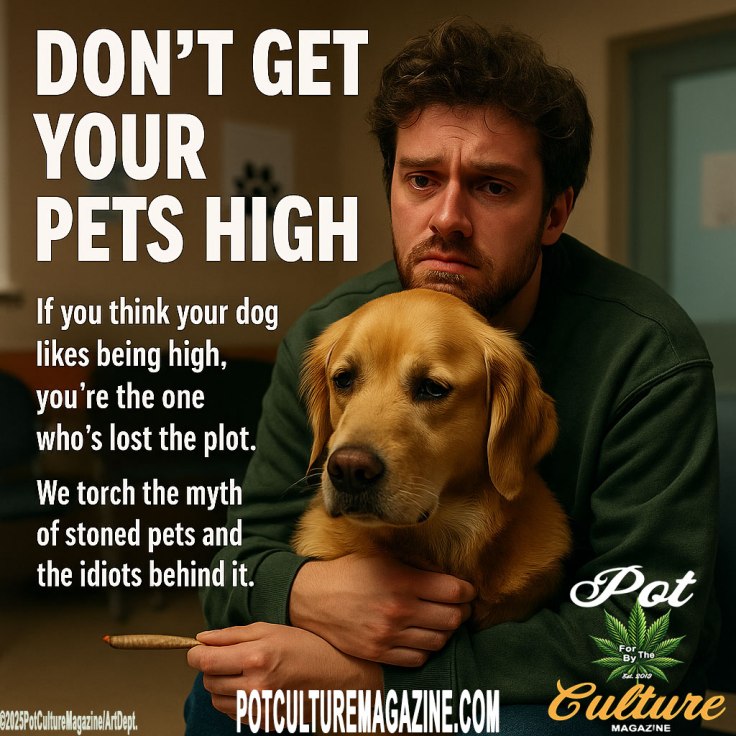
While scrolling through video feeds one night, I stopped on a clip from a guy we’ll call Tony. The frame was washed in the lazy orange light of a living room lamp. Tony grinned at the camera, a joint burning low between his fingers. “My dog comes right up to me and sniffs the air,” he said, exhaling through a smile that mistook trust for consent. “I like to hold his face and blow smoke into his nose. He gets very high.” On the rug in front of him, a small tan mutt sat blinking under the haze, eyes glassy, tail motionless. The dog swayed a little, breathing shallow, his head tipping side to side like gravity had changed its mind. Tony laughed. I didn’t. What he saw as bonding looked a lot more like cruelty wrapped in comfort.
The clip had a few thousand likes, a stack of hearts, and the digital approval of strangers who think empathy is optional. Comments rolled in from other self-styled pet whisperers: “My cat loves it too.” “My ferret gets the giggles.” “You’re a legend.” Nobody saw the tremor in the dog’s back legs. Nobody saw the stillness that comes before collapse. This is what happens when everything becomes content. Suffering stops being real once it’s uploaded.
THC hits animals harder than it hits us. Dogs carry more cannabinoid receptors in their brains, so the same puff that relaxes a person can crush their nervous system. Their heart rate drops, their body temperature follows, and balance disappears. They stumble, drool, tremble, vomit. Some lose control of their bladder. A few stop breathing. Vets call it cannabis toxicosis. The term sounds sterile, but what it means is an animal trapped inside its own body, terrified and helpless while its brain misfires.
Cats lick resin off tables or chew fallen flower, then wander the room like ghosts trying to remember where their feet belong. Birds can suffocate after a single breath of smoke. Rabbits, hamsters, and lizards can’t metabolize THC at all; it lingers in their systems like poison. The look they give you in those moments isn’t a stoner’s daze. It’s confusion and panic written across a face that still trusts you.
Ask any emergency vet in a legal state. They’ll tell you the calls never stop. The ASPCA Animal Poison Control Center logged thousands of cases last year alone, most of them involving edibles. A single gummy can flatten a small dog. Add chocolate or xylitol, and you’re stacking poisons. Clinics brace for it every April, every long weekend, every time another viral clip convinces someone that getting their pet high is funny.
It doesn’t take cruelty to do harm, just stupidity. People read curiosity as consent. The animal comes closer because it knows you, not because it understands what you’re holding. That’s loyalty, not desire. You blow smoke in its face and break something that can’t be repaired. You teach the creature that the person it trusts most is also capable of betrayal.
Scroll long enough and you’ll find a hundred more Tonys. Dogs slumped on couches, cats with eyes like saucers, parrots wobbling on perches while somebody laughs behind the camera. The captions read like punchlines. “He’s vibing.” “Cat’s gone.” “High like his dad.” Every heart and share is another permission slip for cruelty. We used to mock drunks for pouring beer into their dogs’ bowls. Now we stream it in HD and call it bonding.
advertisement
F O R T H E C U L T U R E B Y T H E C U L T U R E

Zurich’s Black Market Problem
Zurich’s Züri Can pilot is giving cannabis reformers something stronger than slogans. New interim findings show regulated, nonprofit access reduced several reported health problems while pulling demand away from the illegal market, giving Switzerland fresh evidence for national cannabis reform and putting prohibition panic on weaker ground.

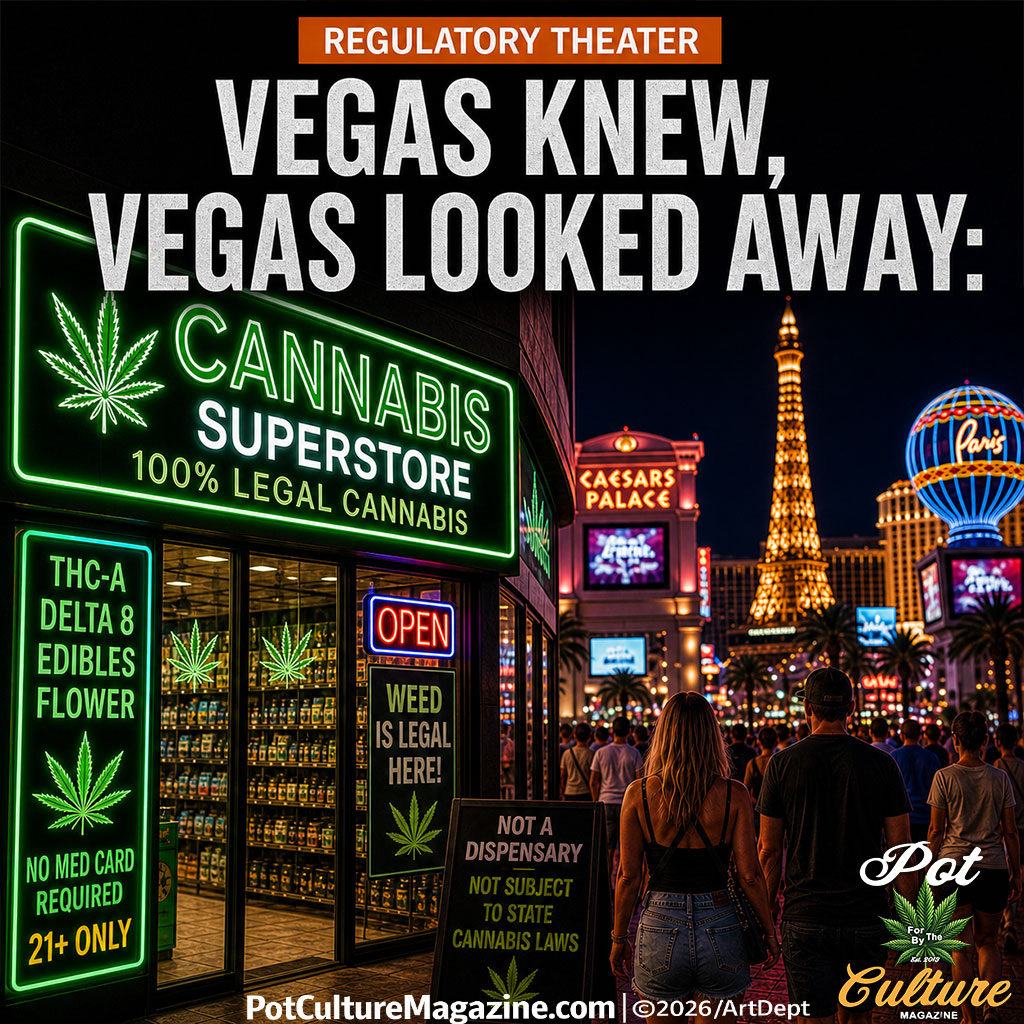
Vegas Knew, Vegas Looked Away
Las Vegas sold tourists the illusion of legal cannabis while fake dispensary style hemp shops operated near the Strip. Vegas Knew, Vegas Looked Away exposes how Nevada’s casino separation rules, weak hemp oversight, delayed Clark County action, and tourist confusion created a loophole economy hiding in plain sight.
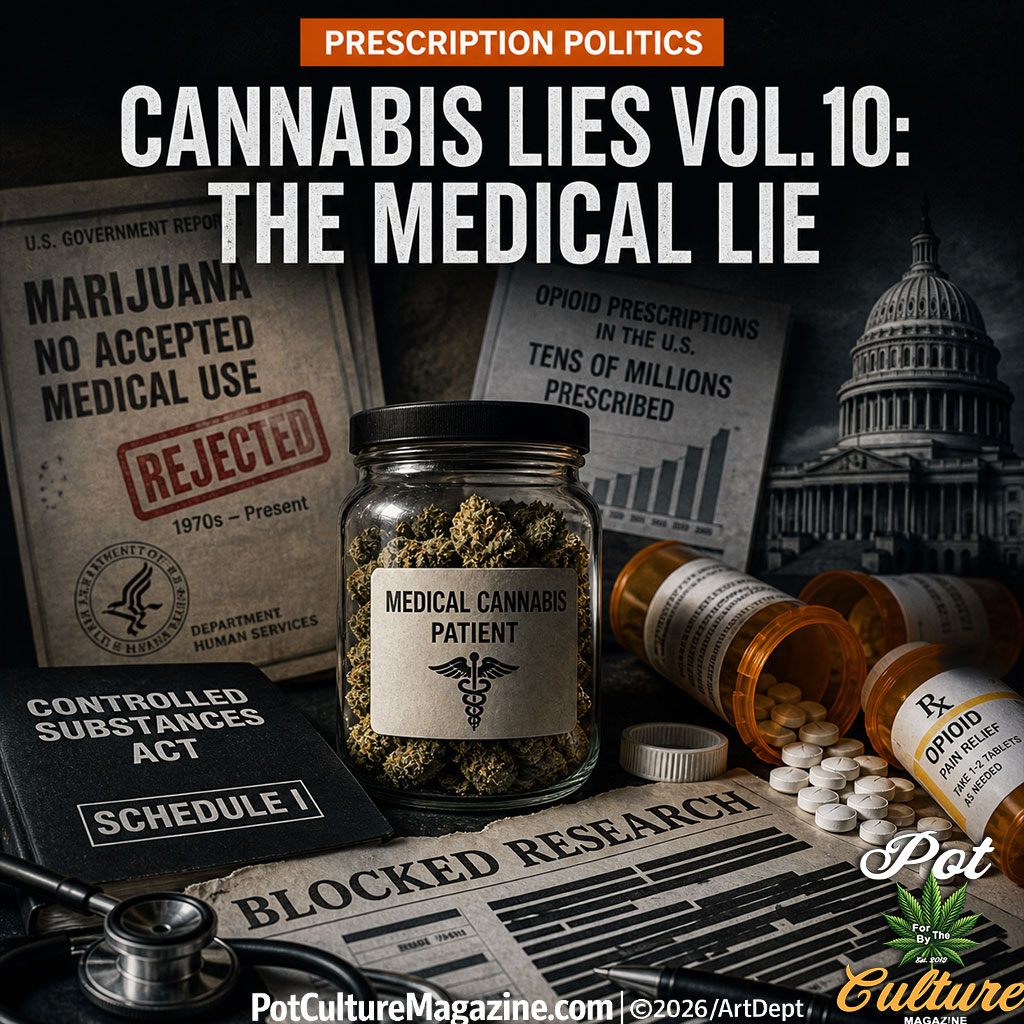
CANNABIS LIES Vol. 10: The Medical Lie
For decades, federal policy claimed cannabis had no accepted medical use while opioid prescriptions moved through the health care system by the tens of millions. Cannabis Lies Vol. 10 exposes the contradiction behind Schedule I, blocked research, medical cannabis patients, and the institutions that spent years pretending politics was medicine.
advertisement
The modern weed economy made it easier. Today’s cannabis isn’t the mellow stuff your parents smoked. It’s lab-bred, turbocharged, and packed into neon gummies that can floor a grown man. One bite from a brownie can trigger seizures in a twenty-pound dog. They don’t sleep it off. They shake, cry, and drift through hours of chemical terror while someone holds up a phone. The vet bill starts around a thousand dollars. The guilt, if it ever arrives, costs more.
Even the supposed good side of the industry isn’t clean. CBD pet treats line every shelf, marketed as holistic medicine. The labels promise calm, healing, relief. The reality is that none of it is regulated. There isn’t one FDA-approved CBD product for animals. Half are mislabeled. Some contain trace THC strong enough to sicken a chihuahua. People buy them because they want to believe they’re doing right by their pets. They aren’t. They’re dosing blind.
Cannabis was supposed to make us better. More aware. More human. It was the plant that taught empathy. But the same joint that opens one mind can close another if it’s used without thought. Weed doesn’t make people cruel. It just removes the excuses.
Dogs don’t get high. They get lost. They stumble, pant, drool, and stare at nothing, still wagging their tails because that’s all they know how to do. They trust us while their bodies fail. They trust us even when they shouldn’t.
If your pet ever eats weed or breathes too much smoke, don’t wait. Call a vet. Call poison control. Tell the truth. Nobody cares about your stash; they care about keeping the heart beating in front of them. The ASPCA Animal Poison Control Center can be reached at 1-888-426-4435, and the Pet Poison Helpline at 1-855-764-7661; both are open 24 hours a day. Most animals live if you act fast. Some don’t.
Getting your dog high isn’t rebellion. It isn’t culture. It isn’t love. It’s ignorance with a lighter. The weed isn’t the villain. The person holding it is.
I still think about that video. The dog blinked through the fog, trying to find the floor while Tony laughed behind the lens. Maybe Tony still laughs. Maybe he still tells people his dog loves it. Maybe the dog does love him. That’s what makes it tragic. Love turns cruelty into a blind spot.
©2025 Pot Culture Magazine. All rights reserved. This content is the exclusive property of Pot Culture Magazine and may not be reproduced, distributed, or transmitted in any form or by any means without prior written permission from the publisher, except for brief quotations in critical reviews.
F O R T H E C U L T U R E B Y T H E C U L T U R E

Jersey’s New Cash Crop
Jersey reinvented itself. A forty-five square mile island once known for offshore finance is now exporting pharmaceutical-grade cannabis into Germany’s booming medical market. With strict regulation, heavy investment, and a government eager for diversification, Jersey has become an unlikely European powerhouse. The contradiction between local policing and global commerce tells the real story.
A State of the Union on the State of Cannabis Media
Cannabis media is undergoing a predictable institutional decay. The movement’s original architects have transformed from revolutionary contributors into defensive gatekeepers, protecting their legacy rather than fostering future growth. This manifesto examines the four archetypes of decay: the Gatekeeper, the Mercenary, the Scavenger, and the Shill, that currently stifle the industry’s independent voice and threaten the…
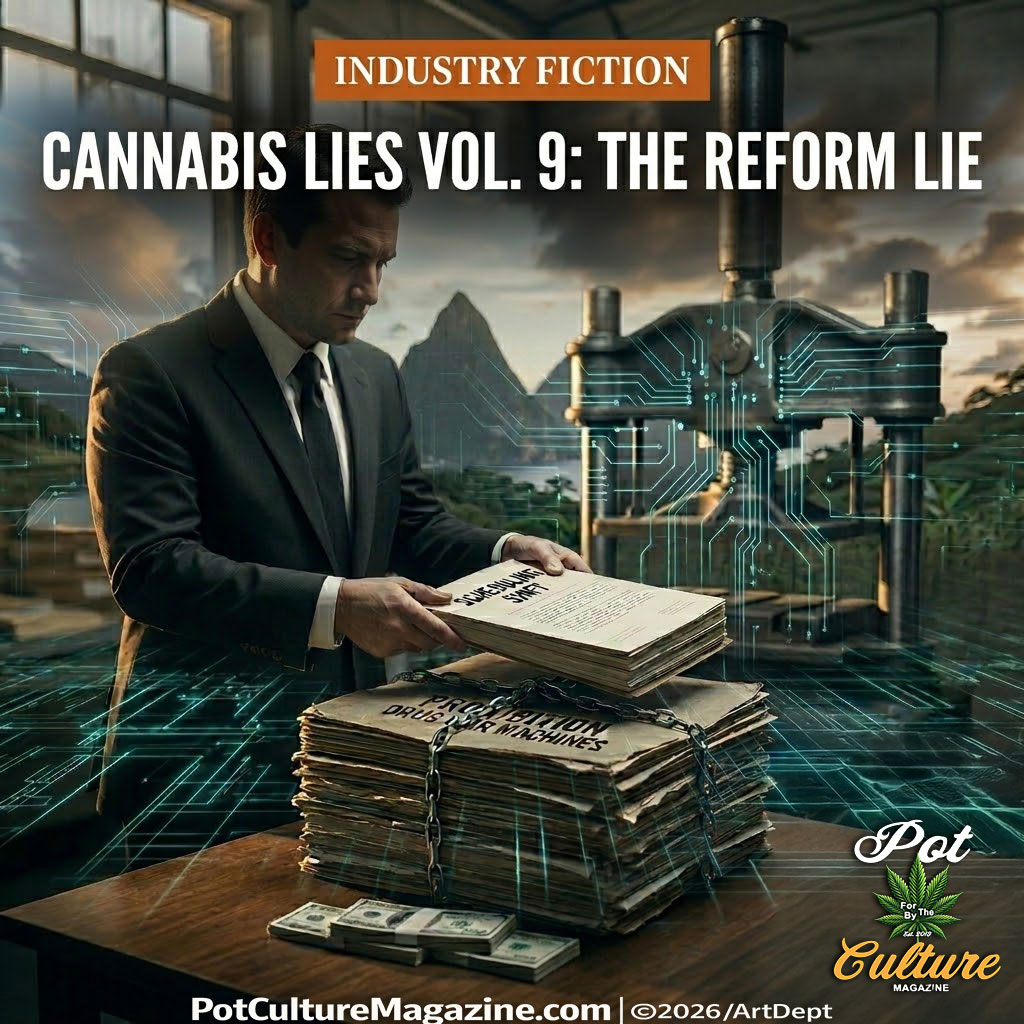
Cannabis Lies Vol. 9: The Reform Lie
The federal move to Schedule III is a masterclass in bureaucratic maintenance. While corporations celebrate tax relief, the core structure of the drug war remains untouched. This analysis deconstructs the Reform Lie, exposing how the state uses symbolic gestures to professionalize a privilege for the few while keeping the machinery of punishment active for everyone…
Discover more from POT CULTURE MAGAZINE
Subscribe to get the latest posts sent to your email.

Leave a comment