Filed Under: A Guide to Advertising
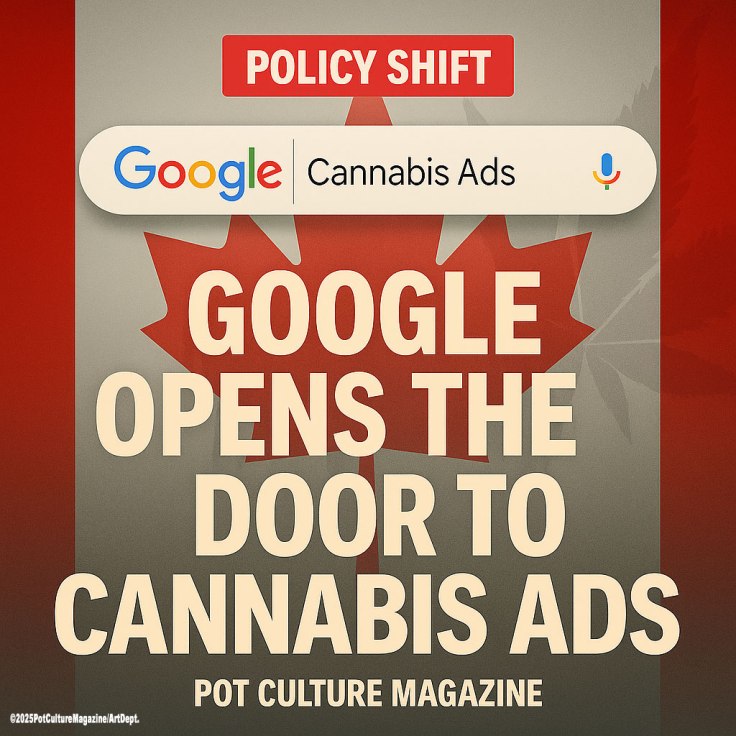
Google just cracked a door that has been locked for decades. In Canada, the world’s largest gatekeeper of digital advertising is running a pilot program that finally allows licensed cannabis companies to advertise on Google Search. It is cautious, controlled, and only available to businesses in Canada that are federally licensed. But make no mistake. This is a test balloon that shows what the future could look like. And what it shows us is how backward and broken the American system still is.
Because in the United States, cannabis businesses are still treated like criminals by the same corporations that are happy to cash checks from beer companies, liquor giants, and gambling empires. Alcohol can sponsor the Super Bowl, drape its name across stadiums, and run ads during family programming. Cannabis, which has never killed anyone, cannot even buy a small search ad to tell adult customers where a legal dispensary is located. And the hypocrisy doesn’t stop with Google. Facebook will take our time, our traffic, and our data, but try to post a Pot Culture Magazine feature and watch it vanish like it never existed. WordPress will take our money for upgrades, but the second we try to boost a story, we are treated like drug dealers.
This is not about safety. It is not about health. It is about power, politics, and puritanical nonsense that refuses to die.
In Canada, federally licensed cannabis producers and retailers can run ads on Google Search under strict conditions. The ads must be age-gated, follow Canadian federal laws, and only appear to users over 19. No lifestyle branding, no cartoonish packaging, no promotions targeting minors. It is boring, clinical, and tightly regulated, but it is also the first time cannabis has been allowed into Google’s ad ecosystem in any meaningful way. The pilot is scheduled to run for twenty weeks. If it succeeds, it is almost guaranteed to expand, first in Canada and then in other federally legal markets like Germany and the United Kingdom. The U.S. will be last in line, stuck in its federal prohibition purgatory, while the rest of the world adapts to a reality that cannabis is a legal, regulated product that adults use responsibly.
Here is what makes the hypocrisy burn. Alcohol is everywhere. Beer logos are stamped on baseball diamonds. Vodka sponsors entire concert tours. Whiskey ads run during prime time while kids are watching. Social media platforms cash millions in ad buys from alcohol brands every year. The messaging is omnipresent: drink to celebrate, drink to relax, drink to cope. Meanwhile, cannabis companies in states where it is fully legal cannot run a Google ad. They cannot promote a post on Instagram. They cannot run a basic awareness campaign to help customers find legal products instead of buying on the black market. The platforms hide behind federal law and “community standards,” while quietly pocketing billions from industries that actually kill people.
It is impossible to call this anything but hypocrisy. And it is hypocrisy with a body count. According to the Centers for Disease Control and Prevention, alcohol kills roughly 140,000 Americans every single year. It causes cancer, liver disease, heart disease, violence, and accidents. Cannabis kills no one. Not one. But it is cannabis that remains in the shadows, censored by Silicon Valley and vilified by politicians who take money from alcohol, pharma, and law enforcement lobbies.
advertisement
F O R T H E C U L T U R E B Y T H E C U L T U R E

Vegas Knew, Vegas Looked Away
Las Vegas sold tourists the illusion of legal cannabis while fake dispensary style hemp shops operated near the Strip. Vegas Knew, Vegas Looked Away exposes how Nevada’s casino separation rules,…


CANNABIS LIES Vol. 10: The Medical Lie
For decades, federal policy claimed cannabis had no accepted medical use while opioid prescriptions moved through the health care system by the tens of millions. Cannabis Lies Vol. 10 exposes…
advertisement
This is not just about the law. It is about culture. America is still trapped in the same puritan hangups that fueled the drug war in the first place. Cannabis is still framed as dangerous and immoral, even though two-thirds of Americans support legalization. Politicians are terrified of the optics of normalization. Tech companies are terrified of federal raids and political backlash. So they hide behind excuses while quietly acknowledging that the stigma is what really drives the decision.
That is why a beer company can throw its logo on an NFL end zone while a cannabis company cannot even run a banner ad in a legal state. It is why you can buy alcohol at an airport bar before an early morning flight, but you cannot buy a cannabis drink at the same terminal, even in states where it is legal. The system is not designed to protect anyone. It is designed to protect the status quo.
Canada’s pilot matters because it exposes how flimsy that status quo really is. Google is showing that cannabis advertising can be handled responsibly, with the same guardrails that exist for alcohol and gambling. Germany is likely to follow suit as its recreational market grows. The United Kingdom and other European countries will not be far behind. This will put enormous pressure on the United States. Global brands will not want to operate under two sets of rules. Investors will not want to pour money into markets that cannot advertise. Politicians will not be able to keep claiming that federal prohibition is good policy when it is costing American businesses billions in opportunities while global competitors get a head start.
Advertising is oxygen for any legal industry. Without it, cannabis companies are forced to fight for scraps through word of mouth, organic social, and overpriced billboards. This hurts small businesses most of all. The corporations with massive budgets can afford to build their own platforms or buy visibility through lobbying and sponsorship deals. But independent operators and legacy brands are locked out of the tools that every other legal business takes for granted.
This is not just unfair. It is dangerous. Keeping legal operators in the shadows drives customers to the black market, where there are no age checks, no lab tests, and no safety standards. If regulators were serious about protecting consumers, they would be fighting to open advertising channels to licensed, regulated businesses. Instead, they are clinging to stigma while pretending it is about safety.
There is no moral case for this. Not when alcohol is legal, advertised, and celebrated. Not when gambling is plastered across every major sports broadcast. Not when pharmaceutical companies can market opioids on television, but a cannabis company cannot tell customers where to find a legal tincture for pain relief.
Cannabis has been legal in parts of the U.S. for more than a decade. Millions of Americans use it safely and responsibly. The idea that those adults cannot be trusted with advertising is insulting and absurd. It is also a political calculation, one that tech companies like Google and Meta make every day. They are not neutral platforms. They are gatekeepers, and they are enforcing a morality code that is decades out of date.
The Google pilot will almost certainly expand in Canada. It will probably roll into Germany and the U.K. next. If the metrics look good, the floodgates will open. But the U.S. will stay stuck until federal law changes. That could come with rescheduling, but even Schedule III will not fully solve the advertising ban as long as cannabis remains criminalized at the federal level.
What is changing is the narrative. Every time a corporation like Google makes a move like this, it chips away at the illusion that cannabis is too risky to normalize. Every new country that opens advertising makes it harder for the U.S. to pretend this is about safety. Eventually, the wall will crack.
This is not about begging for corporate permission. It is about demanding honesty. If alcohol can sponsor the Super Bowl, cannabis should be able to run a simple ad telling adults where to find legal products. If gambling can be sold to anyone with a smartphone, cannabis should not be censored out of existence.
Google’s pilot is not progressing. It is an experiment designed to protect a monopoly while pretending to embrace reform. It is a reminder that tech corporations, like politicians, only move when they think it is safe and profitable. But it is also a sign that the dam is breaking.
Cannabis is here. It is legal in dozens of states. It is used by millions of people who are tired of being treated like criminals by billion-dollar companies that have no problem cashing checks from industries that kill. The hypocrisy is not sustainable. And when the wall finally falls, it will not be because the system wanted change. It will be because the culture forced it.
Until then, Canada gets a glimpse of the future while Americans are left in the dark, watching beer ads during every timeout and wondering why the safest product on the shelf is still treated like contraband.
©2025 Pot Culture Magazine. All rights reserved. This content is the exclusive property of Pot Culture Magazine and may not be reproduced, distributed, or transmitted in any form or by any means without prior written permission from the publisher, except for brief quotations in critical reviews.
F O R T H E C U L T U R E B Y T H E C U L T U R E
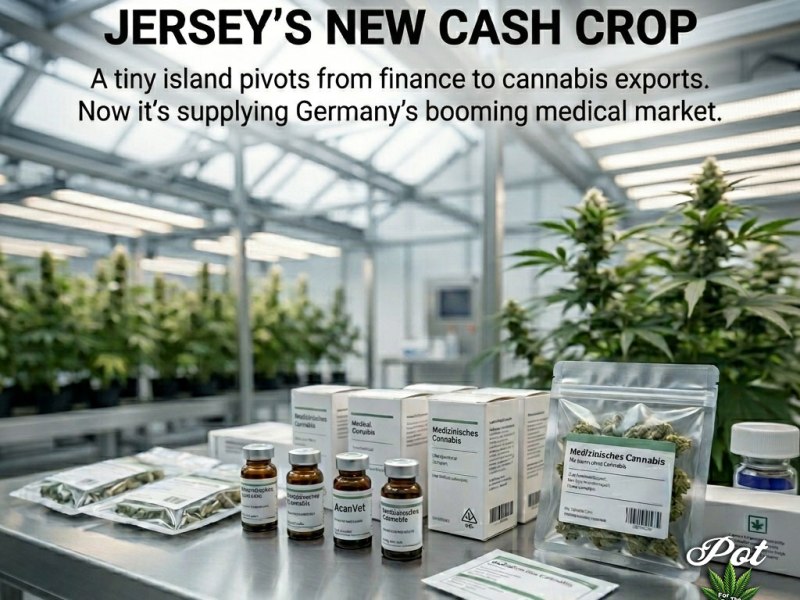
Jersey’s New Cash Crop
Jersey reinvented itself. A forty-five square mile island once known for offshore finance is now exporting pharmaceutical-grade cannabis into Germany’s booming medical market. With strict regulation, heavy investment, and a government eager for diversification, Jersey has become an unlikely European powerhouse. The contradiction between local policing and global commerce tells the real story.

A State of the Union on the State of Cannabis Media
Cannabis media is undergoing a predictable institutional decay. The movement’s original architects have transformed from revolutionary contributors into defensive gatekeepers, protecting their legacy rather than fostering future growth. This manifesto examines the four archetypes of decay: the Gatekeeper, the Mercenary, the Scavenger, and the Shill, that currently stifle the industry’s independent voice and threaten the…

Cannabis Lies Vol. 9: The Reform Lie
The federal move to Schedule III is a masterclass in bureaucratic maintenance. While corporations celebrate tax relief, the core structure of the drug war remains untouched. This analysis deconstructs the Reform Lie, exposing how the state uses symbolic gestures to professionalize a privilege for the few while keeping the machinery of punishment active for everyone…
Discover more from POT CULTURE MAGAZINE
Subscribe to get the latest posts sent to your email.

Leave a comment