Filed Under: The Week in Weed

The week closed in on everyone. The cannabis world felt pressure from every direction. The federal government stalled, states braced for impact, international programs wobbled, and people who rely on cannabis absorbed the fallout. Nothing broke open, nothing moved forward with confidence, and nothing felt secure.
STATEHOUSE HEADLINER

The proposed federal plan to outlaw hemp-derived THC sent shockwaves across the country. The U.S. Hemp Roundtable warned that the language could wipe out up to 95 percent of intoxicating hemp products, threaten a 28.4 billion dollar market, and jeopardize more than 300,000 jobs nationwide. Advocates across major hemp states demanded clarity because the proposal collides with the 2018 Farm Bill that legalized hemp in the first place. No state has provided a real plan, and the industry is staring at economic shock.
Grade: C

GOVERNMENT CLOWN CAR AWARD
New York kept its streak of chaos alive. Regulators continued their crackdown on unlicensed shops while lawsuits over the slow license rollout dragged on. Social equity applicants insisted the system still locks them out. City leaders asked for harsher penalties, advocates pushed for faster licensing, and the market remained stuck in the same feedback loop. New York wants to prove control, yet its actions show disorder.
Grade: D

REGULATOR ROULETTE
Germany’s cannabis club rollout stayed trapped in a maze of bureaucracy. Federal officials cited administrative burdens, local governments questioned implementation capacity, and EU compliance remained unresolved. Analysts warned that Germany risks losing investor confidence as timelines slip and clarity evaporates. The country once framed itself as Europe’s adult-use pioneer, yet it now represents how reform collapses when bureaucracy outweighs will.
Grade: C minus
PATIENT RIGHTS WATCH

Veterans waited again for access that never came. The VA maintained a cautious research posture that sidelines the very conditions veterans struggle with, including chronic pain, insomnia, and anxiety. Veteran organizations continued demanding meaningful change. In legal states, employers still punish workers with outdated THC screening policies that ignore lawful use. Patients remain trapped between institutions that refuse to move forward.
Grade: D

INTERNATIONAL HEAT CHECK
South Africa struggled to execute the reforms affirmed by its own Constitutional Court, and advocacy groups pushed the government to fully implement private use protections. Thailand sent more mixed messages as political factions fought over whether cannabis should be tightly restricted or partially recriminalized. In Colombia, medical cannabis exports continued to lag, leaving investors wary of the sector’s long-term stability.
Grade: C
FINAL GRADE
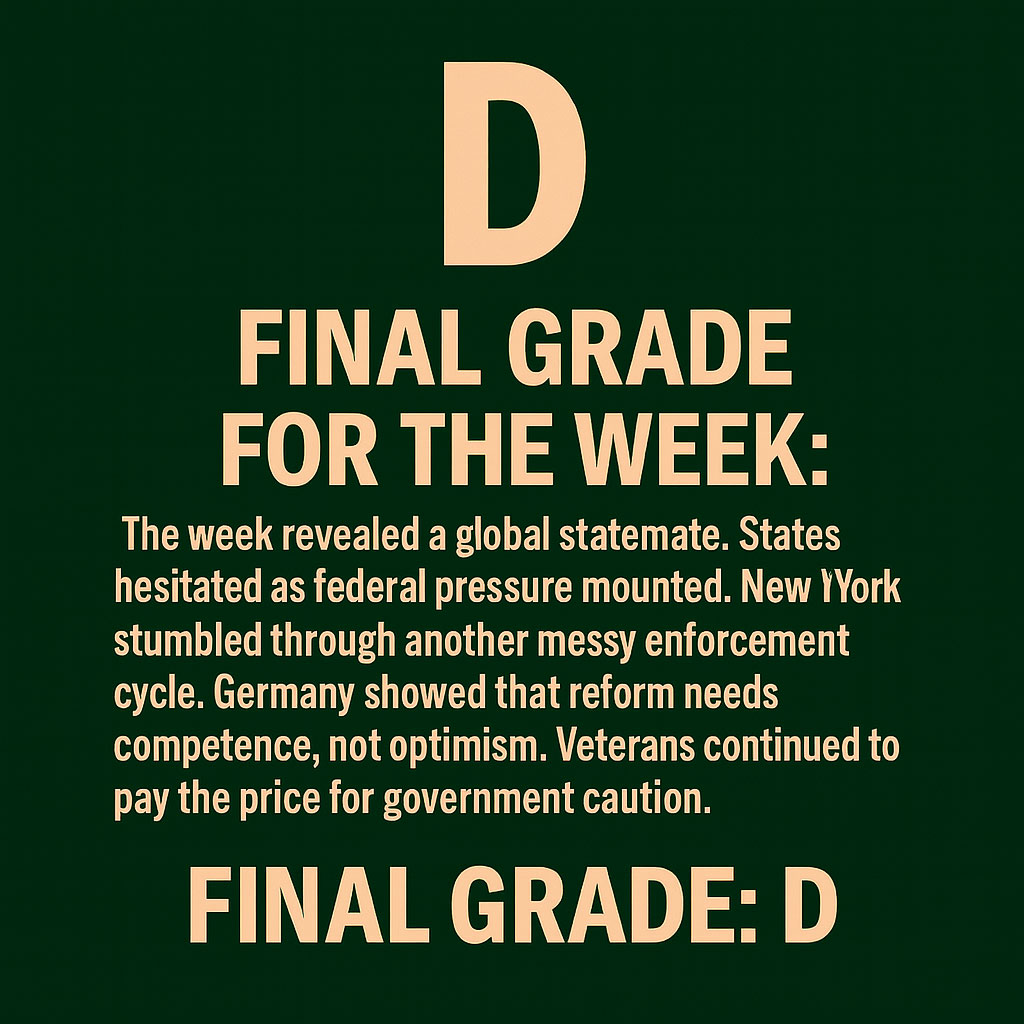
The week revealed a global stalemate. States hesitated as federal pressure mounted. New York stumbled through another messy enforcement cycle. Germany showed that reform needs competence, not optimism. Veterans continued to pay the price for government caution. International reform wavered under the strain of political and economic pressures. A tough week with little relief.
Final Grade: D
©2025 Pot Culture Magazine. All rights reserved. This content is the exclusive property of Pot Culture Magazine and may not be reproduced, distributed, or transmitted in any form or by any means without prior written permission from the publisher, except for brief quotations in critical reviews.
F O R T H E C U L T U R E B Y T H E C U L T U R E

Reefer Report Card Vol. 28: The Rescheduling That Wasn’t
This week’s Reefer Report Card cuts through the hype around cannabis “rescheduling,” exposing how a label change left federal prohibition fully intact. Arrest authority, workplace punishment, and immigration penalties remain untouched. Headlines claimed progress. Reality delivered none. A week defined by performance over policy, and reform that never arrived.


THE SCHEDULE III SCAM
Federal officials claim cannabis is moving forward, but Schedule III changes nothing that matters. This investigation breaks down what rescheduling actually does, what it deliberately avoids, and why prohibition logic remains intact. Arrests continue. Markets remain conflicted. Reform language replaces reform action. The system shifts labels while preserving control.

LEGAL WEED, OLD RULES
Legalization promised freedom but preserved prohibition logic. This investigation examines how cannabis reform left arrests, racial disparities, job punishment, medical blame, and equity barriers intact. By tracing enforcement, employment law, healthcare practice, and licensing rules, it shows how legalization changed the label without dismantling the system.
Discover more from POT CULTURE MAGAZINE
Subscribe to get the latest posts sent to your email.

Leave a comment