Filed Under: Politics & Power
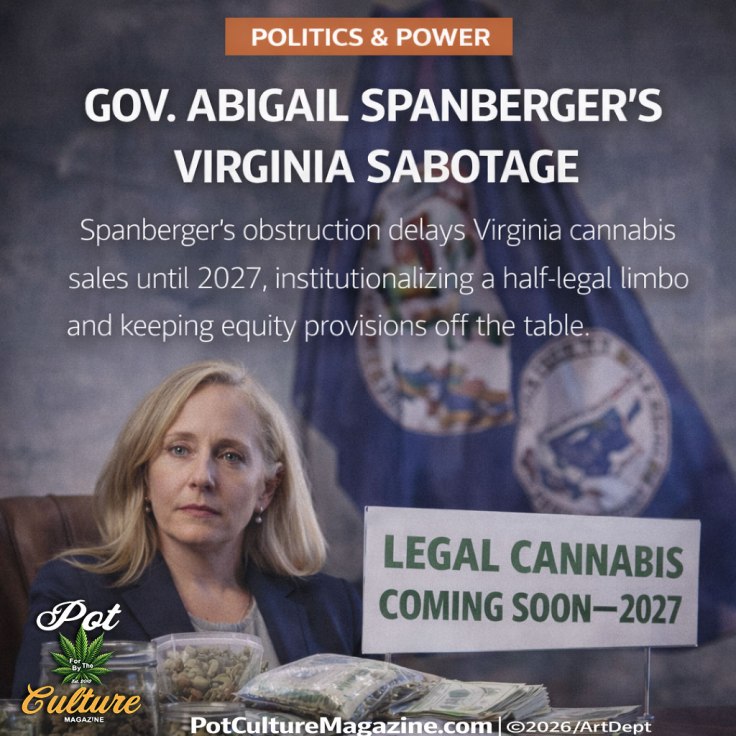
Virginia has created a state of permanent contradiction. On the street, a citizen can legally possess cannabis. Within the halls of the General Assembly, that same citizen faces a bureaucratic maze designed to ensure they have nowhere to buy it. Forget the narrative of oversight or legislative glitches. This is a calculated retreat from the promises of legalization, effectively turning a policy victory into a structural absurdity.
In 2021, the Commonwealth took the first step toward modernization when Virginia legalized possession. It was a signal that the state intended to move away from the failed policies of the past. That move was supposed to be the foundation for a regulated, taxed, and safe retail market. In 2026, the General Assembly finally passed a retail bill, SB 542 and HB 642, to build that market. Lawmakers did their job. Then came the substitute from Governor Abigail Spanberger. She did not offer minor amendments. She returned a total substitute that functions as a roadmap for delay. The retail sales date was pushed to July 1, 2027. It is a postponement serving the interests of the status quo, while leaving the public in a state of suspended animation.
The substitute bill does more than delay. It erodes the fundamental tenets of reform. The market, once envisioned as a competitive space with 350 retail licenses, has been slashed to 200. This is not an attempt at rigorous oversight. It is an attempt to strangle the industry in the cradle. By constricting access, the state ensures that the illegal market remains the only reliable source for consumers. The language of the substitute betrays a deeper hostility toward the user. Public consumption has been reclassified as a misdemeanor. Underage possession penalties have been bolstered. NORML has pointed out that the new criminal code sections are not sealable. The state promised a move toward liberty and equity, but the substitute bill weaponizes the criminal code to maintain the very policing structures that legalization was meant to dismantle.
Legislators who carried the retail bill were left in the dark.
“completely shell shocked“
That is how Senator Lashrecse Aird described the response to the substitute from Governor Abigail Spanberger. Delegate Paul Krizek noted that the substitute
“falls short“
These are not political platitudes. They are the reactions of public servants who watched their work dismantled by a Governor who campaigned on safety and small business opportunity, but chose to govern through obstruction.
History in this legislative session is written in the gap between the campaign trail and the executive office. During the 2025 campaign, promises were made to sign a retail bill. The platform was built on the pillars of public safety, consumer protections, and economic opportunity. It was a promise to curb the illicit market. It was a pledge to support small businesses and ensure reinvestment in the communities most harmed by prohibition. That platform is now a relic of a different political season. The reality of 2026 is a Governor who views the cannabis market not as an economic engine, but as a political liability. The contradiction is stark. How does a leader prioritize public safety while simultaneously rejecting the testing and standards required to make products safe?
Delegate Krizek’s earlier warning rings louder now than ever. He spoke of the danger of having
“no testing, no standards and no oversight whatsoever“
He predicted a
“five billion dollar illegal market“
That market exists today. It thrives because the state refuses to provide an alternative. It thrives because Governor Abigail Spanberger has decided that a half-legal system is preferable to a functioning one.
This is not a technocratic debate about tax structures or licensing caps. It is a cultural issue with profound human consequences. When the state refuses to regulate, it leaves the burden of the illegal market on the communities already marginalized by the War on Drugs. Chelsea Higgs Wise captured the mood of the advocacy community when she called the removal of equity funding a
“direct slap in the face“
This was not a minor line item adjustment. It was the removal of the mechanism designed to correct past wrongs. By stripping equity funding, the state has signaled that the history of criminalization is not a problem to be solved, but a cost of doing business.
NORML has been clear in its assessment. The amendments maintain criminal penalties, and the reforms are reversed. This is not legalization. It is a system designed to keep the threat of arrest alive while pretending to embrace progress. The racial disparities that have defined cannabis enforcement for decades will not disappear under this regime. They will be institutionalized by the very laws that were supposed to end them.
Virginia is currently trapped in a legislative purgatory. It is a state where one can walk down the street with a product that is legal to possess, but illegal to obtain through any legal channel. This absurdity is the intended outcome. It is a system that allows leadership to claim they are tough on crime while ostensibly following the will of the voters who want legalization. It is a strategy of contradiction. The gray market will continue to operate. The illicit market will continue to profit. And the residents of Virginia will continue to navigate a legal system that treats them like criminals for exercising a right that the state itself has codified. This is not reform. It is a managed collapse of policy. The Governor may have signed the substitute, but she has not solved the problem. She has only ensured that the chaos remains the defining feature of Virginia’s cannabis culture.
The vacuum created by this delay is currently being filled by an explosion of unregulated hemp-derived products. These products, which saturate the current gray market, are sold without the testing, quality controls, or safety standards that a legitimate retail cannabis market would demand. Governor Abigail Spanberger claims to prioritize public safety, yet by stalling the legal retail market, she has ensured that consumers are left with no choice but to purchase products that lack any regulatory oversight. This is the ultimate hypocrisy. The Governor is effectively forcing Virginians to participate in a market that is demonstrably less safe than the one she refuses to authorize.
The path to a functioning market is clear, but the will to walk it has evaporated in the halls of power. Until the state decides to treat legalization as a serious public health and economic reality rather than a political hurdle, Virginia will remain a place where the law is broken by design. The cultural impact of this policy cannot be overstated. It forces consumers to rely on unregulated sources, denies small business owners the ability to compete in a legal marketplace, and perpetuates the criminalization of a substance that has already been deemed acceptable for possession.
Consider the logistical nightmare created by this substitute. By delaying retail sales until 2027, the state has effectively kicked the can down the road, hoping the political heat will dissipate. It ignores the immediate reality of thousands of Virginians who are participating in a culture that the law acknowledges, but refuses to accommodate. This is the definition of a failed policy. When a government creates a legal right without a legal path to exercise that right, it creates a vacuum. In that vacuum, the illicit market grows stronger, and the unregulated hemp industry continues to profit from the state’s indecision.
The political calculus behind this move is transparent. By keeping the market illegal, the state retains control over the narrative, even if it loses control over the substance. It is a power play that prioritizes political ideology over the lived reality of the citizens. The promises of 2025 were built on a vision of a regulated, taxed, and safe market. The reality of 2026 is a market that is none of those things. It is a market that is defined by uncertainty, restricted access, and increased criminal penalties.
The advocates who fought for legalization are now fighting to save it from the very officials who claimed to support it. They see the writing on the wall. They understand that a half-legal system is not a stepping stone to full legalization, but a permanent state of limbo. They see the equity funds, the very programs designed to ensure that those most harmed by the War on Drugs have a seat at the table, being stripped away. This is the betrayal. It is not just a delay in implementation; it is a systematic dismantling of the goals that motivated the 2021 legalization effort.
The legislative backlash has been significant, yet it has been met with a wall of indifference from the executive branch. The voices of lawmakers like Senator Aird and Delegate Krizek are ignored in favor of a political agenda that demands the preservation of the old order. The legislative process is being bypassed in favor of executive overreach. The substitute bill is a weapon, and it is being used to kill the progress that was years in the making.
We must look at what this tells us about the state of cannabis culture in Virginia. It reveals a deep-seated fear of the very thing the state is supposed to be regulating. It reveals a lack of respect for the intelligence of the voters. It reveals a desire to control rather than a desire to serve. The culture is not a threat to be managed. It is a reality to be acknowledged. By treating it as a threat, the government has ensured that it will remain a source of conflict.
The consequences of this failure will be felt for years to come. The loss of tax revenue, the continued burden on the criminal justice system, and the frustration of consumers are all direct results of this policy of obstruction. The state had the opportunity to build a model that could have been a beacon for other states to follow. Instead, it has chosen to follow the path of least resistance, maintaining the status quo at the expense of its own citizens.
This is the story of Virginia’s cannabis failure. It is a story of promise, of betrayal, and of a legislative process that has been hijacked by political gamesmanship. It is a story that should serve as a warning to other states that are considering legalization. If the goal is not to build a functioning, regulated, and equitable market, then legalization is nothing more than a hollow promise.
As we look toward the future, the question remains: will the leadership of Virginia ever prioritize the needs of its citizens over the political convenience of the moment? The evidence suggests otherwise. The path ahead is one of continued uncertainty, of illegal market reliance, and of persistent criminalization. The dream of a fully legal and regulated cannabis market in Virginia is further away than it has ever been.
This is the reality of the half-legal trap. It is a trap that was built by those in power, and it is a trap that ensnares everyone who believes in the promise of reform. It is a trap that we must continue to expose, to document, and to resist. Because the truth is that a half-legal system is not reform. It is a betrayal of the culture, a betrayal of the voters, and a betrayal of the very idea of justice. The fight for a real, functioning, and equitable cannabis market in Virginia is far from over, but it is clear that we are starting from a place of significant setback.
The impact of this policy failure on small business owners is particularly devastating. These are the entrepreneurs who were ready to enter a regulated market, who were prepared to invest, to hire, and to build. They have been left out in the cold, their dreams put on hold by a government that refuses to allow the market to exist. This is the economic cost of the obstruction by Governor Abigail Spanberger. It is a cost that will be paid by the citizens of Virginia for years to come.
We see the consequences in every community. We see it in the continued arrests, the loss of potential tax revenue, and the inability of consumers to access safe, tested, and regulated products. We see it in the frustration of those who were promised a new beginning and were given more of the same. The government’s failure to act is an action in itself. It is an action that perpetuates the very problems that legalization was meant to solve.
The narrative of public safety used to justify these restrictions is a thin veil. There is nothing safe about an unregulated market. There is nothing safe about a system that forces consumers into the shadows. There is nothing safe about a policy that keeps the criminal justice system clogged with minor possession offenses. If Governor Abigail Spanberger were truly concerned with public safety, she would be working to create a regulated market, not doing everything in her power to prevent one.
The contradictions inherent in this system are not lost on the public. They see the hypocrisy, they feel the injustice, and they understand that their voices are not being heard. They are the ones who are paying the price for this political failure. They are the ones who will continue to bear the burden of a system that is broken by design.
This is the state of Virginia today. A state that is trapped between the promise of reform and the reality of obstruction. A state that has legalized possession, but refused to grant the right to buy. A state that has turned its back on the very people it was elected to serve. It is a story that needs to be told, and it is a story that will continue to be told until the people of Virginia get the justice they deserve.
The journey toward a truly legal cannabis market in Virginia has been long, difficult, and fraught with setbacks. But the spirit of the movement is resilient. The advocates, the small business owners, the consumers—they are not giving up. They are organizing, they are mobilizing, and they are demanding change. They understand that the fight for legalization is not just about the plant, but about the values that define our society: freedom, justice, and the right to live our lives as we see fit.
They will not be deterred by the delays, the restrictions, or the penalties. They will not be silenced by the political games of those who wish to maintain the status quo. They will continue to push, to advocate, and to fight for the future that they were promised. And in the end, they will win. Because the truth is that the desire for a free, fair, and regulated cannabis market is a desire that cannot be stifled. It is a desire that is rooted in the very fabric of our society, and it is a desire that will eventually prevail.
The story of Virginia’s cannabis legalization is a testament to the power of the people. It is a story of how a grassroots movement was able to change the laws of a state, even in the face of deep-seated opposition. It is a story that shows that change is possible, even when it seems impossible. And it is a story that will inspire others to keep fighting, to keep pushing, and to keep believing in the power of their voices.
As we move forward, we must remember that the fight for legalization is not just about the law. It is about the people whose lives are affected by these policies every single day. It is about the communities that have been harmed by the War on Drugs, the entrepreneurs who have been denied the opportunity to succeed, and the consumers who have been denied the right to access safe products. It is about all of us, and it is a fight that we are all a part of.
M O R E S T O R I E S A B O U T V I R G I N A
Virginia Is For Tokers
Virginia just greenlit its long-delayed cannabis market. But is the launch plan built to last, or is it already showing cracks? The blueprint promises equity, protection from corporate takeover, and sustainable access. Advocates say it could be the first real test of Southern legalization. Pot Culture breaks it all down with facts, receipts, and no…


Virginia’s Legalization Lockdown
Virginia legalized cannabis four years ago, then froze its own future. Governor Glenn Youngkin vetoed retail sales, keeping weed legal to hold but illegal to buy. Now the 2025 governor’s race will decide if voters finally get what they approved. Virginia’s Legalization Lockdown exposes the hypocrisy, the politics, and the system that turned freedom into…
The future of cannabis in Virginia is in our hands. We have the power to shape it, to define it, and to make it a reality. We have the opportunity to build a market that is not just functional, but equitable, inclusive, and fair. We have the opportunity to right the wrongs of the past and to create a better future for everyone.
This is our mission. This is our calling. And this is our fight. We will not stop until the promise of legalization is fully realized, until the market is truly open, and until the people of Virginia are treated with the respect and dignity they deserve. The road ahead may be long, but we are prepared to walk it. We are ready to face the challenges, to overcome the obstacles, and to build the future that we know is possible.
This is the message for Governor Abigail Spanberger and for all who seek to stand in the way of progress. We are watching, we are waiting, and we are fighting. We will not be silenced, we will not be ignored, and we will not be deterred. We are the voice of the movement, we are the strength of the culture, and we are the future of cannabis in Virginia. And together, we will build a market that reflects our values, our vision, and our hope for a better tomorrow.
The time for waiting is over. The time for action is now. Let us join together, let us raise our voices, and let us demand the justice that is rightfully ours. Let us build a future where cannabis is not just legal, but accessible, safe, and regulated. Let us build a future that is worthy of the struggle, and let us never forget the lessons that we have learned along the way. Because the fight for legalization is not just about the plant, it is about the people, the community, and the future that we are building together.
Virginia may be stalled, but the movement is not. It is vibrant, it is active, and it is determined to see this through to the end. The Governor might have tried to stop the progress, but she has only succeeded in fueling the fire. The public is more engaged than ever, and the call for true reform is only getting louder. This is the reality of the situation, and it is the reality that the leadership must face.
The path is clear. It is time for Governor Abigail Spanberger to listen to the people. It is time for her to honor her promises. It is time for her to allow the retail market to flourish, as was intended by the legislature. It is time for her to stop the obstruction, to end the delays, and to build a system that works for everyone. It is time for a real and lasting change.
The General Assembly is scheduled to meet on April 22, 2026, to consider the amendments from Governor Abigail Spanberger. This is the immediate opportunity to course correct. It is a moment of truth for the lawmakers who have already expressed their shock and disappointment at the regressive stance of the Governor. The public will be watching to see if the legislature has the backbone to stand by its own work or if it will fold in the face of executive pressure.
Virginians, the window is closing. You have until the morning of April 22 to force a hand. Contact your representatives now. Tell them to reject the substitute bill that keeps the black market open and equity out of reach. Do not ask for a favor. Demand that they stand by the legislation they passed. If they do not hear you now, they will ignore you until 2027. This is the moment to decide if you are a constituent or a spectator.
We look back at what has been accomplished, and we see how much remains to be done. We recognize the progress that has been made, but we are under no illusions about the work that lies ahead. We are clear-eyed, we are focused, and we are prepared for the challenges that are yet to come.
This is the story of Virginia’s cannabis culture. It is a story of resilience, of commitment, and of an unyielding belief in the potential for change. It is a story that is still being written, and it is a story that we are all a part of. Let us continue to write it together. Let us continue to advocate for the rights of all Virginians. Let us continue to demand a cannabis policy that is based on facts, grounded in equity, and reflective of the values of the community.
The final word on this matter has not been written. The debate is ongoing, the pressure is mounting, and the demand for justice is only growing stronger. The actions of Governor Abigail Spanberger have sparked a conversation that she cannot contain. She has brought the issue to the forefront of the public consciousness, and she has ensured that the demand for a functioning retail market will be at the heart of the political agenda for the foreseeable future.
The journey toward a truly legal cannabis market in Virginia is not just about policy. It is about the fundamental rights of the people. It is about the power of the community. It is about the strength of our convictions. It is a journey that we must take together, and it is a journey that we will see through to the end.
The time has come to stop the games and start the work. The people of Virginia deserve better than a half-legal system. They deserve a functioning market, they deserve a fair and equitable policy, and they deserve a government that works for them. The path is there, the choice is clear, and the responsibility is ours.
©2026 Pot Culture Magazine. All rights reserved.
4/20 is Dead
4/20 has been hollowed out by branding, corporate silence, and a culture that forgot its own history. While the industry sells holiday merch, Singapore executed a man for cannabis. The movement that once fought for autonomy now treats the plant like a commodity. This piece examines the cost of that betrayal and the culture left…
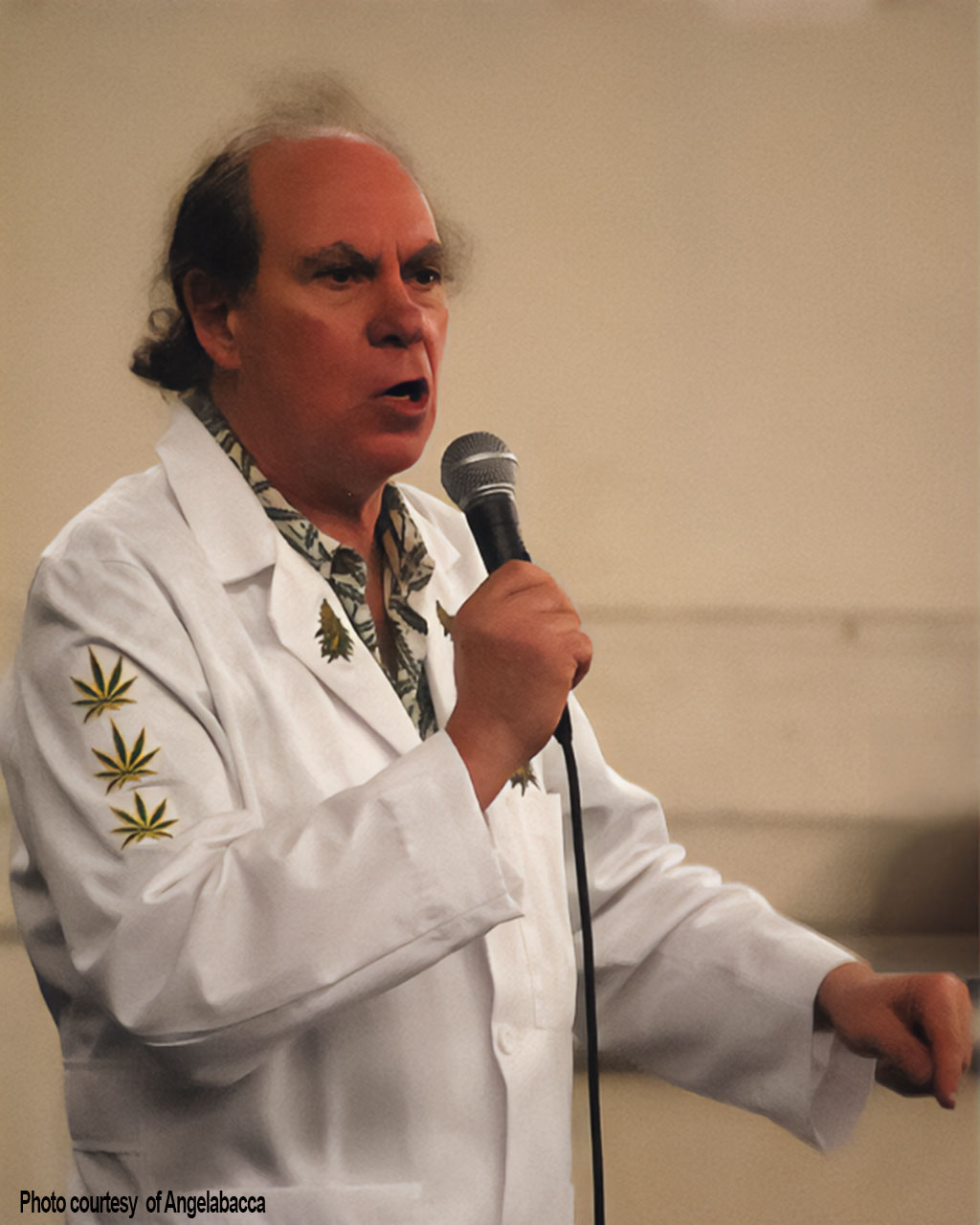
Ed Rosenthal and the Origins of High Times
Ed Rosenthal recounts how the magazine was born not from psychedelic myth but from hard numbers. Rolling paper import data, underground press experience, and market logic revealed a massive hidden cannabis audience. His account challenges the romantic origin story and offers a rare firsthand look at the early mechanics behind one of cannabis culture’s most…

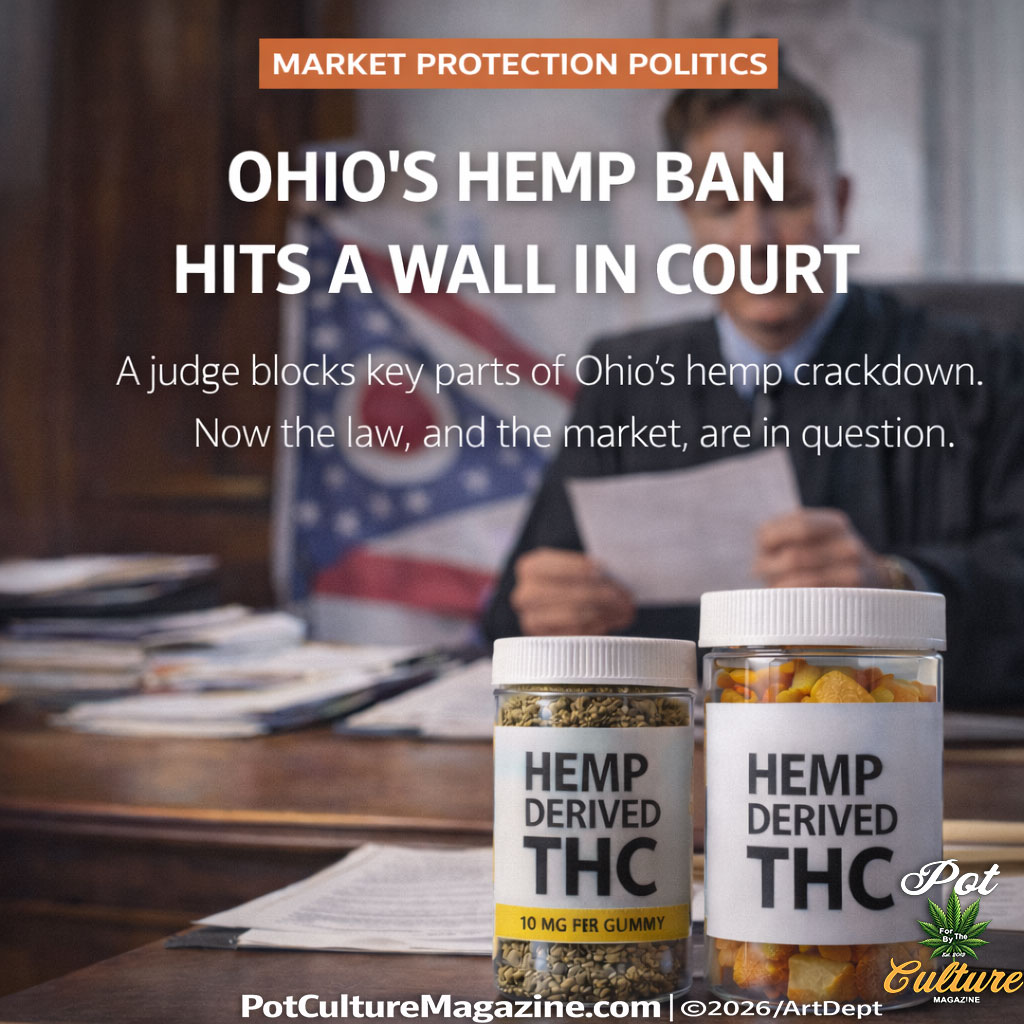
Ohio’s Hemp Ban Hits a Wall in Court
Ohio’s attempt to restrict intoxicating hemp sales is already facing legal resistance. A judge has blocked enforcement of key provisions, raising questions about whether the law protects consumers or reshapes the cannabis market. The case could set a precedent for how states regulate hemp derived THC products across the country.
Discover more from POT CULTURE MAGAZINE
Subscribe to get the latest posts sent to your email.

Leave a comment