Filed Under: Ballot Box Blockade
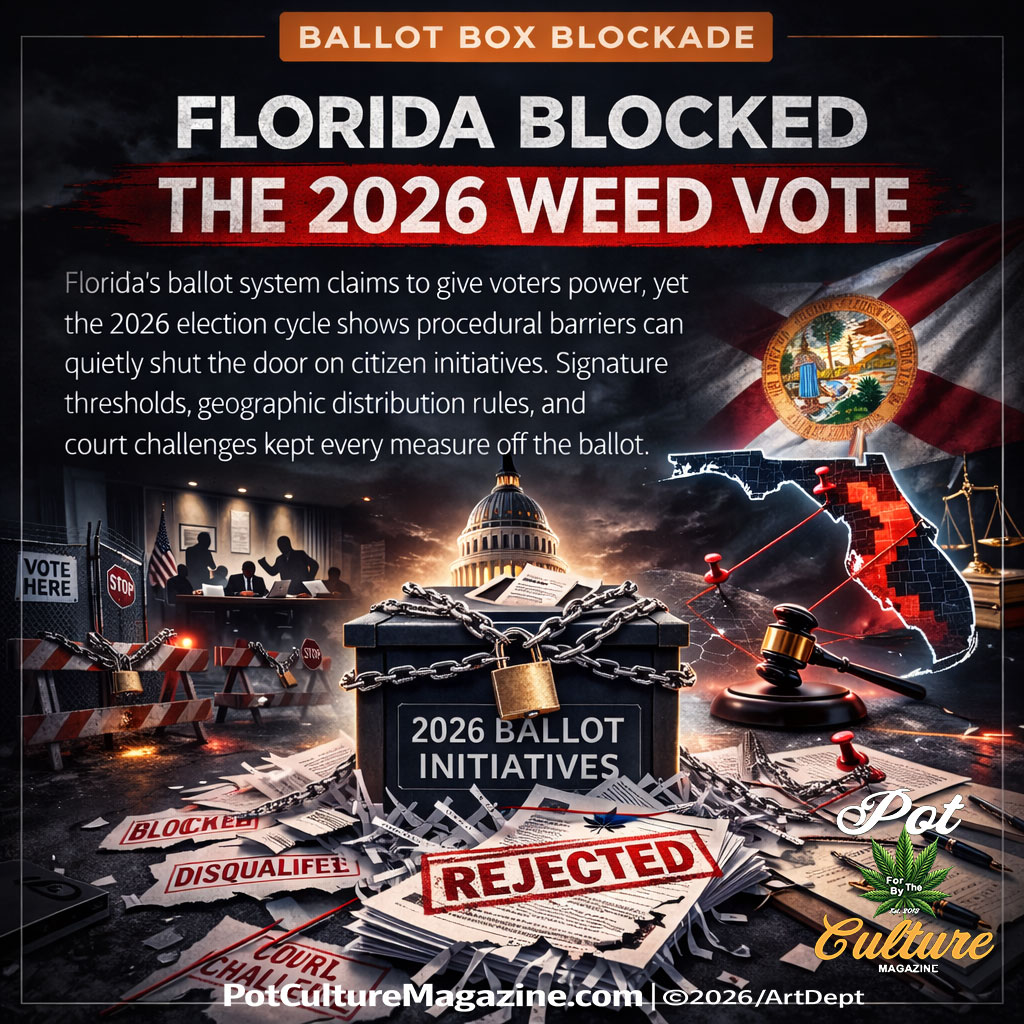
Florida voters will not decide on legal cannabis in 2026.
The campaign attempting to place a legalization initiative on the ballot fell short of the state’s signature requirements before the statutory deadline. State officials said the petition failed to meet the Feb. 1 deadline for validated signatures, while the campaign sponsor disputed the final count and argued more petitions should have qualified.
Organizers challenged the rejection of tens of thousands of petitions in court.
After the campaign challenged the rejection of roughly 70,000 petitions, about 70,646 in dispute, the case moved through Florida’s appellate courts. The Florida Supreme Court later declined to take up the petition for review in the signature validation dispute and would not entertain rehearing, leaving the appellate ruling in place and the initiative short of the required threshold.
With that decision, the initiative effectively died.
The question of legal weed never reached the ballot.
That outcome exposes a contradiction at the center of modern cannabis politics. Polling in Florida has repeatedly shown majority support for legalization. In 2016, voters approved medical marijuana with more than 71 percent of the vote. The state now operates one of the largest medical cannabis systems in the country.
Adult use legalization still cannot get onto the ballot.
Public opinion is only one piece of the equation. The real barrier is structural.
Florida’s constitutional amendment system is one of the most restrictive initiative processes in the United States. For placement on the 2026 General Election ballot, an initiative petition must be signed by 880,062 registered Florida voters according to the Florida Division of Elections.
Those signatures must also be geographically distributed. Florida law requires signatures from at least half of the state’s congressional districts, with each district meeting a threshold equal to 8 percent of the votes cast in the last presidential election within that district.
Every petition must pass verification by county election officials before the state will count it.
The threshold is enormous, the review process is strict, and petition drives cost millions of dollars to run. Before voters ever see a legalization question, a campaign must survive a long chain of bureaucratic hurdles.
The 2026 legalization push ran straight into those barriers.
Organizers spent months collecting petitions across Florida. Signature gatherers worked college campuses, festivals, city streets, and community events. Volunteers pushed the campaign through social networks and local advocacy groups. Paid petition firms handled much of the statewide operation.
The raw numbers looked promising early in the drive.
Verification told a different story.
HELP POT CULTURE MAGAZINE STAY ALIVE, AND INDEPENDENT
Election officials rejected tens of thousands of submitted petitions during the validation process. Some signatures came from voters who were not registered. Others failed because information on the form did not match voter rolls. Others were discarded after missing local verification deadlines.
Every rejected petition pushed the campaign further from the threshold.
By the time the state finished reviewing submissions, the initiative remained short of the number required to qualify for the ballot. Supporters made one final attempt to salvage the campaign through the courts.
Attorneys representing the initiative argued that election officials had applied verification rules inconsistently and had invalidated signatures that should have counted.
If enough of those petitions were reinstated, the campaign believed the initiative might still reach the ballot.
The courts disagreed.
The Florida Supreme Court’s refusal to review the dispute left the earlier rulings intact. Without restored signatures, the petition drive remained below the qualification threshold.
Florida voters will not see a cannabis legalization amendment on the 2026 ballot.
The collapse of the initiative illustrates how difficult ballot campaigns have become in states with strict qualification rules. Florida’s system places enormous logistical demands on citizen initiatives before voters ever encounter them.
First comes the raw signature requirement. Hundreds of thousands of petitions must be collected across a large and politically diverse state. Next comes the geographic distribution rule. Signatures must come from multiple congressional districts, forcing campaigns to build statewide operations rather than concentrating support in major urban centers.
After that comes verification.
County supervisors of elections compare each petition against voter registration records. Even small inconsistencies can invalidate a signature.
Rejection rates can be significant.
Campaigns therefore aim to collect far more signatures than the legal minimum simply to survive the verification process. The scale of that effort drives costs sharply upward. Statewide petition campaigns in Florida can cost tens of millions of dollars once professional signature gatherers, logistics, and verification challenges are factored in.
Few grassroots movements possess the financial resources required to clear those hurdles.
Cannabis legalization campaigns in Florida have historically relied on major industry backing to fund petition drives. The largest financial supporter has been Trulieve, the state’s dominant medical marijuana operator.
The company has invested tens of millions of dollars into previous legalization efforts, helping finance the enormous signature gathering campaigns required to reach the ballot. Trulieve alone has poured tens of millions into these efforts, including nearly $26 million reported toward the 2026 committee, according to reporting by Politico.
The business motivation is obvious. Florida already operates one of the largest medical marijuana markets in the United States. A legal adult use market would dramatically expand the customer base.
Industry funding also fuels opposition arguments that legalization campaigns are driven by corporate expansion.
Political resistance adds another layer of difficulty.
Governor Ron DeSantis has repeatedly opposed recreational cannabis legalization, and his administration has shown little interest in expanding marijuana law beyond the state’s tightly regulated medical system.
Law enforcement organizations continue repeating familiar warnings about youth access and public safety when opposing legalization measures. Those claims remain central to prohibition politics even as real world data from legalized states tell a different story.
Federal youth surveys tracked by the CDC Youth Risk Behavior Survey have not shown the dramatic surge in teen marijuana use that prohibition advocates once predicted.
Those findings rarely slow the rhetoric.
Florida’s legalization campaign therefore ran into two barriers at the same time. Political leadership remains hostile to recreational legalization, and the ballot system itself imposes enormous obstacles before an initiative can reach voters.
The result is a policy stalemate that has now lasted nearly a decade.
Florida continues to operate a massive medical cannabis industry while prohibiting adult recreational use. Dispensaries already serve millions of registered patients. Licensed cultivation operations produce large volumes of cannabis for the medical market. Retail storefronts operate across the state’s largest metropolitan areas.
The infrastructure for a broader regulated market already exists.
Legalization still cannot reach the ballot.
Florida’s position stands out nationally.
Adult use cannabis is now legal in more than twenty states, including large markets such as California, New York, and Michigan.
Florida remains one of the largest prohibition states in the country despite having a medical marijuana program that rivals those markets in scale.
Reform strategies across the United States are beginning to shift in response. Some legalization campaigns are moving away from ballot initiatives and toward legislative pathways. Lawmakers can legalize cannabis through standard legislation without the massive signature campaigns required by constitutional amendments.
That path remains politically difficult in many states, but the ballot alternative is becoming equally challenging.
Florida’s failed 2026 initiative illustrates the problem.
Supporters believed they had enough public backing to compete in a statewide vote.
The vote never happened.
Legalization campaigns do not always fail because voters reject them.
Sometimes the system prevents the question from reaching voters at all.
Florida’s 2026 cannabis initiative ended that way.
The petition drive collapsed under the weight of signature requirements, verification rules, and legal deadlines.
The court declined to revive the effort.
The ballot closed before the public ever saw the question.
Florida voters will not decide the issue in 2026.
The legalization fight will now have to start again from the beginning.
©2026 Pot Culture Magazine. All rights reserved. This content is the exclusive property of Pot Culture Magazine and may not be reproduced, distributed, or transmitted in any form or by any means without prior written permission from the publisher, except for brief quotations in critical reviews.
F O R T H E C U L T U R E B Y T H E C U L T U R E

The Cannabis Lie: Vol. 4 — The Crime Wave Lie
Politicians and pundits warned that legal cannabis would unleash a crime wave. The data tell a different story. From Colorado’s violent crime trends to DOJ time-series research and statewide arrest declines, the evidence shows no consistent long-term surge tied to legalization. The numbers never matched the panic.


South Africa Legalized Weed, But Not the Market
South Africa recognized private adult cannabis use and home cultivation, but never built a legal domestic market around them. With buying and selling still largely outside the law, the illicit trade remains dominant while regulators scramble to set limits, draft rules, and prepare a broader Cannabis Bill that could finally address commerce.
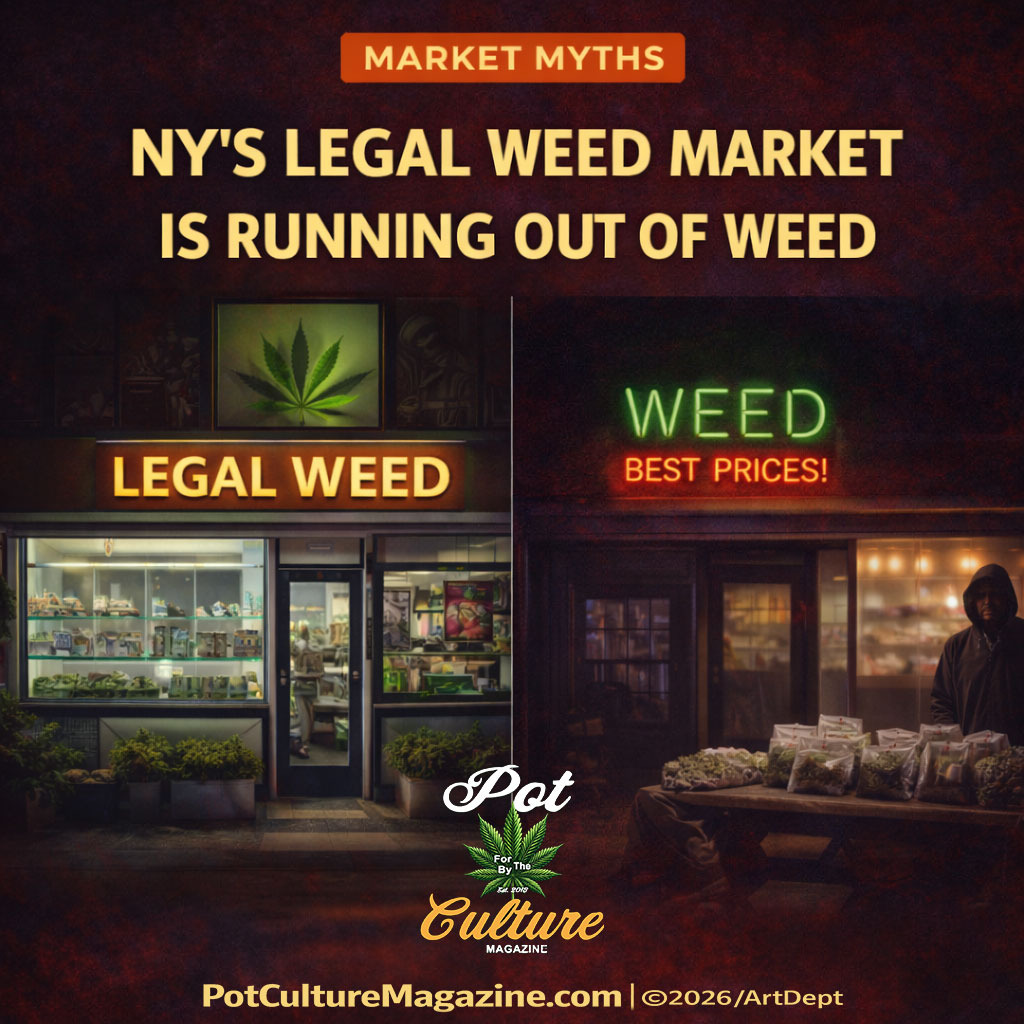
NY’s Legal Weed Market Is Running Out of Weed
New York legalized cannabis and opened hundreds of stores, but regulators now warn the legal market may not produce enough weed to keep them stocked. With nearly 600 stores open and sales nearing $3 billion, the state is discovering that legalization alone does not guarantee a functioning market.
Discover more from POT CULTURE MAGAZINE
Subscribe to get the latest posts sent to your email.

Leave a comment