Filed Under: Prohibition Science
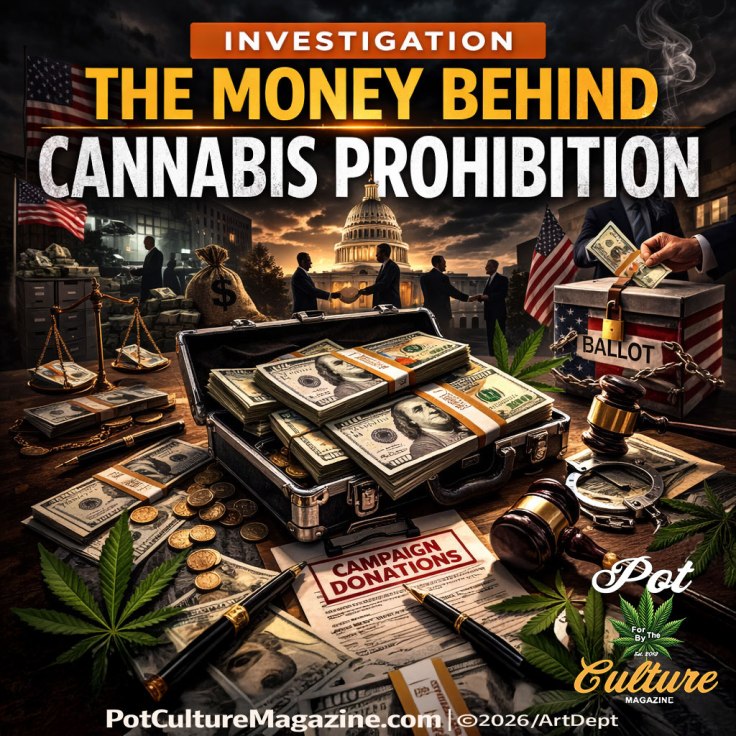
Cannabis prohibition in the United States no longer looks like the Nixon era. It does not rely on public panic films or televised raids. It operates through ballot thresholds, legislative revisions, regulatory bottlenecks, and enforcement budgets. And it costs money.
If you want to understand why cannabis policy moves the way it does, you follow the filings.
This is not an opinion piece. It is a documented audit of who pays to expand cannabis markets, who pays to restrict them, and how structural advantages can outweigh campaign spending.
The central question is simple:
Are anti cannabis interests outspending reform advocates, or is something else shaping the outcome?
Start with Florida.
In the 2024 election cycle, public campaign finance reporting showed that Trulieve contributed roughly 145 million dollars to the Smart and Safe Florida political committee in support of an adult-use constitutional amendment.
The amendment did not pass.
Florida requires sixty percent approval for constitutional amendments. The measure received a majority of votes but did not meet the supermajority threshold.
The takeaway is not that legalization lacks support. The takeaway is structural.
A campaign can raise nine-figure sums and still fail if the rules demand overwhelming margins.
That is not prohibition in its old criminal form. That is, prohibition is embedded in electoral design.
Florida also demonstrates another shift in cannabis politics: corporate capital now plays a central role in legalization campaigns. Reform is no longer exclusively grassroots. Major operators fund ballot access when the reward is a defined market.
That is not inherently improper. It is how modern ballot campaigns operate. But it changes the power equation.
When legalization depends on high-cost constitutional amendments, only well-funded actors can realistically compete.
Now look at Ohio.
In 2023, Ohio voters approved Issue 2, legalizing the adult use of cannabis. Public reporting on campaign finance showed supporters raising roughly 6 million dollars, significantly more than opposition groups.
Legalization passed with 57 percent support.
In this case, the pro-legalization side outspent the opposition and won at the ballot.
But the fight did not end there.
After voter approval, the policy moved into legislative hands. Lawmakers introduced revisions affecting taxation, regulatory authority, and distribution of revenue.
When voters approve legalization, implementation becomes the next battleground. And implementation is shaped through committee rooms, agency rulemaking, and lobbying disclosures.
Now pivot to the federal level.
Cannabis remains federally illegal. That creates a paradox. State markets generate revenue while federal law restricts banking access, tax deductions under Internal Revenue Code 280E, and interstate commerce.
According to OpenSecrets data cited in industry coverage, cannabis companies and advocacy groups spent approximately 2.8 million dollars on federal lobbying in 2023.
HELP POT CULTURE MAGAZINE STAY ALIVE, AND INDEPENDENT
To put that into context, total federal lobbying spending reached roughly 4.4 billion dollars in 2024 across all industries.
Cannabis is not among the largest lobbying sectors in Washington. But it has shifted from movement politics to industry advocacy.
Now examine Texas.
In late 2024 and early 2025, Texas lawmakers advanced proposals aimed at banning or restricting consumable THC products derived from hemp.
The modern prohibition lane frequently appears through product-specific restrictions rather than broad criminal bans.
Now consider New York.
New York’s Commission on Ethics and Lobbying in Government reported a preliminary total of approximately 377 million dollars in statewide lobbying activity in 2024 across all sectors.
Cannabis is one of many industries operating within that ecosystem.
California presents a different structure.
Adult use has been legal since 2016, yet illicit market activity remains significant.
Now return to the central spending question.
Are anti cannabis organizations outspending reform advocates?
Based on publicly reported ballot data in recent major campaigns, the most visible spending imbalances have favored pro-legalization efforts.
Florida’s 2024 amendment saw massive spending from a legalization committee.
Ohio’s Issue 2 campaign showed supporters raising substantially more than opponents.
At the federal level, cannabis industry lobbying expenditures are documented and growing.
Opposition forces may rely on supermajority voting thresholds, legislative rewrite authority, administrative rulemaking control, enforcement budgets, and regulatory choke points.
In other words, prohibition does not always need a larger war chest. It may rely on rule design.
Cannabis policy in the United States is shaped by three forces:
Voter sentiment.
Capital investment.
Institutional structure.
The filings are public.
The thresholds are written into statute.
The lobbying disclosures are searchable.
Follow them.
©2026 Pot Culture Magazine. All rights reserved. This content is the exclusive property of Pot Culture Magazine and may not be reproduced, distributed, or transmitted in any form or by any means without prior written permission from the publisher, except for brief quotations in critical reviews.
F O R T H E C U L T U R E B Y T H E C U L T U R E
CANNABIS LIES Vol. 7: The Mental Health Panic
Cannabis and mental health risks are often overstated in public debate. Research shows heavy use and high THC exposure can increase psychosis risk in vulnerable individuals, but widespread claims of a mental health crisis lack strong evidence. This piece examines the data, separates correlation from causation, and breaks down what cannabis users need to know.

IDAHO TRIES TO STOP A VOTE BEFORE IT STARTS
Idaho lawmakers passed a resolution urging voters to reject a medical cannabis initiative before it reaches the ballot. The move highlights how officials are shaping public opinion ahead of a vote, while maintaining strict prohibition and blocking even limited access for patients.
MS LIMITS MEDICAL CANNABIS WHERE IT MATTERS MOST
Mississippi maintains strict limits on medical cannabis after Governor Tate Reeves vetoed expansion bills on March 26, 2026. Patients remain unable to use cannabis in hospitals while eligibility and access rules stay tightly controlled. This feature examines what the veto blocks, how it affects patients, and what it means for the state’s growing cannabis market.
Discover more from POT CULTURE MAGAZINE
Subscribe to get the latest posts sent to your email.

Leave a comment