Filed Under: Policy Theater
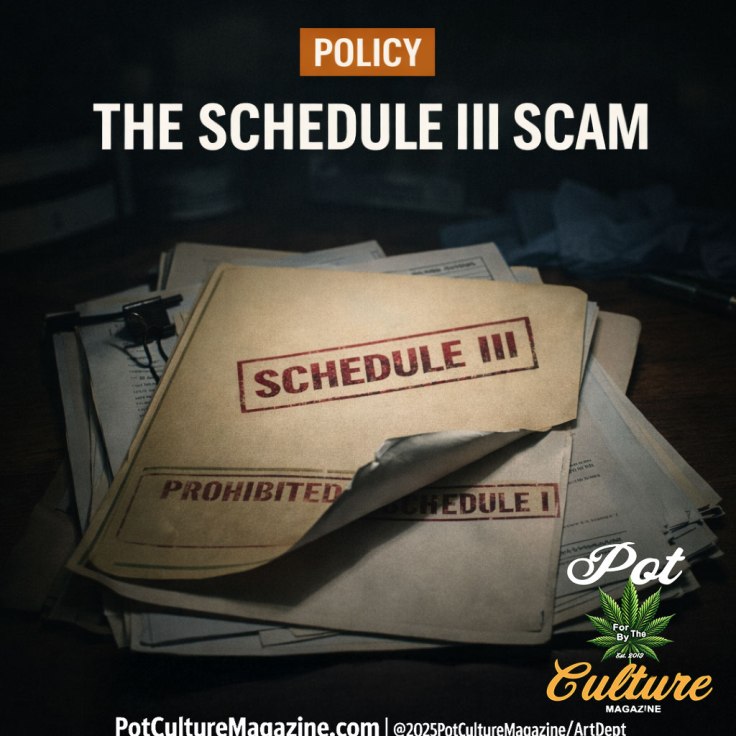
Washington announced a move. Headlines exploded. Cable news rushed alerts. Cannabis was suddenly “rescheduled,” according to the narrative. The sound was historic. The substance was not.
The White House issued executive direction and public signaling, urging federal agencies to continue the rescheduling process
What it does is restart a process that has already been stalled for years.
In August 2023, the U.S. Department of Health and Human Services and the Food and Drug Administration completed a scientific review. They formally recommended moving cannabis to Schedule III, concluding that it has accepted medical use and a lower abuse potential than Schedule I and II substances. That recommendation was sent to the Department of Justice, which proposed a rule change in 2024 and opened a public comment period.
By late 2024, the Drug Enforcement Administration appointed Judge John Mulrooney (DEA Administrative Law Judge) to oversee rescheduling hearings and named 25 witnesses, including several individuals who had previously opposed rescheduling. Legal challenges followed. The hearings were delayed and effectively stalled
None of that changed today.
The executive order does not bypass rulemaking. It does not force the DEA to act. It does not deschedule cannabis. It does not reconcile federal prohibition with state legal markets serving more than half of the U.S. population. It applies pressure without delivering results.
The Marijuana Policy Project made that clear.
HELP POT CULTURE MAGAZINE STAY ALIVE, AND INDEPENDENT
MPP Executive Director Adam J. Smith said,
“While we welcome the proposal to move cannabis from Schedule I to Schedule III, neither the plant itself nor its naturally occurring component cannabinoids belong on the schedule at all,”
Smith did not soften the rest.
“A move to Schedule III does nothing to end hundreds of thousands of possession arrests each year, nor does it fix the ongoing disconnect between federal prohibition and the regulated state markets under which more than half of American adults live.”
Those are the facts missing from most coverage.
Advertisement
F O R T H E C U L T U R E B Y T H E C U L T U R E

CANNABIS LIES Vol. 5: The Gateway Lie
For decades, politicians have claimed marijuana is a gateway to heroin and harder drugs. Federal youth surveys, NSDUH data, and NIDA’s own language tell a different story. Cannabis use is widespread, hard drug use remains rare, and most users do not progress. The data dismantles one of prohibition’s most durable fear narratives.


The Study That Pretends Cannabis Does Nothing
A new cannabis study claims marijuana does nothing for anxiety, depression, or PTSD. The reality is far more complicated. Decades of federal restrictions, limited research access, and synthetic substitutes have shaped the science. This breakdown exposes how incomplete data and selective interpretation continue to drive misleading headlines about cannabis and mental health.
Advertisement
Schedule III would matter if finalized. It could expand medical research. It could ease prescribing barriers. It could remove Section 280E tax penalties that punish state-legal cannabis businesses. Those are structural changes, not symbolic ones.
But Schedule III would still leave cannabis illegal at the federal level. Criminal penalties would remain. DEA authority would remain. The contradiction would remain.
This is why advocacy groups have warned against mistaking rescheduling for reform. Rescheduling is not legalization. It is not justice. It is not freedom.
NORML has said this for years. Regulation must reflect science, not fear. Moving cannabis between schedules without removing it from the Controlled Substances Act simply reshuffles prohibition.
Calling this moment historic ignores the timeline. The science was settled more than a year ago. The rulemaking already exists. The hearings are frozen. An executive order does not resolve any of that.
It signals intent, not outcome.
Cannabis users have seen this cycle before. Announcements. Promises. Press releases. Then delays, stalls, and silence. The system survives by substituting motion for progress.
The only reason this moment exists at all is public pressure. Patients. Advocates. Industry workers. Voters. Pressure forced the system to blink.
But blinking is not surrender.
Until cannabis is fully descheduled and prohibition is dismantled, every move like this remains partial, conditional, and fragile. The Schedule III scam is not about what was done. It is about what was not.
Rescheduling is not reform.
©2025 Pot Culture Magazine. All rights reserved. This content is the exclusive property of Pot Culture Magazine and may not be reproduced, distributed, or transmitted in any form or by any means without prior written permission from the publisher, except for brief quotations in critical reviews.
F O R T H E C U L T U R E B Y T H E C U L T U R E
Florida Blocked the 2026 Weed Vote
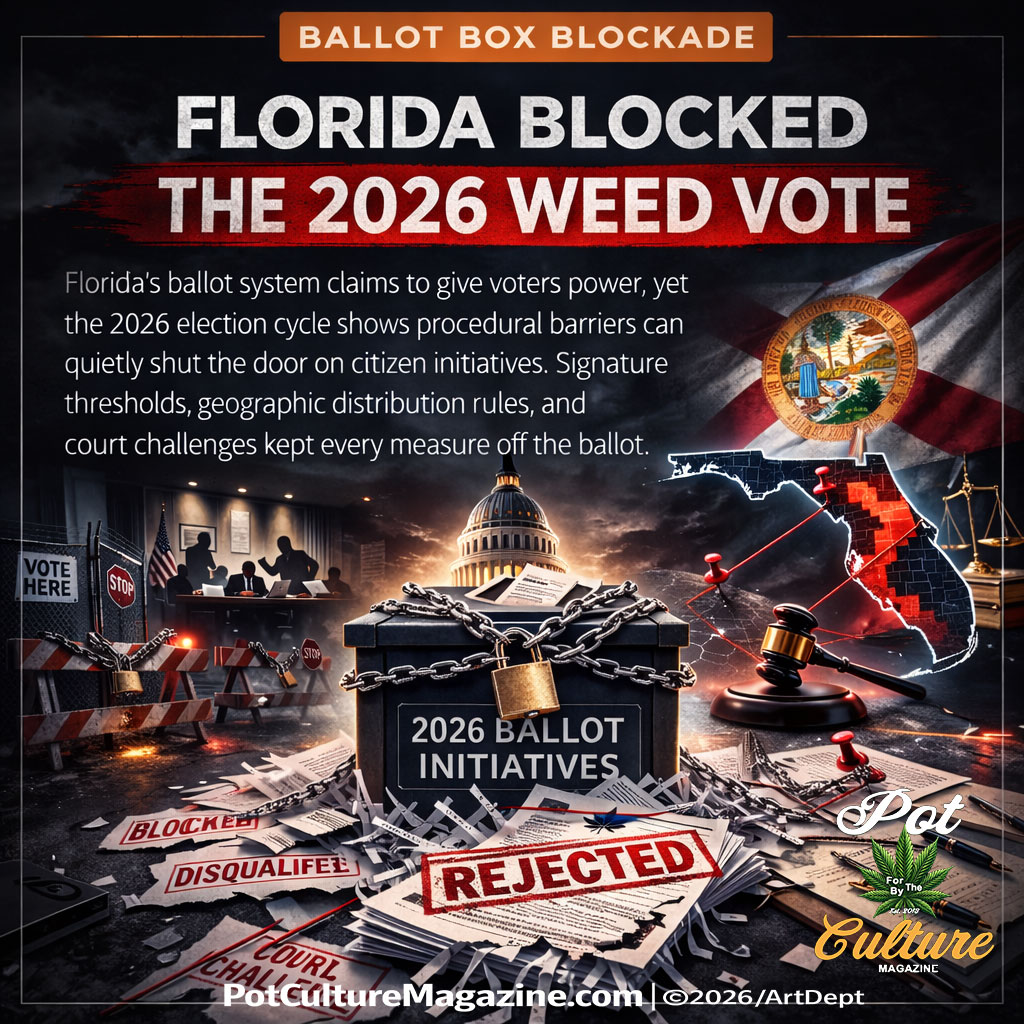
Florida’s ballot system claims to give voters power, yet the 2026 election cycle shows how procedural barriers can quietly shut the door on citizen initiatives. Signature thresholds, geographic distribution rules, and court challenges blocked every measure from reaching voters, revealing how cannabis legalization fights are often decided by bureaucratic design long before election day.

The Cannabis Lie: Vol. 4 — The Crime Wave Lie
Politicians and pundits warned that legal cannabis would unleash a crime wave. The data tell a different story. From Colorado’s violent crime trends to DOJ time-series research and statewide arrest declines, the evidence shows no consistent long-term surge tied to legalization. The numbers never matched the panic.

South Africa Legalized Weed, But Not the Market
South Africa recognized private adult cannabis use and home cultivation, but never built a legal domestic market around them. With buying and selling still largely outside the law, the illicit trade remains dominant while regulators scramble to set limits, draft rules, and prepare a broader Cannabis Bill that could finally address commerce.
Discover more from POT CULTURE MAGAZINE
Subscribe to get the latest posts sent to your email.

Leave a comment