Filed Under: Potheads Need Not Apply
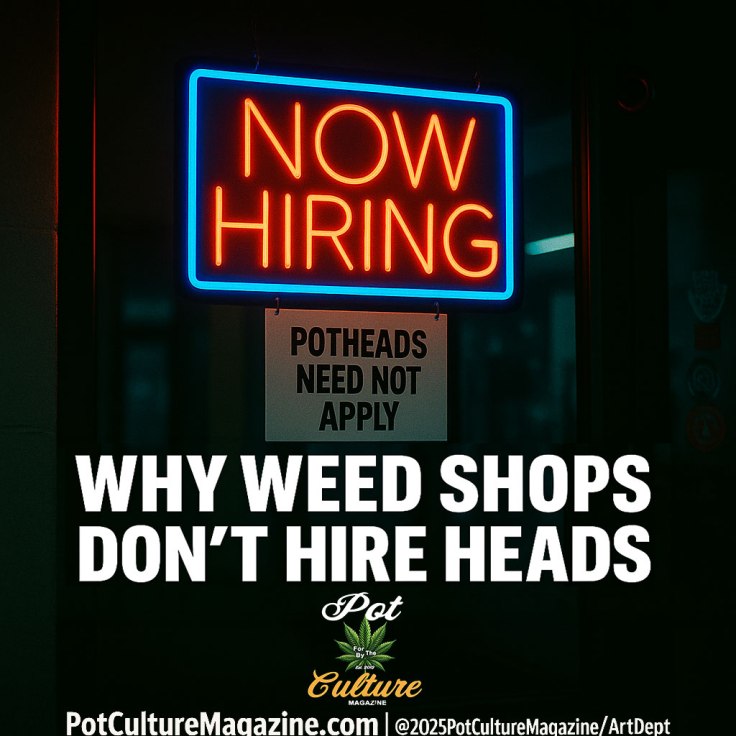
The legal industry exposes itself the moment it fires a worker for doing the same thing its customers do. An Oregon budtender named Andrew told KGW News he lost his job after a random test flagged THC. His job involved recommending strains, guiding new consumers, and helping people avoid mistakes. He thought honesty mattered. Instead, he said, “I sell it every day. I recommend it. I get asked what I prefer. Then I get fired for using it.” That single moment shows exactly how legalization betrayed the people who kept cannabis alive.
Walk into almost any corporate dispensary, and the performance begins. Neon signage. Clean countertops. Lab coat vibes. The product is arranged like pharmaceuticals. Everything screams modern wellness except the part that matters most. The storefront wants the aesthetic. The workforce must pretend the culture never existed. The message lands like a punch. You can buy weed here. You simply cannot be someone who smokes.
This hypocrisy did not appear by accident. Insurance companies stepped in before the culture had a chance to catch its breath. The National Cannabis Industry Association explains that insurers push retailers toward drug-free policies because they view employee cannabis use as a liability exposure. Premiums rise if workers test positive. Entire policies can be denied. The rules read like relics from the war on drugs. Stores comply because they fear losing coverage more than they fear losing authenticity.
Federal contradictions add another twist. Some states require background checks that pull data from federal systems. Cannabis remains illegal in those databases. A conviction from the old world blocks access to jobs in the new one. The Drug Policy Alliance reported that more than a dozen states still restrict cannabis employment for people with prior cannabis records. The people punished under prohibition lose access to the jobs that legalization supposedly created for them.
The hiring process follows the same flawed blueprint. Job boards filled with corporate listings demand clean tests while promising competitive pay and fun environments. Applicants with real cannabis knowledge get screened out before anyone asks a single question. A person who knows the product becomes a risk. A person who avoids it becomes the ideal candidate. The system flips the culture upside down.
Testing keeps the illusion alive. THC metabolites can linger for days or weeks and do not indicate impairment. The National Highway Traffic Safety Administration states directly that THC levels cannot predict functional impairment. The Centers for Disease Control says the same thing. Scientists agree on the limitation. Yet dispensaries cling to a test that measures nothing real. They use it anyway because it protects them from imaginary dangers and gives investors a sense of control.
Independent owners do not think this way. They know cannabis through lived experience, not insurance manuals. They hire people who consume because those people speak the language. They understand how a strain feels, not just how it reads on a terpene chart. They know what a nervous beginner needs to hear. They know which flower brings peace and which one fuels the racing mind. Authenticity does not scare them. Authenticity keeps them alive.
Corporate chains want the opposite. They want predictability. They want clean records. They want workers who check compliance boxes instead of cultural ones. Many stores resemble technology boutiques. Employees speak softly. Scripts replace conversation. Training replaces intuition. The plant becomes a commodity, not a culture. Customers feel it immediately.
Workers inside these chains learn to keep quiet about their real relationship with cannabis. Some refuse to discuss personal use. Others hide it completely. They fear consequences for honesty in an industry built on dishonesty. A workplace that punishes truth creates an entire workforce that lies to survive.
HELP POT CULTURE MAGAZINE STAY ALIVE, AND INDEPENDENT
Customers lose the most. Someone walking into a dispensary for the first time does not need a corporate pitch. They need guidance from someone who understands cannabis as a lived experience. They need reassurance from a person who has made mistakes and learned from them. They need stories, not scripts. The legal industry strips that knowledge away. It replaces lived culture with product training modules.
The rules hit workers long after their shifts end. The Marijuana Policy Project documents that seven states still allow employers to fire workers for off-duty cannabis use, even where cannabis is legal. Employers use that permission freely. Court filings in Illinois describe workers terminated after using legally purchased cannabis on their own time. Nevada applicants have challenged testing practices that block access to high-paying jobs. The law may say cannabis is legal. The job market acts like it is contraband.
Executives hide behind federal law. They claim they cannot change the rules until Washington changes its mind. They present themselves as helpless participants in a system they designed. Blaming the federal government gives them cover. It also hides the truth. These companies choose compliance over culture because compliance keeps investors happy. Culture does not.
New York and Nevada prove how flimsy the old excuses were. Both states restrict cannabis testing for most workers. Productivity did not collapse. Safety did not implode. The retail sector continued without the parade of disasters that opponents predicted. The absence of chaos exposes the weakness behind zero-tolerance logic.
ADVERTISEMENT
F O R T H E C U L T U R E B Y T H E C U L T U R E
CANNABIS LIES Vol. 5: The Gateway Lie
For decades, politicians have claimed marijuana is a gateway to heroin and harder drugs. Federal youth surveys, NSDUH data, and NIDA’s own language tell a different story. Cannabis use is widespread, hard drug use remains rare, and most users do not progress. The data dismantles one of prohibition’s most durable fear narratives.

The Study That Pretends Cannabis Does Nothing
A new cannabis study claims marijuana does nothing for anxiety, depression, or PTSD. The reality is far more complicated. Decades of federal restrictions, limited research access, and synthetic substitutes have shaped the science. This breakdown exposes how incomplete data and selective interpretation continue to drive misleading headlines about cannabis and mental health.
ADVERTISEMENT
Research backs that reality. The Journal of Occupational and Environmental Medicine published a study showing no evidence that off-duty cannabis use increases workplace injuries. Canadian data reached the same conclusion after full legalization. Incident rates did not rise. Businesses did not crumble. The fear existed only on paper.
These contradictions carve the deepest wounds into the people who shaped cannabis culture. Legacy growers, long-time consumers, and underground innovators expected legalization to open doors. Instead, the industry built new barriers on top of the old ones. People with past cannabis charges still face blocked employment. People with real cannabis fluency get dismissed as risks. People with authentic cultural roots discover that culture is unwelcome inside the buildings it helped create.
The branding adds another insult. Dispensaries print posters that mimic vintage headshop art. They hire design teams to recreate seventies psychedelia. They use the vibe of the outlaw era while outlawing the people who lived it. Inside the employee handbook, the tone shifts. Corporate language replaces cultural expression. Rules replace rhythm. Risk replaces reality.
This divide will shape the future of cannabis retail. Chains will keep hiring workers who check compliance boxes. Independent stores will keep hiring people who know cannabis as a lifestyle, not a product. Customers will gravitate toward whichever experience feels human. The market will split accordingly.
The legal industry faces a choice that exposes its identity. It can become a polished retail sector that treats cannabis as a controlled commodity or a cultural institution rooted in the people who carried cannabis into the modern era. One version looks safe to investors. The other version keeps the soul of the plant intact.
A cannabis shop without cannabis culture is just another store selling something it does not understand. A workforce terrified to admit they use the product cannot represent the product with honesty. A hiring system built on punishment cannot coexist with a plant built on community.
The question sits at the heart of every hiring decision. Who belongs behind the counter? A person who understands cannabis or a person who avoids it. The industry keeps choosing the second option. The culture keeps paying the price.
This story never changes until the industry stops treating cannabis users like liabilities. A legal marketplace that rejects cannabis culture cannot call itself a cannabis industry. It can only call itself a business built on the labor and sacrifice of people it refuses to hire.
©2025 Pot Culture Magazine. All rights reserved. This content is the exclusive property of Pot Culture Magazine and may not be reproduced, distributed, or transmitted without prior written permission from the publisher, except for brief quotations in critical reviews.
F O R T H E C U L T U R E B Y T H E C U L T U R E
Florida Blocked the 2026 Weed Vote
Florida’s ballot system claims to give voters power, yet the 2026 election cycle shows how procedural barriers can quietly shut the door on citizen initiatives. Signature thresholds, geographic distribution rules, and court challenges blocked every measure from reaching voters, revealing how cannabis legalization fights are often decided by bureaucratic design long before election day.

The Cannabis Lie: Vol. 4 — The Crime Wave Lie
Politicians and pundits warned that legal cannabis would unleash a crime wave. The data tell a different story. From Colorado’s violent crime trends to DOJ time-series research and statewide arrest declines, the evidence shows no consistent long-term surge tied to legalization. The numbers never matched the panic.

South Africa Legalized Weed, But Not the Market
South Africa recognized private adult cannabis use and home cultivation, but never built a legal domestic market around them. With buying and selling still largely outside the law, the illicit trade remains dominant while regulators scramble to set limits, draft rules, and prepare a broader Cannabis Bill that could finally address commerce.
Discover more from POT CULTURE MAGAZINE
Subscribe to get the latest posts sent to your email.
