Filed Under: Bylines and Battle Scars

Chris Simunek did not walk into High Times with a grow bible or a criminal record. He came in with curiosity, a clean notebook, and a radar for the real ones. The lifers. The freaks. The outlaw botanists who were still dodging helicopters and mailing hash in shoeboxes. What he found was a culture held together by stories too weird to invent and too true to ignore.
“I became the grow editor in 1994,” he said. At the time, the photos we were using, we had maybe one or two people who took nice pictures of marijuana, and everything else was people sending us stuff they took on disposable cameras. It was really hard to get good pot pictures and also good grow information.”

One of the first writers to leave a mark was Professor Afghani, a Staten Island giant with a desire to pass his cultivation knowledge on to his outlaw brethren. Unfortunately, he also had an interest in powders and pills that had a tragic effect on his mental state. “He was one of those people who lived like there was no tomorrow,” Simunek says. “And eventually, there wasn’t.” One dark night, the Professor closed his garage, ran a hose from his car’s tailpipe to the inside of the vehicle where he was sitting, and was gone.
Then came Ken Morrow from Trichome Technologies. “We met because he liked an article I’d written about going undercover at Pot Smokers Anonymous. He asked Ed Rosenthal for my number, called me up, and told me he was going to send me something. I didn’t think much of it until a package arrived on my desk—a box packed with a dozen different varieties of weed and a bottle of hash oil. It was like a little Cannabis Cup in a shoe box. I was impressed.” That was 30 years ago, and they have been close ever since.
Simunek never pretended to be a cultivator. “We didn’t have an actual cultivation expert on staff at High Times until we got Kyle Kushman,” he says. He met Kushman in a parking lot near Schenectady, New York, was blindfolded, and driven to his grow. Soon, Kushman joined the staff as the magazine’s first on-site grow expert. For a moment, the culture had a crew again, growers, writers, weirdos, people with skin in the game.
Then came the shift. “As we catered more and more to the cultivation crowd, we began to disenfranchise our core audience who were interested in marijuana culture as a whole, and who didn’t want to read a gardening magazine every month. But we were being pressured by those above us with a direct financial stake in High Times to increase sales. There was no internet at the time, and those grow issues sold like crazy because we were one of the only reliable sources on the planet for marijuana cultivation information. High Times was at its best when it focused on the wide world of marijuana and drugs, like it had been since Tom Forçade started it in 1974. Suddenly, it was very specific, and a lot of the cultural stuff didn’t matter to our audience anymore. That was a fatal flaw.”

The outlaw stories never left him. There was Hillbilly Al, from eastern Ohio, who hid hundreds of plants behind a single row of corn. “It was balls-out outlaw shit,” Simunek says. “It was literally like a cornfield except a weed field. Had to be at least 300 plants. There are pictures of it out there. I can probably send you one. The smell, the setup, it was invigorating.”
Al did not even smoke weed. “He was in his 60s, retired, old hillbilly, like, ‘I’ll be damned if the government’s gonna tell me what I can grow on my property.’” He went to prison. When he got out, a fight with his brother ended with Al being shot dead in his own house. No headlines. Just the end of a life that never made it into the legal market.

Simunek remembers when High Times was one of the only national voices calling out the drug war. “Nobody in the mid-’90s was writing about it. Bill Clinton was newly elected president, there was the whole crime bill, and nobody was reporting on it. We were really one of the few voices pointing out the travesty of the war on marijuana and the war on drugs in general.”
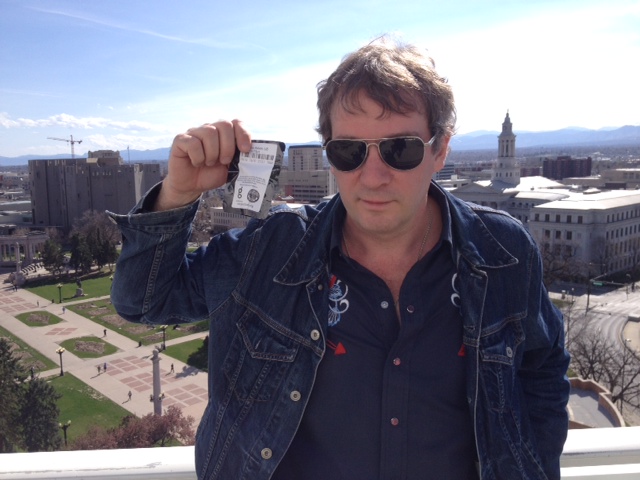
He never thought legalization would happen in his lifetime. That changed with Proposition 215 in California. Vietnam veteran and marijuana activist Dennis Peron had been pushing the limits for years. He’d been arrested and even shot in the line of cannabis duty. Simunek visited the San Francisco Cannabis Buyers Club in the mid-nineties, a three-floor dispensary on Market St., a short walk from City Hall, and was both shocked and impressed. “I was like, wow, this guy’s gonna go to jail. And of course, he did. That was the level of commitment of these people. It wasn’t just pot parades. It was people who really put their lives and their freedom on the line for this cause.”
When legalization came, it did not belong to the activists. “It was taken over by people who are more business-minded,” Simunek says. “They stopped putting people in jail for it, and allowed it to be a legal operation, though it’s very flawed the way they’ve legalized it. The activists worked all those years, but it was greed that ultimately won over people’s opinions. Oh, well, let’s just tax and regulate the shit out of this.”
California’s 26 percent cannabis tax is killing small operators. “ For many, the barrier to entry is so high that only investors or those with access to large capital succeed. They could give a shit about the legacy growers. They’re busting the outlaws because they eat into the profits of the legal industry.”
He calls the system “rinky dink,” designed to keep small players out while pretending to be open. “At the end of the day, it’s a plant that grows out of the ground.” He wonders why he can get avocados from California in New York, but not weed. “Why do I have to smoke this not-so-good New York weed?”
Chris is not chasing the market. “My job is done. They lost and we won.” He still smokes, uses vape pens for convenience, and has had a glass bubbler he has had since he started at High Times. Big bongs do not interest him. “My favorite strains were like the old school ones, like AK-47 and haze varietals. Girl Scout Cookies is a really nice one, the original Girl Scout Cookies. The Cookie Fam gave me a bunch of them when I met them. Whatever my friend Todd McCormick lays on me when I visit him is always exceptional.”
Before the market became king, before SEO and social media, before legalization meant exclusion, High Times had an edge. Simunek credits former editor in chief Steve Hager for that.
“Steve was well-read, had a great sense of humor, and was willing to take risks. He was always looking for something new, which is the mark of a good editor-in-chief. When they started forcing us to do the same grow specials year after year, the magazine lost its spirit. They kept the title but cut out the pulse.”
Now, years later, Chris Simunek has no illusions about where the culture is headed. But he remembers what it felt like when the pages smelled like ink and paranoia, when stories mattered more than product lines, and when the people who built it were still running it.
Simunek has not stepped away from the page. He recently finished a new book about the outlaw days, a project that gathers the stories and scars of the era that shaped him.
Interview conducted on April 8, 2025
©2025 Pot Culture Magazine. All rights reserved. This content is the exclusive property of Pot Culture Magazine. It may not be reproduced, distributed, or transmitted in any form or by any means without prior written permission from the publisher, except for brief quotations in critical reviews.

CANNABIS LIES Vol. 5: The Gateway Lie
For decades, politicians have claimed marijuana is a gateway to heroin and harder drugs. Federal youth surveys, NSDUH data, and NIDA’s own language tell a different story. Cannabis use is widespread, hard drug use remains rare, and most users do not progress. The data dismantles one of prohibition’s most durable fear narratives.


The Study That Pretends Cannabis Does Nothing
A new cannabis study claims marijuana does nothing for anxiety, depression, or PTSD. The reality is far more complicated. Decades of federal restrictions, limited research access, and synthetic substitutes have shaped the science. This breakdown exposes how incomplete data and selective interpretation continue to drive misleading headlines about cannabis and mental health.
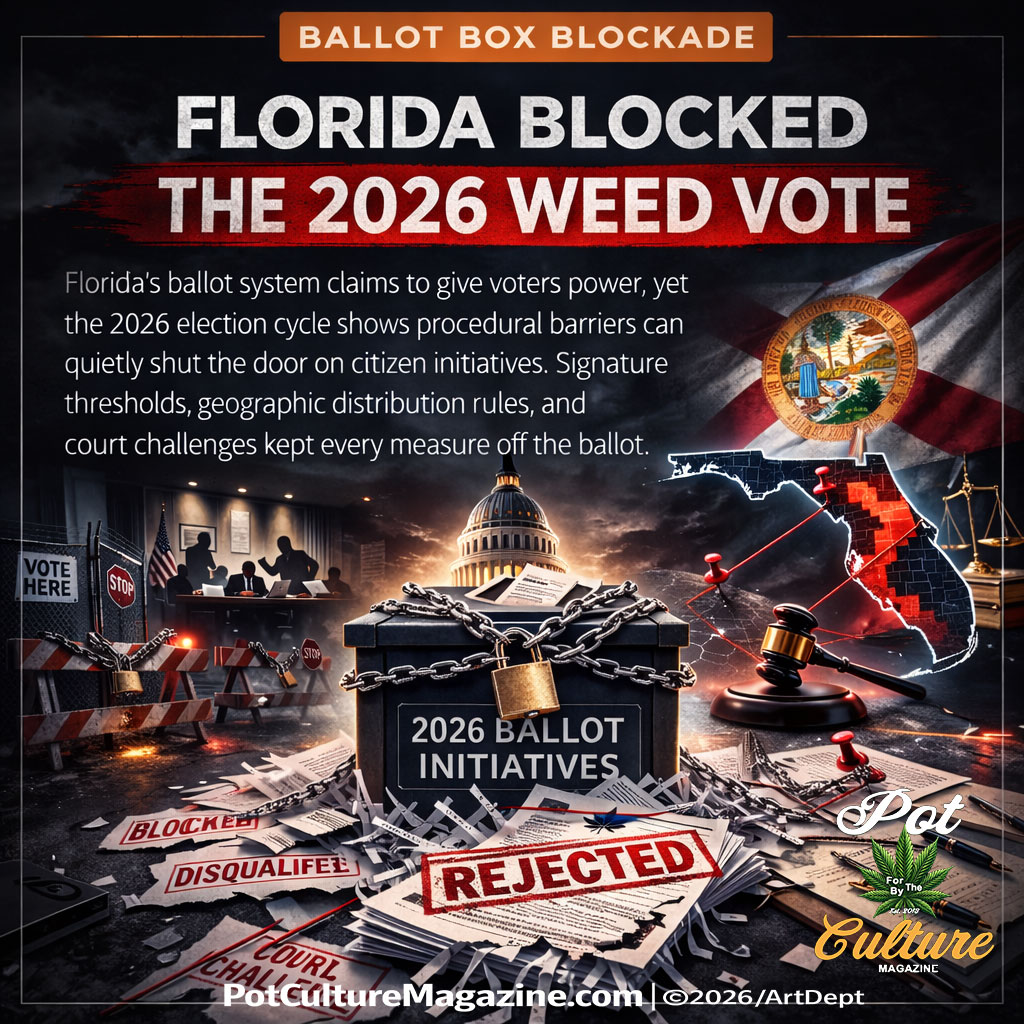
Florida Blocked the 2026 Weed Vote
Florida’s ballot system claims to give voters power, yet the 2026 election cycle shows how procedural barriers can quietly shut the door on citizen initiatives. Signature thresholds, geographic distribution rules, and court challenges blocked every measure from reaching voters, revealing how cannabis legalization fights are often decided by bureaucratic design long before election day.
Discover more from POT CULTURE MAGAZINE
Subscribe to get the latest posts sent to your email.

Leave a comment