Filed Under: The Longest War
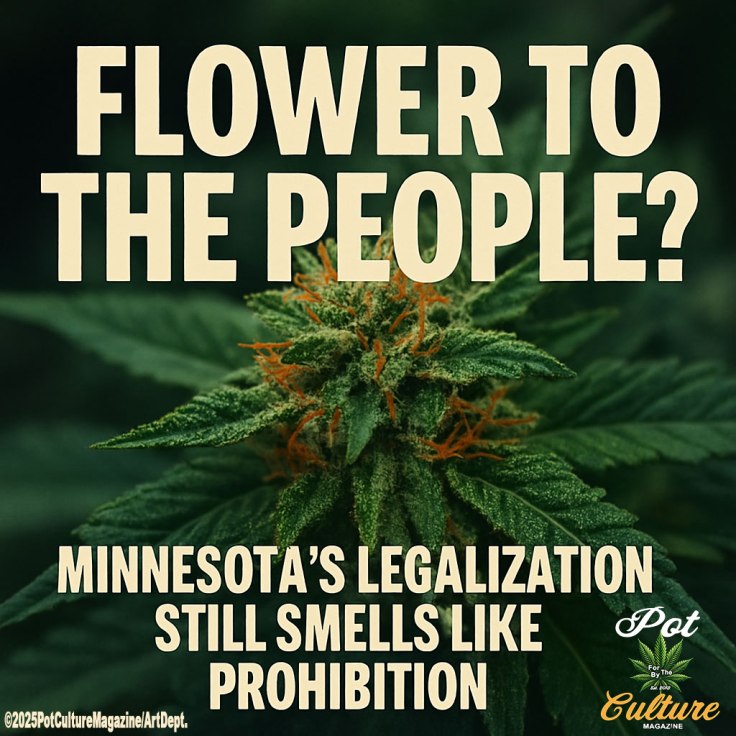
Minnesota wants you to believe history was made this week. Cameras flashed, lawmakers smiled, and the press dutifully typed up the story of the state’s first recreational dispensaries opening their doors. Duluth’s Legacy Cannabis was held up as a milestone. Twin Cities headlines cheered “flower to the people.” The governor and his allies were quick to frame it as proof that progress has arrived. But let’s not get it twisted. This was not the first, and it sure as hell was not justice. It was the state taking a victory lap around a track the tribes had already built, while ignoring the people still shackled by prohibition.
The real first dispensaries in Minnesota were not the ones cutting ribbons this week. They were tribal. Red Lake Nation began selling recreational cannabis in 2023, months before the state even figured out how to form its new Office of Cannabis Management. White Earth Nation followed. Sovereignty meant tribes could act, and they did, supplying adults responsibly while the rest of Minnesota dragged its feet. Those shops were legal, they were regulated, and they were open to anyone over 21. They proved the model worked before the state’s bureaucrats even scheduled their first meeting. Yet this week the press barely mentioned them. Instead, they handed out “first” titles to non-tribal businesses, rewriting history to erase the very communities that led the way.
That is not an accident. That is how prohibition always rewrites itself. When cannabis finally breaks through, the people who built the culture are pushed aside so politicians can act like saviors. It happened in California when lawmakers called legalization a new dawn while growers in the Emerald Triangle were being raided and taxed into extinction. It happened in New York when equity applicants were shoved to the back of the line while corporate players found loopholes. And now it is happening in Minnesota, where tribes are treated like footnotes and the system that criminalized thousands is rebranded as progress.
Do not mistake this moment for liberation. Minnesota still has criminal penalties on the books. Yes, adult-use is legal, but expungements and pardons are slow, uneven, and incomplete. Thousands still carry the weight of cannabis convictions that ruin careers, deny housing, and block loans. Families were broken under prohibition, and those scars do not disappear because a few dispensaries finally flipped the lights on. If the state were serious about justice, its first announcement would not have been about sales. It would have been about clearing records. It would have been about putting money into the communities that took the brunt of prohibition’s hammer. Instead, they celebrated tax revenue and pretended the past was not still alive in court files and prison cells.
The hypocrisy screams louder when you stack cannabis against alcohol. Walk into any Minneapolis bar, and you will see people slamming shots until closing time. Walk past Target Field after a Twins gam,e and you will see drunks pissing in alleys and stumbling into traffic. Alcohol fuels violence, accidents, and addiction, but no one is raiding liquor stores or hauling beer drinkers into court. Cannabis, which has never killed a single person, was criminalized for decades and is still treated like a threat by the very politicians now pretending to be champions of reform.
Look closer at what the state is really celebrating. Minnesota’s new dispensaries are selling cannabis under strict, suffocating regulations that guarantee only those with serious money and connections can play. The licensing system favors existing medical operators, locking out small entrepreneurs and legacy growers. The Office of Cannabis Management has been mired in delays and lawsuits, with applicants waiting months for answers while rent and interest pile up. Meanwhile, corporate players with deep pockets have lawyers, lobbyists, and accountants smoothing the path. Equity, the word that politicians love to sprinkle into speeches, is still missing from the lived reality of Minnesota legalization.
advertisement
F O R T H E C U L T U R E B Y T H E C U L T U R E
Texas Is Moving to Shut Down the Hemp Market
Texas helped build one of the largest hemp THC markets in the country, then moved to shut it down. As regulators tighten rules and enforcement increases, businesses are left exposed and the future of hemp-derived cannabinoids hangs in the balance. This is not a simple crackdown. It is a full policy reversal with real economic…

CANNABIS LIES Vol. 5: The Gateway Lie
For decades, politicians have claimed marijuana is a gateway to heroin and harder drugs. Federal youth surveys, NSDUH data, and NIDA’s own language tell a different story. Cannabis use is widespread, hard drug use remains rare, and most users do not progress. The data dismantles one of prohibition’s most durable fear narratives.
The Study That Pretends Cannabis Does Nothing
A new cannabis study claims marijuana does nothing for anxiety, depression, or PTSD. The reality is far more complicated. Decades of federal restrictions, limited research access, and synthetic substitutes have shaped the science. This breakdown exposes how incomplete data and selective interpretation continue to drive misleading headlines about cannabis and mental health.
advertisement
What makes this sting even more is that Minnesotans have wanted legalization for years. Polls consistently showed majority support long before the state acted. When the legislature finally passed a bill in 2023, it was framed as a bold leap forward. But then came the delays. Licensing froze. Dispensaries stalled. The promise of a thriving market was choked by red tape. The underground market, as always, kept things moving, supplying what the state could not. Now, in September 2025, officials are congratulating themselves for opening doors two years late, while pretending the black market and the tribes did not fill the void first.
The press played along. Axios told readers to “take a look inside” one of the first dispensaries, treating it like a new restaurant opening. Local TV stations ran puff pieces about customers buying pre-rolls and gummies. Nobody asked the hard questions. Nobody asked why the tribes were erased from the story. Nobody asked why expungements were not headline news. Nobody asked why the licensing system looks like a funnel for corporate players. Instead, the coverage treated it like a party. Minnesota made it, they said. Progress at last.
This is where outlaw journalism has to draw a line. Progress is not measured by ribbon cuttings. It is measured by justice. And justice is still missing.
Ask the people who were arrested for a joint in their pocket in 2015. Ask the families who lost jobs, cars, homes, and futures because Minnesota treated cannabis like heroin. Ask the tribes who opened shops last year and watched the press ignore them this week. Ask the small business owners who cannot afford the licensing fees or the lawyers needed to navigate the state’s system. Ask them if this is liberation, and you will not hear cheers. You will hear anger. You will hear exhaustion. You will hear the truth.
Minnesota is not alone in this hypocrisy. New York bungled its rollout so badly that lawsuits piled up higher than the product on dispensary shelves. California drowned its growers in taxes while watching the illicit market thrive. Even Michigan, hailed as a model, left equity goals half-met while corporate consolidation swallowed independent shops. Legalization in America is always presented as progress, but the details show a system that still protects the powerful and still punishes the vulnerable.
Minnesota’s grand opening does not change that. It just proves the script is still in play. The state gets to collect its tax revenue. Politicians get their sound bites. Corporate operators get market share. And the people who carried cannabis culture through prohibition get crumbs, if that.
Here is the real milestone this week. Minnesota officially joined the long list of states where legalization is real in name but compromised in practice. That does not mean we should not celebrate progress at all. Legal access is better than prohibition. Fewer arrests are better than more arrests. But if we stop the story there, we are complicit in the lie. The lie that this is victory. The lie that this is justice. The lie that the people who suffered the most are now free.
The truth is that prohibition is not dead in Minnesota. It is just wearing a new outfit. It is dressed up in licenses, regulations, and corporate logos. It still decides who gets rich and who stays locked out. It still decides whose history is honored and whose history is erased. It still decides who gets to claim victory and who is left carrying the scars.
So let the politicians celebrate their photo ops. Let the press run its puff pieces. Out here, in the culture that lived prohibition, we know better. We know that legalization is not a finish line. It is a battlefield. And in Minnesota, the fight is still on.
©2025 Pot Culture Magazine. All rights reserved. This content is the exclusive property of Pot Culture Magazine and may not be reproduced, distributed, or transmitted in any form or by any means without prior written permission from the publisher, except for brief quotations in critical reviews.
F O R T H E C U L T U R E B Y T H E C U L T U R E
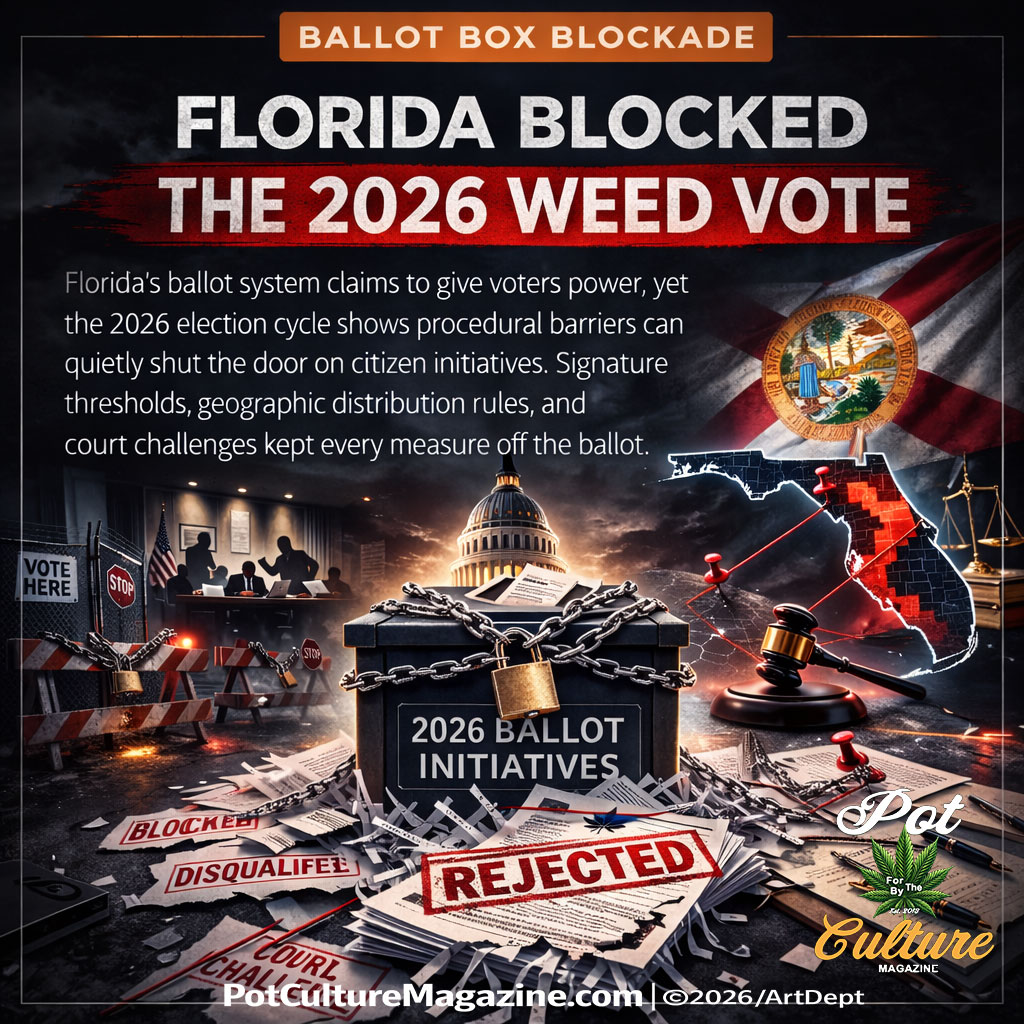
Florida Blocked the 2026 Weed Vote
Florida’s ballot system claims to give voters power, yet the 2026 election cycle shows how procedural barriers can quietly shut the door on citizen initiatives. Signature thresholds, geographic distribution rules, and court challenges blocked every measure from reaching voters, revealing how cannabis legalization fights are often decided by bureaucratic design long before election day.

The Cannabis Lie: Vol. 4 — The Crime Wave Lie
Politicians and pundits warned that legal cannabis would unleash a crime wave. The data tell a different story. From Colorado’s violent crime trends to DOJ time-series research and statewide arrest declines, the evidence shows no consistent long-term surge tied to legalization. The numbers never matched the panic.

South Africa Legalized Weed, But Not the Market
South Africa recognized private adult cannabis use and home cultivation, but never built a legal domestic market around them. With buying and selling still largely outside the law, the illicit trade remains dominant while regulators scramble to set limits, draft rules, and prepare a broader Cannabis Bill that could finally address commerce.
Discover more from POT CULTURE MAGAZINE
Subscribe to get the latest posts sent to your email.

Leave a comment