Filed Under: Cash Grab Culture War

California’s cannabis industry just sent more than half a billion dollars into state coffers this year. The number looks good in headlines, and lawmakers pat themselves on the back as if they built a system that works. But underneath the glossy press releases and political soundbites is a graveyard of legal operators who are going broke under the weight of taxes, compliance fees, and a regulatory system that treats them like criminals while cashing their checks.
Half a billion is a monster number, but it hides the truth. Much of that revenue comes from inflated excise taxes, stacked local levies, and license fees so high they would choke a liquor distributor. Operators are paying 20, 30, sometimes 40 percent of their gross just to cover the government’s cut before a single bill for rent, payroll, or electricity is paid. That is not regulation, that is extortion in a state-sanctioned wrapper.
Look at the collapse of California’s legal market over the past five years. Thousands of growers and retailers have defaulted on taxes or closed altogether. In Humboldt County, once the beating heart of cannabis cultivation, farmers are walking away from properties they have held for generations. Oakland, Los Angeles, and Sacramento are dotted with shuttered dispensaries that could not keep pace with monthly tax payments that ballooned while consumer prices tanked under oversupply. The state takes its pound of flesh regardless of whether the operator survives.
The Department of Cannabis Control is proud to say California pulled in around five billion since adult-use legalization began in 2018. What they leave out is how many of those dollars came from businesses that no longer exist. Revenue is up, but the number of licensed operators is down. Taxes are not tied to success; they are tied to survival, and survival is exactly what the state seems intent on crushing.
The original promise of legalization was that taxes would fund schools, drug treatment programs, public safety, and community reinvestment. That was the pitch to voters. Six years later, local governments are plugging cannabis dollars into general funds and pothole repair. The communities most brutalized by the drug war are still waiting for reparations. The small operators who risked everything to come above ground are now being hounded for back taxes while billion-dollar multistate operators use accounting tricks to delay payments.
Defaults are everywhere. California’s own cannabis board has admitted that hundreds of millions in taxes are uncollected. In 2023 alone, the state had to write off nearly 200 million in unpaid cannabis taxes from businesses that folded. Those defaults are not an accident; they are the inevitable result of a system built to squeeze operators dry until only corporate players with deep pockets remain.
The cruelty is in the numbers. A grower selling a pound of wholesale flower at $600 faces excise taxes that can eat up more than half that value when combined with cultivation levies, state excise tax, local sales taxes, and distribution fees. By the time the product reaches the consumer, the state has made more than the grower, who is left with pennies to pay staff, maintain lights, and keep their farm alive. In any other industry, this would be criminal, but in cannabis, it is business as usual.
Meanwhil,e the illicit market thrives. California promised legalization would put dealers out of business. Instead, the state’s high taxes and fees created the perfect environment for them to flourish. Consumers can walk into unlicensed shops in Los Angeles and buy eighths for half the price of legal stores, no tax, no IDs checked, no paperwork. Enforcement is selective at best, nonexistent at worst. The state is too busy counting its revenue to notice that the legal market it built is being cannibalized by the underground it claims to have replaced.
Politicians pretend the money is going where it should, but follow the trail and you see a different story. Billions of cannabis tax dollars have been swallowed by bureaucracies that produce reports, meetings, and little measurable change. Youth prevention programs are still underfunded. Equity programs designed to help communities devastated by prohibition are broke. Legal defense funds for cannabis prisoners are starved. The people who made legalization possible are still in cages, while the state collects billions and doles it out like an allowance.
This is what happens when a plant is treated as a cash cow instead of a culture. Alcohol and tobacco pay taxes, too, but they operate within systems that have been stable for decades. Cannabis is forced to fund its own regulation and enforcement on top of punitive excise fees. Imagine if every liquor store in California had to pay for the salaries of the Alcoholic Beverage Control agents that police them. That is the deal cannabis businesses are stuck with, and it is why so many are failing.
There is no bailout for the small farmer in Mendocino. No rescue package for the family-owned dispensary in Oakland. No relief for the delivery service in Fresno that paid six figures in taxes before its license was suspended for a clerical error. They are told to pay up or shut down, while Sacramento celebrates another revenue milestone.
The hypocrisy is brutal. California brags about being a progressive beacon, a leader in drug reform, and a defender of equity. Yet it runs its cannabis system like a mob operation. Pay the tax, or you are out. Complain too loudly, and you get audited. Try to innovate, and you drown in compliance paperwork that shifts every six months. No other legal industry is treated this way. It is punishment disguised as regulation.
ADVERTISEMENT
F O R T H E C U L T U R E B Y T H E C U L T U R E

CANNABIS LIES Vol. 5: The Gateway Lie
For decades, politicians have claimed marijuana is a gateway to heroin and harder drugs. Federal youth surveys, NSDUH data, and NIDA’s own language tell a different story. Cannabis use is widespread, hard drug use remains rare, and most users do not progress. The data dismantles one of prohibition’s most durable fear narratives.

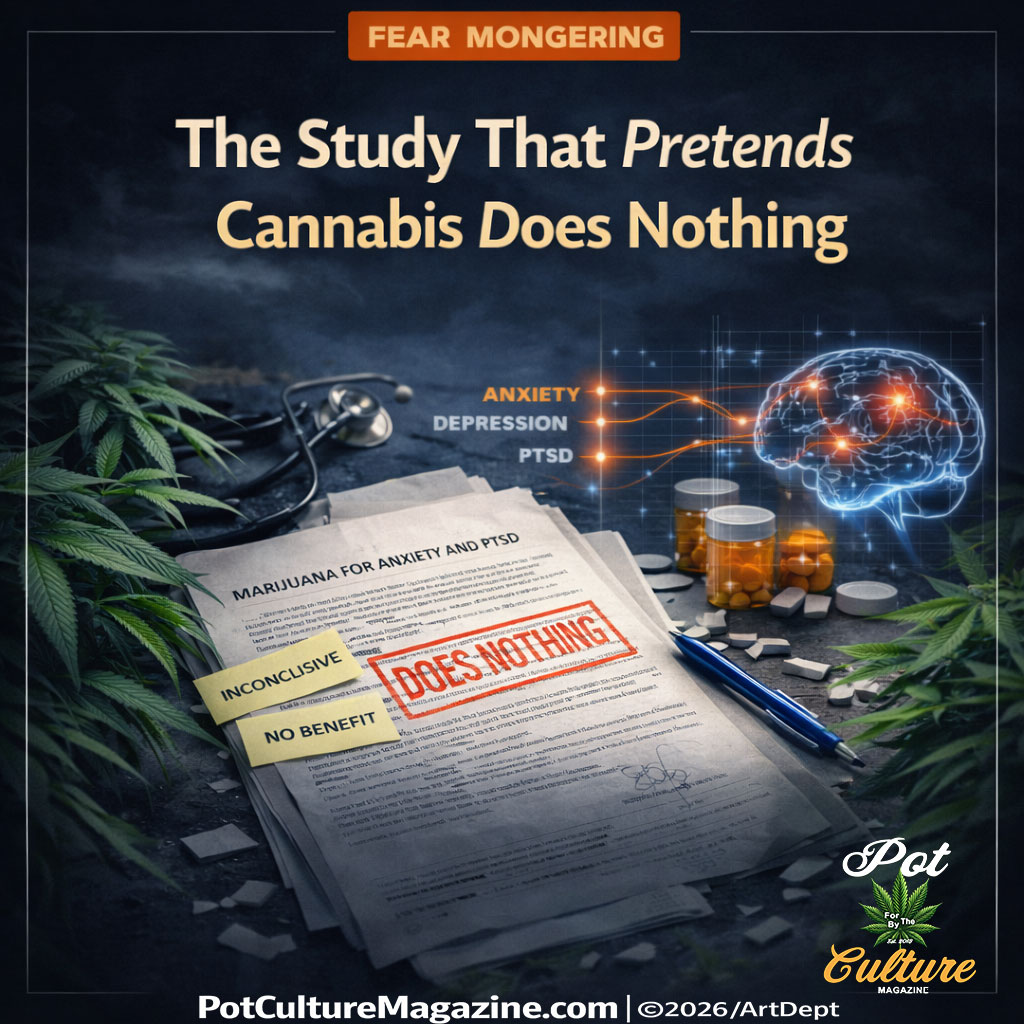
The Study That Pretends Cannabis Does Nothing
A new cannabis study claims marijuana does nothing for anxiety, depression, or PTSD. The reality is far more complicated. Decades of federal restrictions, limited research access, and synthetic substitutes have shaped the science. This breakdown exposes how incomplete data and selective interpretation continue to drive misleading headlines about cannabis and mental health.
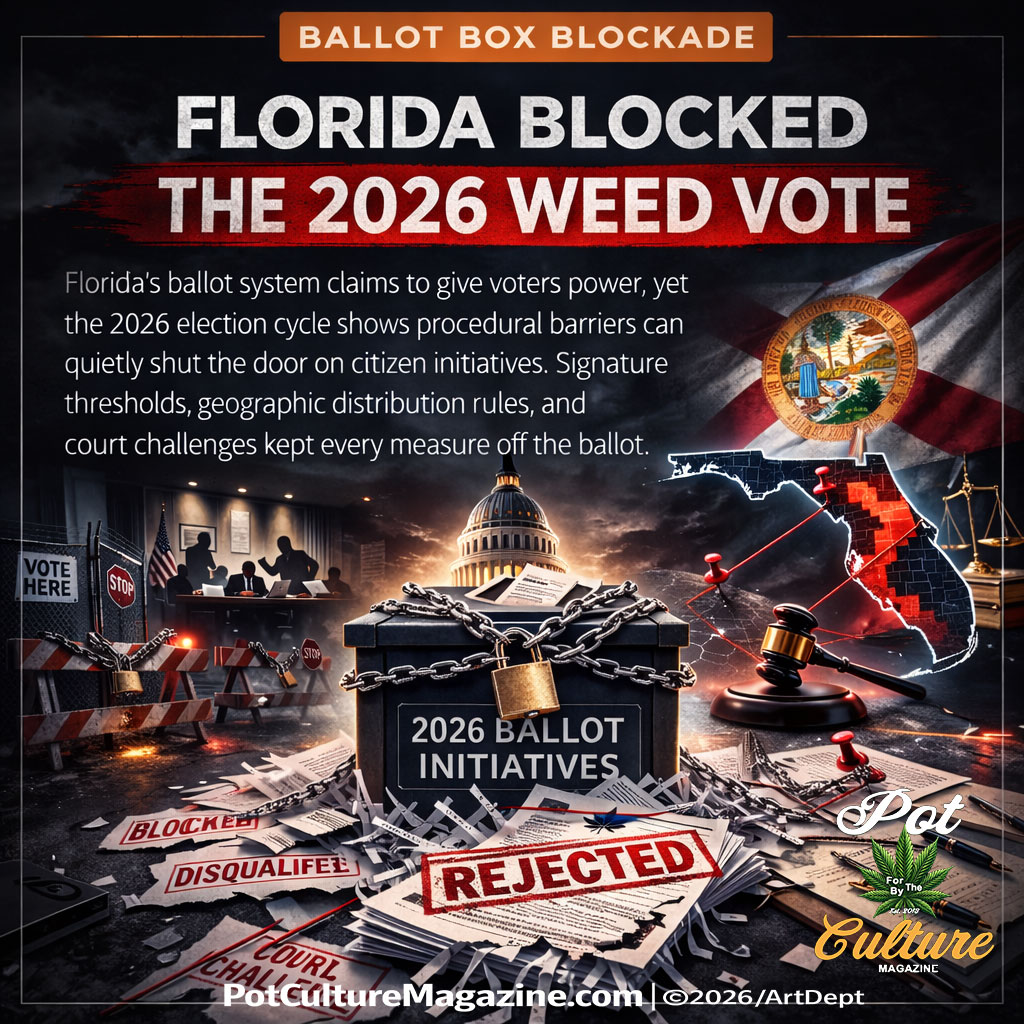
Florida Blocked the 2026 Weed Vote
Florida’s ballot system claims to give voters power, yet the 2026 election cycle shows how procedural barriers can quietly shut the door on citizen initiatives. Signature thresholds, geographic distribution rules, and court challenges blocked every measure from reaching voters, revealing how cannabis legalization fights are often decided by bureaucratic design long before election day.
ADVERTISEMENT
Consumers are starting to catch on. Prices in legal shops are higher, quality is often lower, and the experience is sterile. The culture that made cannabis thrive in the first place, the outlaw growers and the underground networks, is still alive but has been pushed further into the margins. California is taxing the soul out of cannabis and calling it progress.
That half-billion in revenue is not a sign of success. It is a sign of bloodletting. It is a trophy held up by politicians while the people who actually built the market are being erased. Every dollar the state collects is a reminder that legalization was not designed to free the plant; it was designed to monetize it.
Other states are watching. New York is already repeating California’s mistakes with stacked taxes and a regulatory mess. Michigan’s oversupply crisis is pushing prices so low that taxes chew through profits before they are even made. The federal government watches from the sidelines, collecting nothing, while pretending it has no role to play. Everyone is waiting for cannabis dollars, but no one is willing to build a system where small operators can survive long enough to pay them.
The cannabis culture that fought for legalization did not fight for this. It did not fight so that billion-dollar corporations could dominate dispensary chains while family farms were evicted. It did not fight so that Sacramento could treat cannabis like a piggy bank. It fought so that cannabis could be normalized, celebrated, and integrated into society without stigma. Instead, legalization has turned into another cash grab.
If you want proof, look at where that half-billion is going. Schools are not suddenly flush with cannabis cash. Treatment centers are not springing up on every corner. Communities that bore the brunt of prohibition are not being rebuilt. Instead, the money disappears into general funds and state budgets that never seem to shrink. Cannabis revenue is the politician’s favorite kind of cash, untraceable once it is collected, easy to reallocate when no one is paying attention.
The question is how long this can last. Operators are running out of reserves. Equity applicants are running out of patience. Consumers are running out of reasons to pay twice as much for legal weed. The state may collect its half-billion this year, but what happens when the base collapses? When there are no more small operators to tax, no more licenses to sell, no more dreams to exploit?
California’s cannabis system is bleeding out, and half a billion in revenue is not proof of life; it is a death rattle. If Sacramento really wants to celebrate, it should explain how many of the businesses that paid into that pool are still standing. Until then, the victory lap looks a lot like looting.
The half-billion headline is bait, designed to distract from the wreckage. The truth is simpler. California is killing the very industry it claims to regulate. It is squeezing the culture out of cannabis while pretending to honor it. And unless something changes fast, that revenue stream will dry up as quickly as the farms and dispensaries that built it.
©2025 Pot Culture Magazine. All rights reserved. This content is the exclusive property of Pot Culture Magazine and may not be reproduced, distributed, or transmitted in any form or by any means without prior written permission from the publisher, except for brief quotations in critical reviews.
F O R T H E C U L T U R E B Y T H E C U L T U R E

The Cannabis Lie: Vol. 4 — The Crime Wave Lie
Politicians and pundits warned that legal cannabis would unleash a crime wave. The data tell a different story. From Colorado’s violent crime trends to DOJ time-series research and statewide arrest declines, the evidence shows no consistent long-term surge tied to legalization. The numbers never matched the panic.

South Africa Legalized Weed, But Not the Market
South Africa recognized private adult cannabis use and home cultivation, but never built a legal domestic market around them. With buying and selling still largely outside the law, the illicit trade remains dominant while regulators scramble to set limits, draft rules, and prepare a broader Cannabis Bill that could finally address commerce.
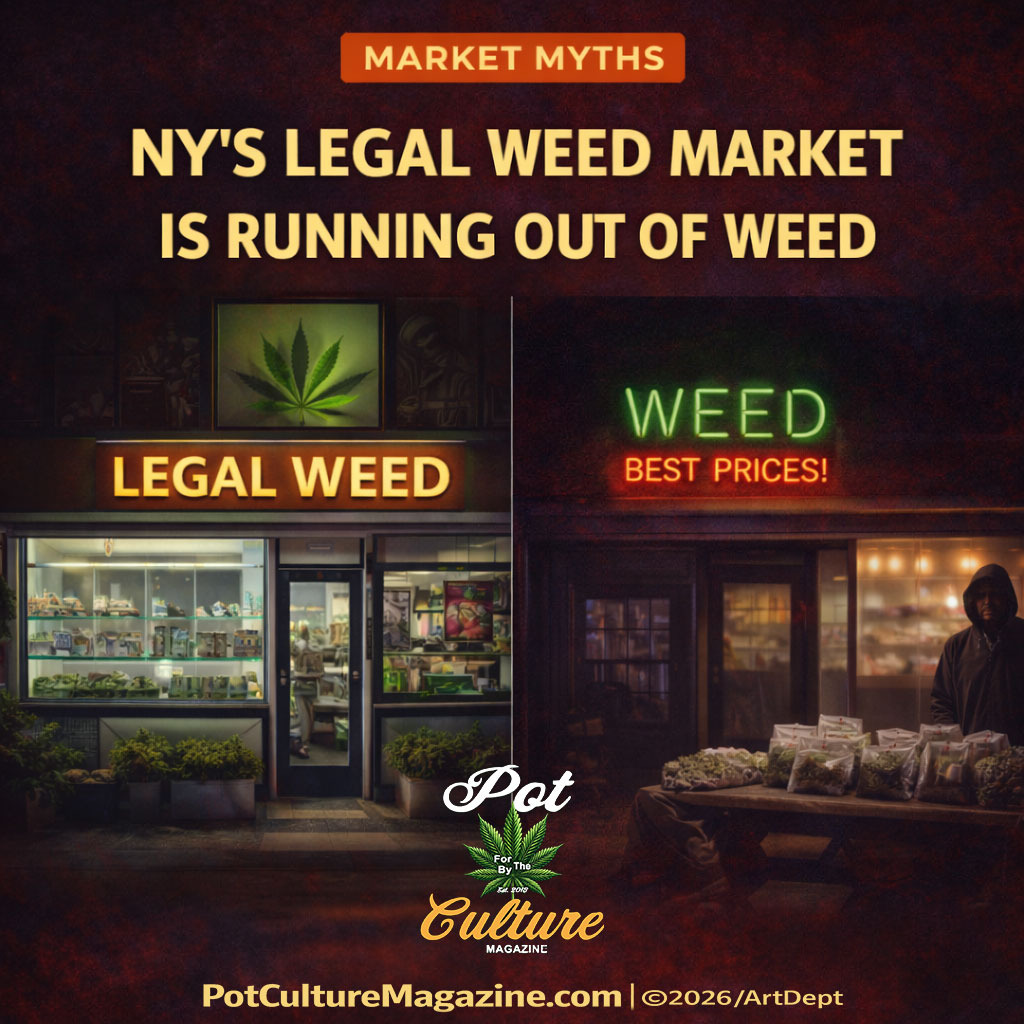
NY’s Legal Weed Market Is Running Out of Weed
New York legalized cannabis and opened hundreds of stores, but regulators now warn the legal market may not produce enough weed to keep them stocked. With nearly 600 stores open and sales nearing $3 billion, the state is discovering that legalization alone does not guarantee a functioning market.
Discover more from POT CULTURE MAGAZINE
Subscribe to get the latest posts sent to your email.

Leave a comment