Filed Under: Same Song, Louder Drums
Congress is back at it, dusting off the Marijuana Opportunity Reinvestment and Expungement Act (MORE Act) and dropping it squarely on the table for the 119th Congress. This bill would finally rip cannabis out of the Controlled Substances Act, giving states the clear runway to regulate without federal interference. For the millions of Americans living in states with legal programs, and for the thousands still being arrested every year in prohibition states, this is no small thing.
The MORE Act is no stranger to Capitol Hill. It passed the House in 2020 and again in 2022, only to die a slow death in the Senate. Those earlier efforts laid the groundwork for what the new Congress is now trying to revive. Representative Jerrold Nadler of New York, who has shepherded this legislation from the beginning, is clear about what is at stake:
“It is long past time to decriminalize marijuana at the federal level, expunge marijuana convictions, and reinvest in the communities most adversely impacted by the War on Drugs,” Nadler said.
This is not a symbolic gesture. Removing cannabis from the Controlled Substances Act means that federal law would finally match reality. States that want to regulate could do so openly, without worrying about raids, seizures, or the constant legal gray area that still haunts even the most established cannabis businesses. The MORE Act does more than pull cannabis out of Schedule I. It creates a federal framework that addresses the damage done by prohibition: automatic expungement of federal marijuana convictions, Small Business Administration support to state-licensed cannabis businesses, and a federal excise tax on cannabis products with revenue directed to grants and community reinvestment programs.
advertisement
F O R T H E C U L T U R E B Y T H E C U L T U R E

South Africa Legalized Weed, But Not the Market
South Africa recognized private adult cannabis use and home cultivation, but never built a legal domestic market around them. With buying and selling still largely outside the law, the illicit…


NY’s Legal Weed Market Is Running Out of Weed
New York legalized cannabis and opened hundreds of stores, but regulators now warn the legal market may not produce enough weed to keep them stocked. With nearly 600 stores open…
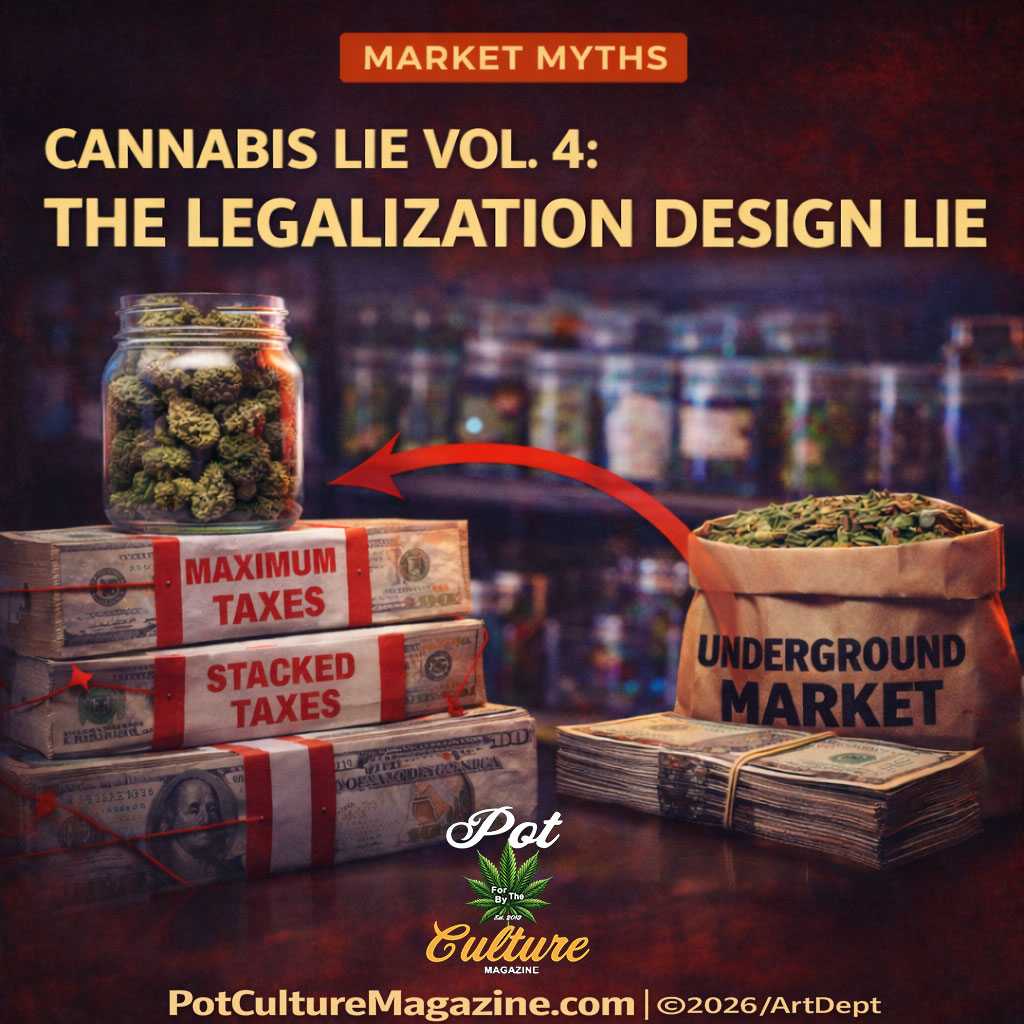
Cannabis Lie Vol. 4: The Legalization Design Lie
Cannabis legalization was sold as the end of the illicit market. Instead, stacked taxes, licensing limits, and local bans created price gaps that allowed underground sales to survive. From California’s…
advertisement
The push to bring back the MORE Act comes as the current administration signals it may move cannabis to Schedule III. That shift would let researchers study cannabis without the stranglehold of Schedule I restrictions, but it would do little to solve the bigger problems. Reclassification still leaves cannabis under federal control, still criminalized in key ways, and still at odds with the dozens of states that have already moved forward with legalization. The MORE Act ends prohibition outright. It clears the way for states to build and refine their markets without the looming threat of federal intervention.
Advocates are already framing the moment as historic. As NORML has said, the bill represents the wishes of more than two-thirds of the American public and creates a federal framework built on science, pragmatism, and justice. Those are not just talking points. Poll after poll shows that Americans are done with prohibition. Even in deeply conservative states, support for legalization has climbed past 50 percent. Yet here we are, still watching people lose jobs, lose housing, or get cuffed and booked over a plant that is fully legal in 24 states and counting. More than 200,000 people are arrested for cannabis every year in the United States, and Black Americans are nearly four times more likely to be arrested for possession despite similar usage rates.
Every year that Congress stalls, taxpayers bleed billions on arrests, prosecutions, and incarceration, while communities miss out on the economic growth that regulated markets bring. Legal cannabis is already generating billions in tax revenue, funding schools, healthcare, and infrastructure in states that chose regulation over fear. The MORE Act would take that model national, leveling the playing field and bringing federal oversight in line with the realities on the ground.
Passing the MORE Act will not be easy. It cleared a Democratic House twice but never gained serious traction in the Senate. Now, with a divided government and an election cycle in full swing, the bill faces a steep climb. But political momentum is a strange thing. Every new state that legalizes cannabis, every poll showing record support, and every headline about someone jailed for what is legal across a state line chips away at the old guard’s defenses. At some point, even the most stubborn prohibitionists will run out of excuses. That is why this reintroduction matters. It keeps pressure on Congress, forces the conversation into the open, and reminds voters that change is not just possible, it is inevitable.
The MORE Act is not perfect. Critics point to concerns about how federal taxes could burden small operators or how oversight will balance with state autonomy. Those debates are worth having, but they are signs of progress. We are no longer debating if cannabis should be legal; we are debating how it should be legal. That shift cannot be undone. Federal law is wildly out of step with reality. Cannabis is a booming industry creating jobs and driving innovation, but at the federal level, it is still lumped in with heroin.
Whether the MORE Act passes this session or stalls again, one fact is undeniable: the era of pretending cannabis belongs in Schedule I is over. The country has moved on. The market has moved on. The culture has moved on. The only question is whether Congress will move with it or cling to a broken policy that criminalizes people, wastes money, and props up the very black market it claims to fight. It is not a question of if. It is a question of when.
The longer Congress drags its feet, the more obvious that disconnect becomes. People are tired of living in two Americas — one where cannabis is treated like wine, and another where a joint can still wreck your life. The MORE Act is a chance to finally end that nonsense, to put science and common sense where fear and politics have ruled for decades. Every year that passes without action makes Congress look less like a deliberative body and more like a wall in the path of progress. At some point, that wall will fall. The question is who wants to be standing on the right side of history when it does.
©2025 Pot Culture Magazine. All rights reserved. This content is the exclusive property of Pot Culture Magazine and may not be reproduced, distributed, or transmitted in any form or by any means without prior written permission from the publisher, except for brief quotations in critical reviews.
F O R T H E C U L T U R E B Y T H E C U L T U R E
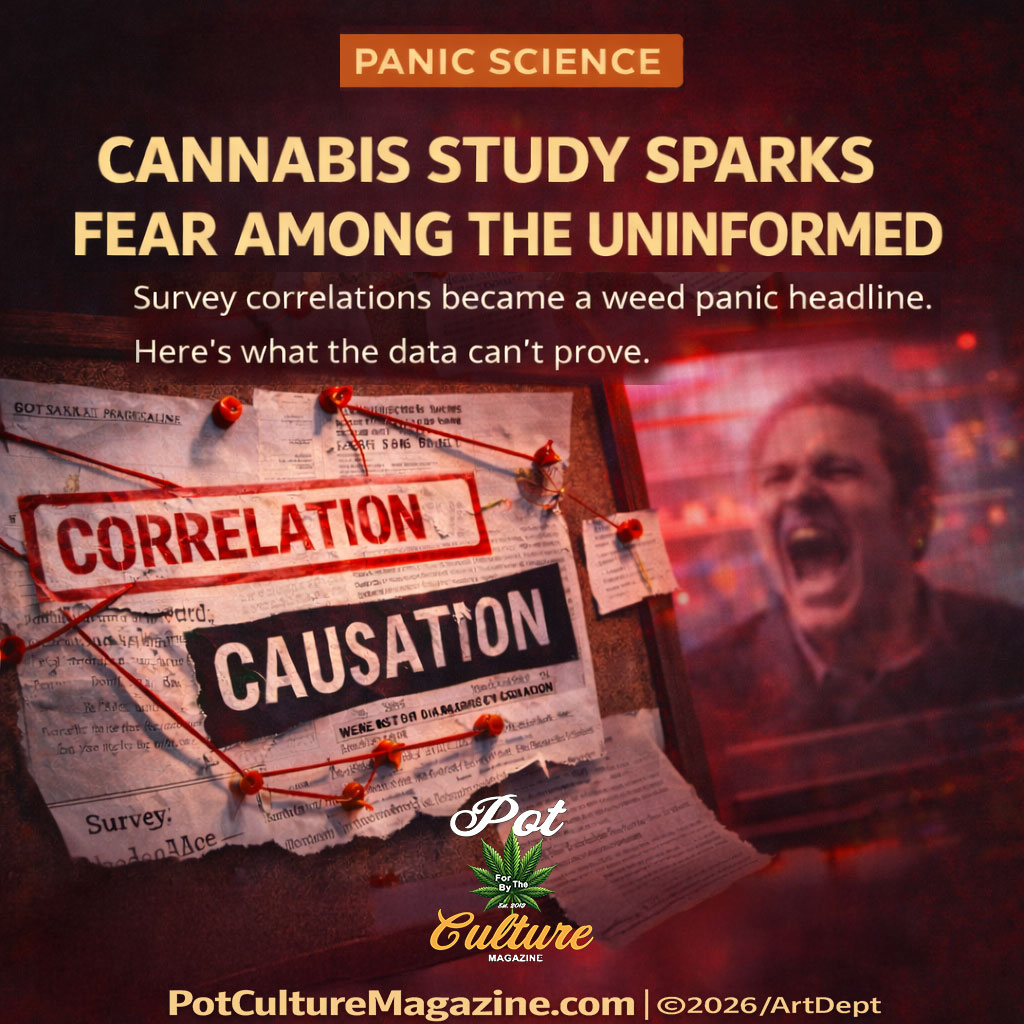
Cannabis Study Sparks Fear Among the Uninformed
A McMaster led analysis of two Canadian mental health surveys is getting recycled as a weed panic story, even though the design can only show association. This piece breaks down what the data can actually support, what it cannot prove, and how headlines turn survey correlations into causal claims that fuel stigma, bad policy, and…

Louisiana’s Cannabis Pilot Gamble
Louisiana HB 373 would create a tightly controlled adult-use cannabis pilot overseen by the Louisiana Department of Health. The bill limits participation to existing medical marijuana dispensaries, imposes permit renewal fees and a 3.5 percent wholesale assessment, and sunsets July 1, 2030, forcing lawmakers to decide whether to make legalization permanent.

Cannabis Lies Vol. 3: The Nuisance Lie
Arizona lawmakers are advancing legislation that would criminalize “excessive” marijuana odor detectable across property lines. Cannabis Lie Vol. 3 examines SB 1725 and SCR 1048, the proposed misdemeanor penalties, the legal implications of State v. Sisco, and why critics argue this is a backdoor attempt to reintroduce cannabis criminalization under the banner of nuisance law.
Discover more from POT CULTURE MAGAZINE
Subscribe to get the latest posts sent to your email.

Leave a comment