Filed Under: Badges and Bullshit

Oklahoma law enforcement is already in full-blown panic, screaming about cartels, crime, and kids before a single ballot signature has been counted. State Question 837, the petition to legalize adult-use cannabis, has only just started collecting signatures, but you would think the apocalypse is scheduled for November 2026 based on the parade of uniforms filling the evening news.
This is the same tired playbook that fueled the drug war for half a century: make the public afraid, sell fear as fact, and hope nobody checks the receipts. The problem for them is that the receipts are everywhere.
The Fear Tour
Moore Police Chief Todd Gibson, who also heads the Oklahoma Association of Chiefs of Police, is leading the charge:
“The citizens of Oklahoma have already spoken out against this issue and have resoundingly said we don’t want recreational marijuana.”
“What we’ve seen is a significant increase in access to our youth, impacts on our community with crime. We’ve seen black market and international crime enter Oklahoma and put a strain on public safety. Nowhere have I seen marijuana make better communities and safer communities.”
Then he doubles down with a little courtroom panic:
“Some of the things outlined in this state question absolutely tie the hands of not only police officers on the street but prosecutors in a courtroom trying to maintain justice.”
Donnie Anderson, Oklahoma’s narcotics director, is hitting the same talking points, minus the polish:
“The big picture is organized crime and what it’s doing to Oklahoma. That’s what I’m having to deal with. You could have gas and get a medical marijuana card. That’s pretty recreational if you ask me.”
“There is 85 million pounds unaccounted for. That is your black market.”
None of these claims stands up when you put them against real data or even Oklahoma’s own numbers. What they do well is create soundbites that keep the fear machine humming.
advertisement
F O R T H E C U L T U R E B Y T H E C U L T U R E
CANNABIS LIES Vol. 5: The Gateway Lie
For decades, politicians have claimed marijuana is a gateway to heroin and harder drugs. Federal youth surveys, NSDUH data, and NIDA’s own language tell a different story. Cannabis use is…

The Study That Pretends Cannabis Does Nothing
A new cannabis study claims marijuana does nothing for anxiety, depression, or PTSD. The reality is far more complicated. Decades of federal restrictions, limited research access, and synthetic substitutes have…
Florida Blocked the 2026 Weed Vote
Florida’s ballot system claims to give voters power, yet the 2026 election cycle shows how procedural barriers can quietly shut the door on citizen initiatives. Signature thresholds, geographic distribution rules,…
advertisement
The Reality They Ignore
Start with the kids. Every single time legalization comes up, someone waves the “what about the children” flag. Here is the truth they do not want to say out loud: teen cannabis use has dropped in states that legalized.
Federal data from the CDC’s Youth Risk Behavior Survey shows a steady decline in high school cannabis use over the past decade. In Colorado, where adult-use has been legal for over a decade, teen use fell to its lowest level since the state began tracking it. Washington shows the same trend. This is not an opinion. This is public health data.
As for “organized crime,” the black market thrives because prohibition creates it. Oklahoma built a medical system so loose and underregulated that anyone with an ID and a pulse could get a card, and anyone with a business license could set up shop. Now, with no real oversight and a thriving demand, bad actors moved in. Legalizing adult-use with clear rules and enforcement mechanisms would pull most of that market into the light, but acknowledging that would kill the narrative.
And the driving panic? Research has been clear: there is no consistent evidence that legalization leads to a spike in impaired driving fatalities. What does happen is that states with legal frameworks get better at testing and reporting, which makes the numbers look higher. That is called data accuracy, not danger.
The Campaign They Fear
While the cops are doing interviews, Oklahomans for Responsible Cannabis Action (ORCA) is doing the work. Director Jed Green says the momentum is real:
“In the first two weeks, we managed to secure over 400 locations where folks across the state and over 60 counties can come and sign the petition.”
“All 837 does is allow adults over the age of 21 to purchase without a medical card. It does not create more grows. It does not create more dispensaries.”
And he is calling out the unprecedented interference by law enforcement:
“We have a state agency and law enforcement organizations weighing in and opposing State Question 837 before it is even cleared for ballot access. That is very atypical and very unprecedented. We believe that it shows the strength of our effort.”
“Ultimately, if these folks did not feel threatened by what we are doing, they would not have attacked us six months before there is even potentially a yes campaign.”
The petition requires roughly 173,000 valid signatures to make the 2026 ballot, and organizers have until early November to deliver them. If they succeed, Oklahoma voters will get another chance to join the growing list of states where cannabis is treated like the normal commodity it already is.
The Real Fight
This is not about crime. It is not about kids. It is not about safety. It is about control. Control of the narrative. Control of the market. Control of the power that comes with a law enforcement system addicted to prohibition.
State Question 837 would end the medical tax, allow adults to buy and grow without risking their jobs or their homes, and cement those rights in the state constitution so politicians cannot gut them in a late-night session. That scares the hell out of people who have built careers on keeping cannabis in the shadows.
The panic pressers are going to get louder. The numbers will get fuzzier. And every headline about cartels and chaos will get fed to the public like it is gospel. But when you strip away the noise, the truth is simple: Oklahomans are already living in a cannabis state. The only question is whether the law will finally catch up.
©2025 Pot Culture Magazine. All rights reserved. This content is the exclusive property of Pot Culture Magazine and may not be reproduced, distributed, or transmitted in any form or by any means without prior written permission from the publisher, except for brief quotations in critical reviews.
F O R T H E C U L T U R E B Y T H E C U L T U R E
The Cannabis Lie: Vol. 4 — The Crime Wave Lie
Politicians and pundits warned that legal cannabis would unleash a crime wave. The data tell a different story. From Colorado’s violent crime trends to DOJ time-series research and statewide arrest declines, the evidence shows no consistent long-term surge tied to legalization. The numbers never matched the panic.

South Africa Legalized Weed, But Not the Market
South Africa recognized private adult cannabis use and home cultivation, but never built a legal domestic market around them. With buying and selling still largely outside the law, the illicit trade remains dominant while regulators scramble to set limits, draft rules, and prepare a broader Cannabis Bill that could finally address commerce.
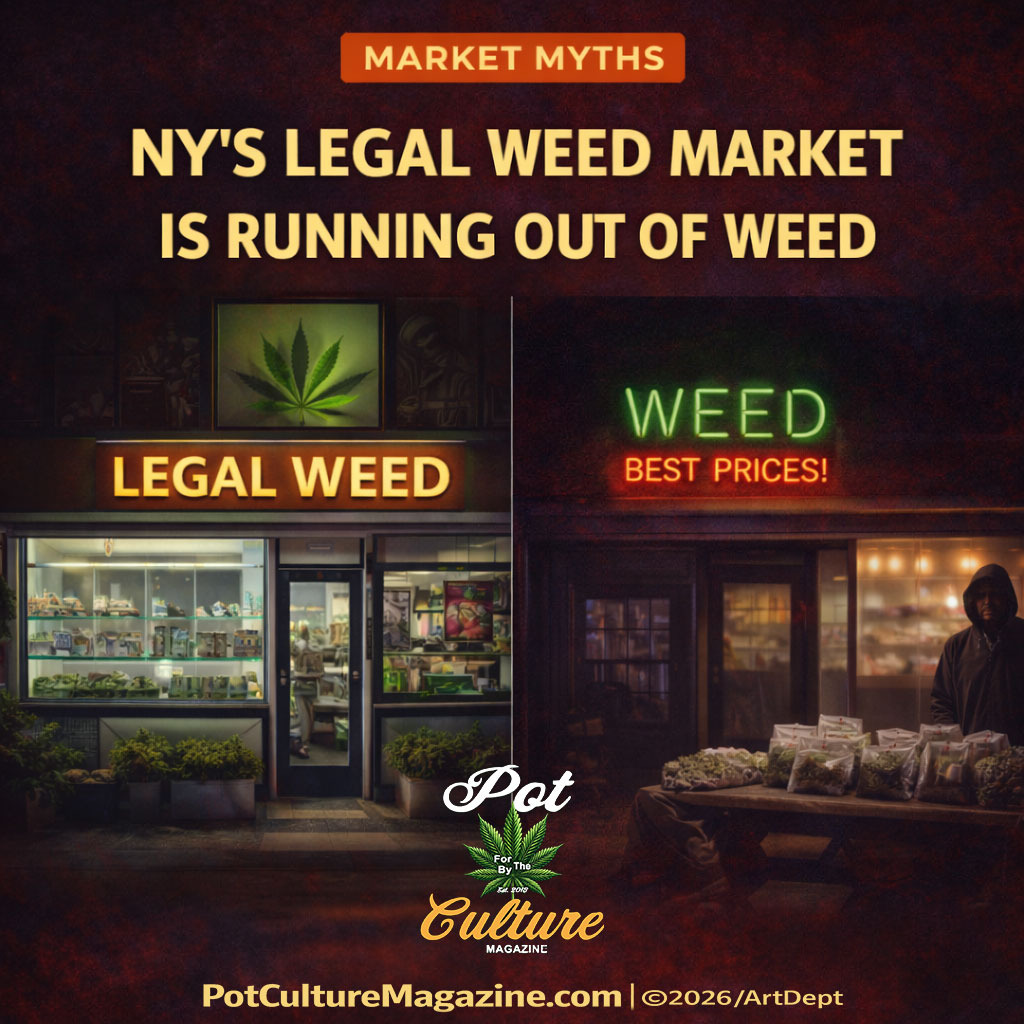
NY’s Legal Weed Market Is Running Out of Weed
New York legalized cannabis and opened hundreds of stores, but regulators now warn the legal market may not produce enough weed to keep them stocked. With nearly 600 stores open and sales nearing $3 billion, the state is discovering that legalization alone does not guarantee a functioning market.
Discover more from POT CULTURE MAGAZINE
Subscribe to get the latest posts sent to your email.

Leave a comment