
Canada is proving something that politicians in the United States keep pretending not to hear. If you build a legal cannabis market that works in the real world, people will use it. Five plus years after federal legalization, the average Canadian cannabis consumer is not juggling two phones or whispering to a friend of a friend. They are walking into licensed shops. They are paying taxes. They are choosing a menu instead of a mystery bag.
The numbers leave no wiggle room. An international team led by the University of Waterloo surveyed 2,686 past-year consumers. On average, respondents said 78 percent of their cannabis in the last year came from legal sources. That is not a soft majority. That is a supermajority of the market telling the underground to get lost. Published in Drug and Alcohol Review, the study makes clear how legalization has shifted daily behavior.
This is not the story of a political promise. It is the story of how prices fell, stores multiplied, and convenience won out. Canada did not end the illicit market with slogans. It did it with access.
Price Made the Difference
The Waterloo study broke down what people paid for nine different product types and compared legal against illegal. The price gap is precise. Legal dried flower +23.8 percent, vapes +18.7 percent, hash +38.4 percent versus illegal. Capsules −28.4 percent cheaper in licensed shops. For drops, drinks, tinctures, and concentrates, there was no statistically significant difference. Researchers noted earlier work overstated the street’s advantage by ignoring package size. Once you line up identical package sizes, the illicit bargain shrinks.
That is how normalization works. In the early years, sticker shock scared people away. Over time supply scaled up, OCS wholesale averaged $3.81 a gram for dried flower, and heavy store competition narrowed spreads. The race to value is brutal, but it has forced the market to stand on its own.
The Illegal Option Is Fading
Health Canada’s Canadian Cannabis Survey shows the same trend from a different angle. In 2023, only 3 percent of Canadians reported purchasing from an illegal source in the past year. Social sources 15 percent. Home-grow 5 percent. Both categories have been down since 2018. The underground has not vanished, but it is no longer the default. In the eyes of most Canadians, illegal weed is a niche product.
advertisement
F O R T H E C U L T U R E B Y T H E C U L T U R E
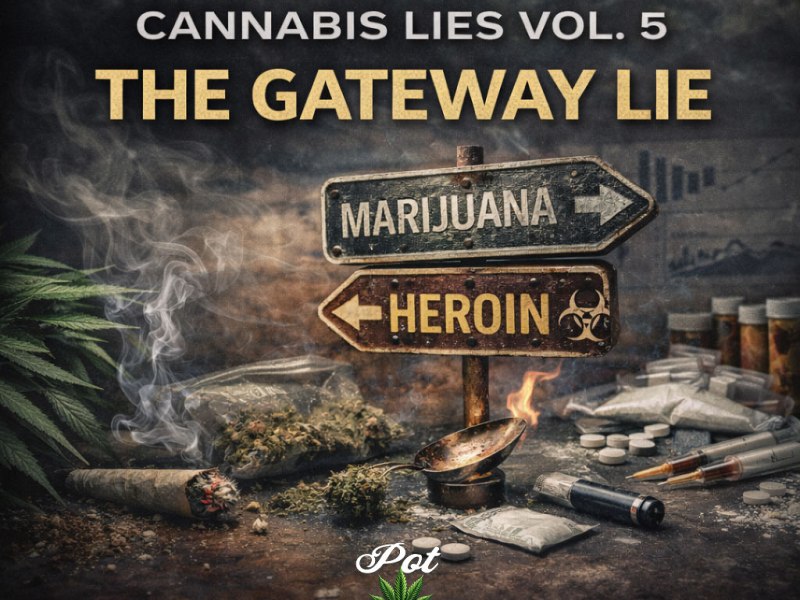
CANNABIS LIES Vol. 5: The Gateway Lie
For decades, politicians have claimed marijuana is a gateway to heroin and harder drugs. Federal youth surveys, NSDUH data, and NIDA’s own language tell a different story. Cannabis use is widespread, hard drug use remains rare, and most users do not progress. The data dismantles one of prohibition’s most durable fear narratives.


The Study That Pretends Cannabis Does Nothing
A new cannabis study claims marijuana does nothing for anxiety, depression, or PTSD. The reality is far more complicated. Decades of federal restrictions, limited research access, and synthetic substitutes have shaped the science. This breakdown exposes how incomplete data and selective interpretation continue to drive misleading headlines about cannabis and mental health.
advertisement
Ontario Shows the Model
By March 31, 2024, Ontario had 1,709 authorized stores. In calendar year 2024, those shops sold 408,882,351 grams of cannabis worth $2,154,430,937, an 11.3 percent increase over the previous year. Ontario now holds about half of Canada’s legal stores. Statistics Canada places the national total over 3,000. This is not an experiment anymore. It is a functioning system.
The depth of access is visible on the ground. By December 31, 2024, the province had 1,720 stores spread across Toronto (355), the GTA (269), the East (406), the West (542), and the North (148). That is what saturation looks like. Legal became easy, so legal became normal.
The United States Is Still Stuck
The contrast with the United States is embarrassing. In legal states, consumers show the same instinct as Canadians. New Frontier Data’s 2023 survey found that 52 percent of users in adult-use states named a licensed dispensary as their primary source. Only 6 percent relied on a dealer. That is a culture shift in action.
But the U.S. governments keep strangling its own markets. Cities and counties ban stores outright. Zoning boards treat cannabis retail like toxic waste. As a result, dispensaries cluster in limited areas, leaving deserts of unmet demand.
Independent analyses show what happens next. Low store density fuels the illicit share. In New Jersey’s early rollout, there was 1 store per 358,000 residents, and more than 80 percent of sales stayed illicit. You cannot buy what you cannot find.
What Canada Got Right
Canada’s approach was not flawless. The first years were plagued by shortages, limited product diversity, and government-set pricing that made customers roll their eyes. But the structure evolved. Provinces that allowed a broad private retail footprint grew faster. More stores meant shorter drive times. Shorter drives meant fewer excuses to stick with the old supplier.
The result is a marketplace that is finally doing what it promised. It is pulling customers off the street. It is taxing sales. It is creating jobs that exist above board instead of in the shadows.
Lessons in Hard Numbers
• 78 percent of Canadian consumers’ cannabis came from legal sources in the past year
• Legal dried flower +23.8 percent, vapes +18.7 percent, hash +38.4 percent versus illegal; capsules −28.4 percent cheaper legally
• 3 percent of Canadians reported an illegal purchase source in 2023; 15 percent social, 5 percent home-grow
• Ontario had 1,709 licensed stores by March 31, 2024; sales hit $2.154 billion on 408,882,351 grams, up 11.3 percent year over year
• Ontario’s total as of December 2024: 1,720 stores province-wide
• Canada’s national store count: 3,000+
• In U.S. adult-use states, 52 percent cite dispensaries as their primary source; 6 percent rely on a dealer
• Low density keeps the street alive, with New Jersey as the case study: 1 store per 358,000 people, 80 percent illicit sales in early rollout
The Cultural Shift
When cannabis becomes legal, people do not automatically abandon the illicit market. They test the legal side. They compare quality, price, and access. They weigh whether they trust the product. Canada has reached the tipping point where those comparisons almost always break in favor of the store.
It is not just about price or availability. It is about trust. Legal products are labeled, tested, and consistent. The buyer knows what they are getting. The myth of the street as cheaper and more authentic is losing its grip.
The U.S. Has the Roadmap
If lawmakers in the U.S. want to crush the illicit trade, they do not need to invent a plan. They need to stop sabotaging the plan they already have. Open more stores. Let competition shape price. Tax reasonably instead of greedily. Recognize that consumers are not ideological. They are practical.
The Canadian example proves that once legal is available, the old numbers get deleted from the phone. Dealers may still operate, but they become irrelevant. That is the goal every government claims to want.
Canada is five plus years into its experiment, and the results are loud. Build the legal market properly, and the underground fades away. The lesson for the United States is sitting across the border, waiting to be copied.
The street does not get crushed by slogans. It gets crushed by stores that are open when people want to buy.
©2025 Pot Culture Magazine. All rights reserved. This content is the exclusive property of Pot Culture Magazine and may not be reproduced, distributed, or transmitted in any form or by any means without prior written permission from the publisher, except for brief quotations in critical reviews.
F O R T H E C U L T U R E B Y T H E C U L T U R E
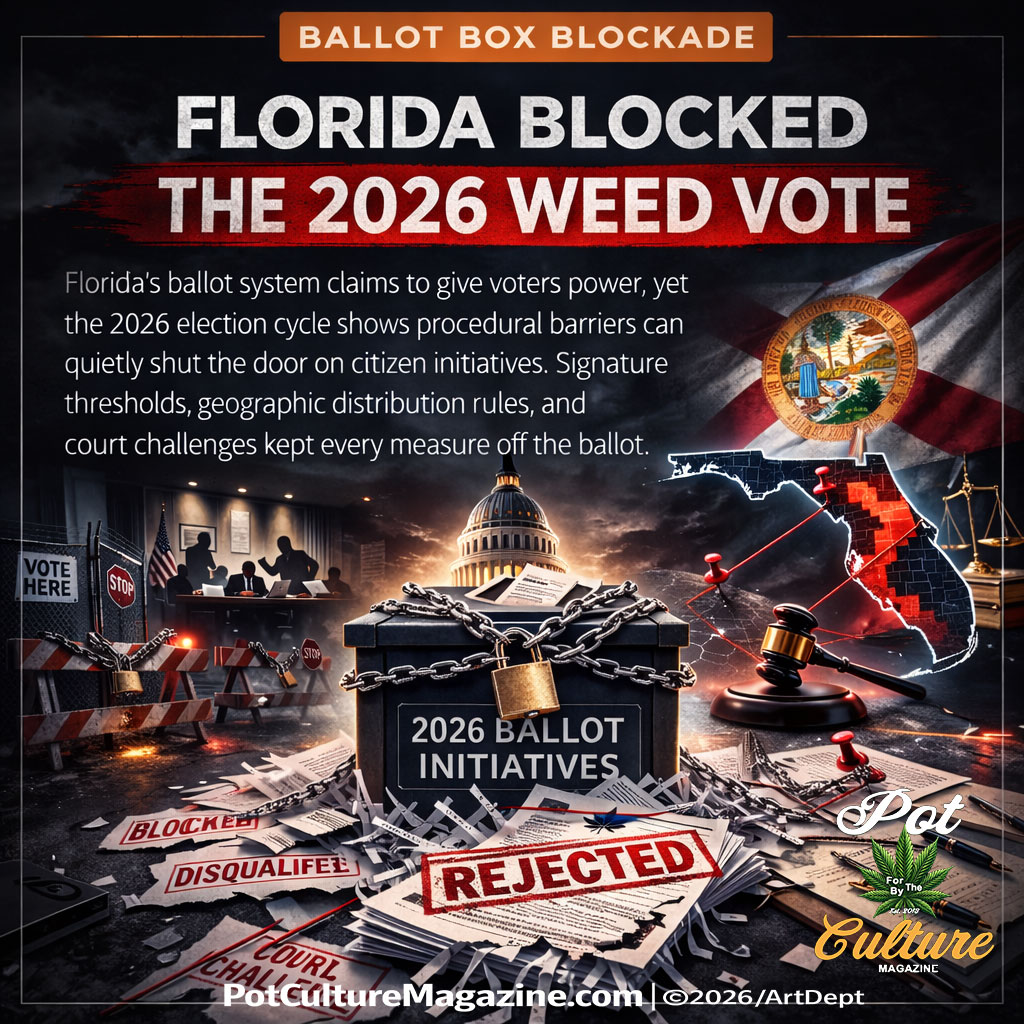
Florida Blocked the 2026 Weed Vote
Florida’s ballot system claims to give voters power, yet the 2026 election cycle shows how procedural barriers can quietly shut the door on citizen initiatives. Signature thresholds, geographic distribution rules, and court challenges blocked every measure from reaching voters, revealing how cannabis legalization fights are often decided by bureaucratic design long before election day.

The Cannabis Lie: Vol. 4 — The Crime Wave Lie
Politicians and pundits warned that legal cannabis would unleash a crime wave. The data tell a different story. From Colorado’s violent crime trends to DOJ time-series research and statewide arrest declines, the evidence shows no consistent long-term surge tied to legalization. The numbers never matched the panic.

South Africa Legalized Weed, But Not the Market
South Africa recognized private adult cannabis use and home cultivation, but never built a legal domestic market around them. With buying and selling still largely outside the law, the illicit trade remains dominant while regulators scramble to set limits, draft rules, and prepare a broader Cannabis Bill that could finally address commerce.
Discover more from POT CULTURE MAGAZINE
Subscribe to get the latest posts sent to your email.

Leave a comment