Filed Under: Legalization’s Fine Print
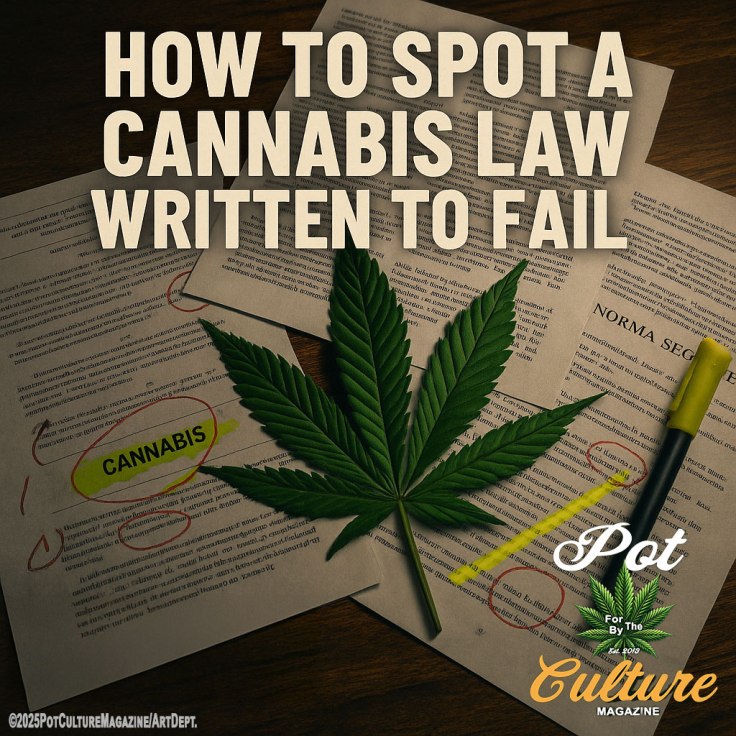
When lawmakers claim they are legalizing cannabis, the truth is often buried in the fine print. Across the United States and beyond, so-called reform bills are packed with language that undermines their own promises. These are not harmless oversights. They shape arrests, access, and the survival of the illicit market.
Texas: In 2023, police arrested over 25,000 people for marijuana possession despite hemp being legal and voters supporting reform. Possession of even a small amount is still a Class B misdemeanor with up to 180 days in jail. The term “usable quantity” is left vague, giving police wide discretion to arrest.
California: The world’s largest legal cannabis market still criminalizes unlicensed sales and cultivation. Local control clauses allow entire cities to ban dispensaries, creating vast cannabis deserts and pushing consumers back to the illicit market.
New York: Lawmakers promised equity licensing, but lawsuits and zoning battles have stalled dozens of legal shops before they could open. Meanwhile, unlicensed stores thrive, vastly outnumbering licensed operations.
Florida: Only medical cannabis is allowed, with strict licensing caps that limit competition and inflate prices. A recreational amendment is headed to voters but faces legal attacks before the election.
Germany: The 2024 legalization law allows just 25 grams in public and bans all commercial sales outside of tightly controlled “cannabis clubs.” This model leaves most consumers relying on unregulated sources.
United Kingdom: Cannabis remains a Class B drug, with possession punishable by up to 5 years in prison. Police discretion exists, but meaningful reform is absent, and public opinion is far ahead of lawmakers.
Other Red Flags: In states like Arizona, Oregon, and Illinois, hidden clauses allow aggressive enforcement against home grows. In Spain, cannabis clubs operate in a gray zone that can be shut down at any time. In France, penalties for possession remain harsh despite growing calls for reform.
What to Watch For:
• Strict possession limits
• Local opt-outs that block access
• Licensing caps protecting corporate players
• Ambiguous terms that give police broad enforcement powers
• Provisions that criminalize cultivation beyond a token amount
The fix is simple in theory and brutal in politics: read the bill text, not the press release. If a law calls itself legalization but still lets police treat cannabis as contraband, it is not reform. It is prohibition rebranded.
©2025 Pot Culture Magazine. All rights reserved. This content is the exclusive property of Pot Culture Magazine and may not be reproduced, distributed, or transmitted in any form or by any means without prior written permission from the publisher, except for brief quotations in critical reviews.
F O R T H E C U L T U R E B Y T H E C U L T U R E
CANNABIS LIES Vol. 5: The Gateway Lie
For decades, politicians have claimed marijuana is a gateway to heroin and harder drugs. Federal youth surveys, NSDUH data, and NIDA’s own language tell a different story. Cannabis use is…

The Study That Pretends Cannabis Does Nothing
A new cannabis study claims marijuana does nothing for anxiety, depression, or PTSD. The reality is far more complicated. Decades of federal restrictions, limited research access, and synthetic substitutes have…
Florida Blocked the 2026 Weed Vote
Florida’s ballot system claims to give voters power, yet the 2026 election cycle shows how procedural barriers can quietly shut the door on citizen initiatives. Signature thresholds, geographic distribution rules,…
Discover more from POT CULTURE MAGAZINE
Subscribe to get the latest posts sent to your email.

Leave a comment