Filed Under: Legalization by Loophole
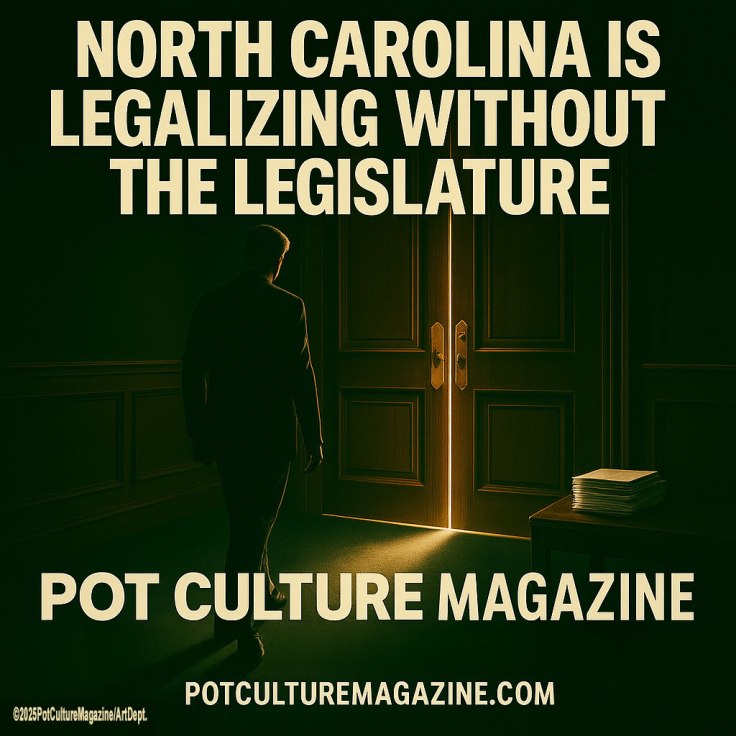
North Carolina didn’t vote to legalize weed. Its lawmakers didn’t pass a bill. And yet, here we are, watching a slow-motion end-run toward regulated cannabis, engineered from the governor’s office. On June 6, Governor Josh Stein signed an executive order creating the state’s first official Cannabis Advisory Council. It’s not legalization. But it’s not nothing either.
The council has 24 members. Their job? Draft a full policy framework for medical and adult-use cannabis by the end of 2026. Not recommend. Draft. It’s a technical move with political teeth, and it’s being framed as a way to “study impacts and provide guidance.” But this is not a neutral panel of lab coats and lawyers. It’s stacked with policy veterans, prosecutors, cannabis advocates, health reps, and law enforcement brass—all of them appointed directly by Stein. Including, for the first time in state history, tribal representation from the Eastern Band of Cherokee Nation.
The tribe is already doing what the state refuses to do, safely and legally. The Cherokee Medical Cannabis Program is up and running in Qualla Boundary territory, operating outside state jurisdiction. They’ve licensed growers, approved dispensaries, and issued patient cards. Their system isn’t theoretical. It’s real, functioning, and putting pressure on the state to catch up.
For Stein, the executive order is a political weapon disguised as a policy tool. North Carolina’s legislature has repeatedly blocked medical cannabis bills, often killing them in committee before public hearings. Lawmakers claim it’s about youth use, THC content, or lack of federal approval. But the votes say otherwise. Public support for medical weed in North Carolina is above 70%. Stein’s move lets him sidestep the deadlock.
Council members include people like District Attorney Ben David, a long-time advocate for criminal justice reform, and Megan Davies, former state epidemiologist. But it also includes law enforcement, substance abuse counselors, and tribal government officials. This isn’t a rubber-stamp group. It’s a field of rivals. And their first deadline hits in March 2026: a draft report with legal, regulatory, and public health recommendations. Final report due in December.
Advisory councils like this have been used in states like Virginia and Minnesota, where lawmakers wanted more time or political cover before full legalization. In some cases, they led to quick rollouts. In others, they became bureaucratic black holes. What Stein’s council actually delivers will depend on how aggressive its members are—and how much political capital he’s willing to burn backing their recommendations.
North Carolina still has no legal adult-use market. No statewide medical system. But it has a governor, a tribe, and now a council all pushing in the same direction. The question isn’t whether change is coming. It’s whether the legislature will finally lead, or get dragged by its own executive branch.
© 2025 Pot Culture Magazine. All rights reserved. This content is the exclusive property of Pot Culture Magazine and may not be reproduced, distributed, or transmitted in any form or by any means without prior written permission from the publisher, except for brief quotations in critical reviews.
Discover more from POT CULTURE MAGAZINE
Subscribe to get the latest posts sent to your email.

Leave a comment