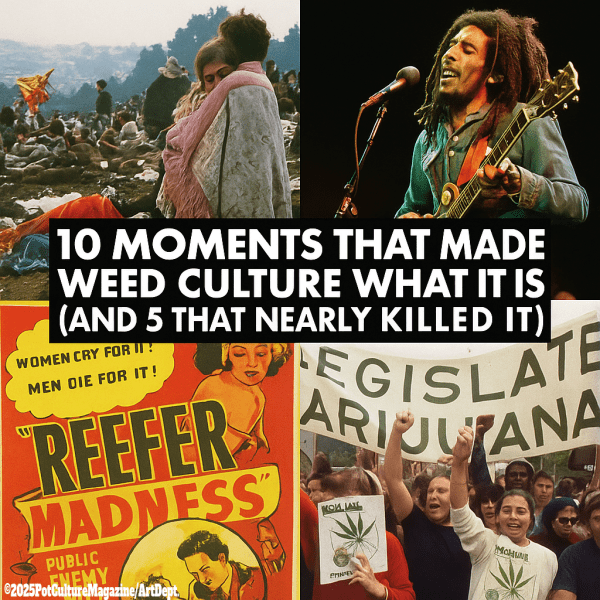
Weed culture didn’t just happen; it was built in smoke-filled rooms, protest rallies, and courtroom battles. From 420’s origin to corporate takeovers that nearly killed it, these are the moments that shaped cannabis history. Discover how legends like Jack Herer, Steve Hager, and the Waldos created a movement bigger than any strain.
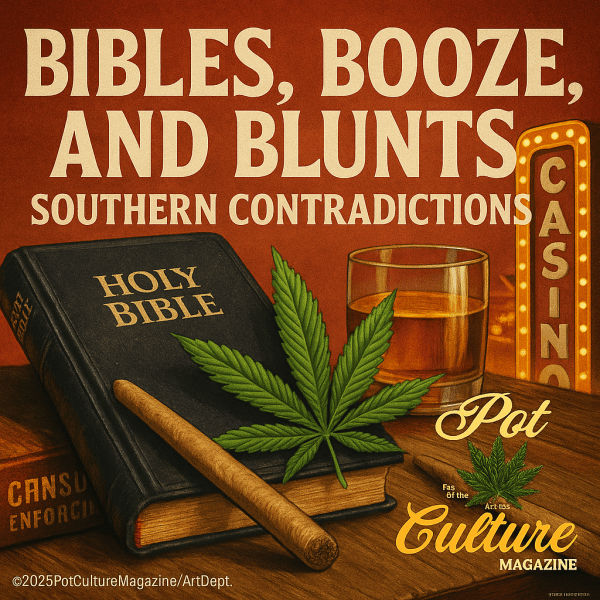
Bibles, Booze, and Blunts: Southern Contradictions
The South loves bourbon and drive-through daiquiris, but weed? Still treated like the devil’s work. We dig into the Bible Belt’s quiet cannabis reforms and the hypocrisy keeping millions criminalized
A Dream of Freedom: What If We Celebrated the Fourth Like We Were Actually Free?
A warm summer evening sets the tone for a sharp reflection on cannabis, culture, and the meaning of freedom. Pot Culture Magazine imagines a future where lighting up on the Fourth of July is more than a risk. It is a right. A dream of marijuana rescheduling blends with memories of perfect summers.
Freedom for Sale, Weed Justice Delayed
This Fourth of July, millions celebrate freedom while thousands remain locked up for cannabis. Pot Culture exposes the hypocrisy of American independence in a country still punishing people for weed. From prison cells to party joints, Freedom for Sale explores how burning one is still a radical act of truth in a nation built on contradictions.
Too High to Fly: TSA Dogs Don’t Care
Every summer, Reddit stoners spiral into panic about TSA dogs and airport cannabis busts. This feature separates myth from reality, breaking down what drug dogs actually detect, what TSA really cares about, and where your weed could land you in deep trouble. If you think peanut butter tricks will save you, this is your pre-flight gut check.
$24.7 Billion Later, Legal Weed’s Massive Tax Haul Is Getting Harder to Ignore
Legal cannabis has generated nearly $25 billion in tax revenue, with $4.4 billion collected in 2024 alone. States benefit significantly, funding various community programs. However, equity issues remain, as many who contributed to legalization are still marginalized. The promise of justice is overshadowed by bureaucracy and economic barriers for legacy growers.