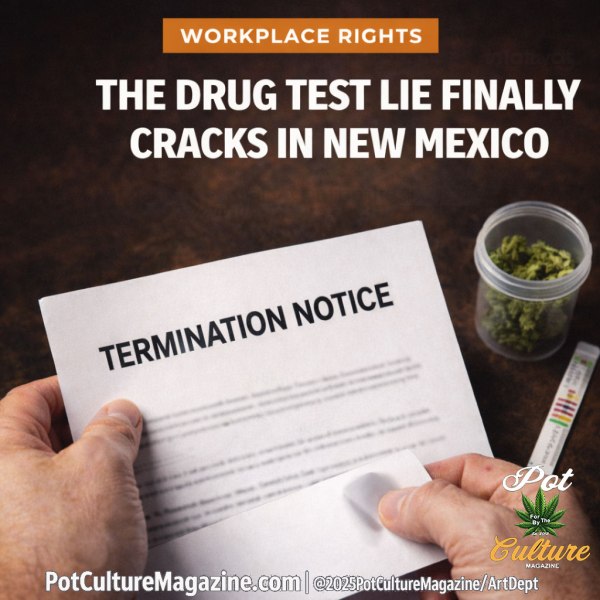
New Mexico’s Senate Bill 129 challenges the long standing assumption that a positive cannabis test equals impairment. By separating outdated drug testing from actual workplace safety, the bill aims to protect medical cannabis patients from job discrimination while preserving employer authority over real on the job risk and misconduct.
Reefer Report Card Vol. 32: Kicking the Can Again
This week’s Reefer Report Card tracks a familiar pattern in cannabis policy: delay dressed as progress. Federal lawmakers punted again on hemp regulation, states flirted with dismantling legal markets, and patients were left waiting. Oversight weakened, accountability faded, and reform stalled. Another week in weed, graded.
Texas Moves to Ban Smokable Cannabis
Texas regulators are moving to eliminate smokable cannabis without passing a law. After lawmakers failed to ban THC products, state agencies rewrote testing standards and imposed crushing fees that push legal cannabis out of reach. The result is prohibition by process, driven by selective morality, political pressure, and regulatory maneuvering.
Legal Weed Is Under Threat
Ballot initiatives in Massachusetts, Maine, and Arizona aim to dismantle regulated adult-use cannabis markets while keeping possession legal. The strategy avoids prohibition language while stripping away oversight, legal supply, and market stability. If successful, these efforts could establish a precedent that makes voter-approved cannabis legalization reversible nationwide.
THE CON OF CANNABIS REFORM
Cannabis rescheduling keeps resurfacing in headlines, then vanishes without action. This feature breaks down how federal officials repeatedly float reform language, let deadlines pass, and leave the law untouched. By tracing the mechanics behind the stall, the piece exposes why delay is intentional, who benefits from it, and why cannabis reform remains trapped in federal limbo.
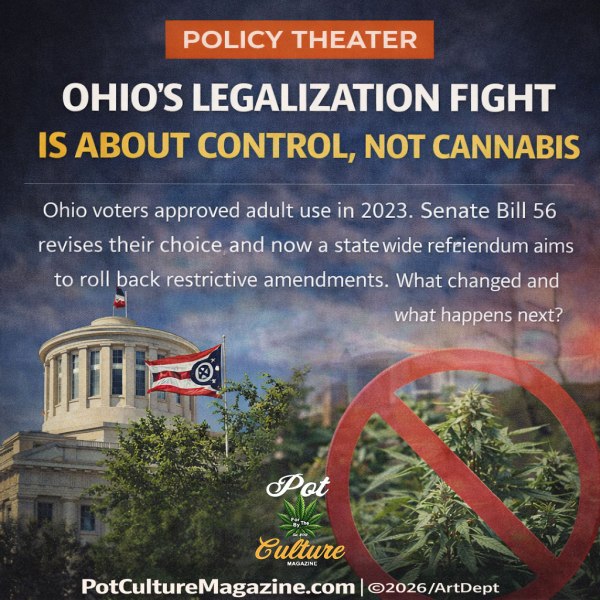
Ohio Tightens Screws On Legal Weed
Ohio voters approved legalization, but lawmakers followed with Senate Bill 56, a measure that tightens control through enforcement expansion, licensing caps, and market restrictions. This piece breaks down what the law actually changes, who benefits from the new structure, and how state authority grows while legal access narrows after the vote.