Filed Under: Legalized and Pulverized
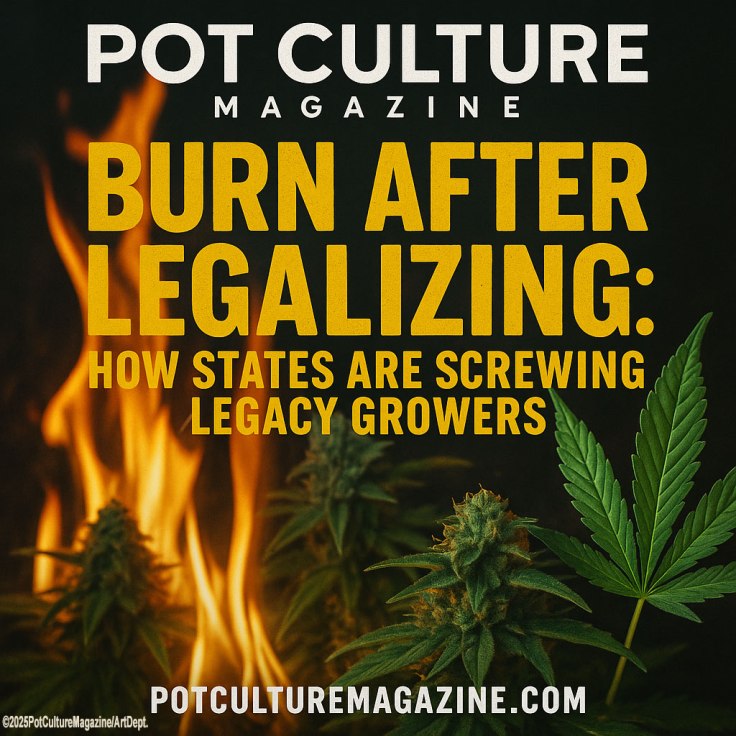
John Casali grows weed legally now. But that wasn’t always the case. In the 1990s, Casali was raided by the feds and spent five years in federal prison for cultivating cannabis in Humboldt County. Today, he runs Huckleberry Hill Farms, one of the few surviving legacy operations in California’s legal market. And even with the paperwork, the licenses, and the branded jars, he says it’s harder than ever. “They’ve created a system that really works for Big Agriculture, but doesn’t work for the small farmer that really created this business.”
He’s not wrong.
Across legal states, the people who built the cannabis industry, growers who risked their freedom when weed was still a felony, are getting forced out of the game. Legalization was sold as a gateway to opportunity. For most legacy operators, it’s turned into a state-sanctioned shutout.
Start with the licensing fees. In California, the combined cost of state and local cultivation licenses can run over $100,000 a year. That’s before you count the consultants, lawyers, inspections, taxes, packaging rules, security compliance, and seed-to-sale tracking software. In New York, the rollout of “justice-focused” licenses has been so botched, tangled in lawsuits, and delayed by bureaucratic infighting that many eligible legacy applicants are still waiting while corporate-backed dispensaries pop up on every corner. And in Illinois? If you didn’t have a lobbyist and deep pockets, you were never getting in.
That’s not legalization. That’s gatekeeping.
And it gets worse at the local level. In California alone, hundreds of municipalities have banned cannabis cultivation entirely, despite statewide legalization. Others use zoning and permitting laws to make starting a small grow functionally impossible. The message is clear: if you didn’t already have capital, land, and a legal team, you’re not welcome. If you came up in the culture instead of coming out of a boardroom, you’re a liability, not an asset.
So who’s left standing? The corporate players. The equity firms. The well-funded multi-state operators with no real connection to cannabis beyond a spreadsheet. They walk in with pitch decks and million-dollar budgets and walk out with licenses. They’re not growing because they care about terpenes or tradition. They’re growing because they see margin.
Meanwhile, the original growers, people like Casali and thousands more who never got the same media profile, are being bled out. The market is oversaturated with cheap weed grown in massive greenhouses. Dispensaries are demanding volume at wholesale prices that barely cover the cost of production. Taxes are stacked at every level. The small, independent farmer can’t keep up. Not because their product isn’t good, but because the system is rigged against them.
And let’s talk about what happens inside the store.
Ask a budtender where the weed came from, and you might get a brand name, maybe a THC percentage, but you probably won’t hear about the grower. The packaging is clean, the design is slick, and the product might be decent, but the story is gone. The soul is gone. The people who kept this culture alive when it was criminal are nowhere to be seen on the shelf.
To make it worse, the term “legacy” is being hijacked. Corporate brands that never touched the plant before 2016 are calling themselves “legacy” because their marketing team thinks it makes them sound authentic. It’s a slap in the face to the growers who spent decades underground, survived raids, took risks, and held the line. If you want to know who’s real and who’s just cashing in, check out our blog post What Does ‘Legacy’ Even Mean Now? for the full breakdown.
This isn’t just exclusion, it’s cultural erasure.
States could have done it differently. They could have given priority licenses to growers with a documented history. They could have waived fees, offered grants, and streamlined the approval process for people who already knew how to cultivate. Instead, they handed the industry to outsiders. Suits who never risked a day of jail time. PR teams that never saw a crop fail in the rain. Shareholders who never rolled a joint.
What legacy growers are facing isn’t just economic pressure. It’s systemic rejection. It’s being told, “Thanks for your service, now get the fuck out.”
But the fight’s not over.
People like Casali are still out here, holding the line, telling the truth, and refusing to be erased. And they deserve more than symbolic applause. They deserve support, visibility, and a seat at the table they built.
Because without them, this whole thing is just empty branding wrapped around mediocre weed.
Copyright © 2025 Pot Culture Magazine. All rights reserved. This content is the exclusive property of Pot Culture Magazine and may not be reproduced, distributed, or transmitted in any form or by any means without prior written permission from the publisher, except for brief quotations in critical reviews.
F O R T H E C U L T U R E B Y T H E C U L T U R E
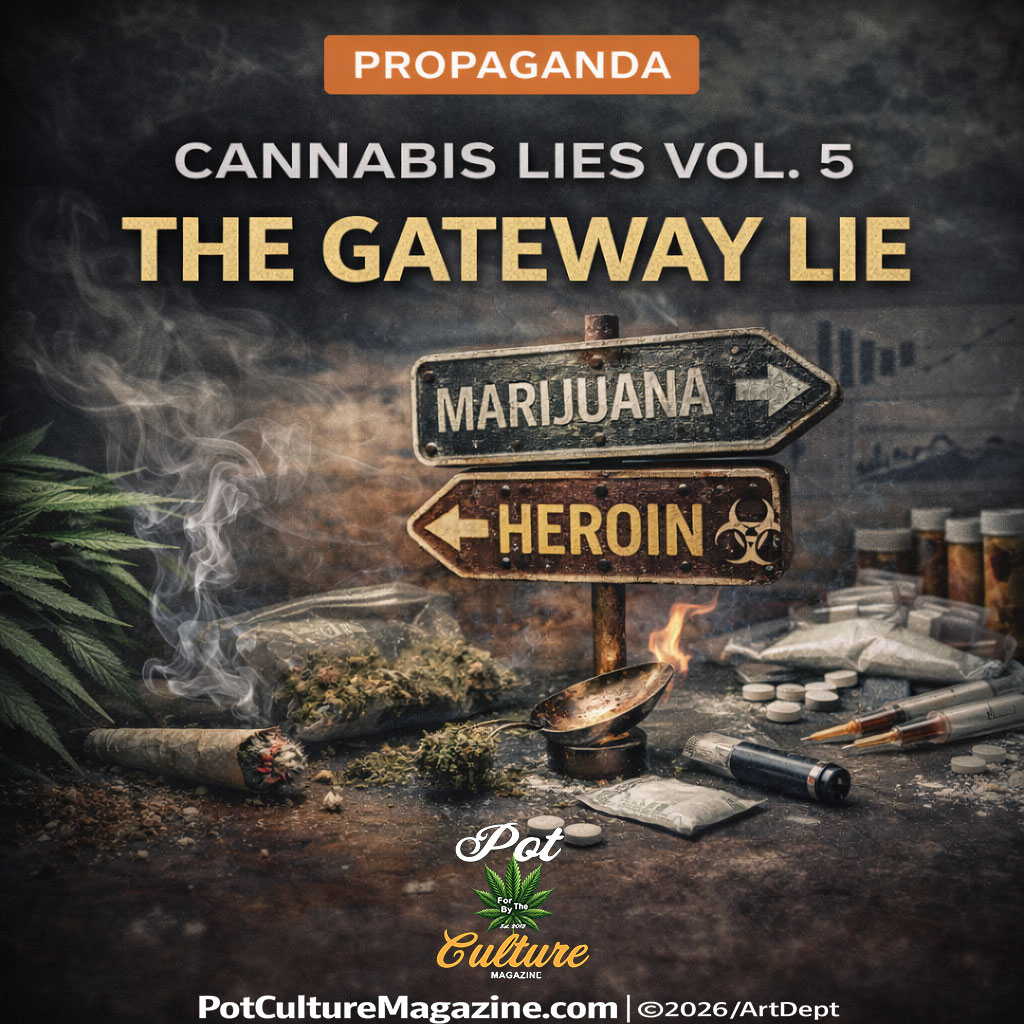
CANNABIS LIES Vol. 5: The Gateway Lie
For decades, politicians have claimed marijuana is a gateway to heroin and harder drugs. Federal youth surveys, NSDUH data, and NIDA’s own language tell a different story. Cannabis use is widespread, hard drug use remains rare, and most users do not progress. The data dismantles one of prohibition’s most durable fear narratives.


The Study That Pretends Cannabis Does Nothing
A new cannabis study claims marijuana does nothing for anxiety, depression, or PTSD. The reality is far more complicated. Decades of federal restrictions, limited research access, and synthetic substitutes have shaped the science. This breakdown exposes how incomplete data and selective interpretation continue to drive misleading headlines about cannabis and mental health.
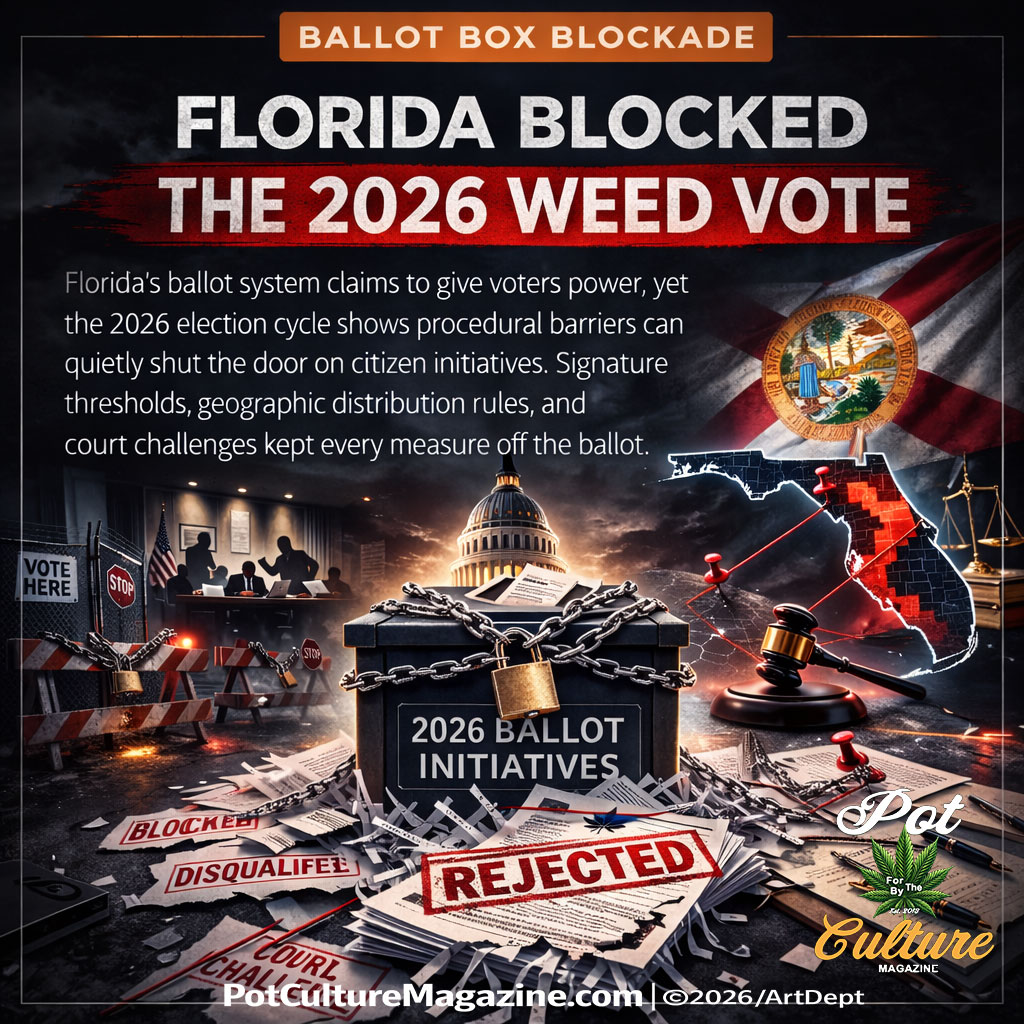
Florida Blocked the 2026 Weed Vote
Florida’s ballot system claims to give voters power, yet the 2026 election cycle shows how procedural barriers can quietly shut the door on citizen initiatives. Signature thresholds, geographic distribution rules, and court challenges blocked every measure from reaching voters, revealing how cannabis legalization fights are often decided by bureaucratic design long before election day.
Discover more from POT CULTURE MAGAZINE
Subscribe to get the latest posts sent to your email.

Leave a comment