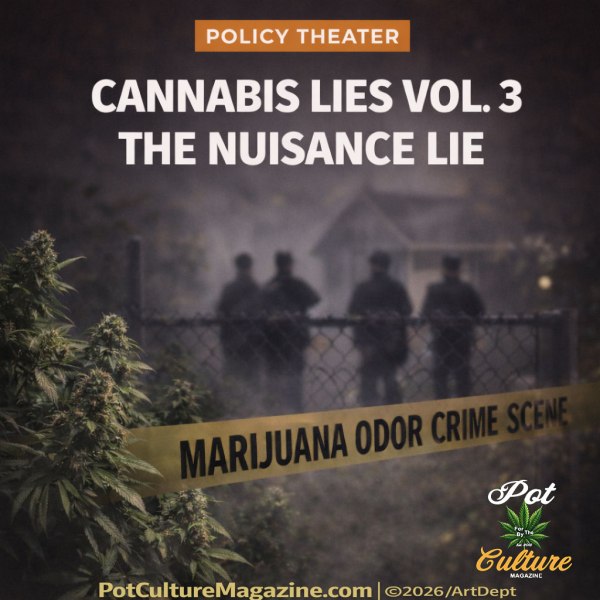
Arizona lawmakers are advancing legislation that would criminalize “excessive” marijuana odor detectable across property lines. Cannabis Lie Vol. 3 examines SB 1725 and SCR 1048, the proposed misdemeanor penalties, the legal implications of State v. Sisco, and why critics argue this is a backdoor attempt to reintroduce cannabis criminalization under the banner of nuisance law.
THE MONEY BEHIND CANNABIS PROHIBITION
Cannabis prohibition in the United States no longer survives on raids and panic films. It survives through ballot thresholds, legislative rewrites, regulatory choke points, and lobbying disclosures. This documented audit follows the filings behind legalization war chests, opposition strategies, and the institutional structures that still shape cannabis policy even after voters move on.
THE CANNABIS LIE: Vol. 2
THE CANNABIS LIE is a reporting series examining how cannabis policy turns shaky assumptions into hard penalties. In THE CANNABIS LIE: Vol. 2, The Fiction of Impairment, THC detection is often treated like proof of impairment, even though blood levels show a weak, inconsistent relationship to functional driving ability. This installment explains why per se THC limits and zero tolerance rules create false certainty, why urine metabolites only show prior exposure, and why real impairment should be demonstrated through behavior and context, not presumed from a lab result.
Why Black People Still Pay More for Weed
Cannabis use rates are similar across races, but arrests are not. Black Americans are still arrested for marijuana possession at several times the rate of white Americans, even as legalization spreads. This investigation breaks down the data, the role of possession-only enforcement, and why legalization without repair keeps old lines firmly in place.
THE CANNABIS LIE: Vol. 1
This new investigative series begins by confronting one of cannabis policy’s most durable myths. THC percentage became a convenient shortcut for harsher laws, even though higher potency has never equaled greater danger. Vol. 1 documents how numbers replaced evidence and how courts, media, and policy still punish people for a claim that cannot survive scrutiny.
The Drug Test Lie Finally Cracks in New Mexico
New Mexico’s Senate Bill 129 challenges the long standing assumption that a positive cannabis test equals impairment. By separating outdated drug testing from actual workplace safety, the bill aims to protect medical cannabis patients from job discrimination while preserving employer authority over real on the job risk and misconduct.