Filed under: Legalization’s Toxic Aftertaste
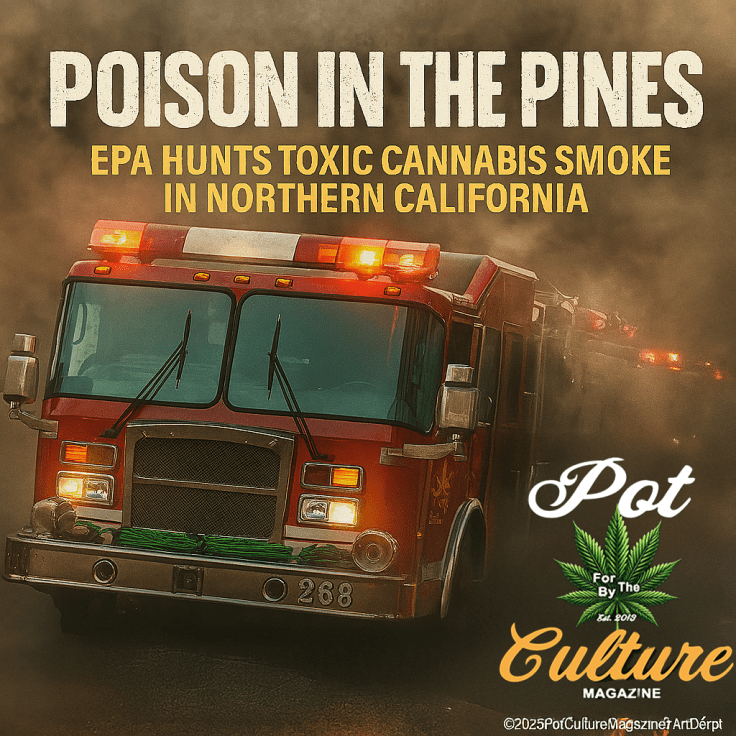
California is choking on poisonous smoke. On July 1, Siskiyou County officials declared a local emergency after thick pesticide-laced air drifted into rural towns. Illegal cannabis growers burned piles of plant waste soaked in banned chemicals. The fires released toxic compounds, including organophosphates and carbamates, which can act as carcinogens and nerve agents. Residents reported headaches, nausea, and breathing difficulties as the haze lingered for miles. County labs identified twenty-seven restricted or off-label pesticides in the debris, some smuggled from overseas, and none approved for cannabis cultivation. A multi-agency task force, including the EPA, CalEPA, DEA, and Siskiyou authorities, began soil, air, and water testing. Federal officials warned of serious risks to public health and the environment.
Nine days later, federal agents raided Glass House Farms in Camarillo and Carpinteria. Immigration and Customs Enforcement, supported by the DEA and Homeland Security, carried out the operation on July 10th. Three hundred sixty-one people were arrested, and agents said they rescued fourteen undocumented minors working in the greenhouses. Jaime Alanís García, a fifty-seven-year-old farmworker, fell thirty feet from a rooftop while trying to escape and later died. His family described him as “a hardworking provider who feared deportation.” Tear gas and flash grenades filled the air as protesters clashed with heavily armed agents. State lawmakers denounced the raid, calling it “an excessive show of federal power.”
These two events are not random. Together, they expose cracks in California’s legalization experiment. The state’s punishing cannabis taxes and regulatory burdens have driven operators and consumers alike into the shadows. That underground economy breeds environmental disasters, unsafe products, and violent federal interventions.
On July first, California raised its cannabis excise tax from fifteen to nineteen percent. That tax, combined with city and county fees, testing costs, licensing expenses, and track and trace compliance, makes legal operations prohibitively expensive. For many small and mid-sized growers, staying compliant has become nearly impossible.
Analysts estimate that roughly sixty percent of cannabis sold in California comes from unregulated sources (source). These unlicensed growers often use cheap, unapproved pesticides and avoid mandatory testing. When enforcement closes in, some torch their crops to destroy evidence, sending toxic plumes over entire communities and wildlife corridors.
Glass House Farms became a target partly because many licensed operations rely on undocumented workers. With thin profit margins, growers often cannot afford higher wages or benefits. Federal law still classifies cannabis as illegal, giving ICE agents the justification to act. The raid left hundreds detained, and at least one U.S. citizen, George Retes, caught in the sweep. Retes, an Army veteran, said, “Agents threw me to the ground, used tear gas, and kept me in detention for three days before releasing me without charges.” He has since filed a lawsuit.
FOR THE CULTURE BY THE CULTURE

Chris Simunek and the Culture They Tried to Bury
In this exclusive interview, Chris Simunek, former Editor in Chief of High Times, reflects on the outlaw era of cannabis culture when speaking up about…
Keep reading

Steve Hager’s High Times Legacy
Steve Hager transformed High Times from a chaotic drug tabloid into a spiritual and cultural force for cannabis. Discover how he created the Cannabis Cup,…
Keep reading
The industry is rattled. Caren Woodson, an advocate with the California Cannabis Industry Association, described the current climate as “deeply uncertain.” The group has begun running workshops to prepare members for potential federal raids and teaching them how to respond if agents arrive unannounced.
Public health officials remain on edge as they try to contain the Siskiyou disaster. The EPA’s regional director pledged coordination with state and local agencies to prevent further contamination. County leaders have issued new warnings and deployed rapid response teams to monitor air, soil, and water. Sheriff Jeremiah LaRue called the situation “a form of chemical warfare” to emphasize the dangers of illegal pesticides acting like nerve agents when burned.
Sacramento lawmakers are considering emergency reforms. Assembly Bill 564 would freeze the excise tax at fifteen percent for six years (read more). Other proposals aim to cap licensing fees and require counties to open up retail access. Advocates are also calling for stricter pesticide testing and better enforcement against unlicensed growers.
Whether these changes come fast enough is uncertain. California’s legal cannabis system resembles a dam under pressure. Temporary fixes buy time, but the foundation is cracking. As long as prices remain high and access is uneven, the illicit market will thrive, and public health emergencies like Siskiyou will repeat.
The pesticide fires in Siskiyou and the deadly ICE raid in Camarillo share a common root. Both are products of a system that leaves growers legal and illegal, desperate to survive. Both ended in tragedy, with poisoned air in one case and a dead farmworker in the other. Both have shaken public confidence in the promise of legalization.
Unless California simplifies its laws, lowers costs, and expands access, the entire experiment may collapse. When that happens, the black market will be waiting to take over every gap left behind.
This is not just a story about smoke and raids. It is about whether California can deliver on the vision of safe, equitable cannabis or let its own system burn it to ash.
©2025 Pot Culture Magazine. All rights reserved. This content is the exclusive property of Pot Culture Magazine and may not be reproduced, distributed, or transmitted in any form or by any means without prior written permission from the publisher, except for brief quotations in critical reviews.
Discover more from POT CULTURE MAGAZINE
Subscribe to get the latest posts sent to your email.

Leave a comment