Filed Under: Fusion Cuisine for the Faded

There is something sacred about the first bowl of the day. You crack the jar, eyeball the grinder, and if you are like most heads with a half-cured Tupperware stash, you combine whatever is left. Jealous Banana with Boss Cake. Lemon Cherry with Gorilla Glue. The random salad bowl of weed is not new. But here is the twist. It is not just stoner chaos. Mixing strains is becoming a ritual. And it might actually make sense.
At Pot Culture Magazine, we do not just smoke. We investigate. So we rolled up our sleeves, cracked open our mixed bags, and asked the question. Does mixing strains really change the high, or is it just a pothead placebo?
Turns out, it is not bullshit. When you combine two strains, you are not just stacking THC numbers. You are merging terpene profiles, cannabinoid ratios, and chemical effects in real time. It is chemistry by trial and error, and according to terpene researchers and seasoned smokers alike, the entourage effect makes these mashups hit different.
Want to calm your body without fogging your brain? Blend a mellow Indica like Peanut Butter Breath with a bright hybrid like Tropical Cherry. Looking to ride the line between relaxation and paranoia? Throw Gorilla Glue Number Four into anything and see what happens. The results are not always predictable, but that is the fun.
Even without a lab, you can feel it. That morning, we lit up a bowl of Jealous Banana at twenty-six percent and Boss Cake at twenty-eight. We were not expecting much beyond a sugar rush and a nap. What we got instead was full-body calm with a mental float. Call it a super sandwich for the soul. A salad of surprise. A reminder that weed, like people, plays better with others.
Is there hard science backing every bowl blend? Not yet. But there is evidence. The entourage effect is real. Terpenes like myrcene, limonene, and caryophyllene interact in measurable ways. And while no one is publishing studies on strain soup for the soul, the logic is there. More inputs mean more possible outcomes.
Of course, this is not for rookies. You can go too far. Mixing a heady Sativa with a heavy Indica can either balance the buzz or lock you into the couch while your brain runs a four-minute mile. If you are chasing consistency or dosing for medical reasons, salad bowls are a terrible idea. But if you are a creative type or a ritual smoker looking for something new, mixing strains is one of the last wild zones in an industry trying to standardize everything.
Want more? Our blog post “So You Trusted a Strain Review—Now What?” digs into why strain names are increasingly meaningless and why trusting your own blend might be the best way forward.
In a world of QR-coded compliance, mixing strains is the one thing that still feels like old-school weed culture. Improvised, unpredictable, sometimes stupid, but often better than anything you could buy in a jar.
So go ahead. Make a mess. Call it a salad. Roll up a sandwich. And remember, just because it is not on the menu does not mean it is not fire.
© 2025 Pot Culture Magazine. All rights reserved. This content is the exclusive property of Pot Culture Magazine and may not be reproduced, distributed, or transmitted in any form or by any means without prior written permission from the publisher, except for brief quotations in critical reviews.
F O R T H E C U L T U R E B Y T H E C U L T U R E

CANNABIS LIES Vol. 5: The Gateway Lie
For decades, politicians have claimed marijuana is a gateway to heroin and harder drugs. Federal youth surveys, NSDUH data, and NIDA’s own language tell a different story. Cannabis use is widespread, hard drug use remains rare, and most users do not progress. The data dismantles one of prohibition’s most durable fear narratives.

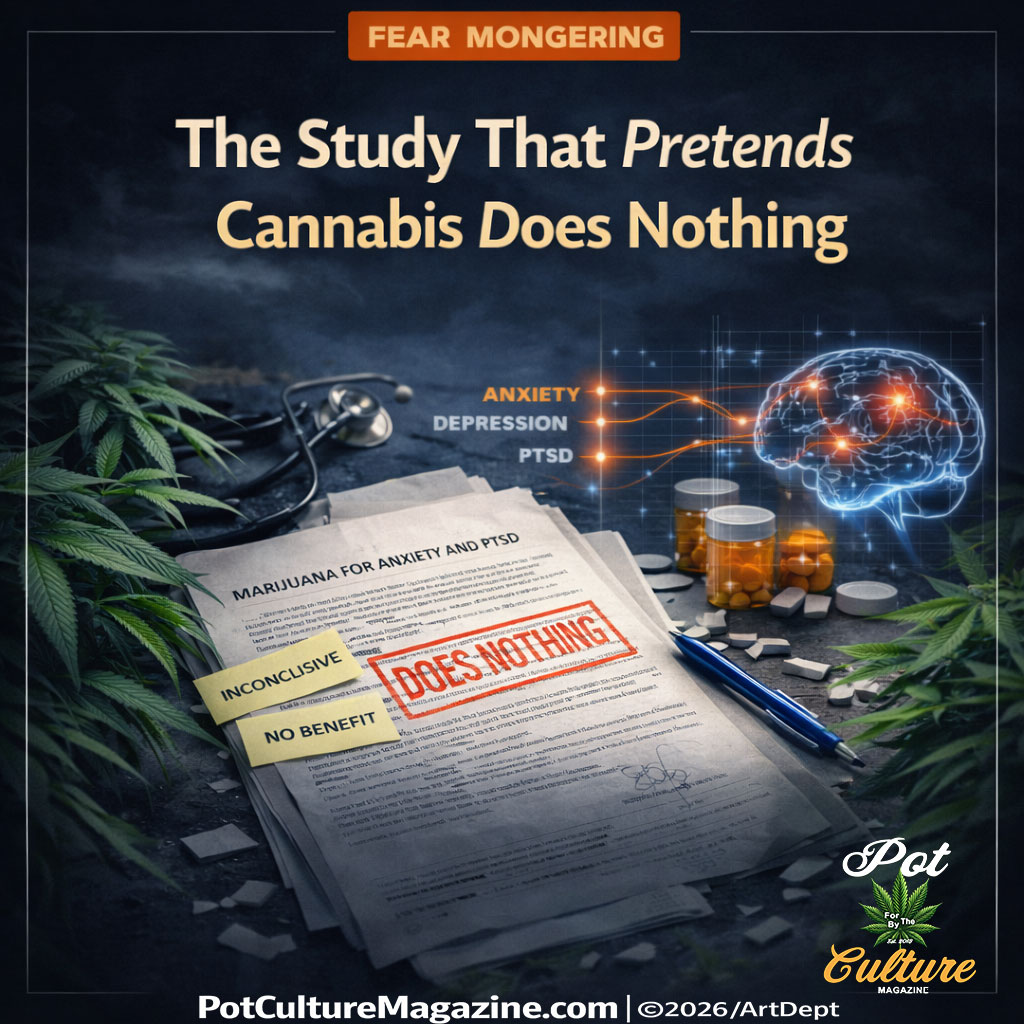
The Study That Pretends Cannabis Does Nothing
A new cannabis study claims marijuana does nothing for anxiety, depression, or PTSD. The reality is far more complicated. Decades of federal restrictions, limited research access, and synthetic substitutes have shaped the science. This breakdown exposes how incomplete data and selective interpretation continue to drive misleading headlines about cannabis and mental health.
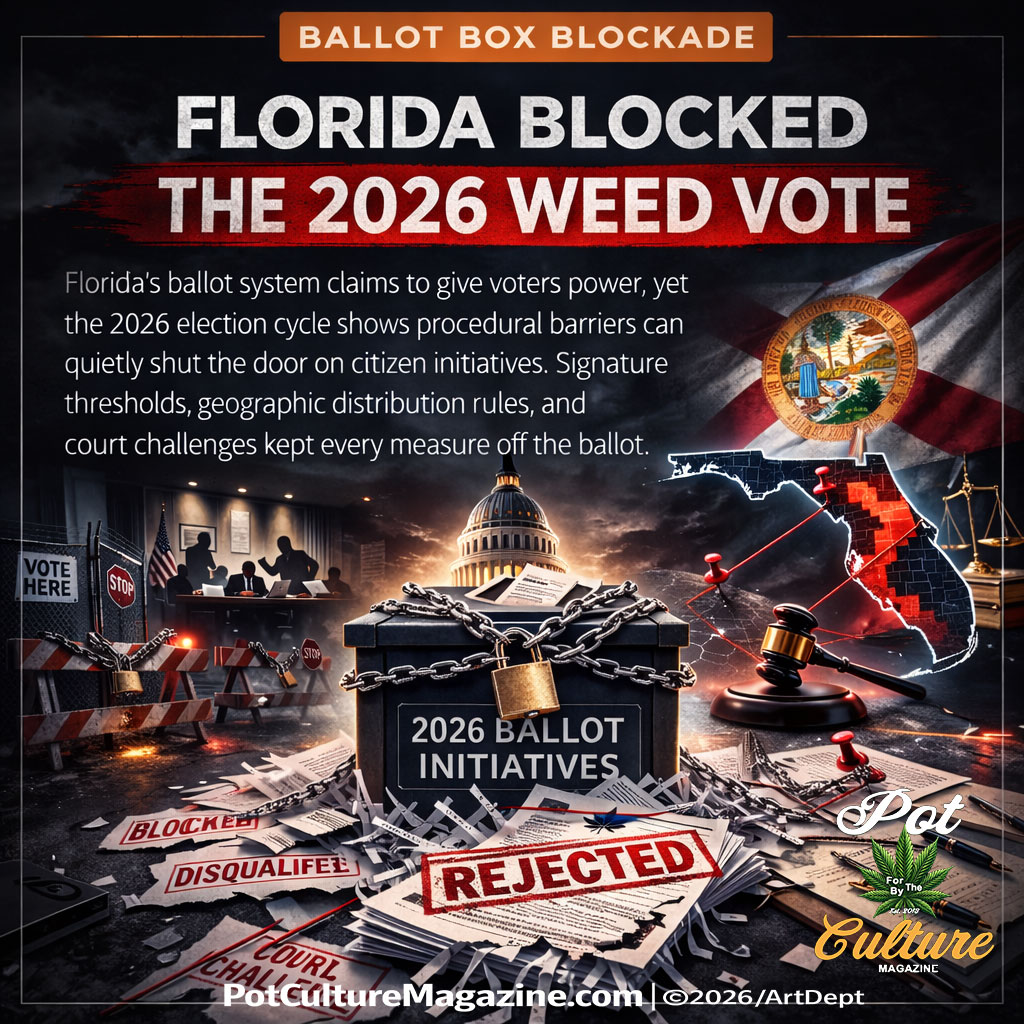
Florida Blocked the 2026 Weed Vote
Florida’s ballot system claims to give voters power, yet the 2026 election cycle shows how procedural barriers can quietly shut the door on citizen initiatives. Signature thresholds, geographic distribution rules, and court challenges blocked every measure from reaching voters, revealing how cannabis legalization fights are often decided by bureaucratic design long before election day.
Discover more from POT CULTURE MAGAZINE
Subscribe to get the latest posts sent to your email.

Leave a comment