Filed Under: Botched Operations
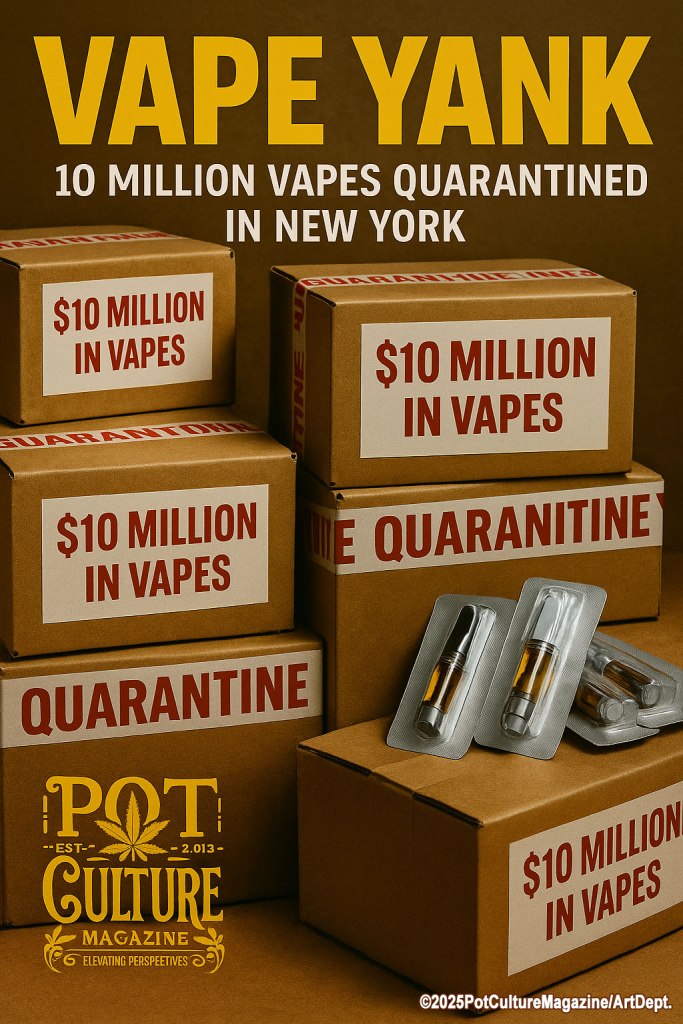
New York’s cannabis market just got smacked in the face with another embarrassment. More than $10 million in cannabis vapes and infused pre-rolls have been yanked from shelves and quarantined statewide. Brands like Stiiizy and mfused—heavyweights in the industry—are caught in the blast radius, all because of one licensed processor accused of playing shell games with out-of-state oil.
At the center of the mess is a practice called inversion—a fancy term for bringing in product from outside New York and slapping a legal label on it. That’s a big no in the Empire State, where cannabis must be grown and processed in-state. According to insiders, the company allegedly skirted extraction rules by using oil not extracted in New York. That violation triggered an Office of Cannabis Management (OCM) investigation, which snowballed into a statewide freeze.
Dispensaries across New York are now sitting on millions in inventory they can’t sell. Some shop owners are calling it the final straw. “We’re already scraping to survive. Now I’ve got $60,000 in product I can’t move,” said one Manhattan operator who asked to remain anonymous.
To be clear, these retailers did nothing wrong. They bought legal products from legal distributors, paid legal taxes, and followed every by-the-book regulation. But in a move that screams bureaucratic panic, OCM is punishing everyone—brands, retailers, and consumers—for the actions of a single processor. It’s regulatory carpet bombing.
We reached out to Stiiizy for comment but had not received a response by the time of publication.
New York’s Office of Cannabis Management (OCM) has claimed this was necessary to maintain public trust and product safety. But their credibility has already taken serious hits—botched rollouts, delayed licensing, and inconsistent enforcement have turned one of the most anticipated legal markets into a barely functioning shell of its potential.
This isn’t just a crisis of logistics. It’s a crisis of confidence. Retailers don’t know what’s safe to stock. Consumers don’t know what’s safe to smoke. And legacy operators watching from the sidelines are laughing—or crying.
What’s worse, this freeze comes as the market finally started showing signs of life. After months of gridlock, dispensaries were seeing better foot traffic, and legal products were slowly chipping away at the still-dominant illicit market. That momentum just got smoked.
New York isn’t alone in this kind of heavy-handed mess. States like California and Michigan have seen similar backlashes from over-regulation, but New York’s model is uniquely fragile. With fewer than 100 adult-use dispensaries open statewide and ongoing lawsuits delaying new licenses, there’s zero room for errors—especially of this magnitude.
And let’s not forget the consumer. They’re the ones stuck with fewer choices, higher prices, and a growing distrust in legal cannabis. Who wants to shop at a dispensary if the products might vanish tomorrow?
It’s not that we shouldn’t have oversight. But this isn’t oversight. It’s chaos disguised as control. The state created a system too brittle to handle real-world complications, then blamed the people playing by their rules.
Until regulators can separate bad actors from honest operators and enforce policy without lighting the whole industry on fire, New York’s cannabis future will remain frozen, just like those vape carts collecting dust on locked dispensary shelves.
Copyright © 2025 Pot Culture Magazine. All rights reserved. This content is the exclusive property of Pot Culture Magazine and may not be reproduced, distributed, or transmitted in any form or by any means without prior written permission from the publisher, except for brief quotations in critical reviews.
Discover more from POT CULTURE MAGAZINE
Subscribe to get the latest posts sent to your email.

Leave a comment