Filed Under: Rewind, Rebellion & Resin
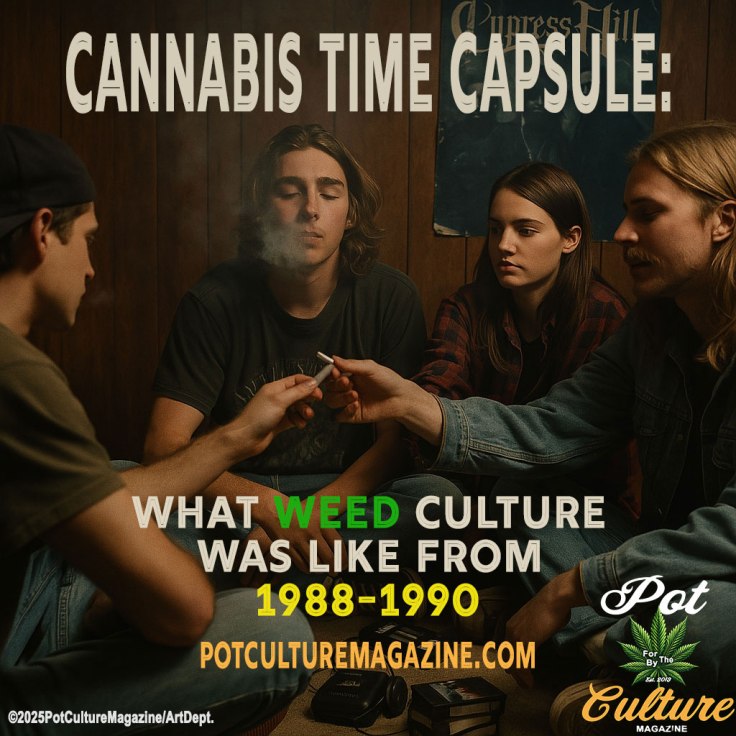
By the late ‘80s, the American War on Drugs had gone full Orwell. Nancy Reagan was on every screen telling you to “Just Say No,” D.A.R.E. officers were infiltrating classrooms like mall cops with a God complex, and Cheech & Chong were being replaced by After School Specials and urine tests. But if you knew where to look, a very different culture was taking shape in basements, parking lots, and the back seats of every beat-to-hell Civic across the country.
This is cannabis culture in the twilight of the 1980s, gritty, analog, and real. If the government was waging psychological warfare on stoners, then stoners fought back with mixtapes, VHS tapes, and perfectly rolled joints hidden in Altoids tins.
Smoking
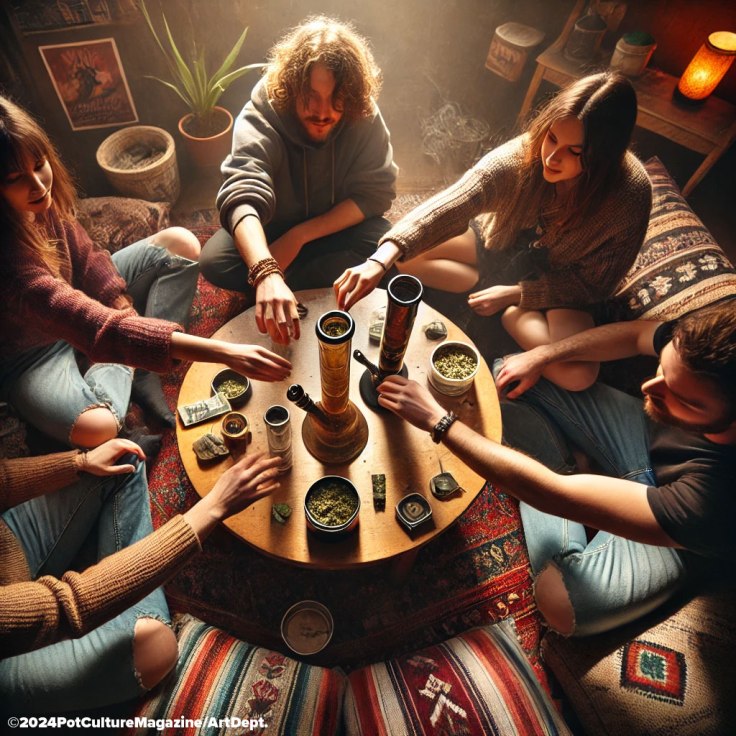
In 1988, nobody was asking for terpene profiles. You bought weed from your cousin’s friend’s sketchy roommate, and it came in a ziplock full of stems and seeds that looked like it had been smuggled inside a sock. This was brick weed, usually compressed Mexican import, brown as a UPS truck and twice as harsh. If you found a bag that smelled faintly of skunk? Jackpot.
Strains? Nobody asked. The words indica and sativa hadn’t crossed the border yet. If it got you high, you smoked it. Period.
Blunts were just starting to appear, mostly influenced by the rising hip-hop scene in NYC, but joints, pipes, and makeshift apple bowls were the standard issue. The rich kids had bongs, often held together with duct tape and teenage delusion. You learned to take your hits fast, quietly, and with one ear on the door.
A dime bag was exactly $10. Sometimes, you’d pay $20 for a quarter if you knew a “guy.” Quality was inconsistent. Weed was bought blind, judged by weight and word of mouth, and stored in film canisters or Altoids tins unless you wanted your entire backpack smelling like a dead skunk with BO.
Watching
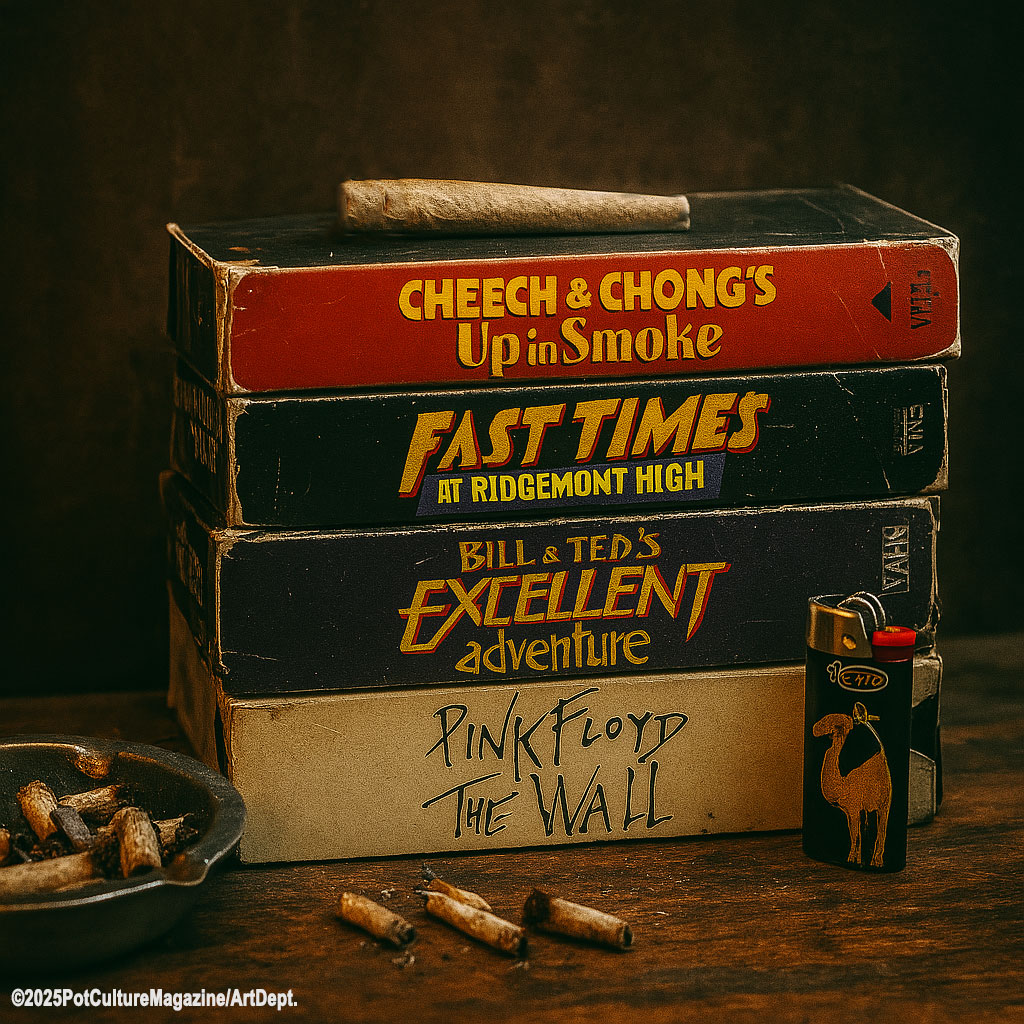
This was the golden era of VHS rebellion. You didn’t stream stoner movies, you passed them around like sacred texts. Fast Times at Ridgemont High, Up in Smoke, Cheech & Chong’s Nice Dreams, Dazed and Confused (which hadn’t dropped yet but would become canon), and midnight showings of Pink Floyd’s The Wall or Heavy Metal were rites of passage.
But even outside the stoner genre, stoners had their staples:
- Heathers (1989): Gen X nihilism meets dark comedy
- Bill & Ted’s Excellent Adventure (1989): Dumb brilliance
- Do the Right Thing (1989): Spike Lee’s acid-laced Molotov cocktail
- _They Live_ (1988): For the conspiracy-loving head who saw subliminal messages everywhere
Late-night TV was pure chaos: USA Up All Night, MTV’s 120 Minutes, Liquid Television, and Night Flight offered psychedelic visuals, weird foreign films, and lo-fi animation perfect for baked brains. Your living room turned into a tripping room the second the static rolled in.
Wearing

Fashion was a strange brew of rebellion and secondhand salvation. Weed fashion wasn’t on runways, it was in Goodwill bins and under flannel jackets. Think:
- Ripped Levi’s, worn until they could stand on their own
- Band tees (Jane’s Addiction, Beastie Boys, Metallica)
- Flannels, oversized and over-washed
- Hemp necklaces made in shop class
- Tie-dye for the Deadheads, Raiders jackets for the West Coast stoners
- Doc Martens, Vans, Converse, pick your subculture
You didn’t wear your weed pride loud unless you wanted to get hassled. Instead, you dressed in layered signals. A Bart Simpson shirt with “Don’t Have a Cow, Man” was code. A Public Enemy patch meant you weren’t playing by Reagan’s rules. And if you were rocking a hemp hat before 1990? You were either a dealer or someone who definitely knew one.
Listening To
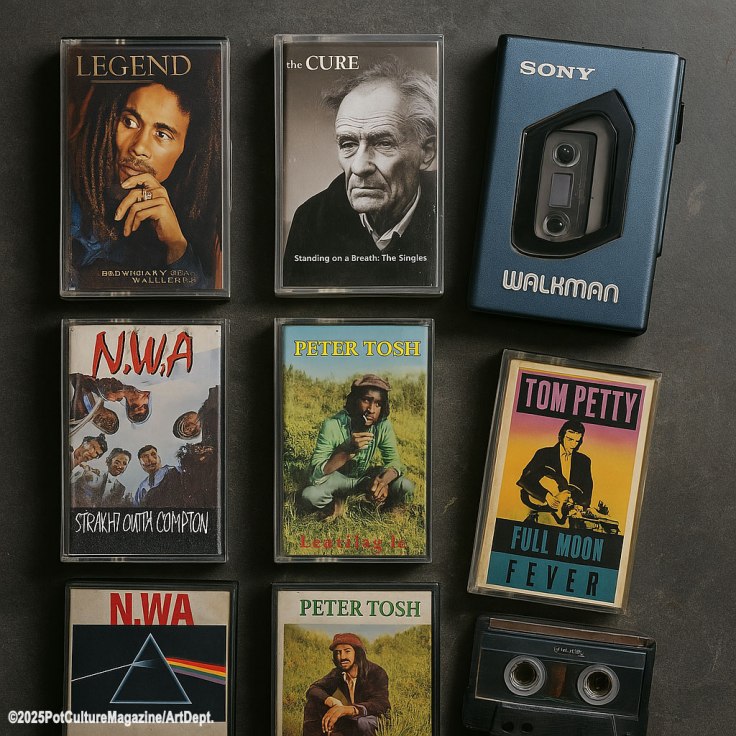
If you didn’t have a Sony Walkman strapped to your hip, were you even conscious?
This was a sonic revolution. Hip-hop was blowing the hinges off reality, and stoners were there for it:
- Public Enemy – It Takes a Nation of Millions to Hold Us Back (1988)
- N.W.A – Straight Outta Compton (1988)
- De La Soul – 3 Feet High and Rising (1989)
Cannabis-coded lyrics were everywhere, subtle, sly, or in-your-face. Meanwhile, the alt scene was rising:
Grunge hadn’t exploded yet, but it was lurking in Seattle’s dive bars. Reggae never left. Peter Tosh, Bob Marley, Steel Pulse, and dub cassettes still made the rounds. Every stoner had a bootleg mixtape with Marley’s “Kaya” next to Cypress Hill’s demo tape, if they were lucky.
The sound quality didn’t matter. What mattered was the feel. Speakers crackling in a garage with a circle of baked teenagers nodding like philosophers? That was the vibe.
Slang & Lingo

The late ‘80s slang hit different:
- “Dank” was the ultimate weed praise
- “Bogart” meant hogging the joint
- “Toasted,” “zooted,” “blazed,” “twisted,” pick your poison
- “Herb,” “bud,” “dope,” “green,” “reefer,” this was pre-“loud” and pre-“gas”
- “Stash” was still a noun and a verb
Slang changed depending on your coast. East Coast heads said “nick” and “dub.” West Coast heads were already saying “chronic” years before Dr. Dre dropped it on vinyl.
Everyone had a “guy,” and the phrase “my guy’s got good shit” was repeated like gospel until that guy ghosted or got locked up.
Legal Landscape

Let’s not romanticize it. This was a hostile era for weed users:
- Ronald Reagan’s anti-drug policies had flooded schools with paranoia
- D.A.R.E. was running Scared Straight sessions with elementary schoolers
- Mandatory minimums put kids away for seeds in the ashtray
- Three-strike laws loomed, especially for Black and Brown communities
- George H. W. Bush took the baton and sprinted toward more surveillance, more prisons
The message from the state was clear: smoke weed, ruin your life.
But stoners weren’t stupid. They adapted. They hid in plain sight, traded info like samizdat, and built a culture underground. They created spaces no authority figure could penetrate, basements, garages, music venues, and head shops with blacked-out windows. That defiance? That’s where modern cannabis culture comes from.
Do you have a memory from that era? A favorite stash spot, mixtape, or smoke session legend? Drop it in the comments. We want to hear the stories that never made it into textbooks.
Copyright © 2025 Pot Culture Magazine. All rights reserved. This content is the exclusive property of Pot Culture Magazine. It may not be reproduced, distributed, or transmitted in any form or by any means without prior written permission from the publisher, except for brief quotations in critical reviews.
F O R T H E C U L T U R E B Y T H E C U L T U R E

Zurich’s Black Market Problem
Zurich’s Züri Can pilot is giving cannabis reformers something stronger than slogans. New interim findings show regulated, nonprofit access reduced several reported health problems while pulling demand away from the illegal market, giving Switzerland fresh evidence for national cannabis reform and putting prohibition panic on weaker ground.


Vegas Knew, Vegas Looked Away
Las Vegas sold tourists the illusion of legal cannabis while fake dispensary style hemp shops operated near the Strip. Vegas Knew, Vegas Looked Away exposes how Nevada’s casino separation rules, weak hemp oversight, delayed Clark County action, and tourist confusion created a loophole economy hiding in plain sight.

CANNABIS LIES Vol. 10: The Medical Lie
For decades, federal policy claimed cannabis had no accepted medical use while opioid prescriptions moved through the health care system by the tens of millions. Cannabis Lies Vol. 10 exposes the contradiction behind Schedule I, blocked research, medical cannabis patients, and the institutions that spent years pretending politics was medicine.
Discover more from POT CULTURE MAGAZINE
Subscribe to get the latest posts sent to your email.

Leave a comment