Filed Under: Etymology, Stoner Linguistics & Elevated Thoughts

We say we “get high,” but why not “get lifted, drifting, or floating?” Who decided on “high” and why does it feel so universally right? Weed slang has evolved over the years, but somehow, this one stuck like resin on an old pipe. Let’s break it down.
The Origins of “Getting High”
The term “high” dates back centuries, with roots in the idea of elevation, transcendence, and being above the mundane. Historically, the word has been used to describe things both literal and metaphorical:
- A high mountain is physically above everything else.
- People on power trips are often described as “high on themselves.”
- Mystics and religious figures throughout history spoke of reaching higher planes of consciousness through meditation, fasting, or psychedelic experiences.
So, when people started experiencing the floaty, euphoric effects of marijuana, the word high fit like a perfectly rolled joint. It wasn’t just about being intoxicated; it was about being elevated above the normal state of mind.
Who Popularized It?
While it’s tough to pinpoint exactly who first said, “Dude, I’m so high,” we can trace its rise in popularity:
- 19th Century: The word “high” was already being used to describe intoxication, particularly with opium and alcohol. People would talk about feeling “high” after drinking heavily.
- Jazz Era (1920s-30s): Musicians, especially in Harlem, often used “high” as a way to describe their elevated state from weed. Louis Armstrong himself was a lifelong fan of the plant and talked about getting high as a way to improve his music.
- 1960s Counterculture Boom: The hippie movement cemented “getting high” as the term for marijuana intoxication, making it mainstream and synonymous with weed culture.
Why Not “Getting Tall”?
If high made sense, why didn’t other words take off? Well, some did not do so as universally.
- “Lifted” – Still in use, but feels a little more poetic.
- “Floating” – Definitely describes the sensation, but didn’t stick.
- “Elevated” – Sounds like something your yoga teacher would say.
- “Getting Tall” – Let’s be real, no one wants to say, “I’m so tall right now.”
Somehow, high just fit better. It was short, simple, and already had a history in intoxication slang.
Bonus Round: Why Do We Call It “Stoned”?
If high means being lifted, stoned is its gritty, earthbound cousin. The term “stoned” has different origins:
- In ancient times, criminals were literally stoned (with rocks, not weed). Being “stoned” later became slang for being so messed up you can’t move like a rock.
- The 1950s Beat Generation started using “stoned” to describe being blissed out and couch-locked from weed.
- “Stoned” became associated with slower, heavier intoxication, while “high” was lighter and more euphoric.
A Global Perspective: What Do Other Cultures Say?
Not every culture landed on “high” as the go-to term for getting blazed. Here’s what other parts of the world say:
- Spanish: Estar volado (literally “to be blown away”) or fumado (smoked).
- French: Envie de Planer (to glide or soar).
- Dutch: Stoned (same as English, but also lekker wazig, meaning “nicely hazy”).
- Jamaican Patois: Bun herb or inna di clouds (in the clouds).
🔥 Bonus Question: Do some cultures focus more on the “floating” feeling rather than being “high” or “stoned”?
HELP POT CULTURE MAGAZINE STAY ALIVE, AND INDEPENDENT
What About “Baked”?
We’ve got high and stoned, but what about “baked”?
- “Baked” started popping up in the 1970s and became more popular in the 90s & 2000s.
- It leans into the slow, melty, warm feeling you get after a strong session—like a freshly cooked batch of brownies (which makes perfect sense for edibles).
WTF Moment: Did We Almost Call It Something Else?
Were there other weird historical terms for getting high that almost caught on?
- Some old-school slang from the early 1900s included “gaga,” “goofy,” and “locoed” (seriously).
- In the 1970s, “zooted” started getting traction in certain regions.
- “Blazed” came from a combo of fire and red eyes—why didn’t this one take over?
So why do we say high? Because it perfectly captures the uplifting, mind-expanding, above-the-clouds feeling that comes with a good session. And why do we say stoned? Sometimes you smoke so much that moving off the couch feels like a lost cause. And baked? Well, sometimes you just melt into your surroundings like a fresh-out-the-oven cookie.
🔥 What’s your favorite term for getting baked? Are you team ‘high,’ ‘stoned,’ ‘baked,’ or do you use something else? Drop it in the comments, and let’s see who’s got the best slang.
© 2025 Pot Culture Magazine. All rights reserved. This content is the exclusive property of Pot Culture Magazine. It may not be reproduced, distributed, or transmitted in any form or by any means without prior written permission from the publisher, except for brief quotations in critical reviews.
F O R T H E C U L T U R E B Y T H E C U L T U R E
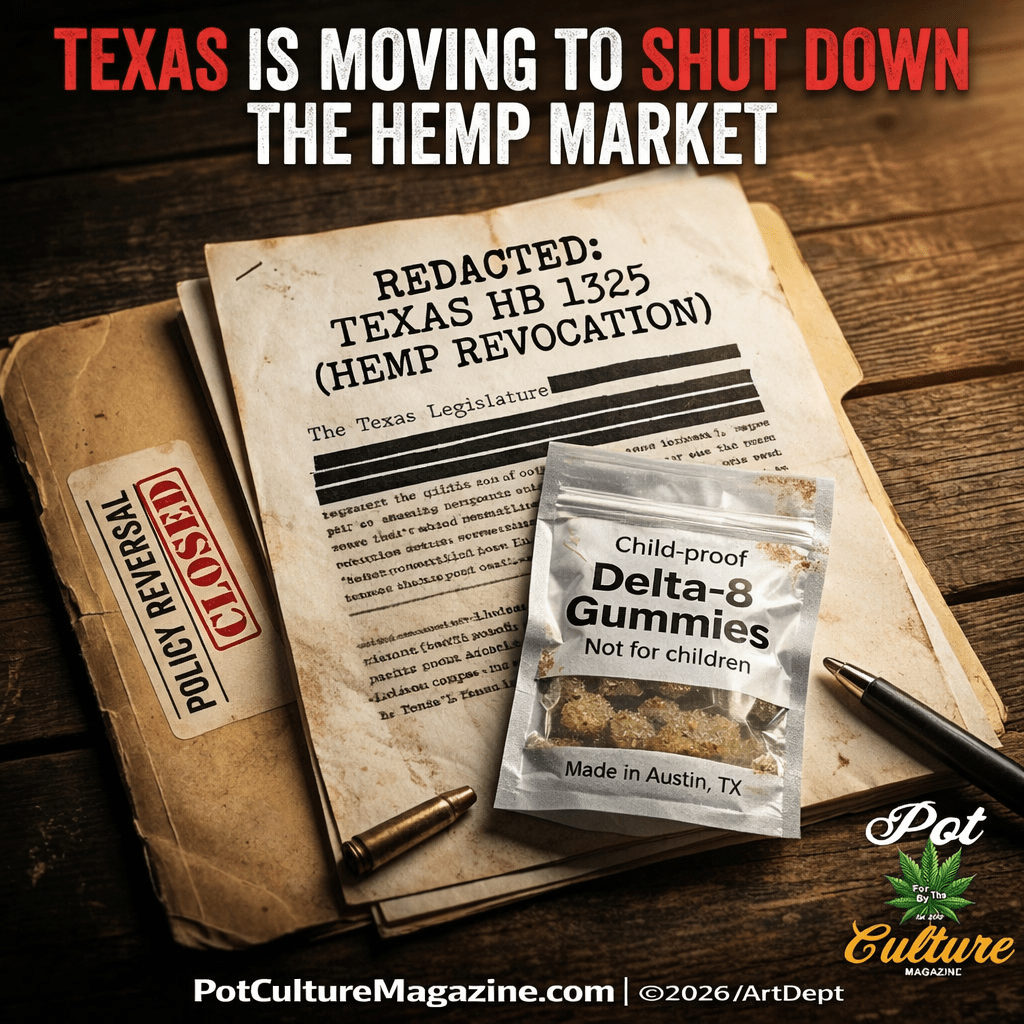
Texas Is Moving to Shut Down the Hemp Market
Texas helped build one of the largest hemp THC markets in the country, then moved to shut it down. As regulators tighten rules and enforcement increases, businesses are left exposed and the future of hemp-derived cannabinoids hangs in the balance. This is not a simple crackdown. It is a full policy reversal with real economic…


CANNABIS LIES Vol. 5: The Gateway Lie
For decades, politicians have claimed marijuana is a gateway to heroin and harder drugs. Federal youth surveys, NSDUH data, and NIDA’s own language tell a different story. Cannabis use is widespread, hard drug use remains rare, and most users do not progress. The data dismantles one of prohibition’s most durable fear narratives.
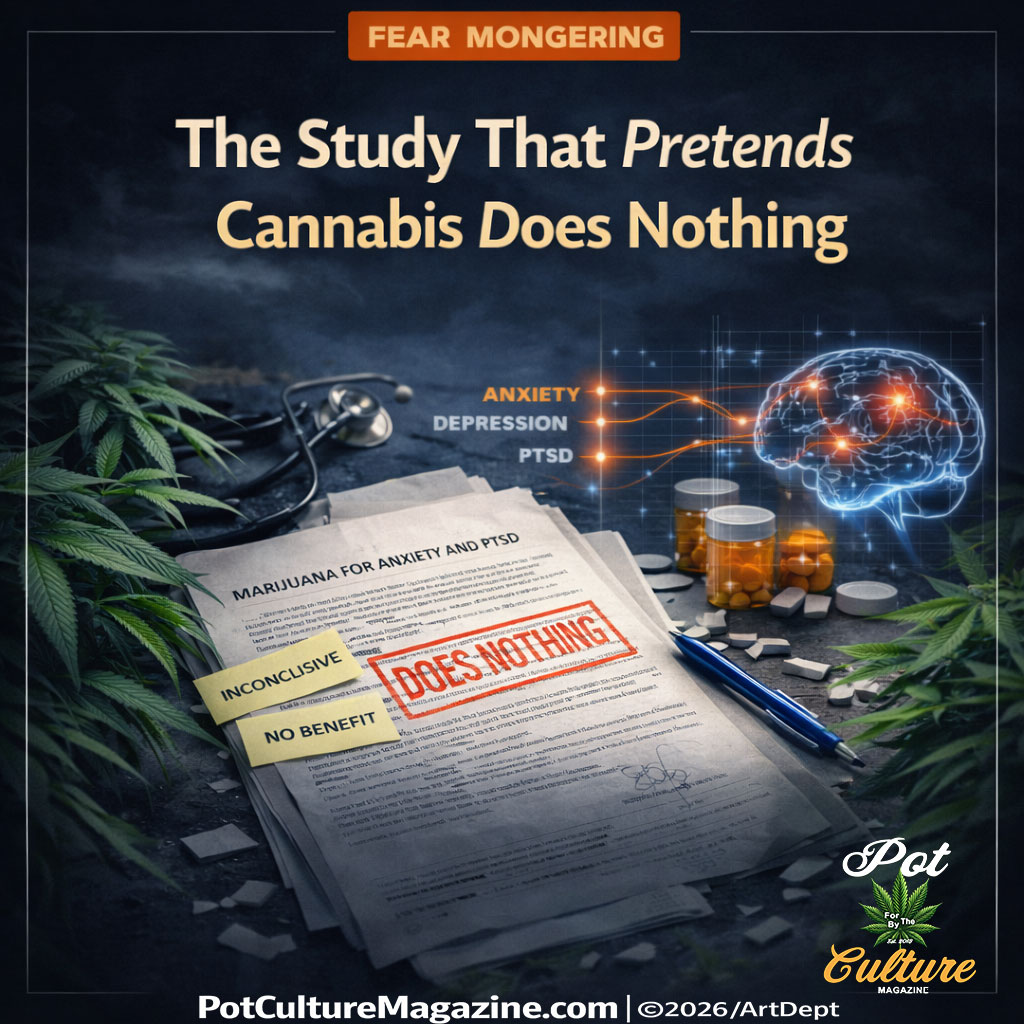
The Study That Pretends Cannabis Does Nothing
A new cannabis study claims marijuana does nothing for anxiety, depression, or PTSD. The reality is far more complicated. Decades of federal restrictions, limited research access, and synthetic substitutes have shaped the science. This breakdown exposes how incomplete data and selective interpretation continue to drive misleading headlines about cannabis and mental health.
Discover more from POT CULTURE MAGAZINE
Subscribe to get the latest posts sent to your email.

Leave a comment