Filed Under: Manufactured Dependence
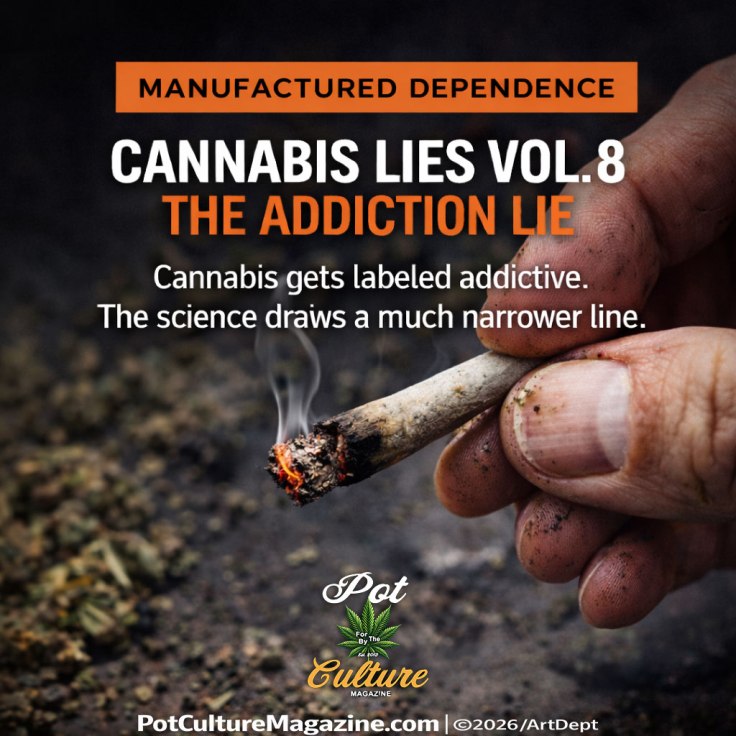
They don’t argue the old myths the same way anymore. The language has changed. The tone sounds calmer, more clinical, and harder to push back on without looking reckless. Nobody is yelling that cannabis turns people into criminals or ruins their moral character. That version burned out. What replaced it sounds smarter. Now the claim comes dressed as a public health concern. Cannabis is addictive. Cannabis is a disorder. Cannabis is quietly pulling people in.
That shift matters, because the word doing all the work is not weed. It is an addiction.
The term lands heavily. It carries the weight of opioids, alcohol, and nicotine, the substances that grip people, wreck bodies, tear through families, and leave a trail that is impossible to ignore. When cannabis gets pulled into that same word, the comparison happens automatically. The public does not stop to sort through definitions or diagnostic criteria. They hear addiction and picture collapse.
The science is not saying it that broadly.
What it actually says is narrower, more conditional, and a lot less dramatic. Cannabis can lead to a diagnosable condition called cannabis use disorder. That part is real. It is defined in clinical terms, measured against a checklist, and recognized by institutions that track substance use and mental health. It exists. Ignoring it would be dishonest.
But the way it is framed outside those clinical boundaries is where the distortion begins.
Cannabis use disorder is not a single state. It is a spectrum. The diagnostic model used in the DSM-5-TR identifies eleven criteria, ranging from increased tolerance to difficulty cutting back to continued use despite problems. Meeting two of those criteria qualifies as a mild case, four to five moves it into moderate, and six or more lands in severe territory. That range matters because it means a person can meet the definition of a disorder without fitting the public image of addiction at all.
This is not a technical footnote. It is the whole game.
Once the label gets applied, the distinctions inside it disappear in public conversation. Mild cases, moderate cases, and severe cases all get flattened into one word. Addiction. The spectrum collapses into a headline. A diagnosis that was built to capture nuance gets repackaged as a blunt instrument.
That is where the narrative drifts away from the evidence.
The most commonly cited numbers follow the same pattern. The Centers for Disease Control and Prevention states, “About 3 in 10 people who use cannabis have cannabis use disorder.” The National Institute on Drug Abuse has long reported that about nine percent of users develop dependence, with higher numbers among current users and those who start young. Both statements are accurate within different definitions and populations. Neither one means what the average reader thinks it means when the word addiction gets attached.
Those numbers do not describe a population collapsing into severe, compulsive drug use. They are describing a range of behaviors, from mild patterns that meet minimal criteria to more serious cases that require intervention. The distinction is buried as soon as the statistic leaves its original context. Thirty percent sounds like a crisis. Nine percent sounds manageable. Both can be used to push a narrative depending on how they are framed.
That elasticity is not accidental.
MORE CANNABIS LIES
CANNABIS LIES Vol. 7: The Mental Health Panic
Cannabis and mental health risks are often overstated in public debate. Research shows heavy use and high THC exposure can increase psychosis risk in vulnerable individuals, but widespread claims of a mental health crisis lack strong evidence. This piece examines the data, separates correlation from causation, and breaks down what cannabis users need to know.

CANNABIS LIES Vol. 6: The Driving Apocalypse Lie
Legal cannabis is often blamed for rising traffic deaths, but federal data tells a more complicated story. NHTSA findings, toxicology limitations, and conflicting crash studies reveal that THC presence is not a reliable measure of impairment. This investigation breaks down how flawed testing and policy shortcuts have shaped the narrative around so-called stoned driving.
CANNABIS LIES Vol. 5: The Gateway Lie
For decades, politicians have claimed marijuana is a gateway to heroin and harder drugs. Federal youth surveys, NSDUH data, and NIDA’s own language tell a different story. Cannabis use is widespread, hard drug use remains rare, and most users do not progress. The data dismantles one of prohibition’s most durable fear narratives.
Risk increases under specific conditions. Starting young raises it. Using it frequently raises it. High THC exposure raises it. Those patterns show up consistently across research, and ignoring them would be as misleading as exaggerating them. The CDC states plainly that the risk of developing cannabis use disorder is greater in people who begin during adolescence and use more often. That is a targeted warning, not a universal one.
The broader claim, that cannabis functions as a widely addictive substance in the same category as alcohol or opioids, does not hold under the same scrutiny.
Withdrawal is where the difference becomes harder to ignore. People who use cannabis heavily can experience symptoms when they stop. Irritability, sleep disruption, appetite changes, restlessness. Those symptoms are real, documented, and worth acknowledging. They are also generally mild and not life-threatening. That stands in sharp contrast to substances like alcohol, where withdrawal can be medically dangerous, or opioids, where the physical severity can be extreme.
That gap is not a minor detail. It defines the category.
Severe physical dependence, in the way the public often understands addiction, involves a level of physiological reliance that creates severe, often dangerous withdrawal and powerful compulsive use. Cannabis does not fit that profile. It can create habits. It can create dependence in some users. It can become part of a pattern that is difficult to break. But it does not produce the same physical cascade that drives the most destructive forms of addiction.
The problem is that the language used to describe it does not always respect that difference.
In clinical settings, cannabis use disorder is treated as a spectrum condition. In public discourse, it often gets presented as a binary. Either you are fine, or you are addicted. That simplification makes the story easier to tell, but it strips out the very nuance the diagnosis was designed to capture. It also opens the door for the term addiction to do work it was never meant to do in this context.
Once that word is in play, the comparison does the rest.
A narrow concern is being sold as a sweeping emergency. Public warnings turn a concentrated risk into a general threat.
This is where media framing and policy language start to overlap. Headlines lean toward the most alarming interpretation. Reports highlight the highest percentage. Statements get shortened until only the most striking part survives. A clinical description of a range of outcomes becomes a cultural warning about a single, escalating threat. The distance between the original research and the final message widens with each step.
One study becomes a headline. One headline becomes a talking point. One talking point becomes policy.
None of this requires a conspiracy. It runs on incentives that reward clarity over accuracy and impact over precision.
That does not mean the underlying concern should be dismissed. Some people struggle with cannabis use. There are cases where use becomes compulsive, disruptive, and difficult to control. Younger users are more vulnerable to negative outcomes. Those realities deserve to be addressed without minimizing them or turning them into something they are not.
Cannabis can be misused. The real issue is how that misuse gets defined, measured, and communicated.
When a spectrum condition is presented as a single outcome, the public loses the ability to understand where the real risk sits. When dependence, habit, and heavy use are grouped under one label, the label becomes less useful and more political. It stops describing behavior and starts shaping perception.
That shift has consequences.
Policy decisions, workplace rules, and public attitudes all respond to the language used to describe risk. If cannabis is framed as broadly addictive, it becomes easier to justify stricter controls, harsher penalties, and continued suspicion around its use. If the nuance is preserved, the conversation changes. Risk becomes something to manage rather than something to fear indiscriminately.
That is the line this argument sits on.
Cannabis use disorder is real. It exists on a spectrum. It affects a subset of users, more heavily under certain conditions, and more seriously in its severe forms. Those are the facts. What does not follow from those facts is the idea that cannabis operates as a broadly addictive substance in the same class as the drugs that have historically defined that word.
The gap between those two ideas is where the lie lives.
It is not a lie built on fabrication. It is built on compression. Take a layered diagnosis, flatten it into a single term, remove the gradations, and present the result as a general truth. The details do not disappear completely. They just stop being the part people remember.
Once that happens, the word addiction does not describe the reality anymore. It replaces it.
©2026 Pot Culture Magazine. All rights reserved. This content is the exclusive property of Pot Culture Magazine. It may not be reproduced, distributed, or transmitted in any form or by any means without prior written permission from the publisher, except for brief quotations in critical reviews.
F O R T H E C U L T U R E B Y T H E C U L T U R E
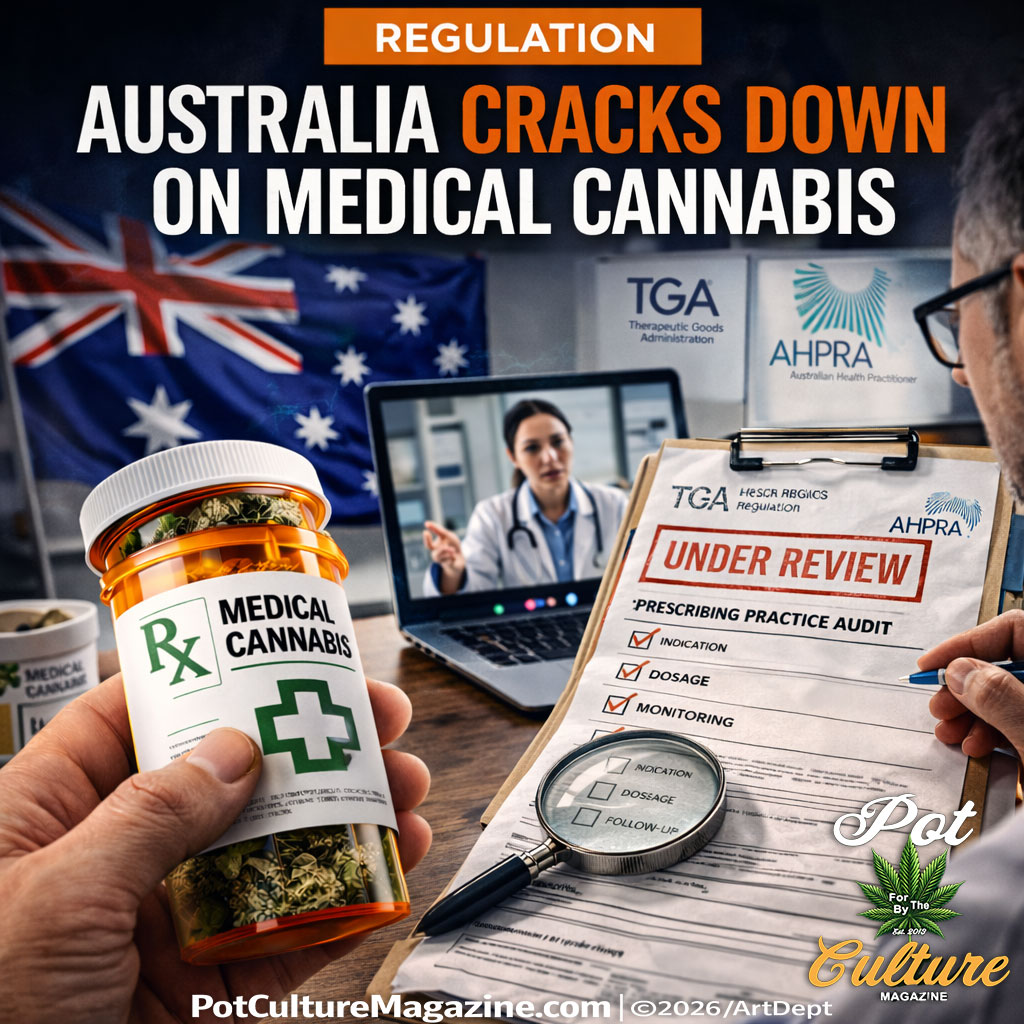
Australia Cracks Down on Medical Cannabis
Australia’s medical cannabis system expanded rapidly through telehealth and high-volume prescribing. Now regulators are tightening oversight. The TGA and AHPRA are increasing scrutiny on prescribing practices, signaling a shift from rapid patient access toward stricter clinical control that could reshape how doctors prescribe and how patients obtain treatment.
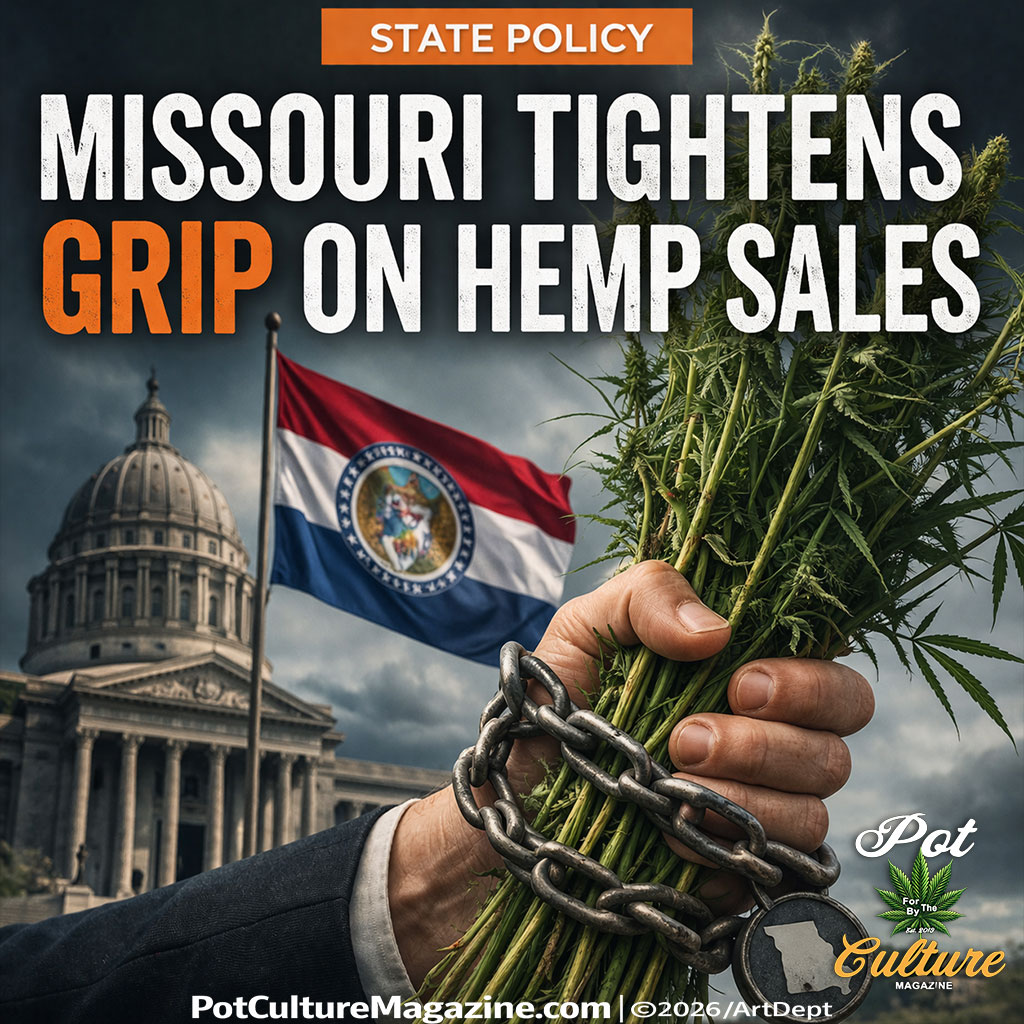
Missouri Tightens Grip On Hemp Sales
Missouri legalized cannabis, then moved to squeeze intoxicating hemp into the dispensary system. HB 2641 is being sold as consumer protection, but critics say it protects licensed marijuana operators while threatening hemp retailers, growers, and small businesses across the state.
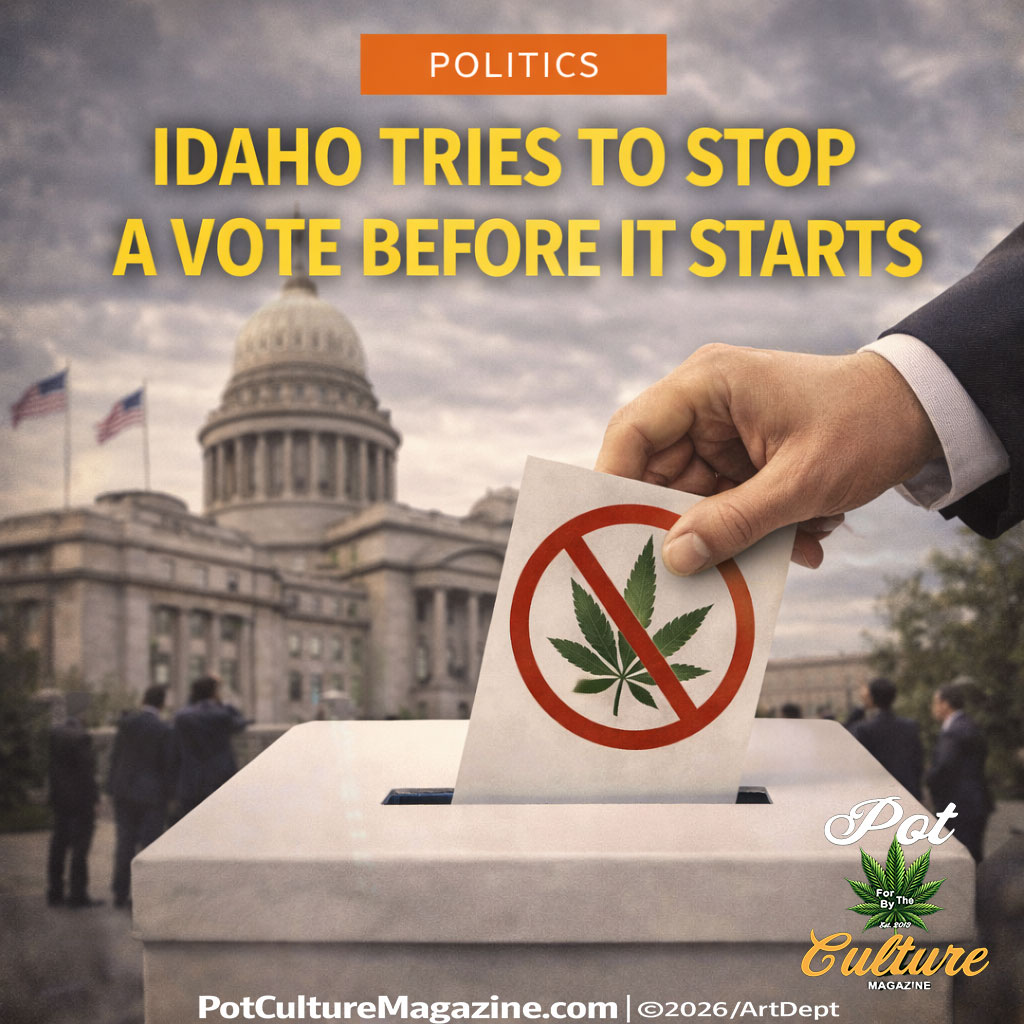
IDAHO TRIES TO STOP A VOTE BEFORE IT STARTS
Idaho lawmakers passed a resolution urging voters to reject a medical cannabis initiative before it reaches the ballot. The move highlights how officials are shaping public opinion ahead of a vote, while maintaining strict prohibition and blocking even limited access for patients.
Discover more from POT CULTURE MAGAZINE
Subscribe to get the latest posts sent to your email.

Leave a comment