Filed Under: Policy Reversal
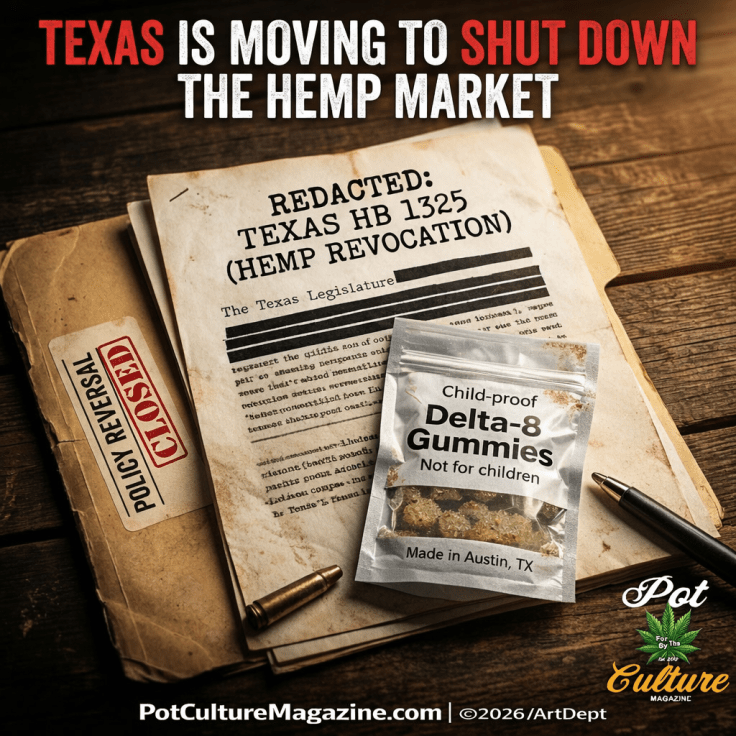
Texas did not stumble into this. It built it. In 2019, the state legalized hemp under House Bill 1325, opening the door to products derived from cannabis so long as they stayed below 0.3 percent delta-9 THC. That line, pulled from federal law, was supposed to define the difference between legal hemp and illegal marijuana.
Instead, it created one of the largest gray market THC economies in the country. Walk into a Texas gas station, smoke shop, or CBD storefront today, and the shelves tell the story. Gummies, vapes, drinks, pre-rolls, and flower. Delta-8. Delta-9 is derived from hemp. THCA flower that looks, smells, and functions like marijuana once it is heated.
The market did not hide. It expanded. Now, Texas is moving to shut it down.
The shift is not coming from a clean new law passed through the legislature. It is happening through regulatory pressure, enforcement changes, and evolving interpretation of hemp rules after lawmakers failed to reach consensus on how to handle the industry they allowed to grow.
That is where this story actually lives. The legislature tried to deal with this market first. During recent sessions, Texas lawmakers introduced proposals aimed at restricting or banning hemp-derived intoxicating products, including delta-8 and related compounds. Those efforts exposed deep divisions over whether to regulate the market or eliminate it outright. No clear legislative solution emerged.
That failure shifted the fight. Regulators stepped in. The Texas Department of State Health Services has begun tightening its interpretation of hemp rules, triggering enforcement changes that directly affect smokable products and high-THC hemp derivatives.
The key issue is how THC is measured. Under the original framework, legality focused on delta-9 THC concentration at or below 0.3 percent. That definition allowed products high in THCA to be sold legally, even though THCA converts into THC when heated. Regulators are now moving toward a broader interpretation that considers the total intoxicating potential of a product, including compounds that convert into THC.
That shift is not fully settled. It has been debated, challenged, and inconsistently applied. But its direction is clear. If enforced aggressively, it would place most smokable hemp products outside the legal threshold.
This is not a minor adjustment. It changes the foundation of the market. And the market is not small. Hemp-derived THC products are sold openly across Texas in gas stations, smoke shops, CBD retailers, and online storefronts. For many businesses, smokable hemp products represent the core of their revenue. Removing that category is not a compliance issue. It is a shutdown.
Industry groups have warned that the economic impact of a crackdown could be severe. Industry analyses have projected multi-billion dollar consequences tied to the hemp-derived cannabinoid market in Texas.
That is the collision now playing out. On one side, the state. Governor Greg Abbott has framed the issue around safety and access, particularly when it comes to minors. In Executive Order GA-56, he directed state agencies to revise testing requirements to account for total THC, including THCA conversion, and significantly hike licensing fees.
“We want… nonintoxicating levels of hemp… with tough enforcement.” That position sounds like regulation. In practice, enforcement is becoming more aggressive. State agencies have increased oversight, and businesses face inspections, product scrutiny, and growing uncertainty. This is not passive regulation. It is active pressure.
On the other side, the industry. Retailers, distributors, and hemp operators are looking at a system that allowed them to exist, taxed their sales, and then changed the rules after the market matured. From their perspective, the state did not stumble into a loophole. It defined one. And now it is closing it.
Business owners are already warning that tightening rules will force them to discard inventory or close entirely. Some are preparing legal challenges, arguing that such drastic changes should be reserved for the legislature, not a state regulatory agency.
There is no clean transition. There is just uncertainty. This is where the contradiction becomes impossible to ignore. Texas is not dealing with an underground market that slipped through enforcement. It is dealing with a market that has been authorized.
House Bill 1325 created the conditions for hemp-derived THC products to exist. It allowed the distinction between hemp and marijuana to rest on delta-9 THC concentration alone. The industry built itself around that definition. Now the state is redefining the rules in a way that places many of those products at risk. Not through a clear legislative ban. Through interpretation, enforcement, and pressure.
Law enforcement concerns are part of that shift. Officials have raised issues around product labeling, potency, and access to minors. Those arguments carry political weight and have been used to justify tighter control. They also exist alongside a reality that is harder to ignore. These products are already everywhere.
Changing the rules does not erase the demand. It changes who is allowed to supply it. That is where the broader cannabis industry enters the picture. Texas still prohibits recreational marijuana and maintains a limited medical program. At the same time, hemp-derived THC products have filled a gap, offering consumers access to intoxicating cannabinoids outside of that system.
The hemp market disrupted that control. The current crackdown is an attempt to reassert it. This is not happening in isolation. Across the country, states are struggling with the same issue. The result is a growing patchwork of laws.
Texas is now moving toward restrictions. The difference is scale. Texas is one of the largest markets in the country, and the hemp industry has had years to expand. That makes the impact sharper. It also makes the story clearer.
This is not a sudden reaction to a new problem. This is a policy reversal. The state allowed a market to grow under one set of rules, then began changing those rules after the fact.
That leaves businesses exposed. It leaves consumers uncertain. It leaves regulators trying to close a gap that has already been filled. The question is not whether Texas can restrict hemp-derived THC. It can. The question is what happens to everything built under the previous system once those restrictions take hold.
For many businesses, the answer is simple. They disappear. For the state, the answer is more complicated. Demand does not vanish when a product is removed from legal shelves. It shifts. Where it shifts, and who controls it next, is the part of the story Texas has not answered.
The market was allowed to expand. Now the state is trying to pull it back. The consequences of that decision are just beginning.
©2026 Pot Culture Magazine. All rights reserved. This content is the exclusive property of Pot Culture Magazine and may not be reproduced, distributed, or transmitted in any form or by any means without prior written permission from the publisher, except for brief quotations in critical reviews.
F O R T H E C U L T U R E B Y T H E C U L T U R E
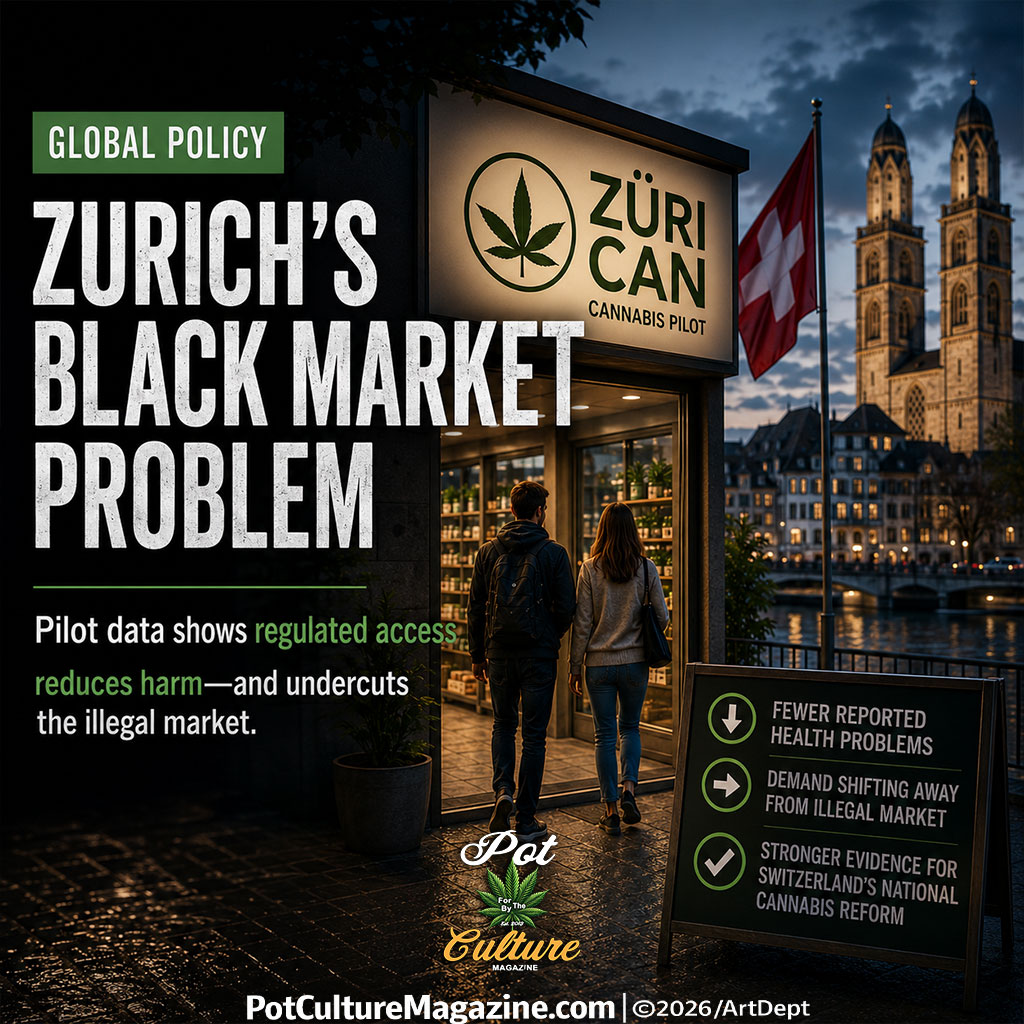
Zurich’s Black Market Problem
Zurich’s Züri Can pilot is giving cannabis reformers something stronger than slogans. New interim findings show regulated, nonprofit access reduced several reported health problems while pulling demand away from the illegal market, giving Switzerland fresh evidence for national cannabis reform and putting prohibition panic on weaker ground.

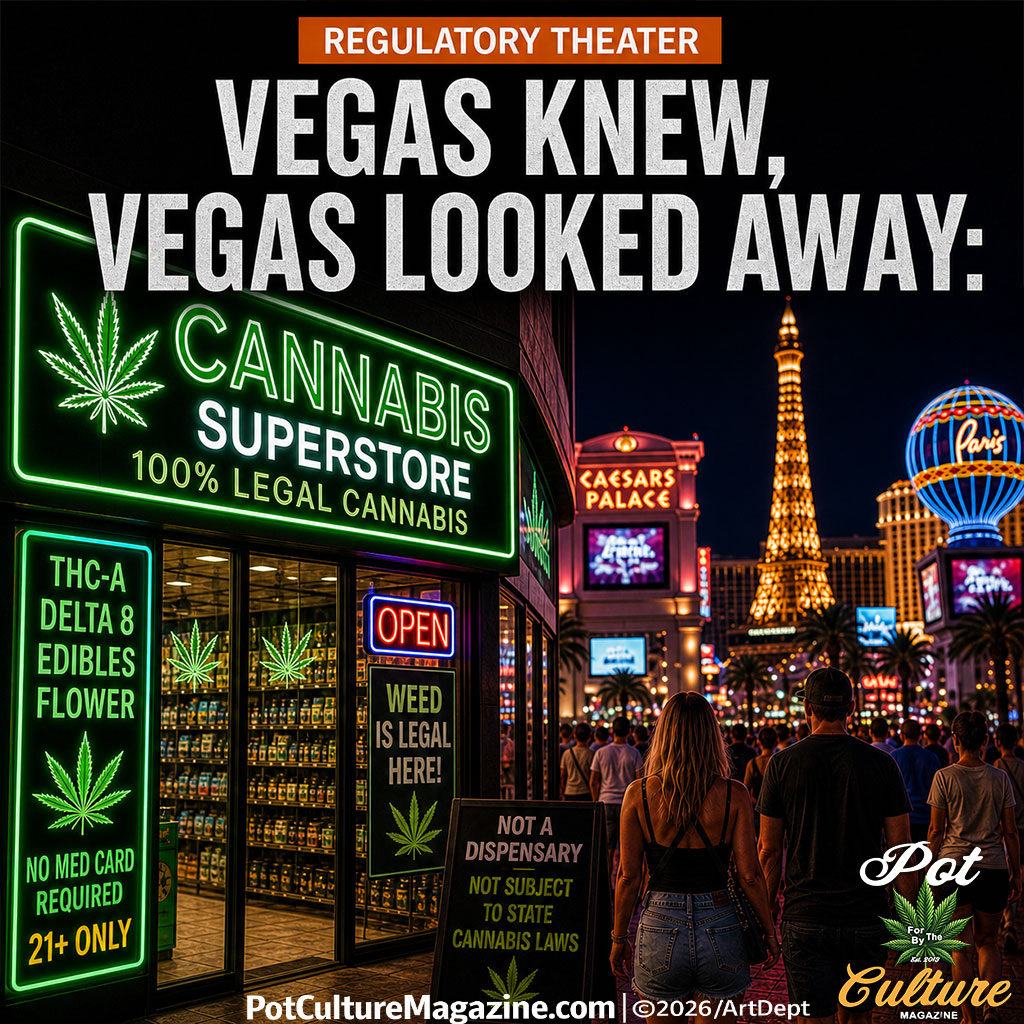
Vegas Knew, Vegas Looked Away
Las Vegas sold tourists the illusion of legal cannabis while fake dispensary style hemp shops operated near the Strip. Vegas Knew, Vegas Looked Away exposes how Nevada’s casino separation rules, weak hemp oversight, delayed Clark County action, and tourist confusion created a loophole economy hiding in plain sight.
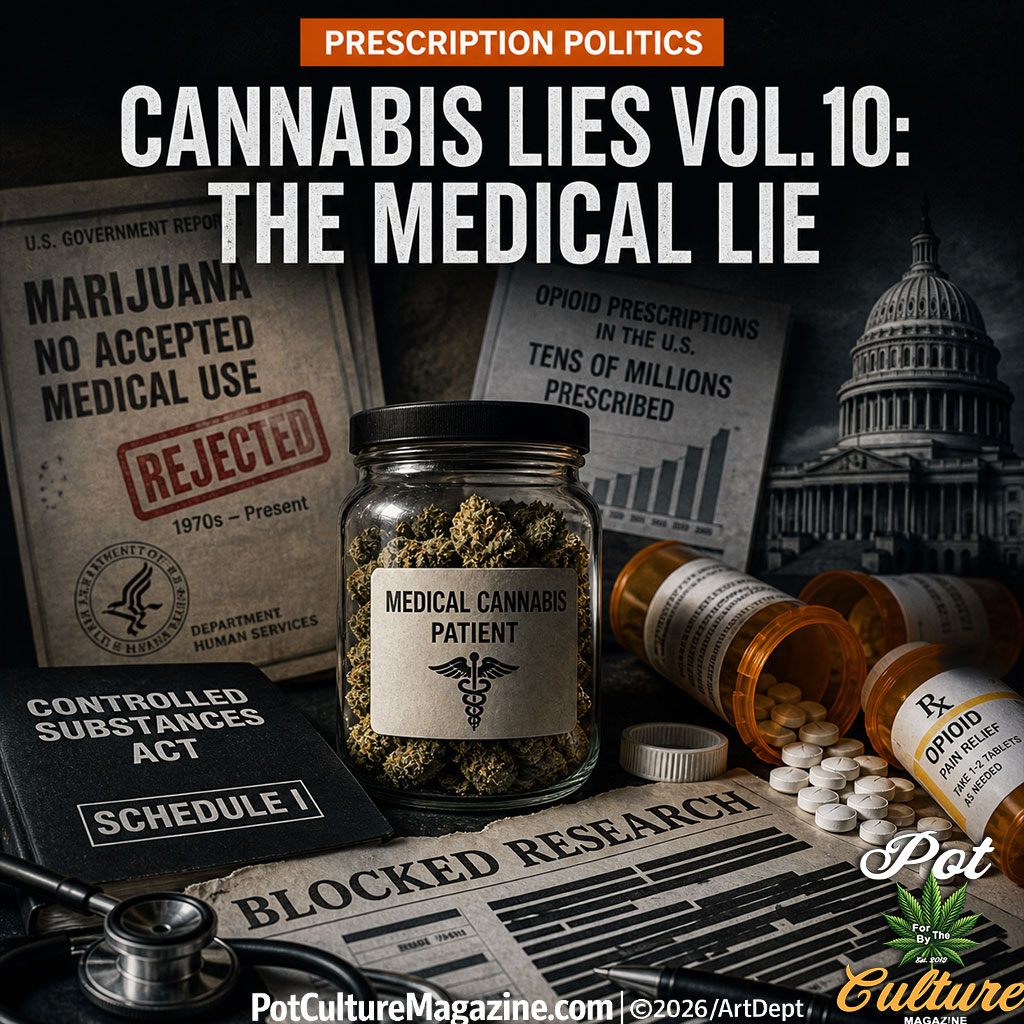
CANNABIS LIES Vol. 10: The Medical Lie
For decades, federal policy claimed cannabis had no accepted medical use while opioid prescriptions moved through the health care system by the tens of millions. Cannabis Lies Vol. 10 exposes the contradiction behind Schedule I, blocked research, medical cannabis patients, and the institutions that spent years pretending politics was medicine.
Discover more from POT CULTURE MAGAZINE
Subscribe to get the latest posts sent to your email.

Leave a comment