Filed Under: Fear Campaigns and False Causation
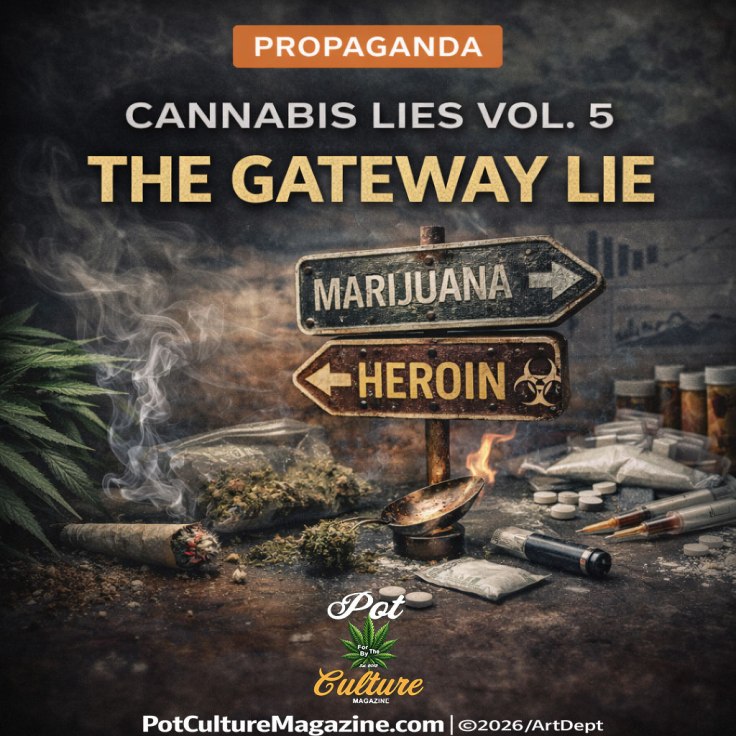
For decades, opponents of marijuana reform have leaned on one line as if it were settled science.
Marijuana is a gateway drug.
It sounds inevitable. A teenager smokes a joint. Years later, they are using heroin. The joint becomes the origin story. The story becomes policy.
The problem is not that the claim is frightening.
The problem is that it does not hold up under federal data.
The gateway theory rests on a familiar observation. Many people who use heroin report that they tried marijuana earlier in life. That statement is true.
It is also predictable.
Marijuana is one of the most widely used illicit substances in the United States. Alcohol is even more common. When a substance is widely used, it will appear early in the life histories of people who later use rarer substances. Order follows exposure. Exposure follows prevalence.
The order does not prove chemical escalation.
Even the National Institute on Drug Abuse states that while marijuana use often precedes the use of other substances, most people who use cannabis do not go on to use other, harder substances later in life. The agency explains that shared risk factors such as genetics, environment, trauma exposure, and social context are more plausible explanations than a built-in pharmacological ladder.
That language matters. It removes inevitability.
Now move from theory to legalization states.
Colorado voters approved adult use in 2012. Retail sales began on January 1, 2014.
Washington also legalized in 2012, with retail sales beginning July 8, 2014.
California launched adult-use sales in January 2018.
If cannabis were a chemical escalator, legalization should have produced a measurable surge in youth marijuana use first.
Federal youth surveys do not show that dramatic surge.
According to Monitoring the Future, 12th-grade past-year marijuana use nationally in 2011 was approximately 34 percent. In subsequent years, usage fluctuated but did not explode following legalization in Colorado and Washington. By the early 2020s, 12th-grade past-year use had declined compared to earlier peaks.
8th- and 10th-grade rates show similar long-term patterns. In several recent surveys, youth marijuana use reached some of the lowest levels recorded in decades.
The CDC’s Youth Risk Behavior Survey shows that post-legalization high school marijuana use in Colorado did not spike dramatically above national averages. Washington showed similar stability. California’s post-2018 data remained within national ranges, with some years showing modest declines and others slight increases.
The surveys do not show a legalization-driven youth explosion.
Now look at the scale.
The National Survey on Drug Use and Health reports that in recent years, past-year marijuana use exceeded 60 million Americans age 12 and older.
Past-year heroin use sits around two-tenths to three-tenths of one percent of the population.
Cocaine use, while higher than heroin, remains a small fraction compared to cannabis prevalence.
The mismatch is enormous.
If marijuana chemically propelled users toward heroin, the ratios would not look like this. Tens of millions use marijuana each year. A tiny fraction uses heroin. The overwhelming majority of cannabis users never use heroin. Most never use cocaine.
That does mean no one transitions. It means progression is not automatic and not universal at the population level.
NIDA addresses that carefully as well. The agency notes that early marijuana use is associated with later substance use, but the association does not prove causation. Shared environmental and developmental risk factors help explain the overlap.
Now consider the broader opioid crisis.
The sharp rise in opioid dependence in the late 1990s and early 2000s followed aggressive prescription opioid marketing and widespread prescribing practices. Millions were exposed through legal medical channels. Later, illicit heroin and fentanyl entered the picture.
If marijuana were a primary driver, opioid initiation would be expected to track more closely with cannabis legalization timelines.
It does not.
Opioid mortality rose sharply before retail cannabis markets opened in Colorado and Washington.
The gateway claim often expands beyond progression into broader social fear.
Crime research tied to legalization is mixed and nuanced.
Some state-level analyses find minimal or no statistically significant long-term changes in violent or property crime attributable to recreational marijuana laws. Other localized studies show variation around dispensary openings, with some areas reporting small increases in certain property crimes and others showing no meaningful change.
The literature does not present a uniform pattern. What it does not show is a consistent, nationwide crime wave caused by cannabis legalization.
If marijuana were chemically driving large-scale escalation into harder drugs, legal states would now show a clear and sustained rise in heroin and cocaine use directly traceable to legalization.
That pattern has not emerged.
None of this denies that some individuals who use heroin once used marijuana. Marijuana is common. Exposure patterns explain overlap far more convincingly than chemical destiny does.
Federal surveys show marijuana use is widespread. Hard drug use remains comparatively rare. Most cannabis users do not progress. NIDA explicitly warns against confusing sequence with causation. Youth data in legalization states does not show the dramatic surge predicted by opponents.
The gateway claim is emotionally powerful.
It is not empirically inevitable.
And when you line up state legalization timelines with federal prevalence data, inevitability is the first thing that disappears.
©2026 Pot Culture Magazine. All rights reserved. This content is the exclusive property of Pot Culture Magazine and may not be reproduced, distributed, or transmitted in any form or by any means without prior written permission from the publisher, except for brief quotations in critical reviews.
F O R T H E C U L T U R E B Y T H E C U L T U R E
The Study That Pretends Cannabis Does Nothing
A new cannabis study claims marijuana does nothing for anxiety, depression, or PTSD. The reality is far more complicated. Decades of federal restrictions, limited research access, and synthetic substitutes have shaped the science. This breakdown exposes how incomplete data and selective interpretation continue to drive misleading headlines about cannabis and mental health.

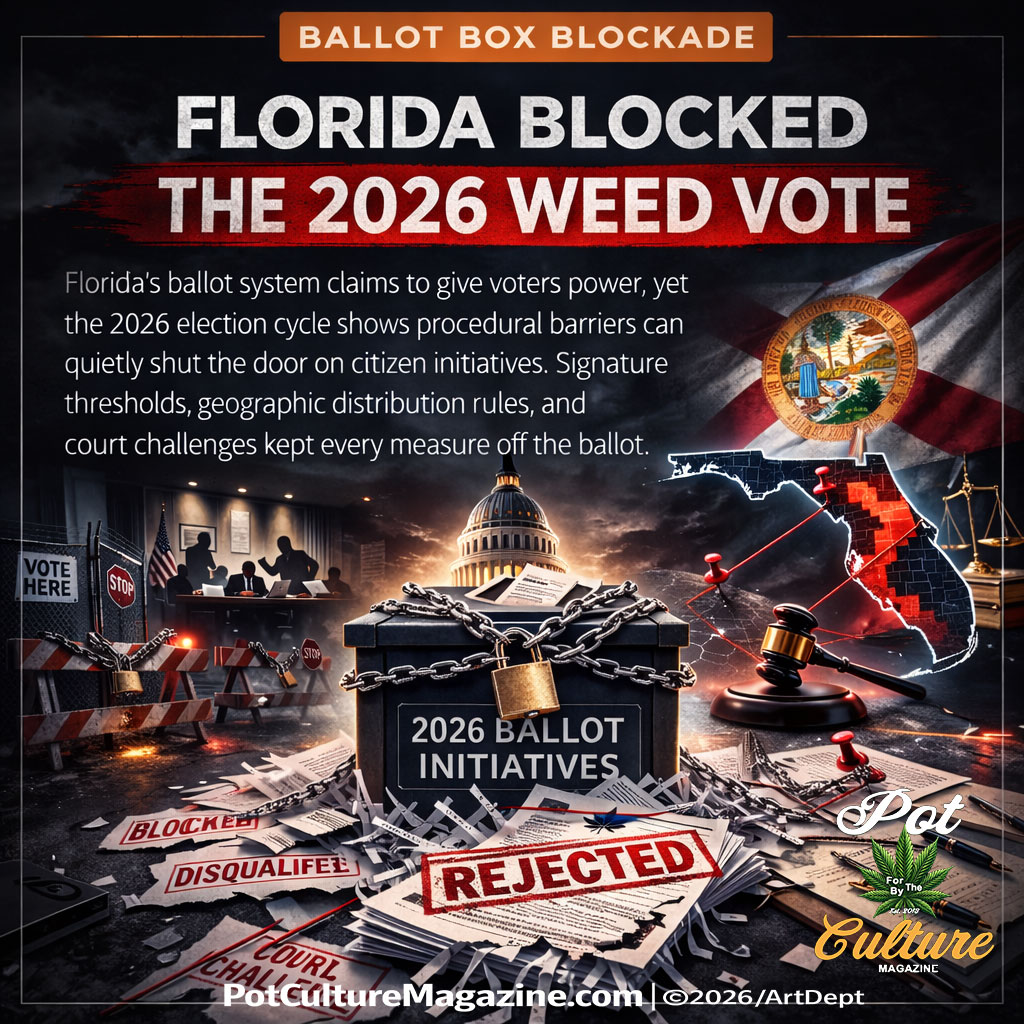
Florida Blocked the 2026 Weed Vote
Florida’s ballot system claims to give voters power, yet the 2026 election cycle shows how procedural barriers can quietly shut the door on citizen initiatives. Signature thresholds, geographic distribution rules, and court challenges blocked every measure from reaching voters, revealing how cannabis legalization fights are often decided by bureaucratic design long before election day.

The Cannabis Lie: Vol. 4 — The Crime Wave Lie
Politicians and pundits warned that legal cannabis would unleash a crime wave. The data tell a different story. From Colorado’s violent crime trends to DOJ time-series research and statewide arrest declines, the evidence shows no consistent long-term surge tied to legalization. The numbers never matched the panic.
Discover more from POT CULTURE MAGAZINE
Subscribe to get the latest posts sent to your email.

Leave a comment