Filed Under: Prohibition’s Revenge
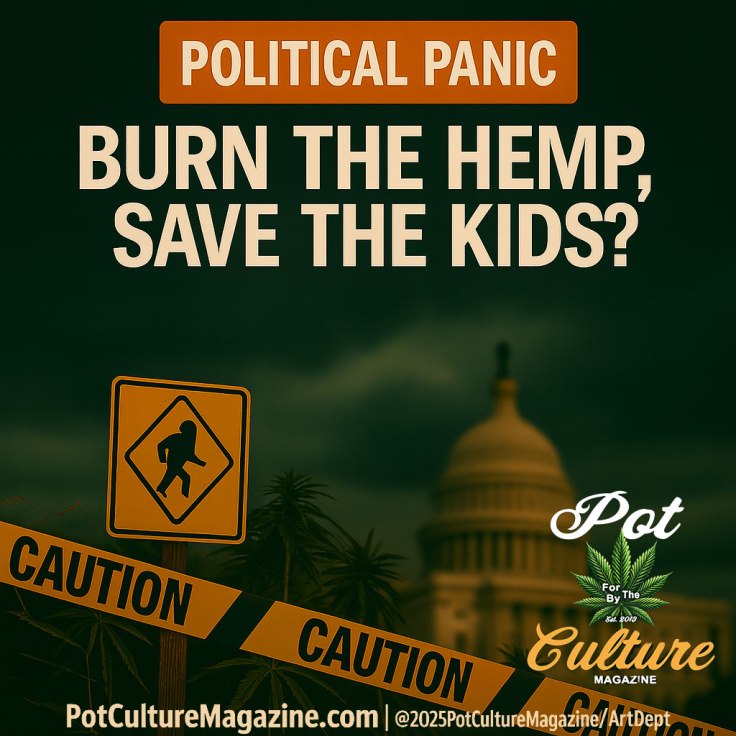
Congress buried a bomb inside a routine funding deal and pretended it was responsible governance. A hemp ban slid into a must-pass bill with barely a flicker of daylight. The lawmakers who backed it moved fast, stayed quiet, and left the consequences for everyone else to absorb.
The new rule looks small on paper but hits like a wrecking ball. Any product containing more than zero point four milligrams of total THC becomes illegal. That limit does not regulate the industry; it wipes it out. A five-milligram gummy is illegal. A bottle of full-spectrum CBD oil fails instantly. Hemp beverages, tinctures, THCA flower, social seltzers, wellness oils, and everything people rely on will be outlawed by a threshold designed to crush the market.
Farmers understood the threat immediately. Hemp plants do not hold still. Weather shifts, water patterns change, and natural variation push THC levels up and down throughout the season. A field that starts compliant can drift a fraction above the new limit and become worthless. This rule punishes normal plant biology. No farmer can grow under a standard this low.
Retailers face the same collapse. Whole shelves turn into liabilities. Stores built around flower, gummies, and drinks will be forced into a countdown toward closure. A grace year means nothing when leases continue, payroll continues, utilities continue, and customers walk away the moment the future becomes uncertain.
Hemp was pitched as stability. For rural communities, it was a life raft. Farmers who lived through tobacco’s fall found hope again. Small towns saw new businesses take root. People who wanted relief without dispensaries trusted hemp. They invested money, energy, and faith in a market Congress now plans to dismantle.
Mitch McConnell once led the celebration. He posed with farmers, called hemp the future, and pushed it into the 2018 Farm Bill. His tone today has shifted. He speaks about youth safety and runaway markets, a far cry from the optimism he sold to his own state. What remains unsaid is how Congress created this chaos by legalizing one cannabinoid while ignoring the rest. Chemistry filled the gap they refused to study.
Other industries saw the growth. Alcohol noticed the rise of low-dose THC beverages and watched younger drinkers drift away from beer. THC seltzers cut into hard seltzer sales. Breweries began investing in cannabis alternatives because the trend was clear. When hemp THC became a competitor, the alcohol lobby did not need to crush cannabis. It only needed to target the easier regulatory target. Hemp was the easy target.
Lawmakers followed the narrative. They labeled hemp THC a loophole and treated the entire market like an accident. That framing made it easier to destroy than reform. Oversight was an option. Standards were an option. National testing was an option. Congress chose elimination instead.
The fallout extends far beyond storefronts and farms. Processors spent years refining extraction systems and now sit on inventories they cannot legally move. Distribution networks that handle hemp products will lose major clients overnight. Designers, co-packers, labs, and delivery drivers all depend on a supply chain Congress just decided to bulldoze.
The ban ignores every responsible operator who built clean, transparent, compliant businesses. It treats them no differently than the reckless few who cut corners. Instead of building national rules, lawmakers opted for a scorched-earth policy.
The one-year sell-off period changes nothing. A doomed marketplace cannot evolve. Manufacturers cannot reformulate entire product lines to fit a microscopic limit. CBD brands cannot strip THC from full-spectrum oil without destroying its effectiveness. The ban does not give time. It gives a warning.
advertisement
F O R T H E C U L T U R E B Y T H E C U L T U R E

Zurich’s Black Market Problem
Zurich’s Züri Can pilot is giving cannabis reformers something stronger than slogans. New interim findings show regulated, nonprofit access reduced several reported health problems while pulling demand away from the illegal market, giving Switzerland fresh evidence for national cannabis reform and putting prohibition panic on weaker ground.

Vegas Knew, Vegas Looked Away
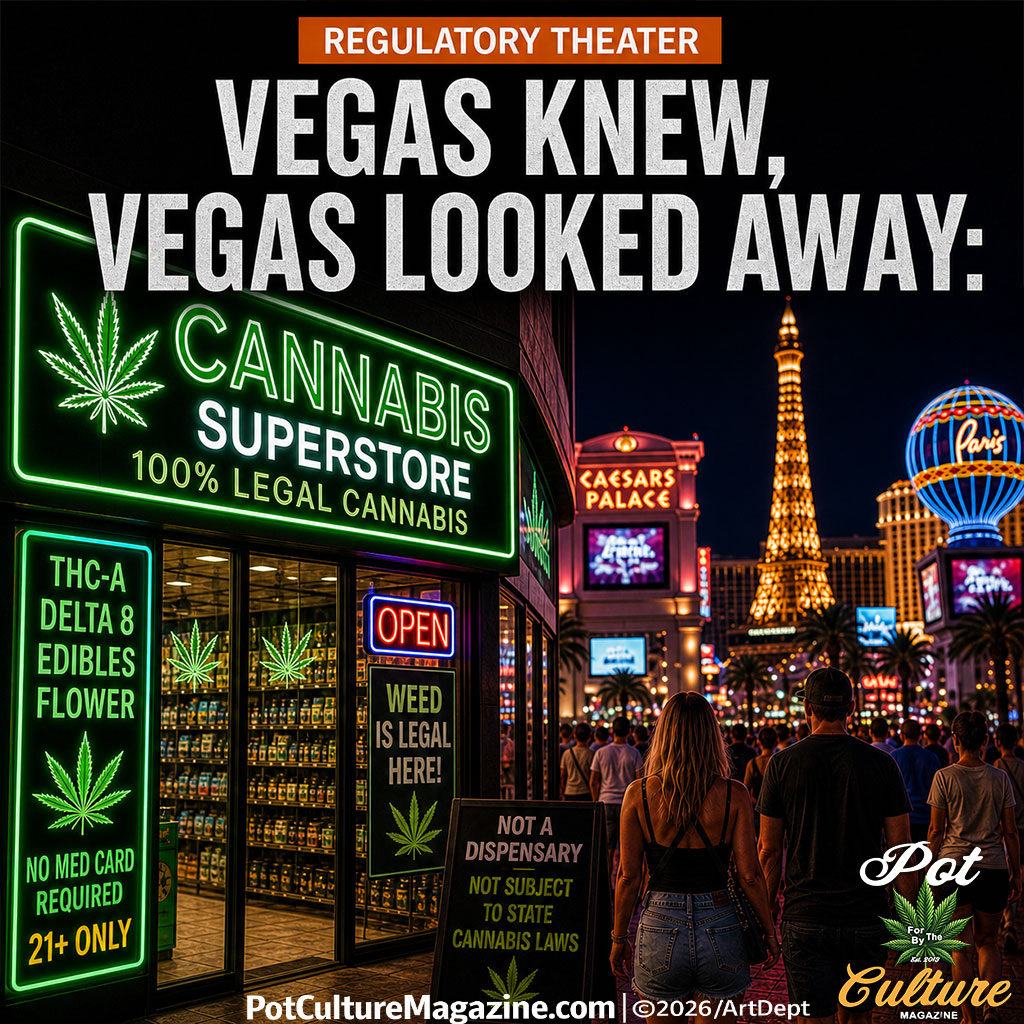
Las Vegas sold tourists the illusion of legal cannabis while fake dispensary style hemp shops operated near the Strip. Vegas Knew, Vegas Looked Away exposes how Nevada’s casino separation rules, weak hemp oversight, delayed Clark County action, and tourist confusion created a loophole economy hiding in plain sight.
advertisement
Consumers lose access to mild, consistent products they rely on for pain, stress, or sleep. They lose alternatives to alcohol. They lose choices that match their comfort level. Some will shift to state-licensed cannabis. Others will return to alcohol. Others will return to underground markets. None of these outcomes improves safety.
Legal challenges are coming, but they will move slowly. Trade groups are working on constitutional angles, arguing that Congress exceeded its authority by eliminating an entire regulatory sector that states have managed for years. Courts may eventually intervene, but the industry will not survive long enough to benefit from delayed rulings.
Political pressure is the only meaningful route. The next Farm Bill offers a chance to repair the damage. A one percent THC limit would protect crops, preserve product categories, and allow regulators to write sensible rules. States with successful programs can push back. Rural communities can remind Congress who this ban hurts. But none of it matters unless voters force the issue.
The culture will not vanish. Cannabis has outlived every attempt to suppress it. Prohibition failed. Criminalization failed. Over policing failed. Hemp will adapt because the demand never disappears. A legal structure can be destroyed. A cultural one cannot.
The hemp community predicted this mess long before Congress acted. Farmers warned that the threshold was impossible. Retailers warned that livelihoods were at stake. Advocates pushed for regulation. Researchers urged lawmakers to understand the plant they were trying to control. Every warning was dismissed.
Now comes the fight.
Washington is betting on silence. They assume anger will pass. They assume small businesses will fold quietly. They assume farmers will take the hit and move on. They assume consumers will shrug and adapt.
Do not give them that victory.
If this industry matters to you, make your voice impossible to ignore. Call your representative. Email your senators. Show up when they hold public meetings. Tell your governor what this ban destroys in your state. Make every elected official who backed this feel the heat from the people forced to live with their decision.
Pressure works when it is loud, steady, and personal. Tell them about your harvest. Tell them about your shop. Tell them about your job, your customers, your patients, your community, and your family. They passed this in a vacuum. Break that vacuum.
This ban can be overturned. It can be amended. It can be rewritten in the next Farm Bill. However, it only happens if the people who know the truth refuse to remain silent.
Your voice is leverage.
Use it.
Make them hear it.
Make them answer for it.
Force them to fucking fix it.
©2025, Pot Culture Magazine. All rights reserved. This is the property of Pot Culture Magazine and is protected by U.S. and international copyright laws. Unauthorized reproduction, distribution, or transmission of this work, in part or in whole, without the express written permission of Pot Culture Magazine is strictly prohibited.
F O R T H E C U L T U R E B Y T H E C U L T U R E
CANNABIS LIES Vol. 10: The Medical Lie
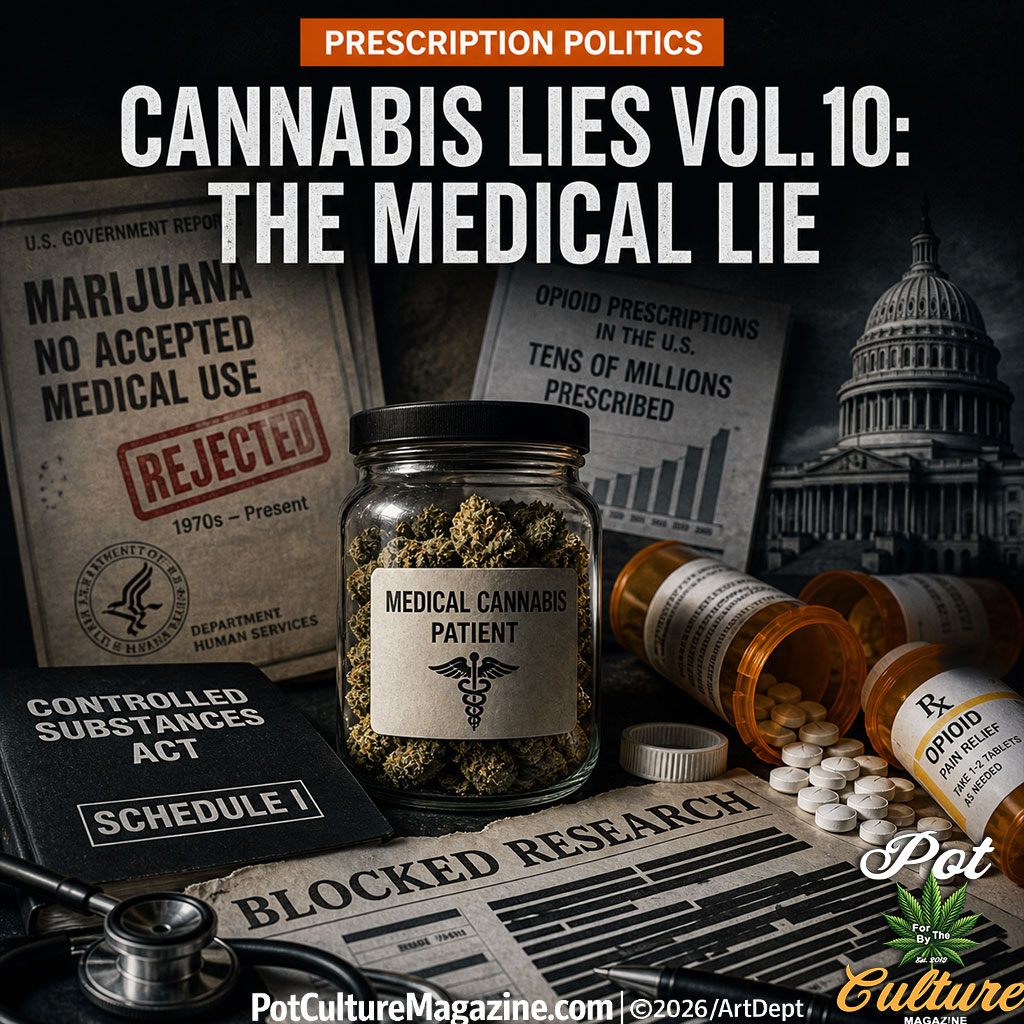
For decades, federal policy claimed cannabis had no accepted medical use while opioid prescriptions moved through the health care system by the tens of millions. Cannabis Lies Vol. 10 exposes the contradiction behind Schedule I, blocked research, medical cannabis patients, and the institutions that spent years pretending politics was medicine.

Jersey’s New Cash Crop
Jersey reinvented itself. A forty-five square mile island once known for offshore finance is now exporting pharmaceutical-grade cannabis into Germany’s booming medical market. With strict regulation, heavy investment, and a government eager for diversification, Jersey has become an unlikely European powerhouse. The contradiction between local policing and global commerce tells the real story.
A State of the Union on the State of Cannabis Media
Cannabis media is undergoing a predictable institutional decay. The movement’s original architects have transformed from revolutionary contributors into defensive gatekeepers, protecting their legacy rather than fostering future growth. This manifesto examines the four archetypes of decay: the Gatekeeper, the Mercenary, the Scavenger, and the Shill, that currently stifle the industry’s independent voice and threaten the…
Discover more from POT CULTURE MAGAZINE
Subscribe to get the latest posts sent to your email.

Leave a comment