Filed Under: Justice Deferred
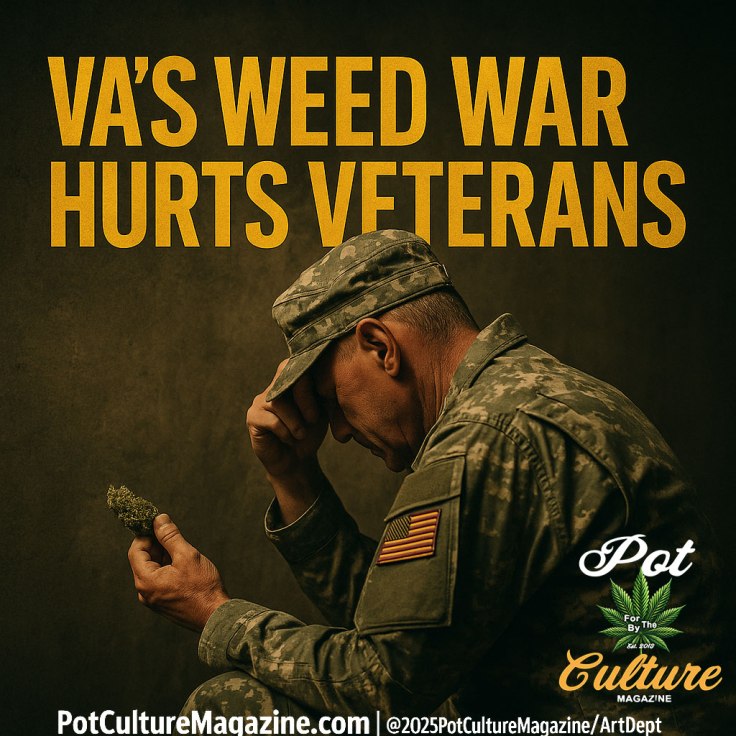
He waters the plant in the morning light, careful fingers on brittle soil, and tells me he treats the pot like a confession. The prosthetic leg sits in a corner like a quiet witness. He says the plant lets him sleep without nightmares. He says the plant keeps his hands from shaking when he opens the mail. He says the VA will not sign the paper that would let him buy it legally in his state, and that is the shape of the betrayal. He fought with a country that thanked him with a medal and a checklist. He came home with his whole life cataloged into pills and forms, and when he says the word cannabis, the room gets colder. This is the lived truth. This is the thing the parades and speeches do not touch.
The hypocrisy of it never stops stinging. The Department of Veterans Affairs still treats cannabis as a Schedule I drug with no accepted medical use. VA clinicians cannot prescribe or recommend medical marijuana, and they cannot complete the forms that would enroll veterans in state-approved programs. Those limits come from VHA Directive 1315, the directive that governs how VA staff can speak with veterans about cannabis and how VA facilities must treat those who use it. The rule allows discussion but forbids assistance. That is an official silence that feels like abandonment.
You will also hear another truth. In 2025, the U.S. House of Representatives passed an amendment to allow VA doctors to recommend medical cannabis to patients in legal states. That is progress in text, but it is not yet law. The Senate and reconciliation still stand in the way. Until the law changes, VA doctors cannot formally recommend cannabis, and VA pharmacies cannot fill cannabis prescriptions. The House measure is a change in motion, not a rescue.
The contradiction is obscene. The federal government supplied troops with opioids on the battlefield. After the tours ended, many veterans were handed prescriptions that spiraled into dependence. The same institutions that delivered those pills now refuse to let veterans choose an alternative that many say helps. The VA will say that participation in state marijuana programs does not affect benefits, as if that were mercy. It is bureaucracy in disguise.
More than one-third of veterans in VA care live with chronic pain, and about fifteen percent have post-traumatic stress. The veteran suicide count reached 6,407 in 2022, with seventeen lives lost every day. Veterans die at higher rates from overdose than civilians. Those numbers have faces. They are the men and women who leave letters behind, the ones who ran out of options.
When veterans talk about cannabis, they do not use advocacy language. They talk about survival. One former medic said he would be dead without it. Cannabis helped him quit opioids and sleep through the night. That story repeats in homes and support groups across the country. These are not soft arguments. They are the words of people who found what works while their government looks away.
Geography decides the cruelty. In states such as Georgia, Texas, Idaho, and Kansas, veterans face laws that make access to medical cannabis nearly impossible. Georgia limits them to weak, low-THC oil. Texas allows oil but bans flowers. Idaho has no medical law at all, not even a token CBD rule. Kansas offers a symbolic defense for CBD oil but no legal source. Veterans in these states are left to either break the law or suffer in silence. They can be honored at a courthouse on Monday and arrested for possession on Tuesday.
In Idaho, lawmakers have gone further. Governor Brad Little signed a law creating mandatory minimum penalties for possession. Legislators such as Senator Scott Grow backed a constitutional amendment to block voters from ever legalizing cannabis. They say it protects families. It protects nothing. It traps veterans with PTSD in a state that calls medicine a crime. It is hypocrisy on full display.
Advocates call it cruelty. Nick Etten of the Veterans Cannabis Project points to the absurdity of a system that hands out sedatives and opioids while denying access to a plant. Eric Goepel of the Veterans Cannabis Coalition says prohibition punishes the same people who used cannabis to survive wounds ignored by policy. Their criticism is direct because the reality is brutal.
Inside the VA bureaucracy, even administrators know change is coming. Officials told Congress they cannot ignore growing evidence that cannabinoids may help with PTSD and pain. Research moves at a crawl while veterans die waiting. Saying more study is needed while blocking access is not prudent. It is cowardice. Weed for Warriors Project and other veteran-led groups fill the gap, giving donated cannabis to those who cannot afford it. Their work is noble, but it should not have to exist.
For veterans in prohibition states, the only lawful relief comes from hemp. Endoca produces full-spectrum hemp extracts rich in CBD and other cannabinoids with trace THC. Their foundation offers veterans 50 percent discounts to make products accessible. It is not a cure. It is survival in a bottle for veterans who are waiting for the law to catch up with reality.
America says it supports its troops. The commercials roll, the flags wave, the politicians salute. But when the people who fought the wars ask for medicine that helps them heal, the same voices go silent. Veterans are told to be strong, to wait, to follow procedure. They are told the war is over. It is not. It just changed locations.
The man at the window still waters his plant. He does not see a crime. He sees hope in a small green leaf. He says it keeps him breathing. After everything he gave, that should not be against the law.
©2025 Pot Culture Magazine. All rights reserved. This content is the exclusive property of Pot Culture Magazine and may not be reproduced, distributed, or transmitted in any form or by any means without prior written permission from the publisher, except for brief quotations in critical reviews.
Affiliate Disclosure: Pot Culture Magazine may receive commissions from purchases made through affiliate links such as Endoca. This helps support our independent journalism without affecting our editorial standards.
F O R T H E C U L T U R E B Y T H E C U L T U R E
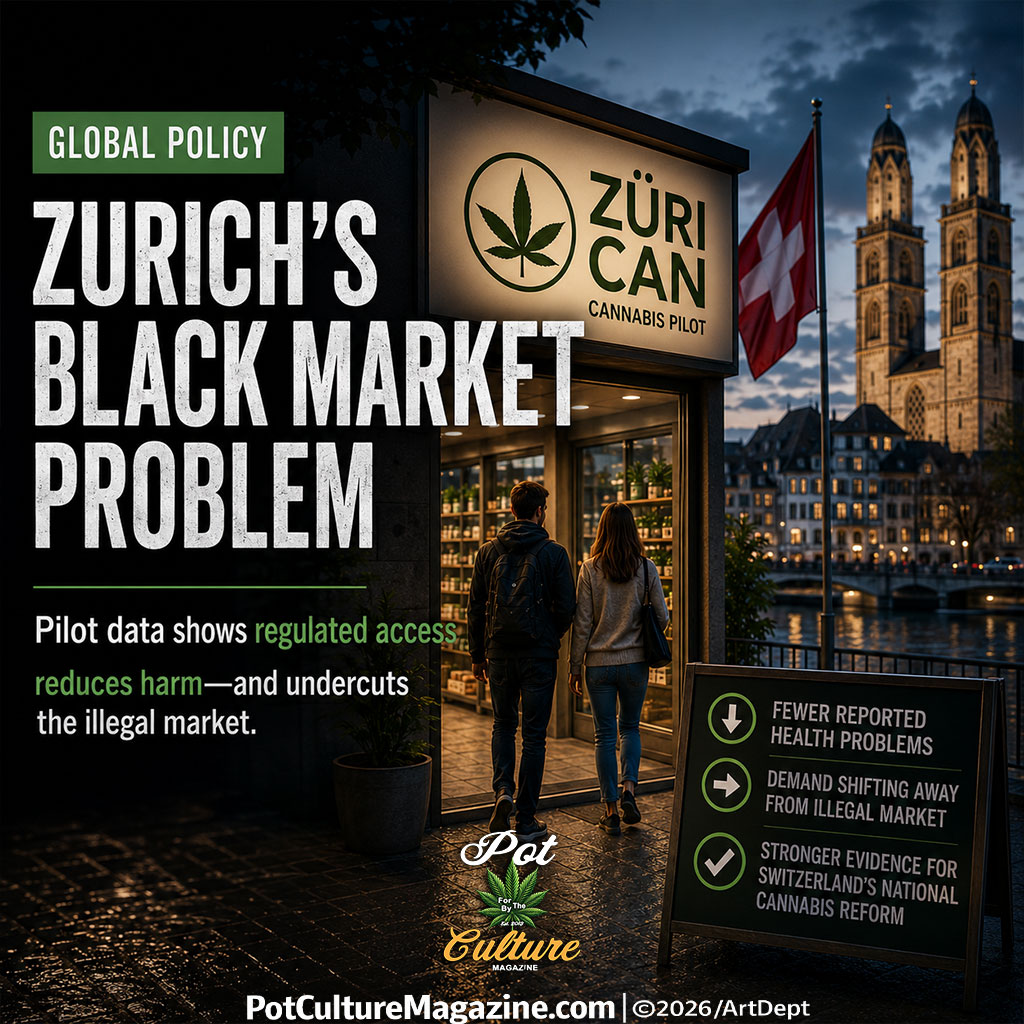
Zurich’s Black Market Problem
Zurich’s Züri Can pilot is giving cannabis reformers something stronger than slogans. New interim findings show regulated, nonprofit access reduced several reported health problems while pulling demand away from the illegal market, giving Switzerland fresh evidence for national cannabis reform and putting prohibition panic on weaker ground.

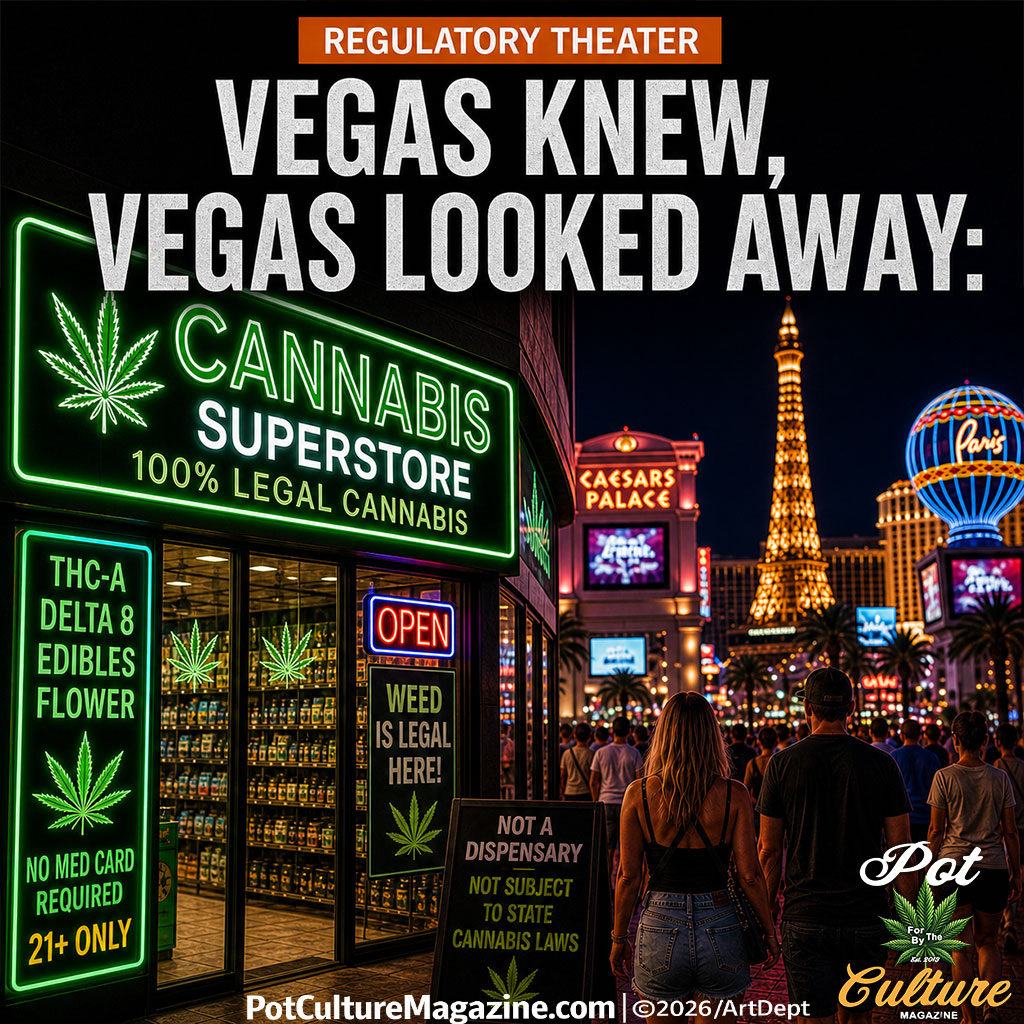
Vegas Knew, Vegas Looked Away
Las Vegas sold tourists the illusion of legal cannabis while fake dispensary style hemp shops operated near the Strip. Vegas Knew, Vegas Looked Away exposes how Nevada’s casino separation rules, weak hemp oversight, delayed Clark County action, and tourist confusion created a loophole economy hiding in plain sight.
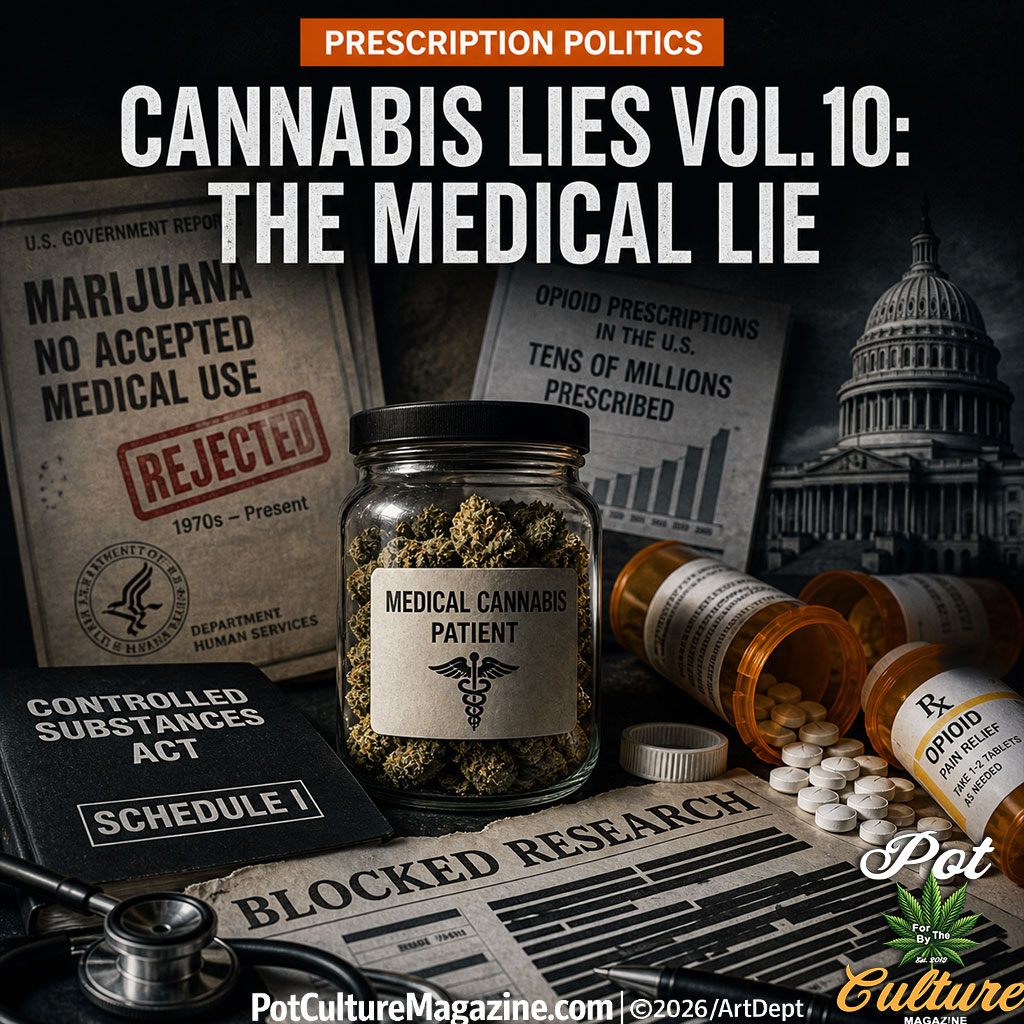
CANNABIS LIES Vol. 10: The Medical Lie
For decades, federal policy claimed cannabis had no accepted medical use while opioid prescriptions moved through the health care system by the tens of millions. Cannabis Lies Vol. 10 exposes the contradiction behind Schedule I, blocked research, medical cannabis patients, and the institutions that spent years pretending politics was medicine.
Discover more from POT CULTURE MAGAZINE
Subscribe to get the latest posts sent to your email.

Leave a comment