Filed Under: Policy Fiction
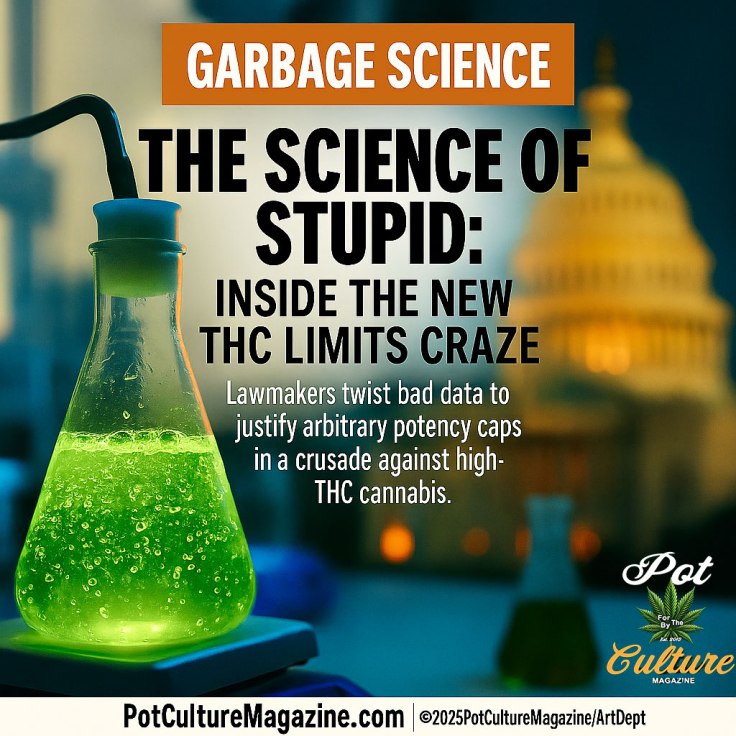
They finally found a way to outsmart science, but they ignored it. That is the secret genius of America’s new obsession with THC. State lawmakers across the map are inventing purity laws for weed in the name of public health. The irony is almost perfect. None of them are scientists, few have ever read a toxicology report, and most could not tell you the difference between THC, THCA, or CBD if their careers depended on it. But that has never stopped a good panic.
In Connecticut, politicians wrote numbers into law and called it safety: Thirty percent THC for flower, sixty percent for concentrates, and nothing above that. The problem is that cannabis does not work that way. Potency is not morality. It is chemistry. Terpenes, cannabinoids, and environmental factors define the effect far more than a single number ever could. Still, they pushed it through, smiling for the cameras.
Connecticut raised adult-use caps to 35% for flower and 70% for concentrates, effective Oct 1, 2025, with “high-THC” labeling, according to legislative updates reported by Pullman & Comley. Medical cannabis remains exempt, a quiet admission that the limits were political, not scientific. If high-THC products are too dangerous for adults, why are they fine for patients? Because science never supported the limit in the first place.
Minnesota followed a similar script, pretending to be cautious while writing bad math into law. Minnesota set 5 mg per serving and 50 mg per package for hemp edibles, later allowing 10 mg per can for beverages. Legislators called it consumer protection. It was actually politics disguised as prudence. Scientists were never consulted, because real researchers would have told them that potency is not the same as dosage, and dosage without context is meaningless.
Colorado did not impose a potency cap. It tightened medical purchase limits on concentrates and labeling, plus tracking. That is regulation, not restriction. The difference matters. The state targeted abuse patterns, not chemistry.
Behind every one of these laws is the same false assumption, that stronger cannabis is more dangerous cannabis. Associational studies link frequent use of higher-THC products with higher rates of psychosis diagnoses and cannabis use disorder, but causation is not established, and thresholds are not defined. Even major medical reviews stopped short of declaring THC itself a cause of psychosis. The reality is that these findings are complex, limited, and constantly evolving. But nuance does not win elections.
The people pushing THC caps call it harm reduction. That is a lie. True harm reduction uses evidence, not superstition. The National Academies of Sciences characterized evidence for many alleged harms as limited or insufficient, underscoring how blunt caps are not evidence-based. The honest approach would be to educate consumers and regulate contaminants, but that requires work, and fear sells faster.
The unintended consequences are already visible. When legal products are weakened, people return to the gray market. They buy from unlicensed sellers who promise real strength and make up their own testing standards. That undermines safety, taxation, and trust. The same lawmakers who claim to be protecting consumers are the ones driving them back underground.
advertisement
F O R T H E C U L T U R E B Y T H E C U L T U R E
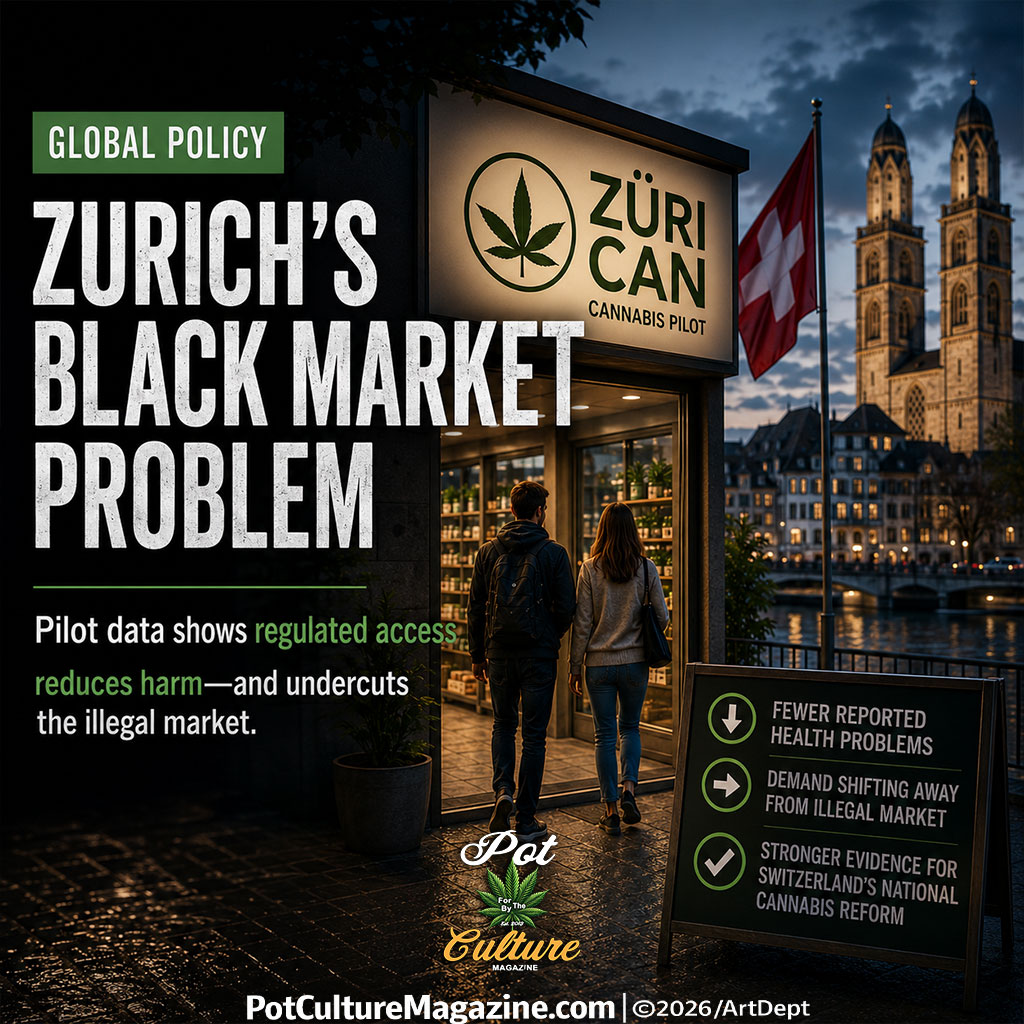
Zurich’s Black Market Problem
Zurich’s Züri Can pilot is giving cannabis reformers something stronger than slogans. New interim findings show regulated, nonprofit access reduced several reported health problems while pulling demand away from the illegal market, giving Switzerland fresh evidence for national cannabis reform and putting prohibition panic on weaker ground.


Vegas Knew, Vegas Looked Away
Las Vegas sold tourists the illusion of legal cannabis while fake dispensary style hemp shops operated near the Strip. Vegas Knew, Vegas Looked Away exposes how Nevada’s casino separation rules, weak hemp oversight, delayed Clark County action, and tourist confusion created a loophole economy hiding in plain sight.
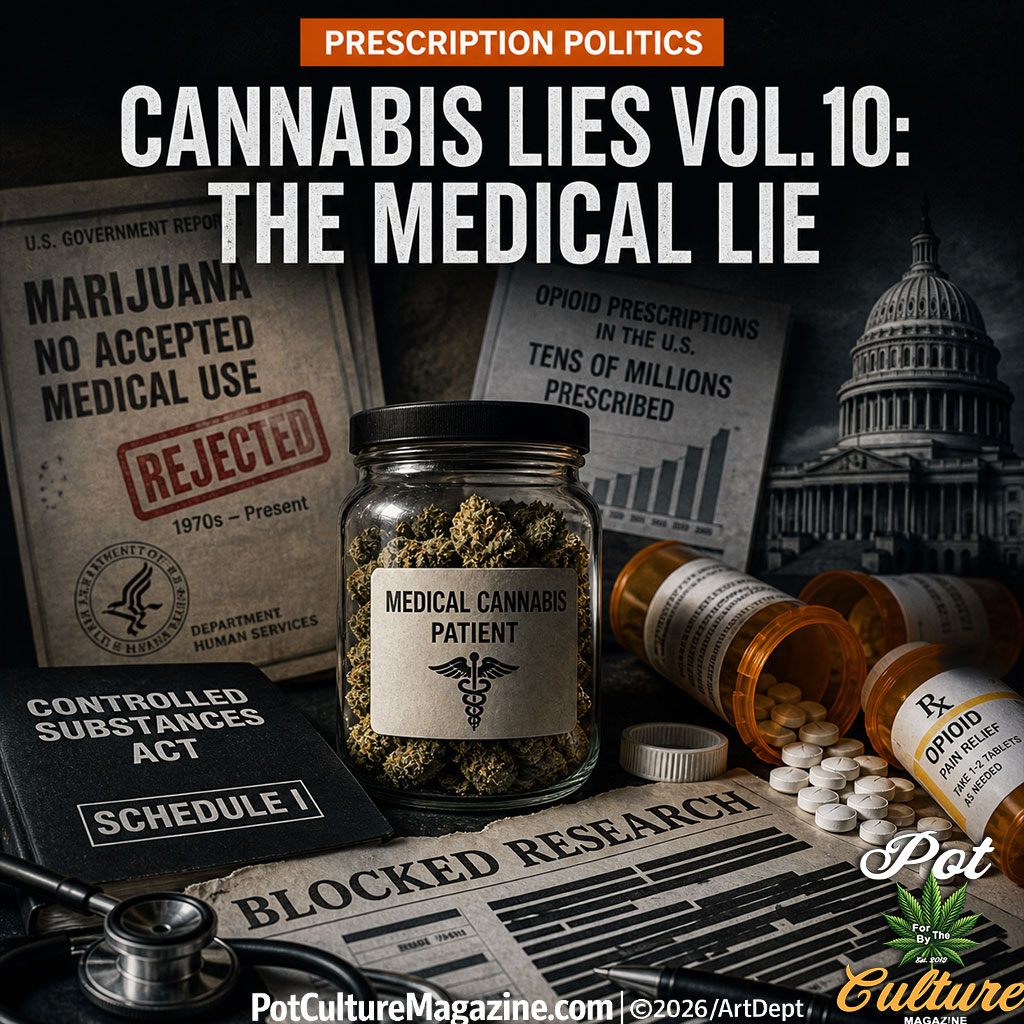
CANNABIS LIES Vol. 10: The Medical Lie
For decades, federal policy claimed cannabis had no accepted medical use while opioid prescriptions moved through the health care system by the tens of millions. Cannabis Lies Vol. 10 exposes the contradiction behind Schedule I, blocked research, medical cannabis patients, and the institutions that spent years pretending politics was medicine.
advertisement
Caps can raise costs and reduce access for patients who rely on concentrated products. People with chronic pain, cancer, or PTSD often rely on stronger medicine to function. For them, high potency is not a luxury; it is relief. Forcing them to use weaker products means forcing them to use more of them, which increases cost and waste. It is cruelty wrapped in compassion language.
If lawmakers cared about safety, they would focus on solvents, heavy metals, and mislabeled edibles. They would fund public education and mental health programs instead of setting fake purity standards. But real safety does not fit on a campaign poster, so they settle for easy numbers and fake science.
Public health has become the perfect shield for lazy policy. It lets politicians pretend to be doctors while ignoring the actual medical community. They use it to justify bans, limits, and raids, always claiming to “protect the children.” Yet not one of these THC laws defines what “high potency” even means. The phrase sounds clinical, but it has no standard definition anywhere in legitimate pharmacology.
Vermont proved how deep the ignorance runs. Lawmakers there set their own arbitrary caps, thirty percent for flower and sixty percent for concentrates, and claimed to be following science. Their source was a single self-reported survey study that never recommended potency limits at all. The science said nothing. The state just needed something to cite.
Researchers such as Ziva Cooper and Gillinder Bedi have warned that fixed potency caps are not grounded in clear pharmacological thresholds and risk misleading consumers. The chemistry is complicated, and reducing cannabis to a single number risks misinforming the public rather than protecting it.
This is how moral panic evolves. Every generation invents its villain. In the fifties, it was reefer madness. In the nineties, the gateway drug. Now it is a potent psychosis. The formula never changes. Take a partial truth, remove the context, and legislate the fear.
There is also profit in the panic. Alcohol and pharma have incentives to support weaker cannabis markets. The less effective the competition, the safer their profits remain. Restricting potency under the label of safety is just another way to maintain market control.
The hypocrisy writes itself. No one is proposing proof caps on bourbon or caffeine limits for energy drinks. No one is suggesting we ban high-nicotine vapes to protect adult freedom of choice. But mention THC, and suddenly every moral crusader in the statehouse finds their voice.
The public is not fooled. People can tell when a policy smells like a lie. They see politicians cashing checks from liquor distributors while crying about cannabis strength. They hear the same “protect the children” chorus that has justified every failed drug law since 1937. They understand that when fear becomes law, truth becomes contraband.
The THC cap movement is not science. It is politics disguised as chemistry. Lawmakers quote lobbyists, lobbyists quote outdated studies, and the echo chamber grows loud enough for reporters to print it as fact. By the time anyone checks the data, the restrictions are already signed.
When the numbers collapse under scrutiny, as they always do, the politicians who wrote them will blame someone else. They will say regulators went too far, or consumers misused the law, or scientists moved the goalposts. What they will never admit is that the entire argument was built on fear instead of evidence.
The goal was never safety; it was control. Cannabis represents independence, and independence is the one thing that makes politicians sweat. It cannot be patented, standardized, or owned. THC limits give them a leash. They use science like a slogan and trust no one who actually reads it.
But the truth moves faster than their fear. Real researchers are mapping the entourage effect, the chemical synergy that makes cannabis work as a medicine and an experience. They are refining dose-response models and learning how cannabinoids interact with the human body in ways no cap could ever predict. None of this supports the political war on potency. It proves that cannabis deserves understanding, not regulation by superstition.
Every time a state passes a potency cap, it tells the public that lawmakers have learned nothing from fifty years of drug policy failure. The War on Drugs did not end; it just put on a white coat and learned how to pronounce cannabinoids.
They can keep quoting fake science. We will keep quoting the real thing.
©2025 Pot Culture Magazine. All rights reserved. This content is the exclusive property of Pot Culture Magazine and may not be reproduced, distributed, or transmitted in any form or by any means without prior written permission from the publisher, except for brief quotations in critical reviews.
F O R T H E C U L T U R E B Y T H E C U L T U R E

Jersey’s New Cash Crop
Jersey reinvented itself. A forty-five square mile island once known for offshore finance is now exporting pharmaceutical-grade cannabis into Germany’s booming medical market. With strict regulation, heavy investment, and a government eager for diversification, Jersey has become an unlikely European powerhouse. The contradiction between local policing and global commerce tells the real story.
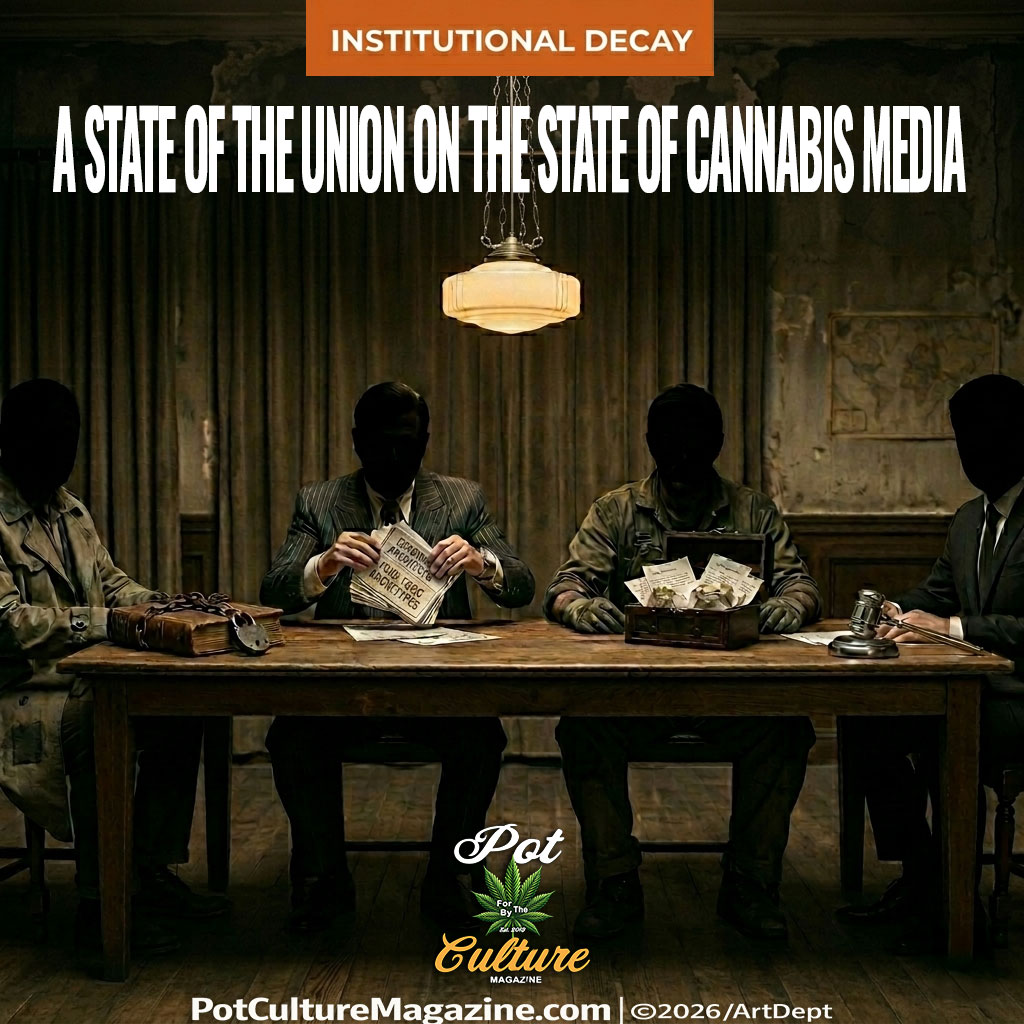
A State of the Union on the State of Cannabis Media
Cannabis media is undergoing a predictable institutional decay. The movement’s original architects have transformed from revolutionary contributors into defensive gatekeepers, protecting their legacy rather than fostering future growth. This manifesto examines the four archetypes of decay: the Gatekeeper, the Mercenary, the Scavenger, and the Shill, that currently stifle the industry’s independent voice and threaten the…
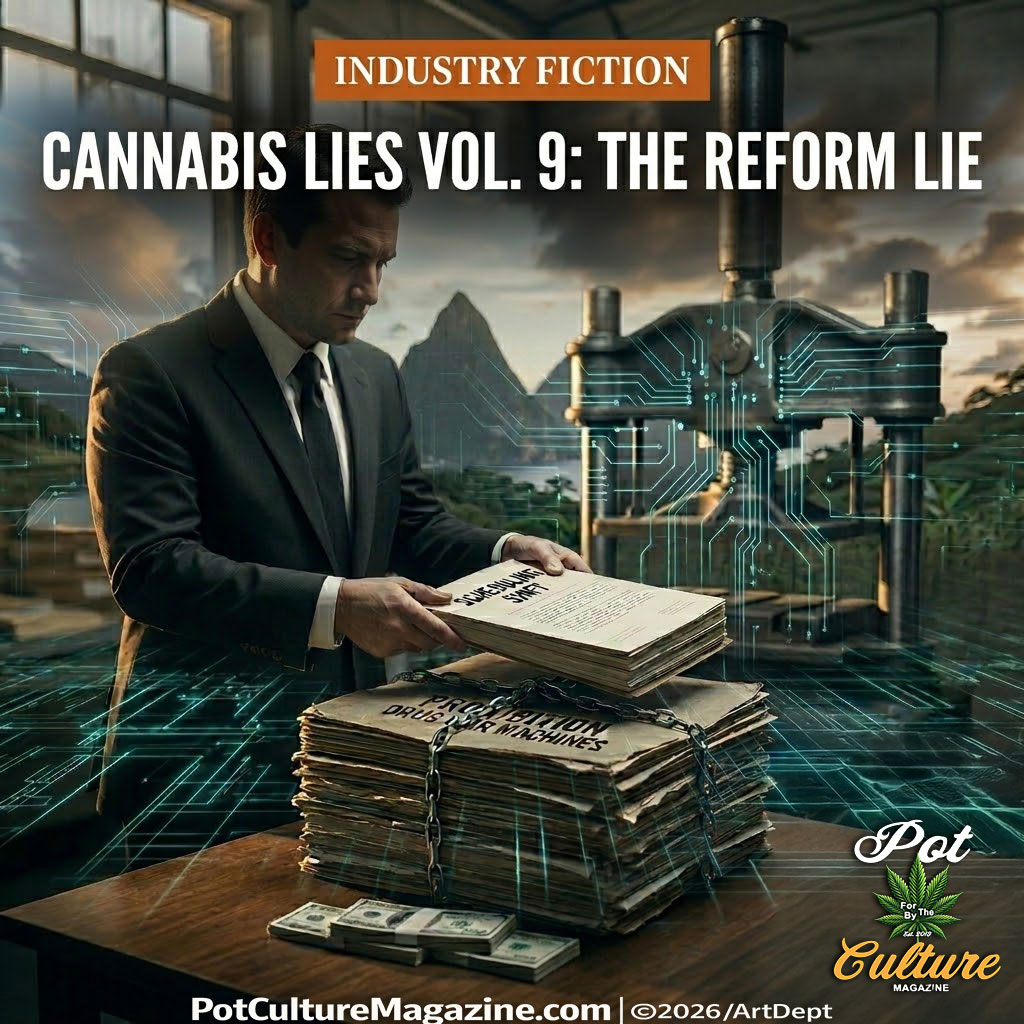
Cannabis Lies Vol. 9: The Reform Lie
The federal move to Schedule III is a masterclass in bureaucratic maintenance. While corporations celebrate tax relief, the core structure of the drug war remains untouched. This analysis deconstructs the Reform Lie, exposing how the state uses symbolic gestures to professionalize a privilege for the few while keeping the machinery of punishment active for everyone…
Discover more from POT CULTURE MAGAZINE
Subscribe to get the latest posts sent to your email.

Leave a comment