Filed under: Weekly Burn
Texas moved to protect minors but left the adults scrambling. California cut cannabis tax to save fading legal shops. Germany’s researchers demand data. The White House refuses to pick a rescheduling fight. Let’s grade what changed and what kept falling apart.
STATEHOUSE HEADLINER
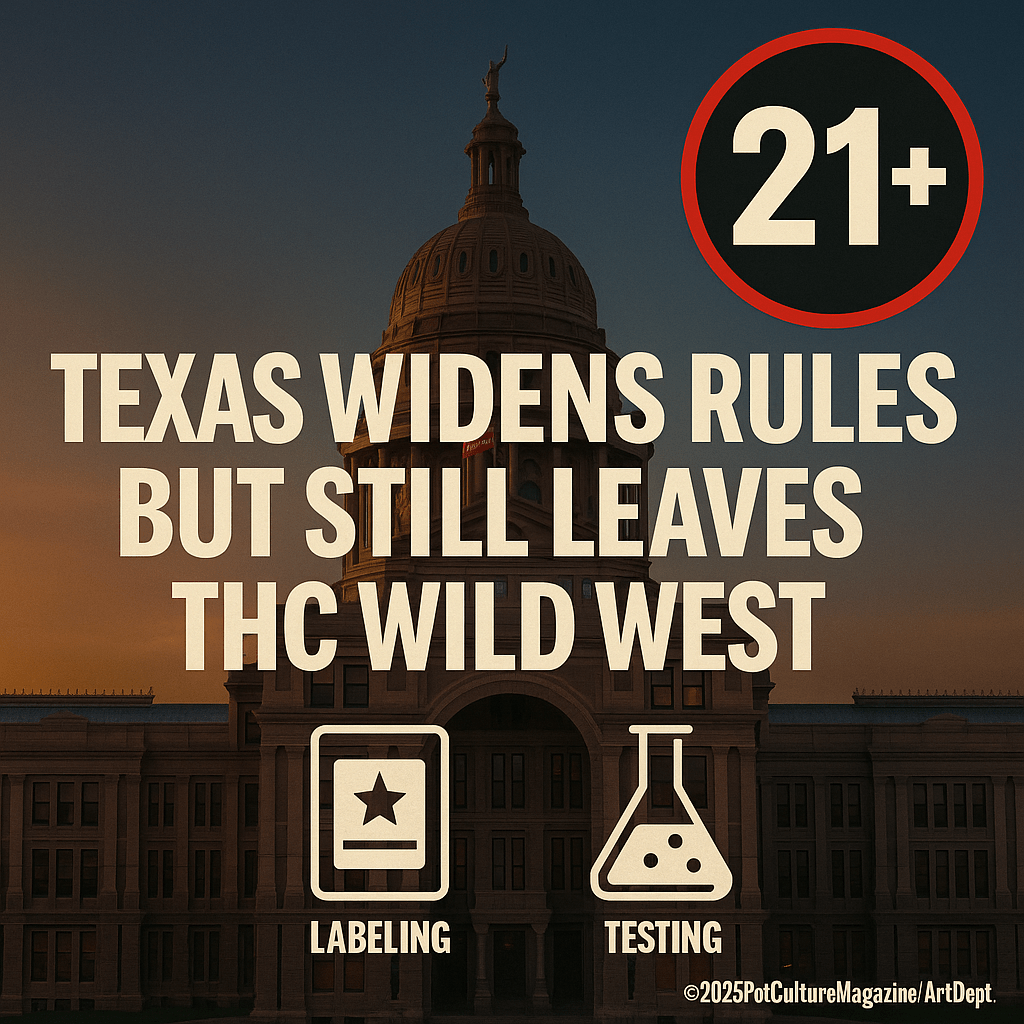
Texas Widens Rules but Still Leaves THC Wild West
Gov. Greg Abbott issued new executive orders that ban hemp‑derived THC products from sales to anyone under 21 and force companies to implement stricter labeling, testing, and buffer zones near schools. Lawmakers failed to deliver a broader ban earlier this year. Now regulators are scrambling to define limits for potency. Consumers report confusion. Retailers warn of legal traps. Reality check: Kids get protection. Adults still play in gray zones.
Grade: C‑
GOVERNMENT CLOWN CAR AWARD
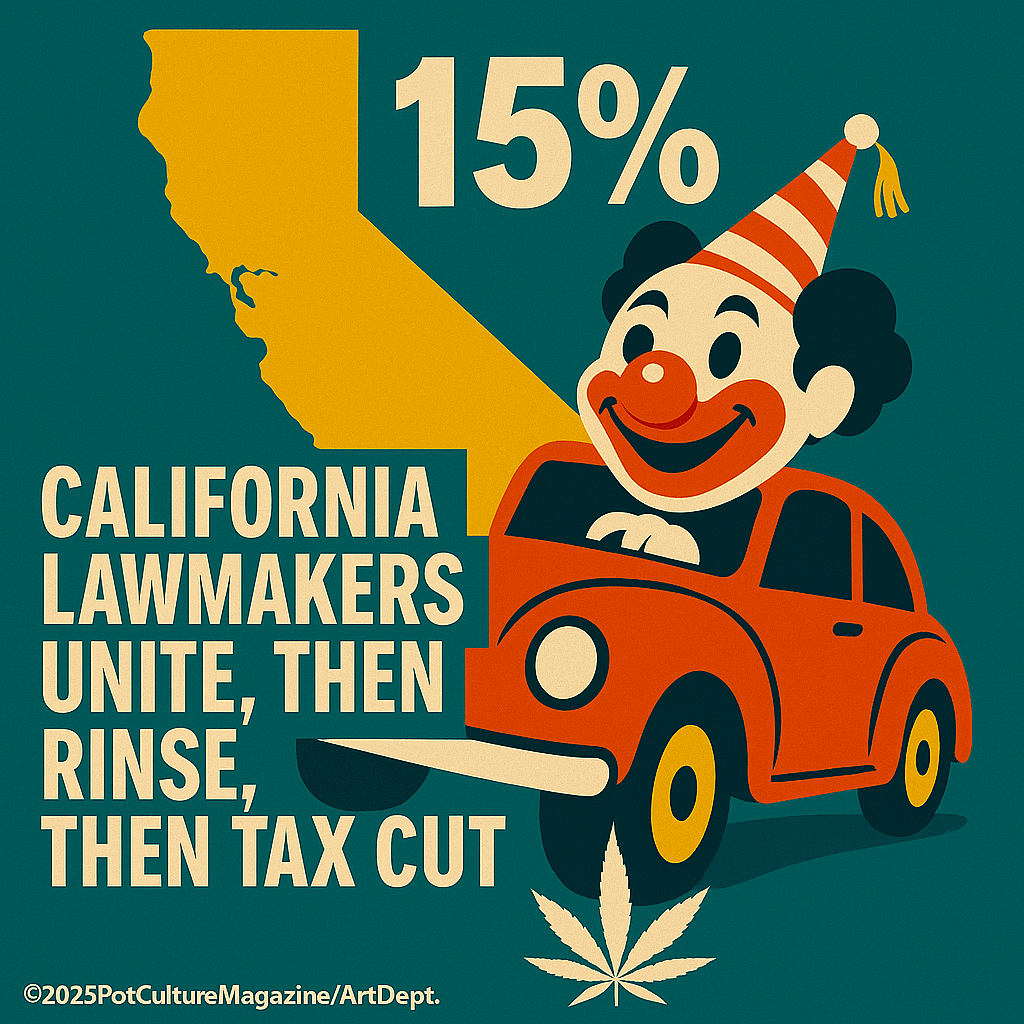
California Lawmakers Unite, Then Rinse, Then Tax Cut
In California, lawmakers agreed on a temporary cut to the 19% excise tax, moving it down to 15% through mid‑2028. It happened because legal shops are bleeding. But critics said this guts programs relying on cannabis revenue. It is a tactic born of desperation, not reform.
Grade: D+
LOCAL TRAINWRECK

Ohio Hits $3B in Sales, but Bans Still Block the Market
Ohio crossed $3 billion in combined medical and adult-use cannabis sales this week, a milestone that shows strong consumer demand. But more than a hundred cities and townships still keep moratoriums in place, freezing new dispensaries. The state celebrates record numbers while tens of thousands of residents remain excluded. Progress and paralysis rolled into one.
Grade: F
REGULATOR ROULETTE

Germany Scientists Demand Legal Oversight, Not Guesswork
Researchers pointed out that after Germany’s legalization law in 2024, there remains a gaping hole in reliable data on youth health impact, illegal market behavior, and consumer trends. They want the government to greenlight more formal projects under its cannabis law’s research clauses. No action yet, but the alarm bells are loud.
Grade: C
FEDERAL STALL JOB

White House Says “All Options” While States Do the Work
A federal drug adviser recently said that the White House is exploring “all options” for federal cannabis rescheduling, but stopped short of timelines. Meanwhile, states like Texas, California, and Germany are fighting their own regulatory battles. Politics at the national level remains a theater without center-stage action.
Grade: D
FINAL GRADE: C‑
Texas stepped up for some regulation but left the rest dangerously vague. California patched a bleeding tax wound but only temporarily. Ohio’s market grows, but many still live in a state of legal limbo. Germany’s science sector is pushing boundaries. The feds are offering talking points, not timelines. Another week where reform creeps, not charges ahead.
©2025 Pot Culture Magazine. All rights reserved. This content is the exclusive property of Pot Culture Magazine and may not be reproduced, distributed, or transmitted in any form or by any means without prior written permission from the publisher, except for brief quotations in critical reviews.
F O R T H E C U L T U R E B Y T H E C U L T U R E

Zurich’s Black Market Problem
Zurich’s Züri Can pilot is giving cannabis reformers something stronger than slogans. New interim findings show regulated, nonprofit access reduced several reported health problems while pulling demand away from the illegal market, giving Switzerland fresh evidence for national cannabis reform and putting prohibition panic on weaker ground.


Vegas Knew, Vegas Looked Away
Las Vegas sold tourists the illusion of legal cannabis while fake dispensary style hemp shops operated near the Strip. Vegas Knew, Vegas Looked Away exposes how Nevada’s casino separation rules, weak hemp oversight, delayed Clark County action, and tourist confusion created a loophole economy hiding in plain sight.

CANNABIS LIES Vol. 10: The Medical Lie
For decades, federal policy claimed cannabis had no accepted medical use while opioid prescriptions moved through the health care system by the tens of millions. Cannabis Lies Vol. 10 exposes the contradiction behind Schedule I, blocked research, medical cannabis patients, and the institutions that spent years pretending politics was medicine.
Discover more from POT CULTURE MAGAZINE
Subscribe to get the latest posts sent to your email.

Leave a comment