Filed Under: Waiting Room Warfare
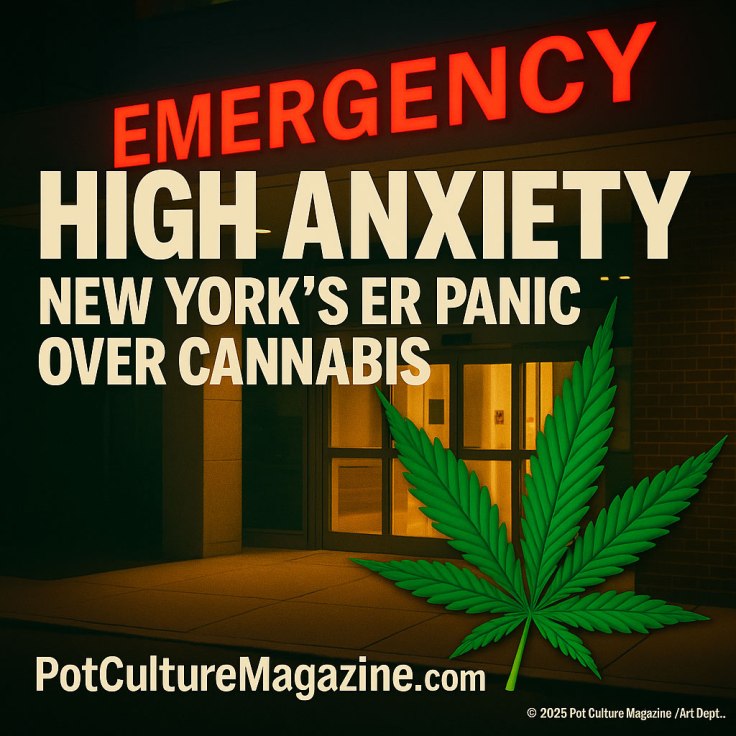
New York legalized cannabis in 2021, and ever since, prohibitionists have been waiting like vultures for a weak spot. They think they found it in the hospital waiting room. Headlines scream about a spike in cannabis-related emergency visits. Politicians clutch the numbers. Doctors shake their heads about high THC products and new users overdoing it. Local TV runs scare packages about children in ER beds. Smart Approaches to Marijuana (SAM), Kevin Sabet’s anti-weed outfit, is flooding the state with claims of crisis. The narrative is set: legalization broke New York’s health system.
Here is the outlaw truth. Yes, ER visits are up. But the story behind the numbers is not what prohibitionists want you to believe. The real problem is education, regulation, and the slow-motion rollout of the Office of Cannabis Management (OCM). What they call a crisis is what happens when you legalize in chaos. And the chaos is not coming from the plant. It is coming from Albany’s half-built system, and the public is still learning how to handle legal weed.
Since legalization in 2021, cannabis-related emergency visits have nearly doubled across New York. In 2023 alone, the state logged more than 135,000 cannabis-related ER visits, compared to tens of thousands fewer just years before. Central New York saw almost 13,000 such visits. The Mid-Hudson region saw a 147 percent jump. New York City recorded a 52 percent increase. Central New York’s increase was 82 percent. These numbers are real. They come from hospital reporting and state data. But numbers without context are political weapons.
Here is the context they never give you. Cannabis legalization brought more honesty into the system. People who once lied about use now tell the truth in the ER. Parents who once feared police now admit their child got into edibles. Doctors who once dismissed cannabis issues now code them properly. More honesty means more reported cases. That is not a crisis; it is transparency.
advertisement
F O R T H E C U L T U R E B Y T H E C U L T U R E
MS LIMITS MEDICAL CANNABIS WHERE IT MATTERS MOST
Mississippi maintains strict limits on medical cannabis after Governor Tate Reeves vetoed expansion bills on March 26, 2026. Patients remain unable to use cannabis in hospitals while eligibility and access…

CANNABIS LIES Vol. 6: The Driving Apocalypse Lie
Legal cannabis is often blamed for rising traffic deaths, but federal data tells a more complicated story. NHTSA findings, toxicology limitations, and conflicting crash studies reveal that THC presence is…

Thailand Lost Control
Thailand blew open its cannabis market, then tried to force it back under control. This feature tracks the country’s shift from prohibition to medical legalization, decriminalization, and regulatory backlash, exposing…
advertisement
Doctors describe what they are seeing. Some patients show up with cannabinoid hyperemesis syndrome (CHS), a brutal cycle of nausea and vomiting that comes with heavy chronic use. Others show up with anxiety attacks after eating too strong an edible. Children are admitted after accidental ingestion, some requiring IV fluids or respiratory support. These cases are not imagined; they are real. But they are not new. They were just underground when cannabis was illegal. Now they are visible.
Smart Approaches to Marijuana (SAM) spins the story another way. They say THC is stronger than ever, dispensaries are pushing high potency products, and legalization opened a floodgate of sickness. They tell the public that cannabis is a threat equal to opioids or alcohol. They want voters to see legalization as a failed experiment. It is the same fear play they have been running for thirty years.
The comparison does not hold. Cannabis-related ER visits in New York number in the hundreds of thousands. Alcohol sends millions to hospitals nationwide every year. Opioids kill more than 80,000 Americans annually. Cannabis has not killed anyone in New York. The vast majority of cannabis ER visits resolve within hours. Patients recover with hydration, reassurance, and time. Compare that to liver failure, car crashes, and overdoses. The scale is not even close.
The real lesson is in the details. Most cases involve edibles. Gummies and chocolates hit late and hit hard. New users think nothing is happening and take more. The high arrives hours later and knocks them flat. In kids, brightly packaged edibles look like candy. Accidental ingestion lands them in the ER. These are problems of packaging and education, not legalization itself.
Regulated dispensaries in New York cap edible servings at ten milligrams of THC. Labels are clear, and packaging is child-resistant. The real danger comes from unregulated street products, where labels lie and doses are sky high. Dispensary owners say it every day. Customers come in asking for 15 milligram edibles because that is what they bought on the street. In reality, those black-market edibles were often far less, sometimes none at all, sometimes wildly more. Regulation fixes that. But the legal market in New York is still small, still struggling against thousands of illegal shops. When regulators drag their feet, the black market wins, and so do the ER numbers.
Doctors like June Chin, the chief medical officer for the Office of Cannabis Management, are blunt. The problem is not legalization. The problem is education. Physicians and nurses are not trained in cannabis medicine. They do not know how to ask patients about cannabis use or how to advise safe consumption. The state has not built the training programs or public campaigns needed to guide people. Instead, fear fills the gap. Patients panic and land in the ER. Parents panic and call 911. Education would stop many of these visits before they start.
The outlaw community has known these lessons for decades. Start low, go slow. Respect edibles. Store products away from kids. Do not believe every label on a street cart. Use trusted sources. The problem is that Albany outlawed the outlaws, then tried to replace them with bureaucrats who had no idea how to teach those lessons. Now the state is paying the price in ER bills and bad headlines.
The numbers will keep rising as long as the black market outpaces the legal one. New York’s Office of Cannabis Management has been a mess, with lawsuits, delays, and shifting regulations. Thousands of illegal shops thrive in New York City while licensed dispensaries struggle. That imbalance guarantees more unregulated products, more overdoses on mislabeled gummies, and more children finding candy that is not candy. Prohibitionists call this proof that legalization failed. Outlaws call it proof the state botched the rollout.
There is another side to the ER spike that never makes headlines. More people are coming to hospitals seeking cannabis as medicine. Some ERs report patients asking about cannabis for pain, insomnia, or anxiety. Doctors who once dismissed it now have to take it seriously. That is not a crisis, that is cultural change. The ER is becoming a front line in cannabis normalization. Prohibitionists see danger, but the outlaw community sees opportunity.
The outlaw perspective is clear. Do not run from these numbers. Own them. They show that cannabis is now part of daily life in New York. They show that people are using it openly. They show that the system is catching up. Rising ER visits are not a sign of collapse. It is a sign that cannabis is out of the shadows. The real crisis would be ignoring the lessons. Regulate properly. Educate aggressively. Build trust in the legal market. Cut out the bullshit from groups like SAM. That is how you shrink the numbers and build a sane system.
Cannabis legalization was never going to be clean. It was always going to be messy, public, and political. New York is living through that. The outlaw community has seen it before in Colorado, California, and Canada. Each place saw a spike in ER visits at first. Each place saw panic headlines. Each place saw the numbers level out once education and regulation caught up. New York is no different.
The prohibitionists want the public to see hospitals filled with weed victims. They want the narrative of chaos. The truth is simpler. New York’s hospitals are dealing with a learning curve, not a plague. The real illness is prohibition propaganda. The cure is outlaw education.
©2025 Pot Culture Magazine. All rights reserved. This content is the exclusive property of Pot Culture Magazine and may not be reproduced, distributed, or transmitted in any form or by any means without prior written permission from the publisher, except for brief quotations in critical reviews.
F O R T H E C U L T U R E B Y T H E C U L T U R E
Texas Is Moving to Shut Down the Hemp Market
Texas helped build one of the largest hemp THC markets in the country, then moved to shut it down. As regulators tighten rules and enforcement increases, businesses are left exposed, and the future of hemp-derived cannabinoids hangs in the balance. This is not a simple crackdown. It is a full policy reversal with real economic…
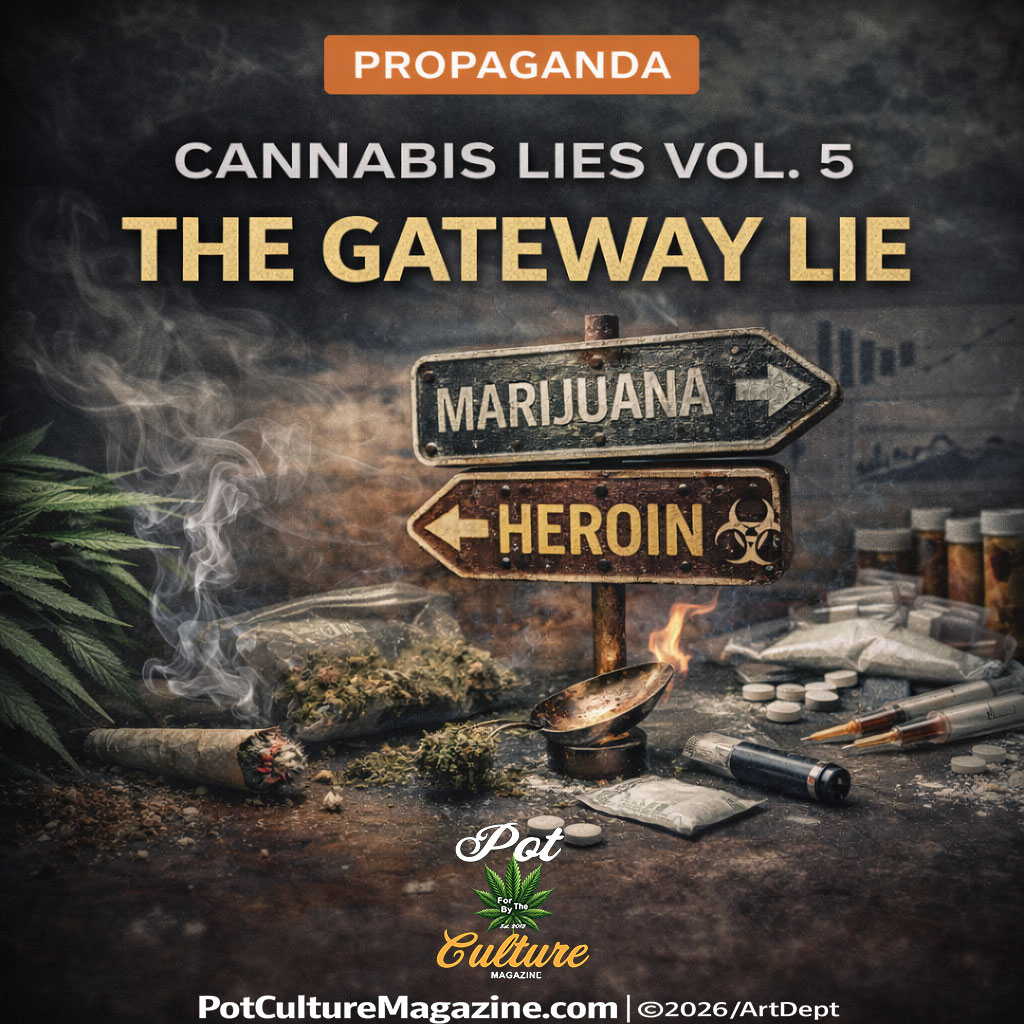
CANNABIS LIES Vol. 5: The Gateway Lie
For decades, politicians have claimed marijuana is a gateway to heroin and harder drugs. Federal youth surveys, NSDUH data, and NIDA’s own language tell a different story. Cannabis use is widespread, hard drug use remains rare, and most users do not progress. The data dismantles one of prohibition’s most durable fear narratives.
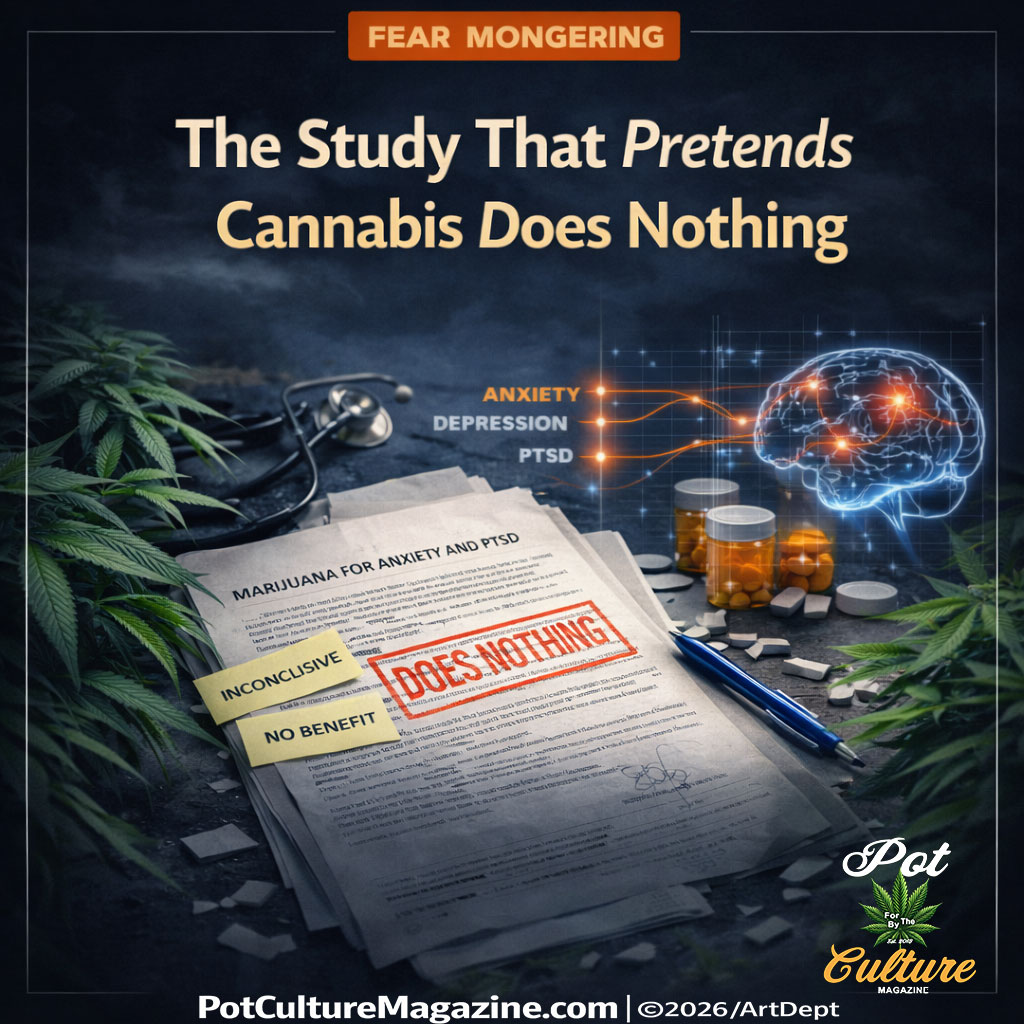
The Study That Pretends Cannabis Does Nothing
A new cannabis study claims marijuana does nothing for anxiety, depression, or PTSD. The reality is far more complicated. Decades of federal restrictions, limited research access, and synthetic substitutes have shaped the science. This breakdown exposes how incomplete data and selective interpretation continue to drive misleading headlines about cannabis and mental health.
Discover more from POT CULTURE MAGAZINE
Subscribe to get the latest posts sent to your email.

Leave a comment