Filed Under: Panic Science and Policy Theater
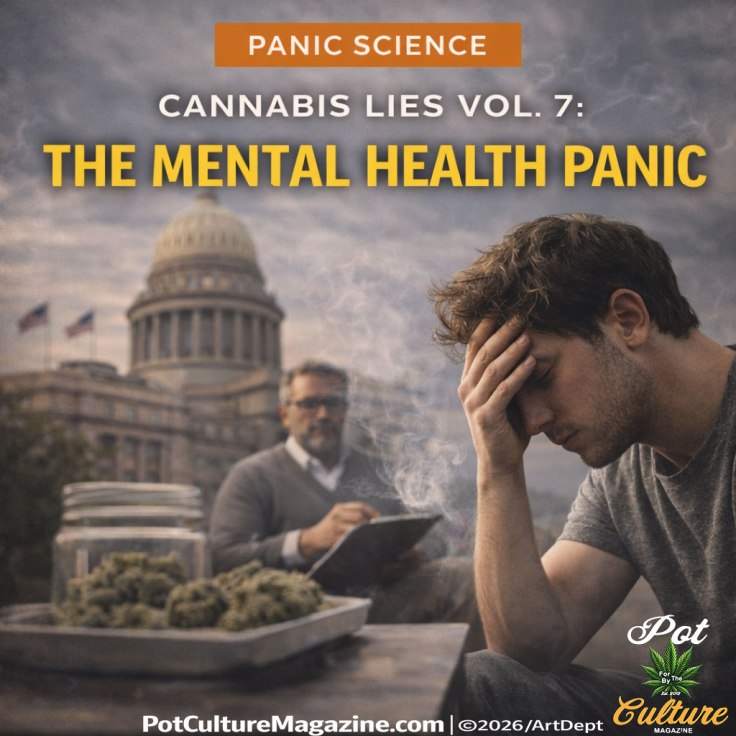
They always find a new way to scare people when the old ones stop working. First, it was a crime. Then it was laziness, moral decay, the gateway line, the usual stale garbage prohibition dragged around for decades. Once those claims started falling apart, once legalization kept advancing, and millions of ordinary adults kept using cannabis without turning into the monsters they were promised, the panic had to evolve. Now the warning comes wrapped in white coats and anxious headlines. Now the line is that cannabis is quietly wrecking minds, triggering psychosis, pushing people toward schizophrenia, and softening up an entire generation for mental collapse.
It is a better scare tactic than most of the old ones because it sounds clinical. It sounds modern. It sounds harder to challenge. Nobody wants to sound reckless when mental health is on the table, and the people pushing this line know it. They do not have to prove a broad public crisis if they can make everybody feel like one might be hiding just around the corner. That is how the story spreads. One study becomes a headline. One headline becomes a talking point. One talking point becomes policy. Before long, a plant is back on trial, and the public is told to be grateful for the protection.
The problem is not that cannabis carries no mental health risk. That would be stupid, and it would also be false. The problem is that the risk is being stretched, flattened, and weaponized until it barely resembles what the evidence actually shows. A narrow concern is being sold as a sweeping emergency. A concentrated risk is being repackaged as a universal threat. The loudest version of this story depends on people never slowing down long enough to ask the obvious question: who is actually at risk, how much risk are we talking about, and what exactly has been proven.
Start there, and the panic begins to wobble.
The strongest evidence does show an association between cannabis use and psychotic outcomes. That much is real. Heavy use matters more than occasional use. High potency matters more than weaker products. Starting young matters more than starting later. If somebody is using frequently, hitting high THC products hard, and already has a personal or family vulnerability, the danger is not imaginary. That person is not the invention of a moral crusader. They exist, and any serious publication should say so without flinching.
But that is not the same as saying cannabis is causing a broad mental health collapse. It is not the same as saying most users are headed toward a psychiatric breakdown. It is not the same as saying legalization opened the gates to mass psychosis. Those claims travel farther because they are cleaner, scarier, and easier to repeat, but they flatten the evidence into something the evidence itself cannot support.
The baseline matters here, and it almost always gets buried. Schizophrenia is a serious disorder, but it is also relatively rare in the general population. That changes the meaning of the numbers people like to throw around. If a study finds that heavy cannabis use doubles the risk of a rare outcome, the relative increase sounds dramatic, but the absolute increase may still be small. We are talking about a few percentage points, not a population-wide collapse. That is not spin. That is basic arithmetic. The public keeps getting fed the first half of the equation because the second half makes the panic harder to sell.
This is one of the oldest tricks in the modern health scare playbook. Relative risk grabs the throat. Absolute risk forces people to think. One sounds like a siren. The other sounds like context. Context is terrible for fear campaigns, so it’s usually the first to disappear. A study finding elevated odds in a narrow user group turns into a broad cultural warning. By the time the headline reaches social media, it barely resembles the actual terms of the research.
Then there is the causation problem, which is where this whole story gets even messier. People who are already more vulnerable to mental health problems are also more likely, in many cases, to use cannabis.
That overlap matters because it complicates the neat storyline so many people want. If vulnerability comes first, then cannabis may act as an aggravating factor in some cases without serving as the root cause. That is a very different claim from the one the panic merchants prefer. They want the public to picture cannabis as the clean trigger, the single bad actor, the obvious villain in a simple chain of events. Real life rarely works that way, and neither does psychiatric research.
Twin studies and long-term cohort studies matter for exactly this reason. When researchers try to control for shared genetics, family environment, and background risk, some of the strongest-sounding claims start losing their swagger. That does not erase every concern. It does mean the relationship is less direct, less universal, and less politically convenient than the public is usually told. The same factors that raise the odds of mental health trouble can also raise the odds of heavier cannabis use. Once that is admitted, the idea of a clean cause-and-effect story starts looking more like a sales pitch than a settled fact.
What the evidence supports most clearly is concentration, not universality. Risk clusters. It rises in a more vulnerable slice of users, not across the entire population in one smooth, uniform way. The people facing the greatest danger tend to be those who start young, use heavily, choose high THC products often, and carry other risk factors into the picture before cannabis even enters it. That is a real public health concern. It deserves serious handling. It does not justify turning every adult consumer into a warning label.
Potency is where the fear rhetoric gets especially lazy. Cannabis is stronger now than it was decades ago. No honest person needs to pretend otherwise. But higher potency alone is not a magic explanation for every psychiatric fear being dumped on the plant. Frequency still matters. Dose still matters. User behavior still matters. Somebody hitting high-potency cannabis every day is not the same as somebody taking a few puffs on the weekend, and pretending otherwise is either sloppy or dishonest. Much of the strongest risk signal in the research comes from repeated, heavy exposure, not casual adult use. The broader panic depends on blurring that line until nobody can see it anymore.
Hospital and emergency room data create even more room for distortion. Numbers on cannabis related visits sound decisive until you ask what those visits actually involved. Some are acute reactions, panic episodes, vomiting, temporary confusion, the kind of messy, short-term outcomes that make for bad nights but do not amount to permanent psychiatric ruin. Some cases involve positive THC screens layered on top of preexisting conditions, alcohol use, other drugs, or already unstable mental health. Once the words cannabis related get stamped on the file, though, nuance dies quickly. The case enters the bloodstream of public rhetoric and comes back out as another brick in the mental health panic wall.
MORE CANNABIS LIES
CANNABIS LIES Vol. 6: The Driving Apocalypse Lie
Legal cannabis is often blamed for rising traffic deaths, but federal data tells a more complicated story. NHTSA findings, toxicology limitations, and conflicting crash studies reveal that THC presence is not a reliable measure of impairment. This investigation breaks down how flawed testing and policy shortcuts have shaped the narrative around so-called stoned driving.

CANNABIS LIES Vol. 5: The Gateway Lie
For decades, politicians have claimed marijuana is a gateway to heroin and harder drugs. Federal youth surveys, NSDUH data, and NIDA’s own language tell a different story. Cannabis use is widespread, hard drug use remains rare, and most users do not progress. The data dismantles one of prohibition’s most durable fear narratives.
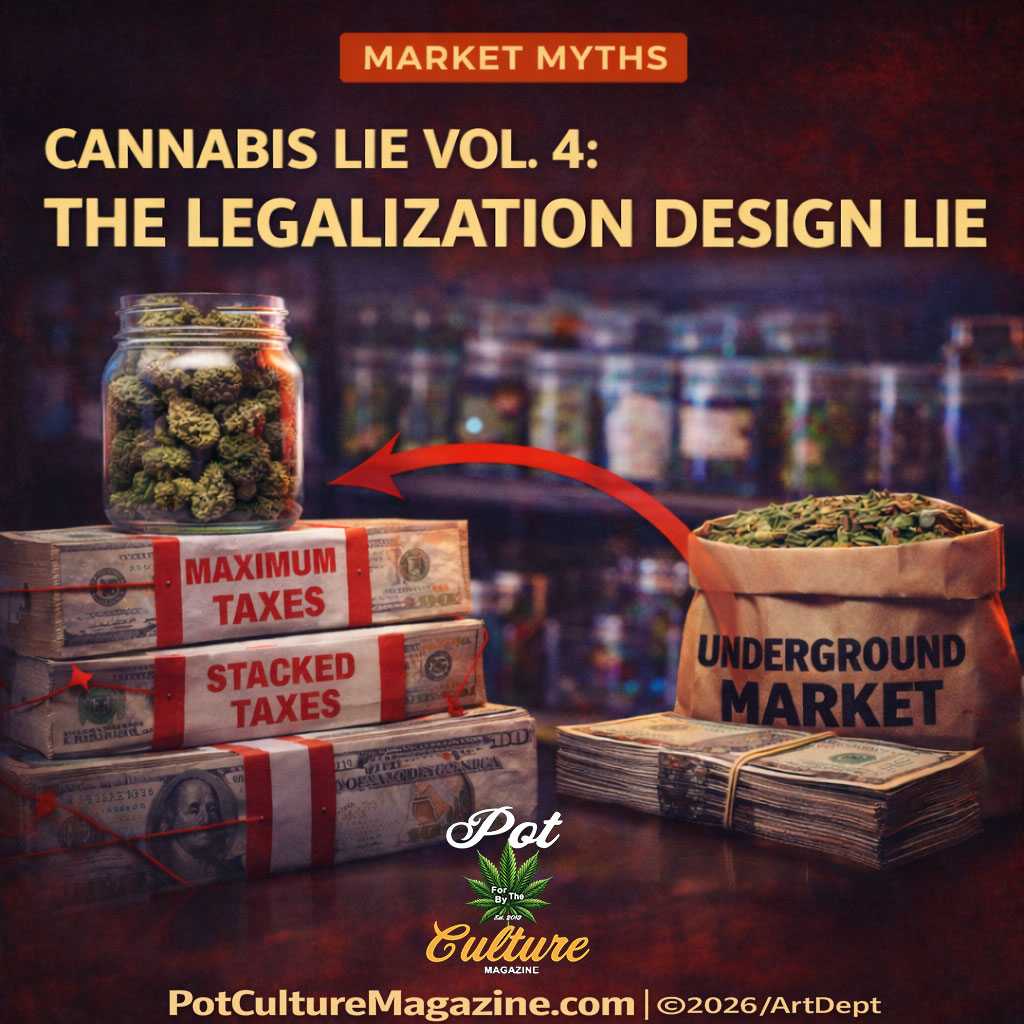
Cannabis Lie Vol. 4: The Legalization Design Lie
Cannabis legalization was sold as the end of the illicit market. Instead, stacked taxes, licensing limits, and local bans created price gaps that allowed underground sales to survive. From California’s cultivation tax to Illinois pricing and Michigan’s price compression, this installment of Cannabis Lie examines how policy design, not the plant, determines who wins and…
That matters because presence is not the same thing as cause. A toxicology screen can tell you something was in the system. It cannot always tell you what created the episode in front of you. That distinction gets ignored because it is a pain in the ass for clean storytelling. It slows the moral stampede. It forces people to admit uncertainty, and uncertainty is terrible fuel for an anti cannabis campaign. The same sloppy move showed up for years in drugged driving rhetoric, and it shows up here, too. Detection becomes blame. Association becomes proof. A messy human case gets reduced to a chemical headline.
If the broad panic were true on the scale people keep implying, we would expect to see population-level evidence tracking with that claim. We would expect severe psychiatric disorders to explode in some clear, durable, measurable pattern as legalization spread and access increased. That has not been clearly established. Some datasets show minor movement. Some show mixed results. Some show no major shift that can be directly pinned on legalization itself. What we do not have is a clean, national picture that matches the drama of the public warning campaign.
That gap is not a side note. It is the center of the argument. A country supposedly drifting into cannabis driven mental collapse should leave clearer footprints than this. Instead, what keeps surfacing is complication, overlap, uncertainty, subgroup risk, and confounding factors, all the boring things panic hates. The public keeps getting sold a picture of a giant mental health wave rolling over everyone, while the research keeps pointing back toward a narrower, more conditional problem. That difference is the lie.
None of this means the culture should turn stupid and defensive. A serious pro cannabis publication should not react to bad science by inventing its own fantasy. We do not need to claim the plant is harmless to expose how the harm gets exaggerated. We do not need to pretend every critic is making everything up. Some people should stay far away from cannabis. Some people should be warned hard and early. Family history matters. Existing instability matters. Heavy adolescent use matters. Those are not betrayals of the culture. They are facts, and if our side cannot handle facts, then it does not deserve credibility in the first place.
What deserves to be challenged is the way those facts get stretched beyond recognition. A real concern becomes a universal sermon. A concentrated risk becomes a broad cultural indictment. A subset of users becomes everybody. That is where the medical framing stops being useful and starts becoming political. It is not about informing the public at that point. It is about managing fear, preserving control, and keeping cannabis under a cloud of suspicion even after so much of the old propaganda has already been dragged into daylight.
That is why this narrative keeps showing up in respectable clothes. It works. It gives prohibition a smarter accent. It lets institutions sound protective instead of punitive. It turns a familiar urge to control into something that looks like concern. Meanwhile, the public gets a distorted version of the truth, one where the worst cases are treated like the norm, and the actual scale of risk gets buried under dramatic phrasing.
Cannabis can raise mental health risk for a narrow group of vulnerable users. That is serious. It should be reported straight. It should be studied harder. It should never be hidden. What it should not become is a catchall panic slogan for every anxious parent, opportunistic lawmaker, and media outlet looking for another scary angle. The data does not support that leap. The broad collapse story remains louder than the evidence behind it.
That is the pattern by now. Take a real issue, strip out the limits, amplify the worst case, and sell it as the full truth. That is not science. That is messaging with a stethoscope on. And just like the old lies, it survives by counting on people to hear the fear first and never go back for the details.
©2026 Pot Culture Magazine. All rights reserved. This content is the exclusive property of Pot Culture Magazine and may not be reproduced, distributed, or transmitted in any form or by any means without prior written permission from the publisher, except for brief quotations in critical reviews.
F O R T H E C U L T U R E B Y T H E C U L T U R E
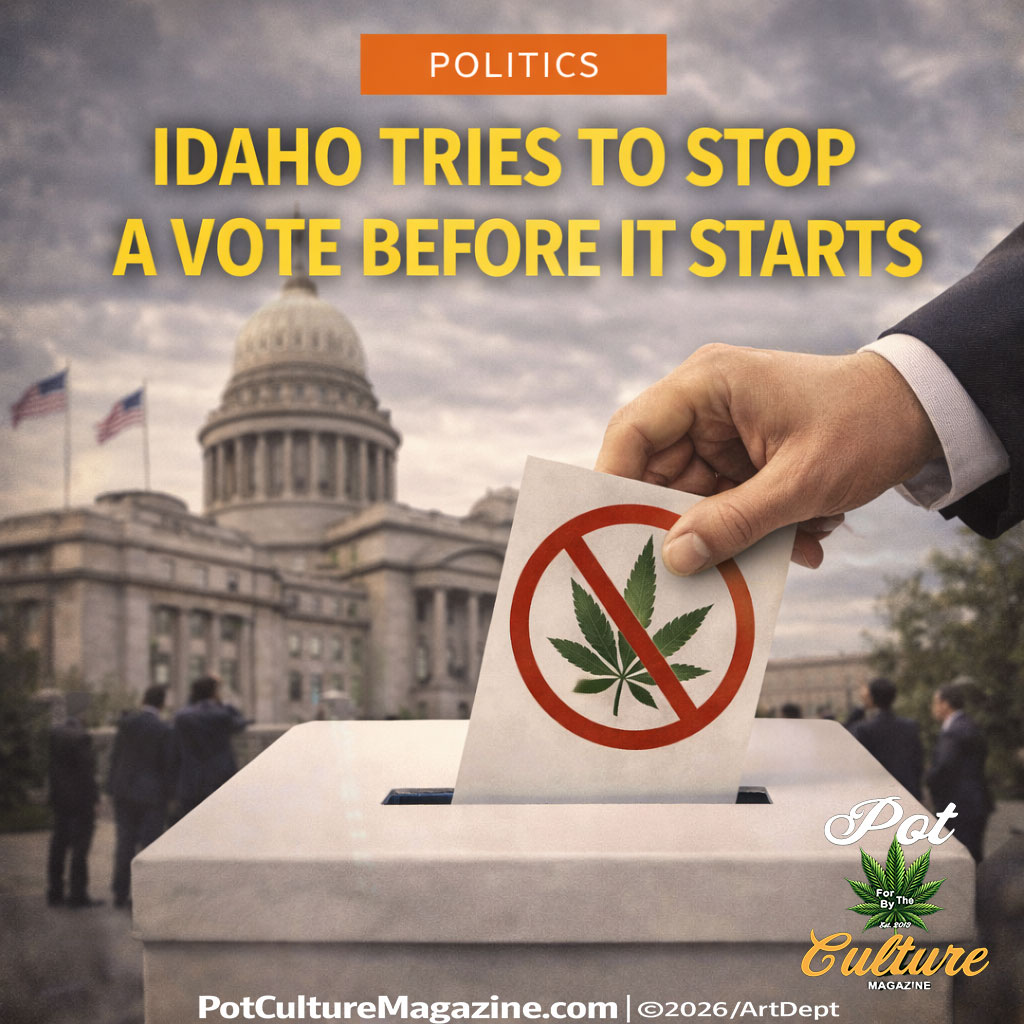
IDAHO TRIES TO STOP A VOTE BEFORE IT STARTS
Idaho lawmakers passed a resolution urging voters to reject a medical cannabis initiative before it reaches the ballot. The move highlights how officials are shaping public opinion ahead of a vote, while maintaining strict prohibition and blocking even limited access for patients.
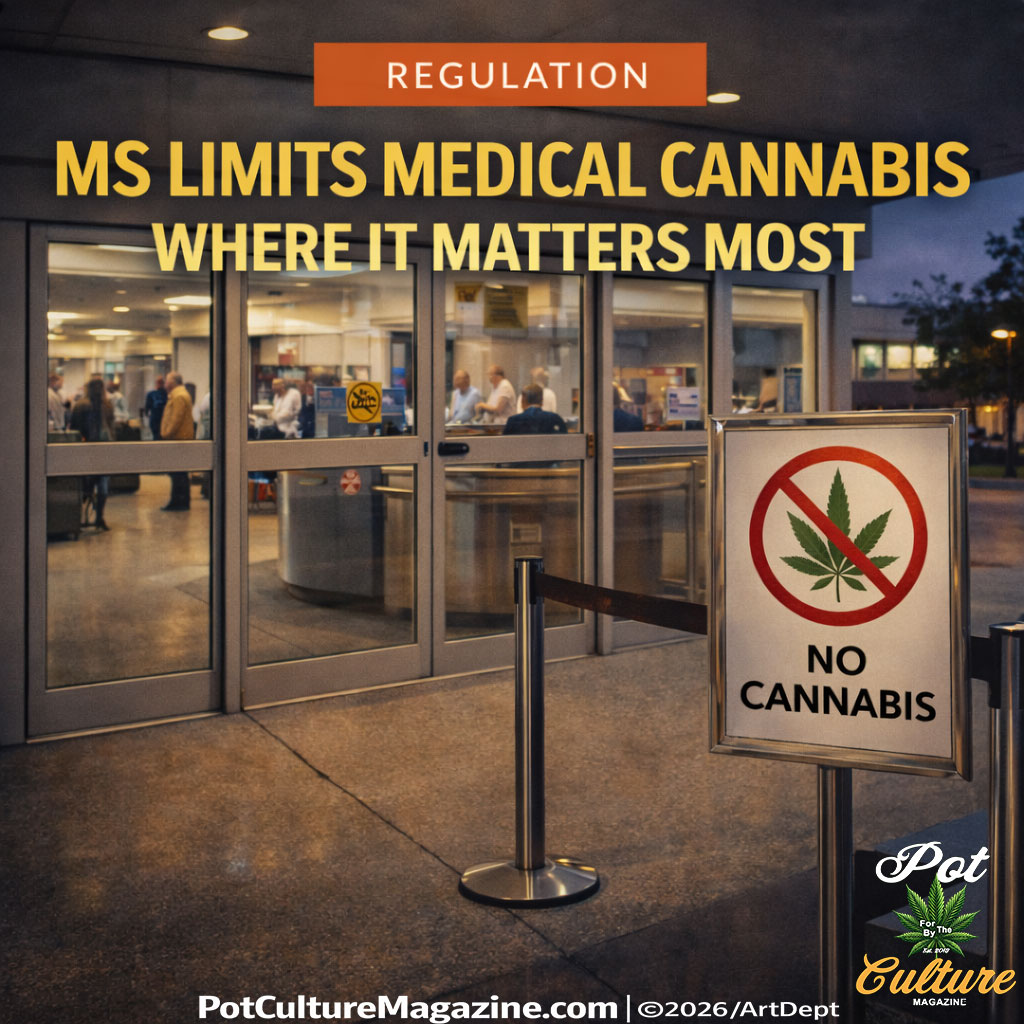
MS LIMITS MEDICAL CANNABIS WHERE IT MATTERS MOST
Mississippi maintains strict limits on medical cannabis after Governor Tate Reeves vetoed expansion bills on March 26, 2026. Patients remain unable to use cannabis in hospitals while eligibility and access rules stay tightly controlled. This feature examines what the veto blocks, how it affects patients, and what it means for the state’s growing cannabis market.
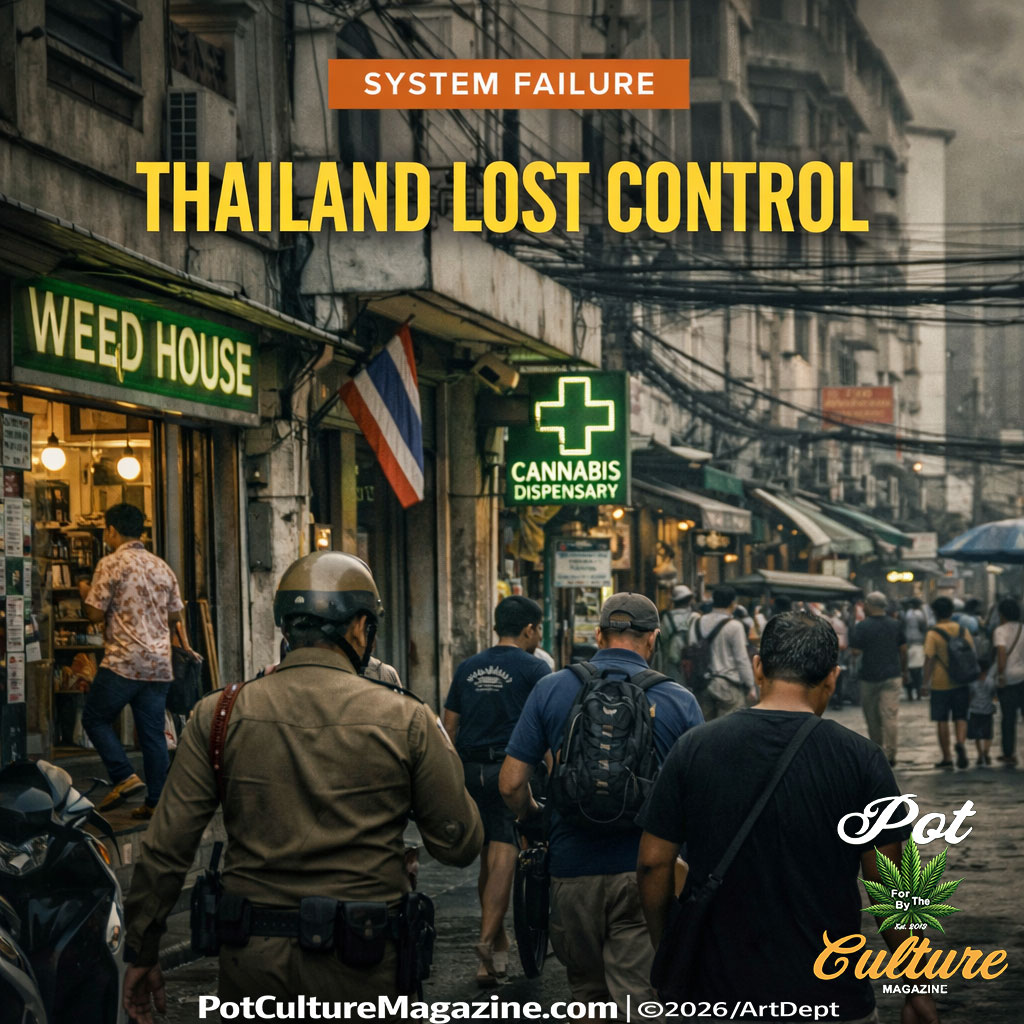
Thailand Lost Control
Thailand blew open its cannabis market, then tried to force it back under control. This feature tracks the country’s shift from prohibition to medical legalization, decriminalization, and regulatory backlash, exposing how weak enforcement, political pressure, and rushed policy turned a reform headline into a live case study in state correction.
Discover more from POT CULTURE MAGAZINE
Subscribe to get the latest posts sent to your email.

Leave a comment