Filed Under: Ballot Control
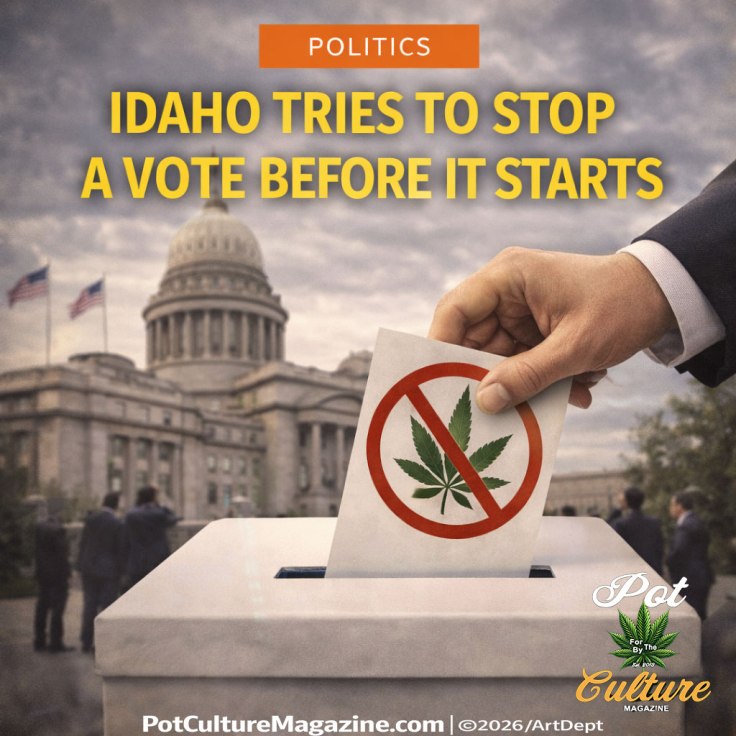
Idaho lawmakers are not waiting for a cannabis vote. They are trying to shape it before voters ever see the proposal, before signatures are counted, and before it reaches the ballot.
On March 30, 2026, the Idaho Senate passed SCR 128, a resolution urging residents not to sign a medical cannabis petition backed by the Natural Medicine Alliance of Idaho. Rather than creating policy, the resolution pushes a message into the process. No regulations, no THC limits, no enforcement, just persuasion ahead of a vote that does not yet exist.
The timing is not accidental.
The campaign being targeted is attempting to place the Idaho Medical Cannabis Act on the November 2026 ballot, a tightly written proposal that would allow limited access for qualifying patients under strict oversight. Signature collection is already underway. To qualify, organizers must gather signatures equal to 6 percent of qualified electors across at least 18 of Idaho’s 35 legislative districts, a threshold requiring geographic support, not just raw numbers.
Lawmakers moved first, stepping into that process before it could fully form.
SCR 128 does not regulate cannabis or alter criminal penalties. It tries to shape the vote before it takes form. That is not how a ballot process works.
Idaho has no medical cannabis program. No adult use system. No form of decriminalization. Idaho law continues to treat marijuana possession as a criminal offense, with penalties that include jail time and fines.
This is not caution. This is prohibition, actively maintained while the rest of the country moved on.
Surrounding states built regulated markets years ago. Idaho chose to hold the line. That choice has consequences for patients, for enforcement, and for a system that now exists in isolation.
The ballot initiative is an attempt to break that pattern from the outside, not by overwhelming the system, but by forcing a narrow opening into it.
The proposal itself is narrow. It does not resemble open market systems. It creates a controlled structure designed to limit access while allowing patients with qualifying conditions to obtain medical cannabis under defined conditions.
Under the framework being circulated by organizers, the program would operate under strict oversight with a limited number of licensed operators and dispensaries, physician approval requirements, and no home cultivation. Access is restricted. Supply is capped. Distribution is controlled.
As outlined by the Marijuana Policy Project, the proposal creates a regulated system allowing patients with qualifying conditions to access medical cannabis under state oversight.
“The Idaho Medical Cannabis Act would allow patients with serious conditions to access cannabis under a tightly regulated system.” — Marijuana Policy Project
This is not broad legalization. It is a tightly contained medical system designed to operate within a state that has resisted every version of reform presented to it.
And even that is a shift Idaho has refused to make.
For patients in this state, the current system offers nothing. No access. No legal pathway. No alternative beyond criminal risk. There is no regulated option, no medical exception, no acknowledgment that cannabis is already part of the reality lawmakers claim to control.
“Criminal prohibition does not eliminate cannabis use. It only punishes those who engage in it.” — National Organization for the Reform of Marijuana Laws
This initiative does not open the floodgates. It creates a door where none exists, a limited, controlled entry point into a system that has remained completely closed.
That distinction disappears in the resolution.
Lawmakers leaned on the usual list: crime, cartels, black markets, public health risks, and the familiar warnings that have followed cannabis debates for decades. The language is not new. The difference is in how it is used.
Before voters see the proposal. Before they evaluate the structure. Before they decide.
The argument is being framed in advance.
Senator Scott Grow made the opposition clear.
“This initiative is not about compassionate care. It opens the door to broader drug use under the guise of medicine.”
That argument skips past what the initiative actually does. It treats any movement away from prohibition as a threat, regardless of how tightly it is controlled or how limited the access is.
Supporters are arguing something else entirely.
Amanda Watson, speaking on behalf of the campaign, described the proposal for what it is, not what opponents claim it will become.
“This is a tightly regulated medical program designed for patients who have no other options.”
She pushed back on the legislature’s attempt to define the debate in advance.
“Idahoans deserve the chance to vote on this, not be told what to think before they ever see it.”
That is where the conflict sits.
Not just whether cannabis should be legal, but whether Idaho voters are allowed to decide that question on their own terms, based on the actual proposal instead of the narrative built around it.
Ballot initiatives exist for a reason. They give voters a path when lawmakers refuse to move. Idaho’s legislature is not only refusing. It is stepping into that path early, attempting to shape the outcome before voters even engage with the proposal.
It doesn’t stop there.
Lawmakers are advancing a separate constitutional amendment aimed at tightening control over ballot initiatives, a move that could place future cannabis legalization efforts under greater legislative authority.
This is not just about cannabis. It is about control.
Control of the message. Control of the process. Control over what voters are allowed to decide.
Idaho is one of the last states holding onto full prohibition. That position is no longer neutral. It is a choice.
A choice to maintain a system that offers no legal access while neighboring states build regulated markets. A choice to keep enforcement in place while rejecting even limited medical frameworks. A choice to resist change even when that change is narrow, controlled, and focused on patients rather than profit.
The initiative is not trying to match broader legalization systems. It is trying to introduce the most limited version of one.
And it is being met with resistance before it reaches the ballot.
If the campaign gathers enough signatures, the initiative will appear on the November ballot. Voters will have the chance to review it, not as a talking point or a warning, but as a defined, structured proposal.
SCR 128 does not stop that process. It tries to shape it before it begins.
The resolution leans on familiar claims, crime, cartels, black markets, public health risks, and cost, deployed ahead of the actual policy debate.
Supporters now have to do two things at once. Explain the initiative while dismantling what lawmakers claim.
Two campaigns are running at the same time.
One gathers signatures. The other shapes perception.
Whichever lands first will decide the outcome.
If the initiative qualifies, voters will decide whether Idaho continues full prohibition or allows a controlled medical system to exist. If it fails, the resolution will have done its work without ever changing the law.
That is the leverage behind SCR 128.
It operates before the vote exists, in the space where opinions form, narratives settle, and decisions begin to take shape.
Idaho’s position is clear. Cannabis remains illegal, and lawmakers intend to keep it that way. Faced with a ballot effort that introduces even limited access, they moved early.
No ban. No rewritten statute. Just a message delivered ahead of the process it aims to influence.
They didn’t pass the policy. They sent a warning.
Now it’s up to voters whether they accept it.
If you’re an Idaho voter and don’t want this decision shaped for you, make your voice heard.
Contact your state legislators:
https://legislature.idaho.gov/legislators/whosmylegislator/
Idaho Senate: (208) 332-1300 | senateinfo@senate.idaho.gov
Idaho House: (208) 332-1000 | hinfo@house.idaho.gov
Governor’s Office: https://gov.idaho.gov/contact-us/
Read the proposal yourself:
https://www.idahomedicalcannabis.org/initiative/
©2026 Pot Culture Magazine. All rights reserved. This content is the exclusive property of Pot Culture Magazine and may not be reproduced, distributed, or transmitted in any form or by any means without prior written permission from the publisher, except for brief quotations in critical reviews.
F O R T H E C U L T U R E B Y T H E C U L T U R E
MS LIMITS MEDICAL CANNABIS WHERE IT MATTERS MOST
Mississippi maintains strict limits on medical cannabis after Governor Tate Reeves vetoed expansion bills on March 26, 2026. Patients remain unable to use cannabis in hospitals while eligibility and access rules stay tightly controlled. This feature examines what the veto blocks, how it affects patients, and what it means for the state’s growing cannabis market.

CANNABIS LIES Vol. 6: The Driving Apocalypse Lie
Legal cannabis is often blamed for rising traffic deaths, but federal data tells a more complicated story. NHTSA findings, toxicology limitations, and conflicting crash studies reveal that THC presence is not a reliable measure of impairment. This investigation breaks down how flawed testing and policy shortcuts have shaped the narrative around so-called stoned driving.

Thailand Lost Control
Thailand blew open its cannabis market, then tried to force it back under control. This feature tracks the country’s shift from prohibition to medical legalization, decriminalization, and regulatory backlash, exposing how weak enforcement, political pressure, and rushed policy turned a reform headline into a live case study in state correction.
Discover more from POT CULTURE MAGAZINE
Subscribe to get the latest posts sent to your email.

Leave a comment