Filed Under: Panic Science and Policy Theater
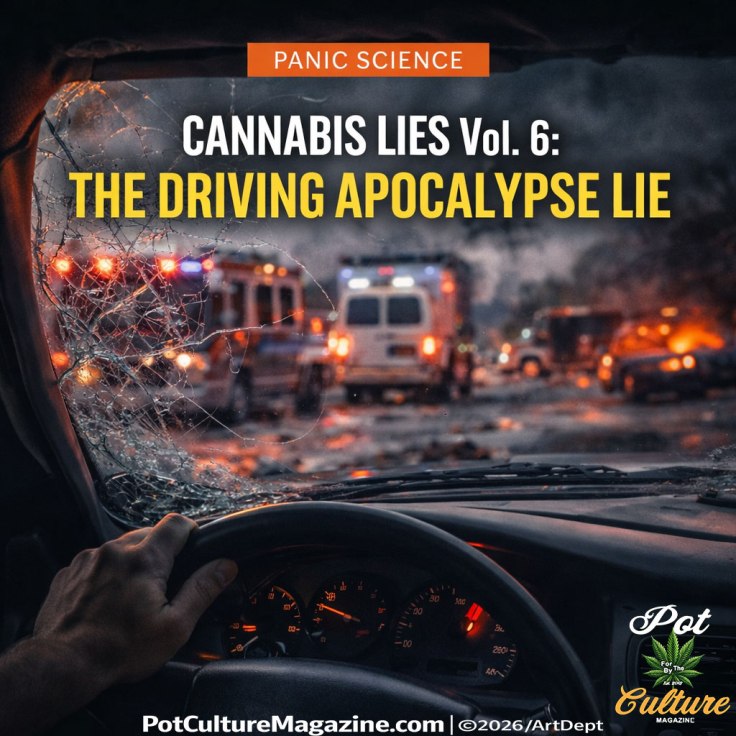
For years, one of the drug war’s favorite scare lines has survived every legal setback, every ballot loss, and every collapsing moral panic. Legalize weed, they said, and the roads will turn into a demolition derby run by glassy-eyed idiots drifting through red lights with a vape pen in one hand and a burrito in the other. It was always a good line. It made parents nervous, made cops look necessary, and gave lawmakers a clean excuse to keep treating cannabis like a social emergency long after the country stopped believing the rest of the script.
Now here is the problem. A good line is not the same thing as a good measurement system.
That distinction matters because impaired driving is real. People can absolutely drive too high. Reaction time can slow. Attention can drift. Judgment can wobble. Mix cannabis with alcohol, and the risk gets worse. None of that is fantasy. The problem is what happened next. Instead of building a serious science around cannabis impairment, a lot of policymakers grabbed the nearest shortcut and called it proof. Presence became impairment. Impairment became causation. Causation became headlines. And the public got sold a clean crisis story out of a messy pile of incomplete data.
Compare that to alcohol, where the baseline is brutal and well-established. According to the CDC, drunk driving accounts for 30 percent of all traffic fatalities in the United States. In 2022 alone, NHTSA reported 13,524 deaths involving drivers with a BAC of .08 or higher, 32 percent of all traffic-related fatalities.
That is a real crisis by any honest measure.
Alcohol has something cannabis still does not. It has a reasonably stable relationship between concentration and impairment. Extensive research has shown that as blood alcohol concentration rises, crash risk rises predictably. That does not make alcohol policy perfect, but it does mean the state is working from a measurement tool that at least roughly tracks actual driving risk.
THC does not behave that way. Not even close.
The most damaging thing in this entire debate did not come from advocates. It came from NHTSA. In its Report to Congress on Marijuana-Impaired Driving, the agency says the consistent finding across studies is that THC blood level and degree of impairment do not appear to be closely related. It also states that the THC level in blood and oral fluid does not appear to be an accurate and reliable predictor of impairment. It further notes that common “per se” limits used by states appear to have been based on something other than scientific evidence.
That should have forced a reset. It did not.
Too much of the system was already built around the convenience of pretending THC could be handled like alcohol. It cannot. Peak THC levels do not line up neatly with peak impairment, with research published in JAMA showing impairment can peak later even as THC levels in blood drop sharply. A blood number can look meaningful without telling you what actually matters: whether the driver was too impaired to drive safely at that moment.
This is where the public gets misled. Most people hear that a driver tested positive for THC and assume the case is closed. It is not. Federal guidance, including NHTSA’s own Drug-Impaired Driving reports, has repeatedly made clear that a positive drug test shows only that a substance was present, not that the driver was impaired at the time, and not that the drug caused the crash. Cannabinoids can remain detectable long after impairment has passed, especially in regular users.
That distinction between presence and impairment is the core scientific problem.
The data system itself adds another layer of distortion. Alcohol data in federal crash systems are robust enough to support modeling and correction. Drug data are not. In 2019, only 36.2 percent of drivers in fatal crashes had reported drug test results, and testing practices varied significantly across states. That means national claims about THC-positive drivers are being built on incomplete and inconsistent data.
Test more drivers, detect more THC, and you can manufacture the appearance of a trend without proving a cause. More detection is not automatically more dangerous.
Now comes the part critics lean on. Some post-legalization studies do show increases in certain crash outcomes. That has to be addressed directly. One study from the Insurance Institute for Highway Safety (IIHS) found legalization was associated with a 6.5 percent increase in injury crash rates and a 2.3 percent increase in fatal crash rates in the states studied. Other analyses, including research published in the American Journal of Public Health, have found increases in fatal collisions in some jurisdictions following legalization.
Those findings are real. They cannot be ignored.
But they do not prove the apocalypse narrative either.
The effects vary by state. The timelines differ. The magnitude is modest compared to alcohol-related crash burdens. Association at the policy level does not prove that cannabis-impaired drivers directly caused those crashes. Legalization changes multiple variables at once, including enforcement, reporting, testing rates, tourism, and behavioral disclosure. Untangling those variables is difficult, and the literature reflects that.
Other analyses, including earlier multi-state comparisons published in AJPH, have found weaker or mixed effects, especially in earlier post-legalization periods. Science has not produced a single, uniform conclusion that legalization caused a clear nationwide surge in dangerous driving.
That is the gap where exaggeration thrives.
Even enforcement tools struggle to keep up. Research summarized by the National Institute of Justice has shown that THC levels in biological samples are not reliable indicators of intoxication. Standard roadside testing methods are less effective for detecting cannabis impairment compared to alcohol.
Across the country, states have taken widely different approaches to THC enforcement, with many adopting zero-tolerance or per se limits despite the lack of a reliable impairment threshold.
At this point, the argument usually shifts. If the science is imperfect, shouldn’t policy err on the side of safety?
That sounds reasonable until it turns into punishment based on uncertainty. If the state cannot reliably distinguish between past use and present impairment, then per se THC laws function less like precise safety tools and more like broad enforcement mechanisms. Residual chemistry becomes evidence, even when it does not reflect current driving ability.
None of this gives cannabis a pass. Driving immediately after use can be dangerous. Combined use with alcohol increases the risk significantly. Impairment exists and should be taken seriously.
But that is not the same as a nationwide crisis caused by legalization.
Alcohol remains a massive, measurable driver of fatal crashes. Cannabis impairment is real but harder to quantify. THC presence is not a reliable proxy for impairment. Positive toxicology does not establish causation.
Research on legalization and crash outcomes remains mixed, with no consistent national pattern matching the scale of the narrative being pushed.
The problem is not that impaired driving is being ignored. The problem is that it is being oversimplified.
A complex issue has been reduced to a slogan because slogans are easier to enforce than science. And that is how bad policy survives.
© 2026 Pot Culture Magazine. All Rights Reserved. This content is the exclusive property of Pot Culture Magazine and may not be reproduced, distributed, or transmitted in any form or by any means without prior written permission from the publisher, except for brief quotations in critical reviews.
F O R T H E C U L T U R E B Y T H E C U L T U R E
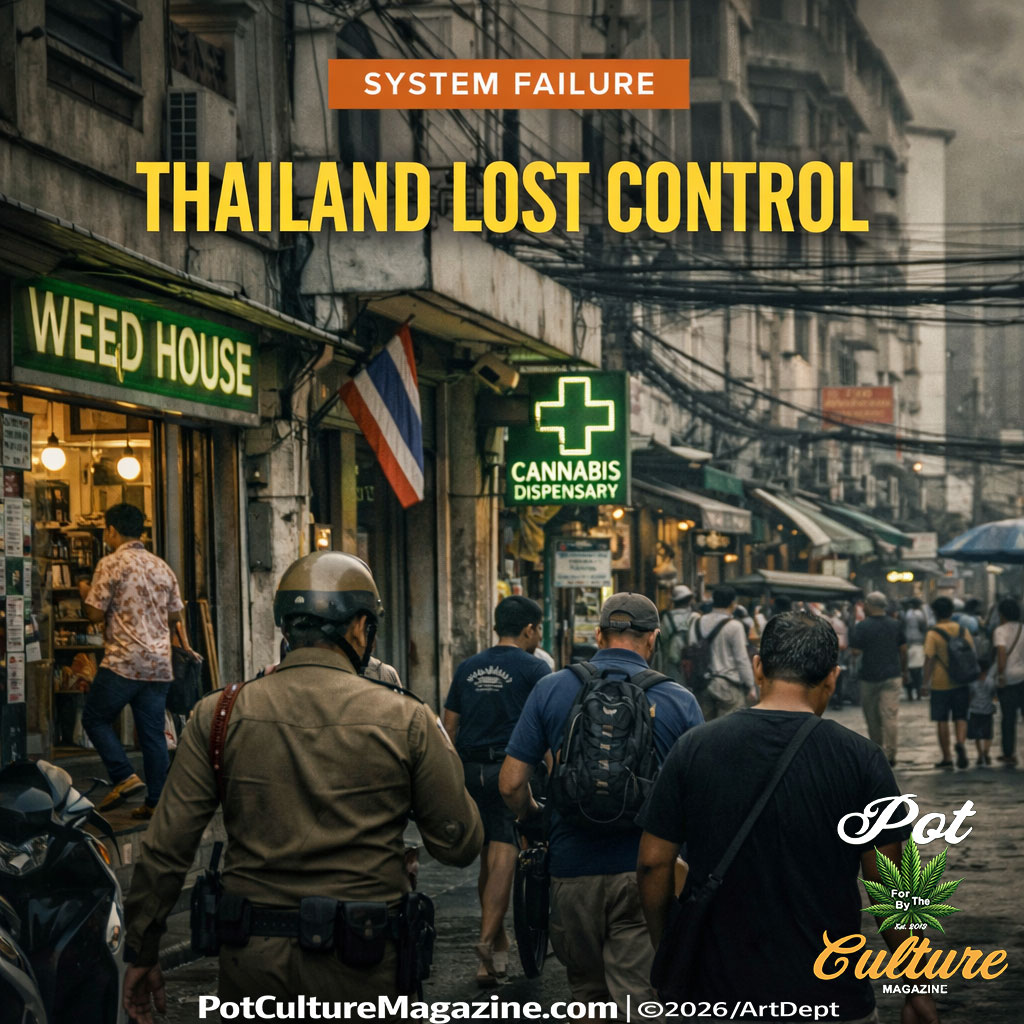
Thailand Lost Control
Thailand blew open its cannabis market, then tried to force it back under control. This feature tracks the country’s shift from prohibition to medical legalization, decriminalization, and regulatory backlash, exposing how weak enforcement, political pressure, and rushed policy turned a reform headline into a live case study in state correction.

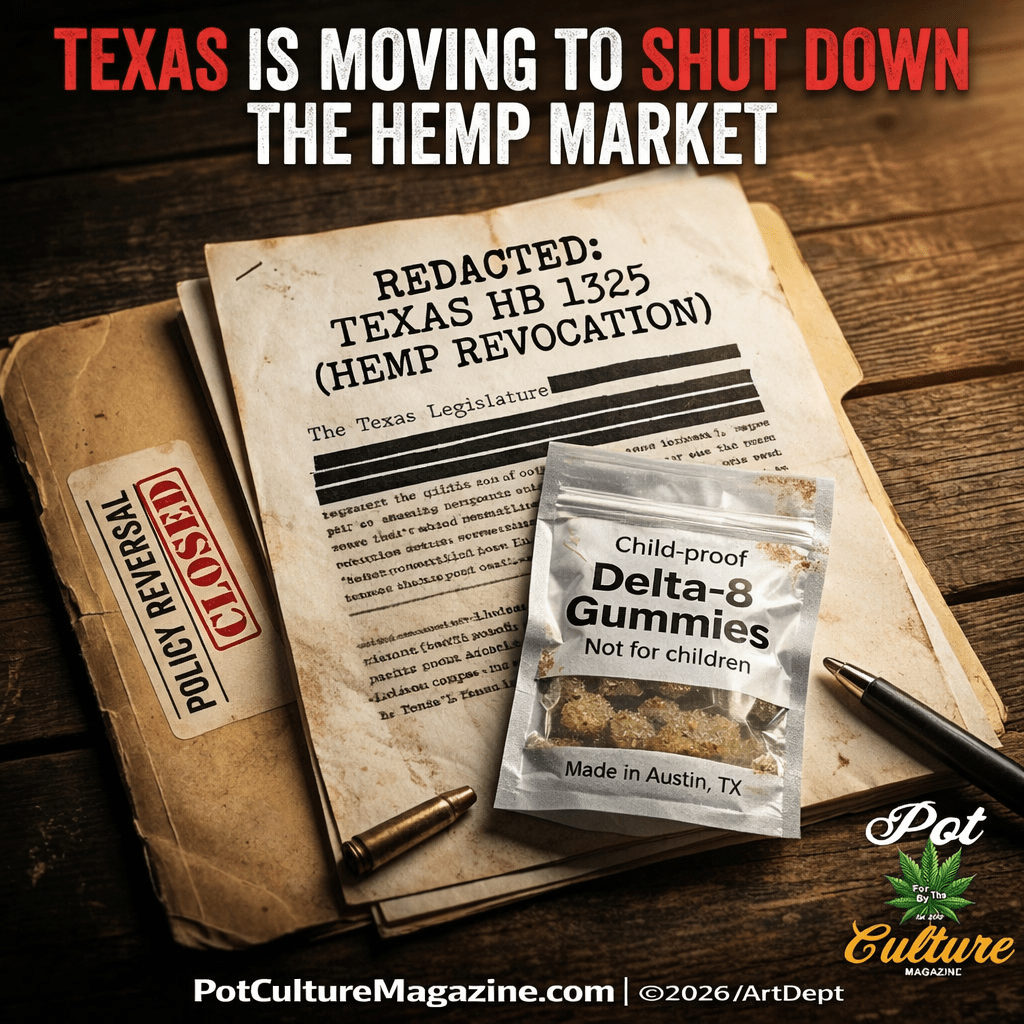
Texas Is Moving to Shut Down the Hemp Market
Texas helped build one of the largest hemp THC markets in the country, then moved to shut it down. As regulators tighten rules and enforcement increases, businesses are left exposed and the future of hemp-derived cannabinoids hangs in the balance. This is not a simple crackdown. It is a full policy reversal with real economic…
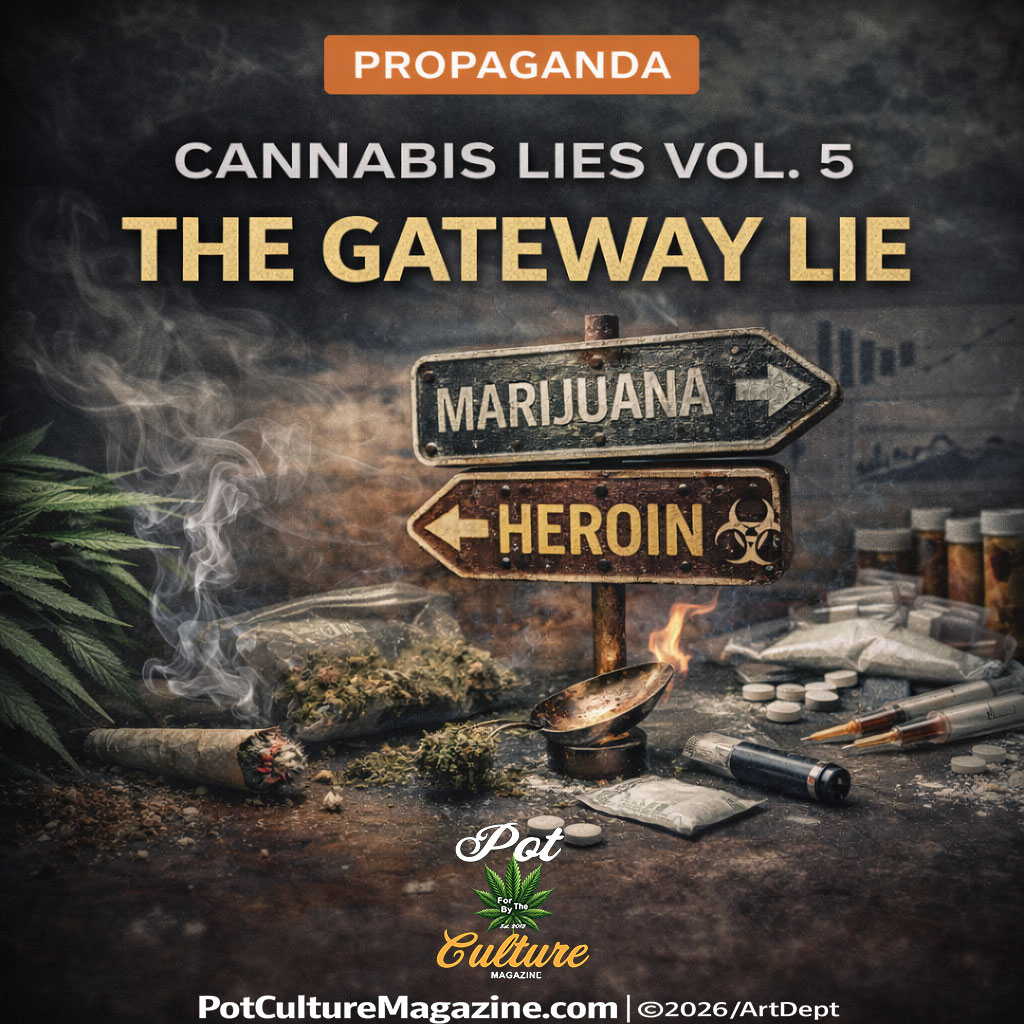
CANNABIS LIES Vol. 5: The Gateway Lie
For decades, politicians have claimed marijuana is a gateway to heroin and harder drugs. Federal youth surveys, NSDUH data, and NIDA’s own language tell a different story. Cannabis use is widespread, hard drug use remains rare, and most users do not progress. The data dismantles one of prohibition’s most durable fear narratives.
Discover more from POT CULTURE MAGAZINE
Subscribe to get the latest posts sent to your email.

Leave a comment