Filed Under: System Failure
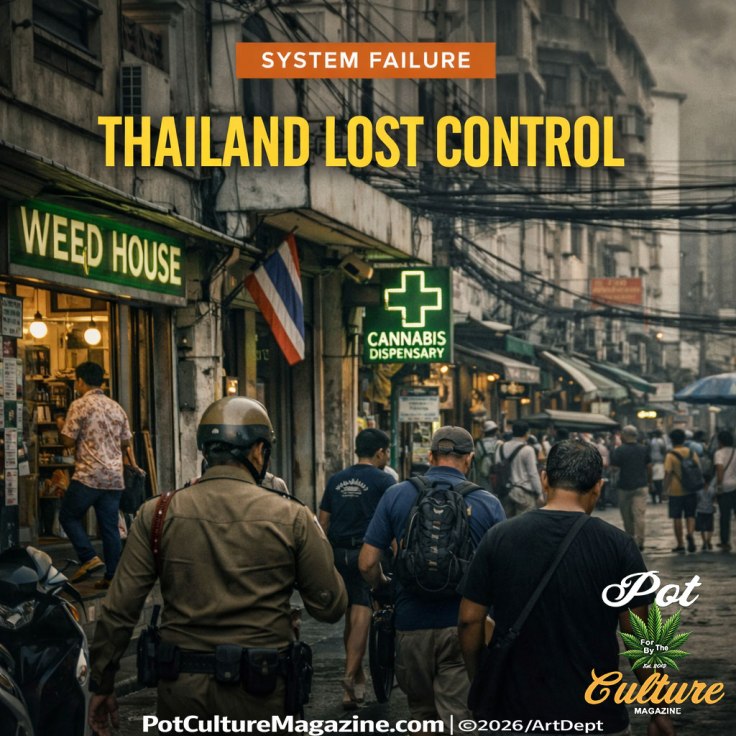
Thailand did not ease into legalization.
It detonated into it.
For decades, cannabis in Thailand was illegal under the Narcotics Act of 1979, classified alongside harder drugs with penalties that could include long prison sentences. The country treated cannabis as a criminal substance, enforced through strict drug laws and aggressive policing that defined much of Southeast Asia’s approach to narcotics.
That position was held for years.
Then it flipped.
In December 2018, Thailand became the first country in Southeast Asia to legalize medical cannabis, carving out a narrow exception inside a system still built on prohibition. The move was controlled, limited, and framed around research, medicine, and state oversight.
It did not stay that way.
On June 9, 2022, Thailand removed cannabis from its narcotics list, effectively decriminalizing the plant. The decision was immediate. There was no fully built retail system waiting behind it, no national law clearly defining how cannabis would be sold, who could sell it, or how enforcement would work at scale.
The law changed faster than the system.
The market did not wait.
Shops opened everywhere. Bangkok became ground zero. Dispensaries are stacked up across commercial districts, tourist corridors, side streets, and residential neighborhoods. Cannabis moved from a controlled substance to an open commodity almost overnight.
On paper, it was still tied to medical use.
On the street, it was not.
That gap is where the entire story lives.
The government created access without control.
What followed was predictable.
Tens of thousands of cannabis-related licenses and registrations were issued nationwide, reflecting the scale of expansion that followed decriminalization.
The scale was not accidental.
It grew because there were no meaningful barriers to slow it.
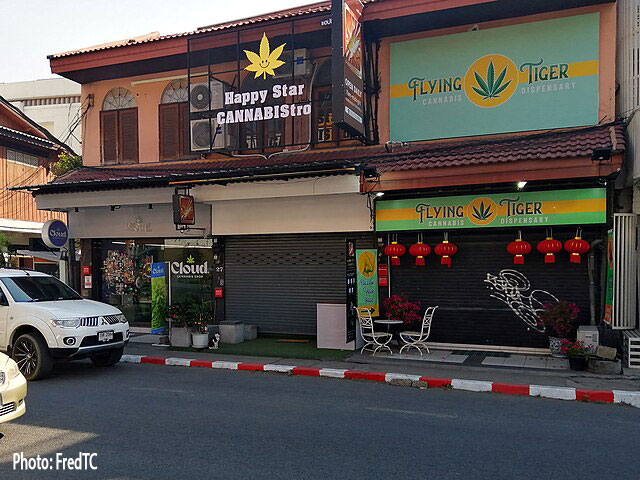
Licensing was loose. Enforcement was inconsistent. Rules existed, but they were not built for the scale the market reached. Cannabis was technically medical, but dispensaries operated like retail storefronts, selling directly to consumers with little friction.
The system was open.
Too open.
Politics caught up.
Thailand’s cannabis push was tied closely to one figure.
Anutin Charnvirakul remains a central political figure in Thailand’s cannabis policy landscape, tied directly to the country’s legalization push and ongoing regulatory direction.
That political backing mattered.
Losing it mattered more.
When power shifted, the tone changed. What had been framed as economic opportunity and medical progress was reframed as a regulatory failure. Concerns over youth access, public consumption, and uncontrolled retail spread became the justification for tightening the system.
The same government that opened the door began trying to close it.
The rollback did not come as a full ban.
It came through the rules.
In June 2025, Thailand’s Public Health Ministry introduced new regulations that restricted cannabis use to medical purposes only, reversing the practical reality of the open market without formally re-criminalizing the plant.
The details mattered.
Sales are now required to align with a medical-use framework tied to documentation and oversight under Thailand’s controlled herb system.
Cannabis advertising was heavily restricted under the new rules.
Retail operations were pushed toward a medical framework to remain compliant.
Those changes hit every part of the market.
Shops that had operated as retail businesses were suddenly expected to function differently. Selling cannabis without medical justification is no longer aligned with the updated framework.
The market did not adjust smoothly.
It fractured.
The fallout was immediate and measurable.
Many cannabis shops did not renew their licenses under the tightened regulations, either because they could not meet the new requirements or chose not to operate under them.
This was not a minor correction.
It was a contraction.
What had been one of the fastest-growing cannabis markets in the world began shrinking under regulatory pressure. Smaller operators were hit first. The cost of compliance increased. Licensing became more restrictive. The requirement to align with medical standards pushed out businesses that had no infrastructure to support that model.
The system started filtering itself.
Not through demand.
Through enforcement.
The advertising restrictions cut deeper than they looked.
Cannabis businesses had relied heavily on visibility, storefront presence, and promotion to compete in a saturated market. Once those channels were restricted, growth narrowed immediately.
New operators lost the ability to build awareness the way early entrants did.
Existing operators lost one of their primary tools for staying competitive.
The effect was quiet but significant.
Expansion stalled.
The medical framework reshaped access.
Before 2025, cannabis could be purchased with minimal friction in many parts of the country. After the rule change, access became tied to documentation and oversight, at least on paper.
That shift changes how the system functions.
A retail market becomes a controlled one.
A consumer transaction becomes a regulated interaction.
Even where enforcement varies, the structure is different.
Thailand now operates inside that contradiction.
Cannabis is not fully illegal.
It is not freely available either.
The law says medical. The market still shows remnants of the open phase. Shops remain, but fewer. Access exists, but is narrowed. Enforcement is present, but not uniform.
Stability is not the right word.
This is a transition.
The timeline explains everything.
Prohibition defined the baseline.
Medical legalization opened the door.
Decriminalization removed the barrier.
The market exploded.
Regulation arrived after the fact.
That sequence is not unique to Thailand.
What stands out is how fast it happened.
Thailand did not fail because it legalized cannabis.
The failure came from not controlling what legalization required.
If you’ve been following Pot Culture Magazine’s previous coverage of Thailand’s cannabis rollout, the pattern was visible early. The system opened wide without a structure strong enough to hold it.
Now the correction is playing out in real time.
When a government removes prohibition without building the system behind it, the market builds itself. Once that happens, pulling it back becomes harder, more disruptive, and more uneven.
The licensing fallout reflects that shift.
Closures were part of it.
The larger story is correction.
Walk through Bangkok today, and the difference is subtle until you know where to look.
Shops are still there. The visual presence has not disappeared. To a visitor, it can still feel like an open market.
It is not.
Behind the counter, the rules changed.
Licensing matters. Compliance matters. Medical justification matters. Businesses that survived did so by adapting to a tighter system or by navigating enforcement gaps that still exist.
The surface stayed familiar.
The structure did not.
This is not a clean rollback.
Thailand has not returned cannabis to its full narcotic status.
It has not eliminated the market; it has allowed it to grow.
Instead, it is trying to contain it.
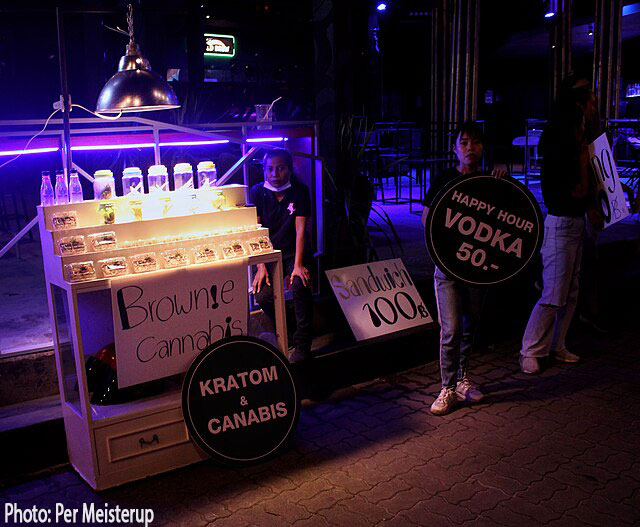
Licensing tightened.
Restrictions expanded.
Enforcement increased after the fact.
A harder path than prohibition.
And a messier one.
Thailand’s cannabis story is about legalization, backlash, and control.
If you zoom out, it lines up with what we’ve documented across global cannabis policy shifts. Open too fast, regulate too late, then try to pull it back.
The difference is how visible it is here.
The government moved faster than its ability to regulate. A market formed before rules could define it. The correction came after the system was already built.
The lesson is sitting in plain view.
Not theoretical.
Real.
© 2026 Pot Culture Magazine. All Rights Reserved.
This is the property of Pot Culture Magazine and is protected by U.S. and international copyright laws. Unauthorized reproduction, distribution, or transmission of this work, in part or in whole, without the express written permission of Pot Culture Magazine is strictly prohibited.
Texas Is Moving to Shut Down the Hemp Market
Texas helped build one of the largest hemp THC markets in the country, then moved to shut it down. As regulators tighten rules and enforcement increases, businesses are left exposed and the future of hemp-derived cannabinoids hangs in the balance. This is not a simple crackdown. It is a full policy reversal with real economic…

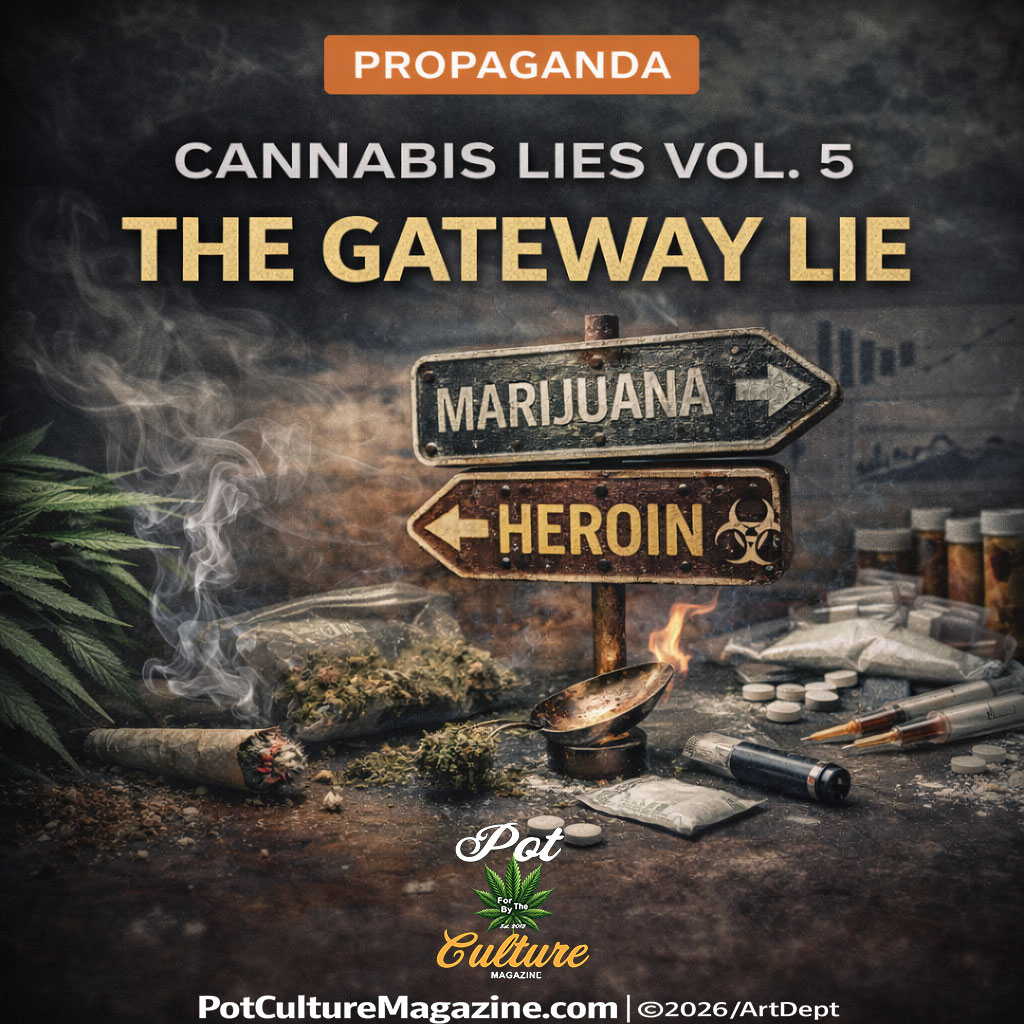
CANNABIS LIES Vol. 5: The Gateway Lie
For decades, politicians have claimed marijuana is a gateway to heroin and harder drugs. Federal youth surveys, NSDUH data, and NIDA’s own language tell a different story. Cannabis use is widespread, hard drug use remains rare, and most users do not progress. The data dismantles one of prohibition’s most durable fear narratives.
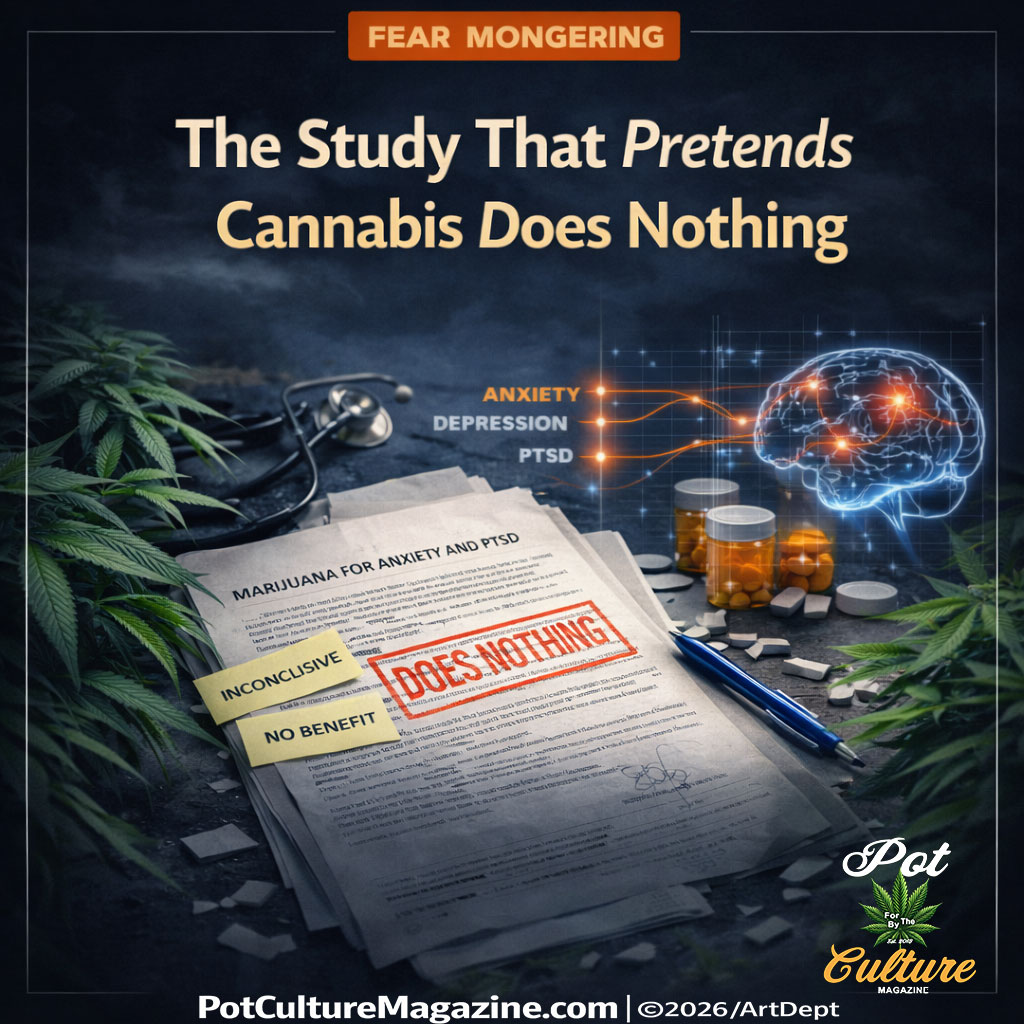
The Study That Pretends Cannabis Does Nothing
A new cannabis study claims marijuana does nothing for anxiety, depression, or PTSD. The reality is far more complicated. Decades of federal restrictions, limited research access, and synthetic substitutes have shaped the science. This breakdown exposes how incomplete data and selective interpretation continue to drive misleading headlines about cannabis and mental health.
Discover more from POT CULTURE MAGAZINE
Subscribe to get the latest posts sent to your email.

Leave a comment