Filed Under: Market Myths
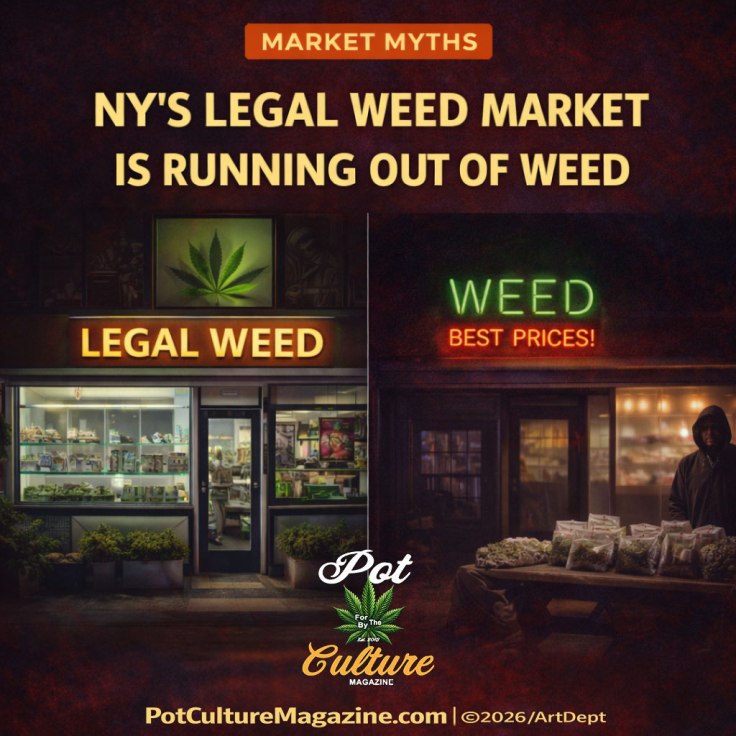
New York sold legalization like a polished fix. Regulate the plant, open the stores, collect the taxes, and watch the underground market fade into the wallpaper. That was the pitch. The reality is uglier. A few years into legal sales, regulators are already warning that the legal system may not be able to keep its own shelves stocked. The problem is not demand. Demand was never the mystery. The problem is that New York built the retail side faster than it built the supply behind it.
New York legalized adult-use cannabis in March 2021 when the Marijuana Regulation and Taxation Act was signed into law on March 31, 2021. Legal adult use sales began Dec. 29, 2022, when Housing Works made the first legal sale in New York. That was the symbolic victory lap. The harder part came later, building a market that could actually function.
That market grew quickly on the retail side. Officials at the New York Office of Cannabis Management say there are nearly 600 stores open, and public reporting says legal sales are nearing $3 billion since the market launched in December 2022. That confirms the obvious. New Yorkers were always going to buy weed. The state had no trouble creating customers. It is having trouble feeding them through the legal pipeline.
The state’s own numbers now make that problem impossible to hide. A New York Cannabis Control Board resolution approved this week says a shortage may emerge because adult-use cultivators are anticipated to produce too little product to meet future market demand by 356 thousand pounds. That is the official figure, not industry gossip, not activist spin, not a panic number floated by a rival. It is the state saying out loud that the legal market may not be able to grow enough weed to support the legal market it created.
That mismatch is exactly what PCM readers should care about, because it blows up the fantasy that legalization automatically creates order. It does not. It creates a regulated battlefield. If the legal side is slow, expensive, overmanaged, or understocked, the underground market does not vanish. It waits. It adapts. It keeps selling.
New York’s regulators did not stumble into this by surprise. They were trying to avoid the kind of oversupply other legal states have already shown: price compression, margin collapse, and growers getting crushed. So New York went the other direction. It kept a firmer grip on production, moved cautiously on canopy expansion, and tried to engineer the market from above. The result was predictable. Stores opened. Demand surged. Supply lagged. Now the state is trying to widen cultivation after the fact because the balance was wrong from the start.
That is why the shortage story matters. It is not just about product scarcity. It is about market design. New York did not simply hit a rough patch. It exposed a built-in flaw. The legal system was structured to look controlled and responsible, but control without capacity is just theater. If people want to buy cannabis and the legal stores cannot meet the demand, the old market gets another shot at survival.
HELP POT CULTURE MAGAZINE STAY ALIVE, AND INDEPENDENT
And that old market never left. In 2023, CNBC reported that New York City was estimated to have around 1,500 unlicensed retailers. That number should have been a five-alarm fire for every politician talking about legalization as if passing a bill was the same thing as building a functioning industry. A legal market that cannot outcompete 1,500 illicit sellers in its largest city is not a finished success story. It is a work in progress with its guts hanging out.
The whiplash makes it even worse. Not long ago, New York was dealing with the opposite embarrassment. There was oversupply pressure and unsold product while retail rollout dragged, and stores opened too slowly. Now state officials are openly warning about a shortage pressure because retail demand has outstripped cultivation. That is not stability. That is a market lurching from one avoidable problem to another. Even John Kagia, acting executive director of the Office of Cannabis Management, has acknowledged the swing.
“With nearly 600 stores open, strong consumer demand is driving growth, and our responsibility is to ensure supply aligns with demand.”
That line should be read for what it is. A quiet admission. The state built a legal cannabis market that still needs active rescue and adjustment just to keep up with basic consumer demand. This is not the clean, frictionless transition legalization advocates promised voters. It is a state still trying to figure out how to make the legal market behave like a real market.
None of this means legalization was the wrong move. It means legalization is not magic. Passing the law is the easy part. Building the infrastructure, balancing the licenses, expanding cultivation at the right pace, and keeping legal stores competitive against an entrenched illicit market is the hard part. New York won the political fight. The commercial one is still underway.
That is the deeper story here. New York did not just run short on weed. It revealed how fragile a top-down cannabis market becomes when the people designing it are more focused on controlling the rollout than making sure the shelves stay full. Legalization promised replacement. What New York built was an overlap, legal stores on one side, illicit sellers on the other, and regulators now scrambling to widen production so the whole thing does not choke on its own demand.
The state legalized weed. Fine. Now it has to prove it can actually keep the legal market supplied.
©2026 Pot Culture Magazine. All rights reserved. This content is the exclusive property of Pot Culture Magazine. It may not be reproduced, distributed, or transmitted in any form or by any means without prior written permission from the publisher, except for brief quotations in critical reviews.
FOR THE CULTURE BY THE CULTURE
Cannabis Lie Vol. 4: The Legalization Design Lie
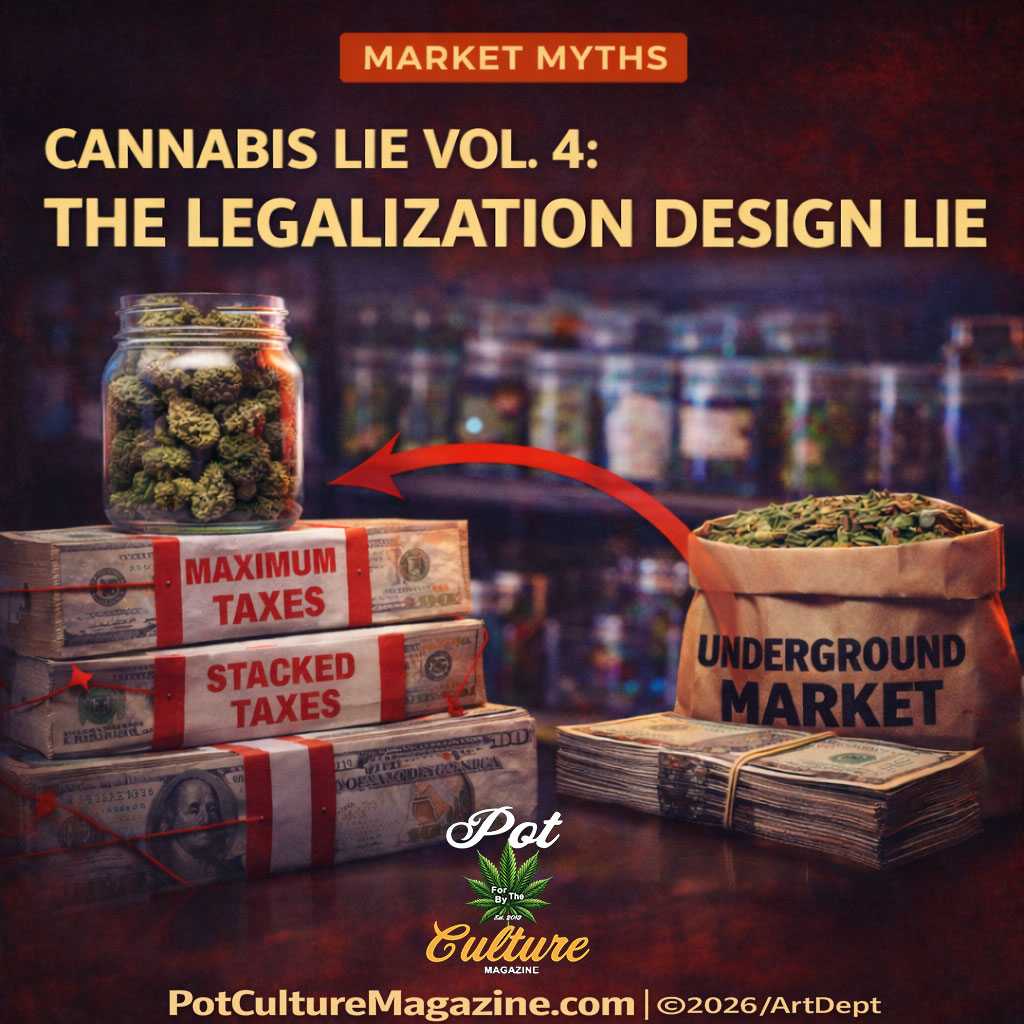
Cannabis legalization was sold as the end of the illicit market. Instead, stacked taxes, licensing limits, and local bans created price gaps that allowed underground sales to survive. From California’s cultivation tax to Illinois pricing and Michigan’s price compression, this installment of Cannabis Lie examines how policy design, not the plant, determines who wins and…

Cannabis Study Sparks Fear Among the Uninformed
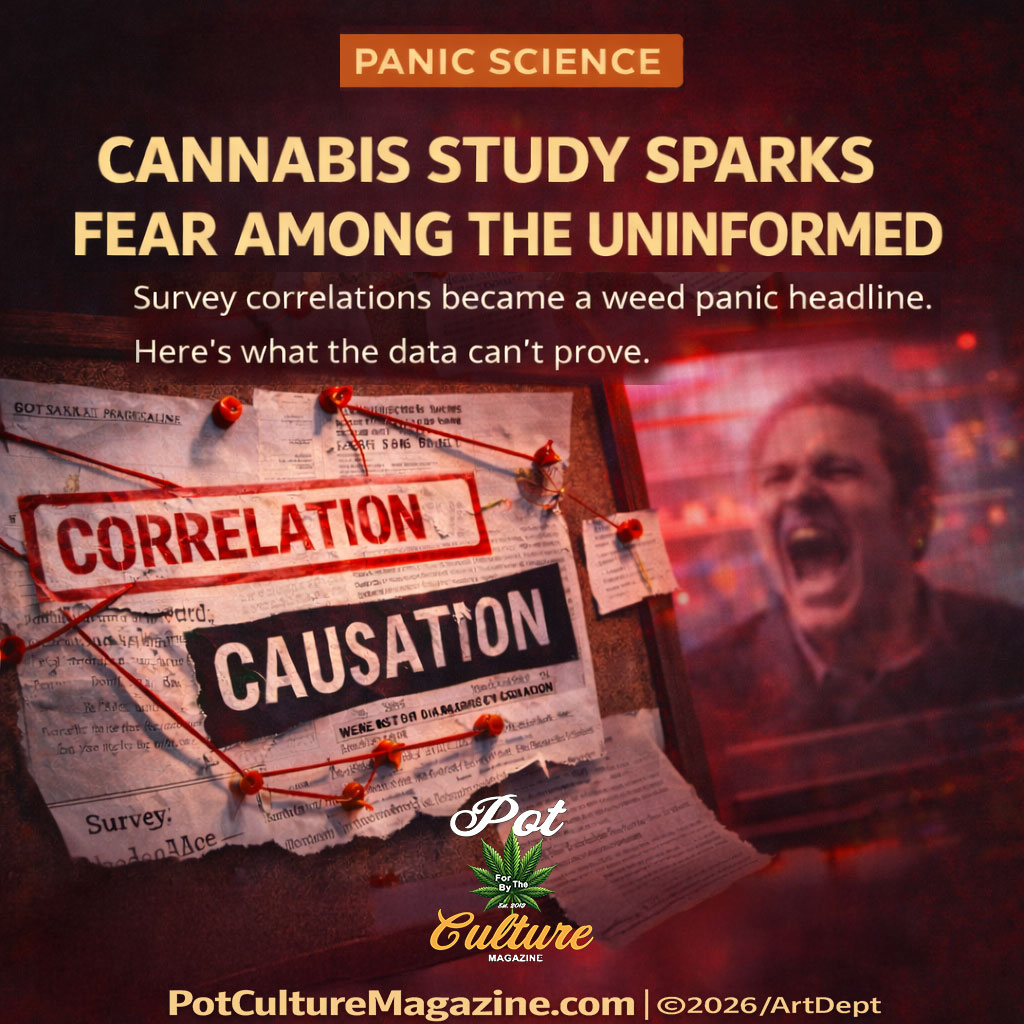
A McMaster led analysis of two Canadian mental health surveys is getting recycled as a weed panic story, even though the design can only show association. This piece breaks down what the data can actually support, what it cannot prove, and how headlines turn survey correlations into causal claims that fuel stigma, bad policy, and…

Louisiana’s Cannabis Pilot Gamble
Louisiana HB 373 would create a tightly controlled adult-use cannabis pilot overseen by the Louisiana Department of Health. The bill limits participation to existing medical marijuana dispensaries, imposes permit renewal fees and a 3.5 percent wholesale assessment, and sunsets July 1, 2030, forcing lawmakers to decide whether to make legalization permanent.
Discover more from POT CULTURE MAGAZINE
Subscribe to get the latest posts sent to your email.

Leave a comment