Filed Under: Panic Science
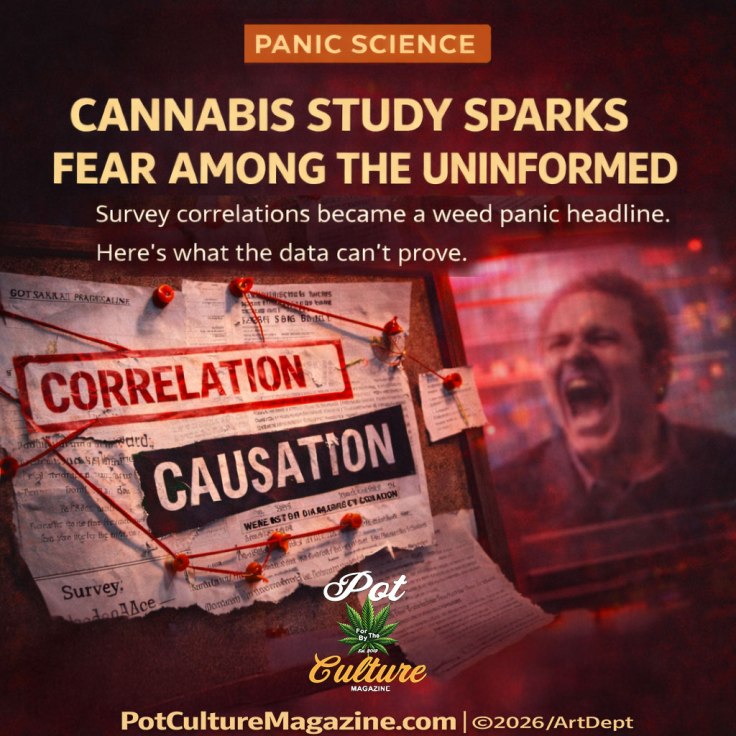
Every few years, the cycle repeats itself. A new cannabis study appears, a few statistics are pulled from the results, and within hours, headlines begin warning that marijuana is fueling a mental health crisis.
The latest panic comes from researchers at McMaster University, whose analysis was published in The Canadian Journal of Psychiatry. Media coverage quickly framed the research as evidence that cannabis use is driving anxiety, depression, and suicidal thoughts across Canada.
That is not what the study actually proves.
The researchers did not run a clinical experiment. They did not administer cannabis to participants or monitor psychological changes over time. Instead, they analyzed existing national survey data collected between 2012 and 2022 from the Canadian Community Health Survey, a large population dataset maintained by Statistics Canada.
The dataset included roughly 35,000 respondents. Participants answered questions about cannabis use and about their mental health. Researchers then compared those answers to identify statistical patterns across the population.
What they found was an association.
Individuals who reported cannabis use were more likely to report symptoms of anxiety, depression, or suicidal thinking. Heavy users, defined in the paper as individuals using cannabis at least twice per week, appeared more likely to report psychological distress than people who reported never using cannabis.
But association is not causation.
The survey does not show that cannabis caused mental health problems. It only shows that people who use cannabis also report those problems at higher rates. The direction of that relationship remains unknown.
People experiencing anxiety or depression may turn to cannabis as a coping mechanism. Individuals already struggling with mental health issues may be more likely to experiment with substances. Socioeconomic stress, trauma, and other factors can influence both substance use and psychological well-being.
Survey data cannot untangle those relationships.
HELP POT CULTURE MAGAZINE STAY ALIVE, AND INDEPENDENT
Even the researchers acknowledge this limitation. The analysis relies entirely on self-reported responses rather than medical diagnoses, laboratory testing, or controlled observation.
Self-reported survey data is valuable for spotting trends across large populations, but it cannot establish biological cause and effect.
That distinction often disappears once the findings leave the academic journal and enter the news cycle.
Headlines compress nuance into alarm. A statistical relationship becomes proof of danger. Words like “linked” or “associated” quietly disappear and are replaced by stronger claims that the research never made.
This pattern has followed cannabis research for decades.
Studies showing correlations between cannabis use and mental health outcomes frequently receive widespread attention. The more cautious conclusions written in the paper itself rarely make it into the headline.
None of this means cannabis is harmless. Like alcohol, prescription medication, or any psychoactive substance, it can affect individuals differently depending on genetics, mental health history, age, and frequency of use.
But good science requires precision.
The McMaster analysis examined survey responses.
It identified statistical relationships.
It did not demonstrate that cannabis use causes mental illness.
Those distinctions matter, especially when research findings are used to shape public policy, influence public perception, and guide medical conversations.
Without that context, studies designed to explore complex social patterns can easily become fuel for the next wave of cannabis panic.
And the cycle starts again.
©2026 Pot Culture Magazine. All rights reserved. This content is the exclusive property of Pot Culture Magazine and may not be reproduced, distributed, or transmitted in any form or by any means without prior written permission from the publisher, except for brief quotations in critical reviews.
F O R T H E C U L T U R E B Y T H E C U L T U R E
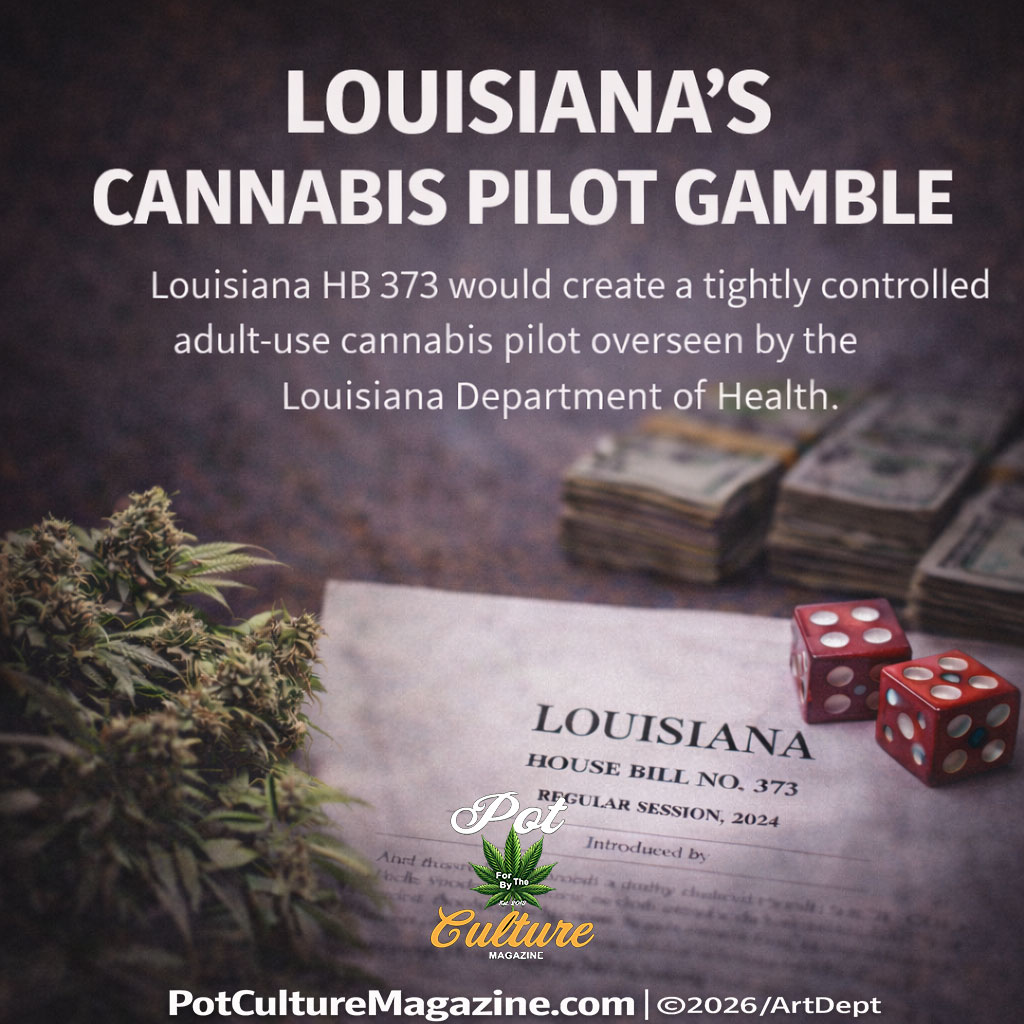
Louisiana’s Cannabis Pilot Gamble
Louisiana HB 373 would create a tightly controlled adult-use cannabis pilot overseen by the Louisiana Department of Health. The bill limits participation to existing medical marijuana dispensaries, imposes permit renewal fees and a 3.5 percent wholesale assessment, and sunsets July 1, 2030, forcing lawmakers to decide whether to make legalization permanent.


Cannabis Lies Vol. 3: The Nuisance Lie
Arizona lawmakers are advancing legislation that would criminalize “excessive” marijuana odor detectable across property lines. Cannabis Lie Vol. 3 examines SB 1725 and SCR 1048, the proposed misdemeanor penalties, the legal implications of State v. Sisco, and why critics argue this is a backdoor attempt to reintroduce cannabis criminalization under the banner of nuisance law.
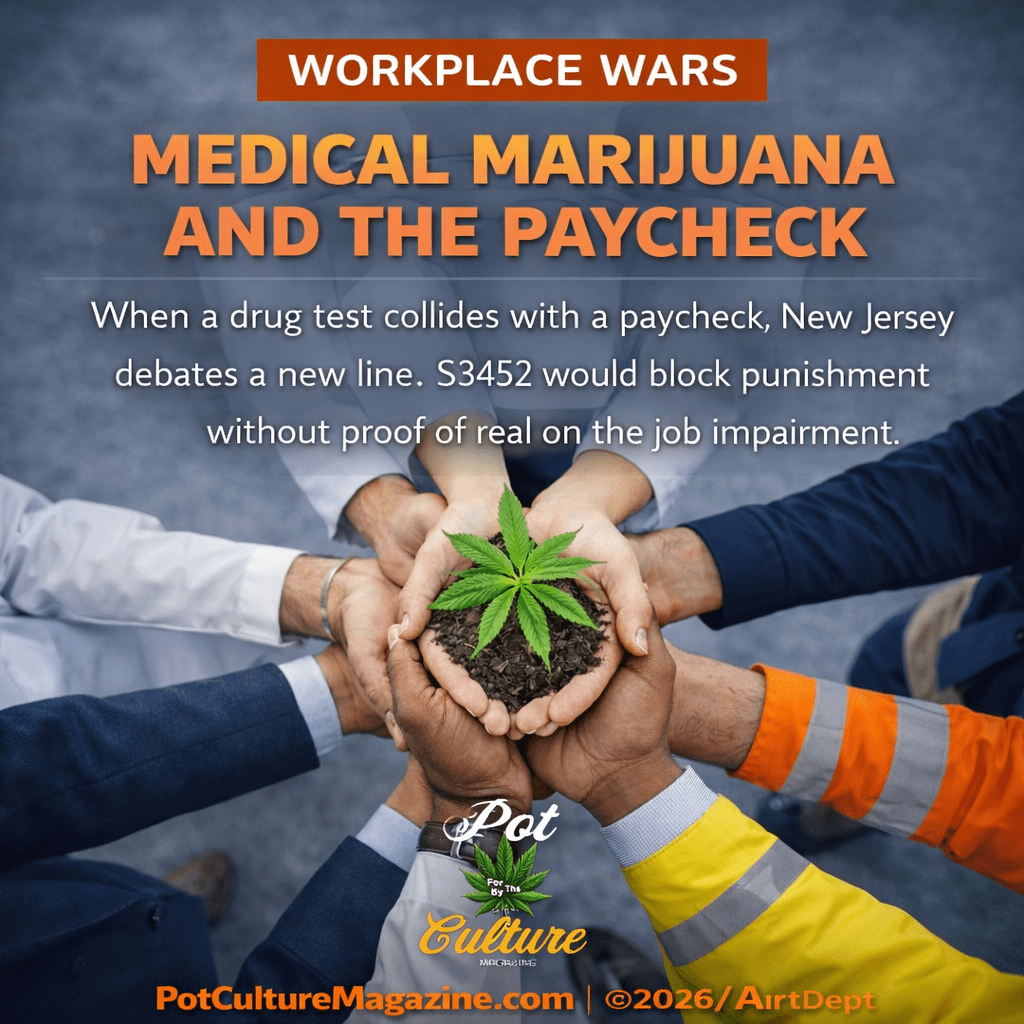
Medical Marijuana and the Paycheck
Workplace Wars continues in New Jersey, where Senate Bill S3452 would protect registered medical cannabis patients from metabolite only drug test punishment. The proposal shifts the burden to employers, requiring proof by a preponderance of the evidence that lawful medical use caused on duty impairment, backed by specific articulable symptoms. It also keeps the written…
Discover more from POT CULTURE MAGAZINE
Subscribe to get the latest posts sent to your email.

Leave a comment