The Fiction of Impairment
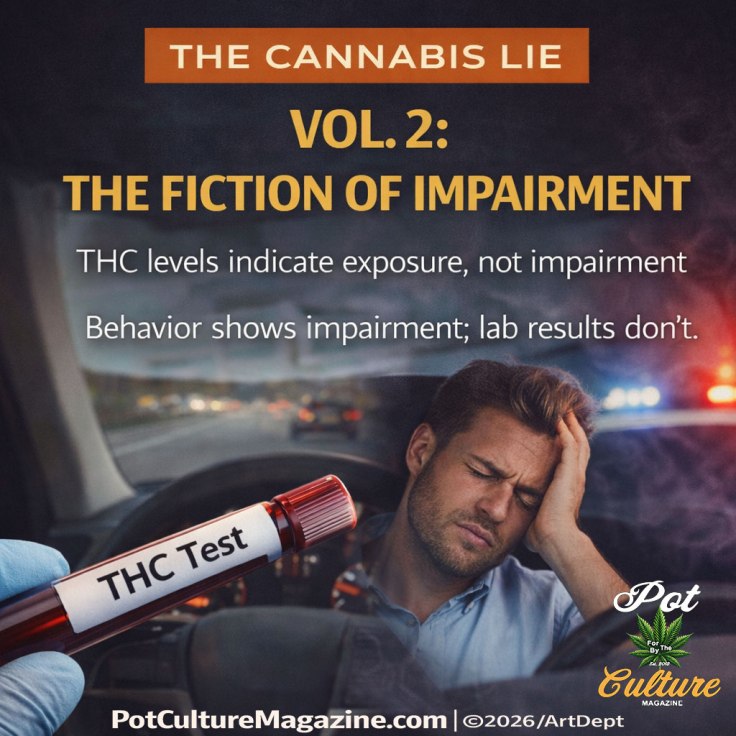
A molecule does not drive a car.
A metabolite does not swerve across a lane.
A laboratory report does not establish incapacity.
Yet across the United States and in multiple international jurisdictions, the presence of THC in blood, saliva, or urine is often treated as proof of impairment. Licenses can be suspended. Jobs can be terminated. Probation can be revoked. Criminal charges can attach quickly.
Demonstrating actual impairment is often unnecessary.
The test result becomes the verdict.
The Lie: THC presence equals impairment.
The claim persists because it simplifies enforcement. Proving impairment requires observation, context, and evaluation of behavior. Detecting a molecule requires equipment. Regulatory systems favor equipment.
Per se DUI statutes illustrate the structure clearly. Instead of proving that a driver was incapable of safely operating a vehicle, some states criminalize driving with THC above a fixed threshold in blood, including 5 nanograms per milliliter in some states, while others use lower limits or zero-tolerance rules, as summarized by the National Conference of State Legislatures.
Those thresholds were not derived from impairment equivalence data comparable to alcohol. They were policy decisions.
Alcohol follows a predictable impairment curve. Blood alcohol concentration correlates strongly with measurable declines in cognitive and motor performance and with crash risk as concentrations rise.
THC does not behave the same way. Blood THC concentration shows a weak and inconsistent relationship to functional impairment across individuals. The compound is lipid-soluble. It redistributes rapidly into fat tissue. Blood levels can fall quickly after smoking, even as functional effects may still be present. In frequent users, measurable THC may persist in the blood long after impairment has resolved. In urine, inactive metabolites can remain detectable for days or weeks, as described in the NHTSA report to Congress on marijuana impaired driving.
Presence does not establish timing. Timing does not establish impairment.
The National Highway Traffic Safety Administration has acknowledged that THC concentration in blood does not reliably indicate impairment in the same manner as alcohol, according to the same NHTSA report to Congress.
Drivers with low concentrations may show observable impairment. Drivers with higher concentrations may not.
Researchers reported that per se THC limits are not supported by current scientific evidence because blood THC levels are poor predictors of impairment, as concluded in the AAA Foundation review of per se THC limits.
These findings are institutional, not ideological.
Drug testing technology compounds the confusion. Urinalysis detects inactive metabolites such as THC COOH, which have no psychoactive effect, as explained by the American Bar Association’s overview of THC testing challenges.
Their presence proves prior exposure, not present impairment. Saliva testing captures more recent use, but still cannot quantify functional capacity. Blood testing offers closer temporal proximity but remains unreliable as a standalone indicator of driving ability.
Scientific reviews across traffic safety and pharmacology literature conclude that no universally accepted THC concentration corresponds to a defined level of impairment across individuals, as discussed in the Brubacher review.
Individual variability drives the instability. Tolerance alters response. A frequent consumer may display measurable THC while performing normally on cognitive tasks. A novice user may exhibit impairment at lower concentrations. The route of administration further complicates interpretation. Inhaled cannabis produces a rapid onset and decline. Edible products produce delayed onset and prolonged effects with comparatively lower blood concentrations.
The molecule does not operate on a single impairment curve.
Acute cannabis intoxication can impair reaction time, divided attention, and lane tracking performance. Controlled simulator and closed-course studies document measurable functional decline shortly after consumption. For most users, those effects diminish within several hours.
Meta-analyses examining crash responsibility show that acute cannabis use is associated with a modest increase in crash risk, as summarized in a Frontiers review of the evidence.
The crash risk signal tied to acute cannabis use is generally smaller and less consistent than the crash risk reliably associated with alcohol impairment. The elevated risk is tied to recent consumption, not residual metabolites.
Residual presence does not equal current impairment.
HELP POT CULTURE MAGAZINE STAY ALIVE, AND INDEPENDENT
International frameworks reflect the same tension. Canada established per se THC limits after legalization, but paired them with behavioral enforcement and graduated penalties, as outlined by the Canadian Department of Justice.
Other countries maintain zero-tolerance rules under which any detectable THC results in administrative or criminal sanctions, regardless of demonstrated functional decline.
Science and statute do not align cleanly.
Family courts have at times cited positive cannabis tests in custody disputes without requiring evidence of compromised parental capacity. Probation conditions often prohibit any detectable THC, transforming lawful conduct in legalized states into technical violations.
The structure rewards simplicity over accuracy.
Law enforcement agencies rely on Drug Recognition Experts to assess impairment through behavioral indicators. Those evaluations involve observation, yet once toxicology confirms THC presence, juries often infer causation automatically.
The inference exceeds the science.
Detection technology advanced rapidly. Impairment measurement did not advance at the same pace. Legislatures filled the gap with numeric standards. Courts treated those standards as functional equivalents to alcohol laws.
The proxy hardened into doctrine.
Cannabis can impair. Acute intoxication affects performance. That fact does not resolve the fiction. The issue is not whether impairment exists. The issue is whether detection equals impairment.
The evidence does not support that equation.
No universal blood THC threshold reliably predicts incapacity across individuals. No urine metabolite test measures real-time cognitive decline. No saliva strip independently establishes safe or unsafe driving ability.
Impairment is a functional condition defined by diminished capacity to perform a task safely. It is observable, contextual, and time-dependent.
Presence is a chemical finding.
Collapsing those concepts simplifies prosecution but weakens evidentiary integrity. When statutes criminalize concentration rather than conduct, the burden shifts quietly. Defendants are forced to disprove impairment instead of the state being required to prove it.
Drivers can lose licenses without demonstrated incapacity. Employees can be terminated despite documented performance. Patients using state-authorized medical cannabis can be excluded from certain professions. Criminal records can accumulate based on nanogram levels untethered to behavior.
Administrative efficiency replaces behavioral proof.
The fiction persists because measuring chemistry is easier than evaluating capacity.
Impairment must be demonstrated.
The system chose presumption.
That choice remains embedded in law.
©2026 Pot Culture Magazine. All rights reserved. This content is the exclusive property of Pot Culture Magazine and may not be reproduced, distributed, or transmitted in any form or by any means without prior written permission from the publisher, except for brief quotations in critical reviews.
F O R T H E C U L T U R E B Y T H E C U L T U R E
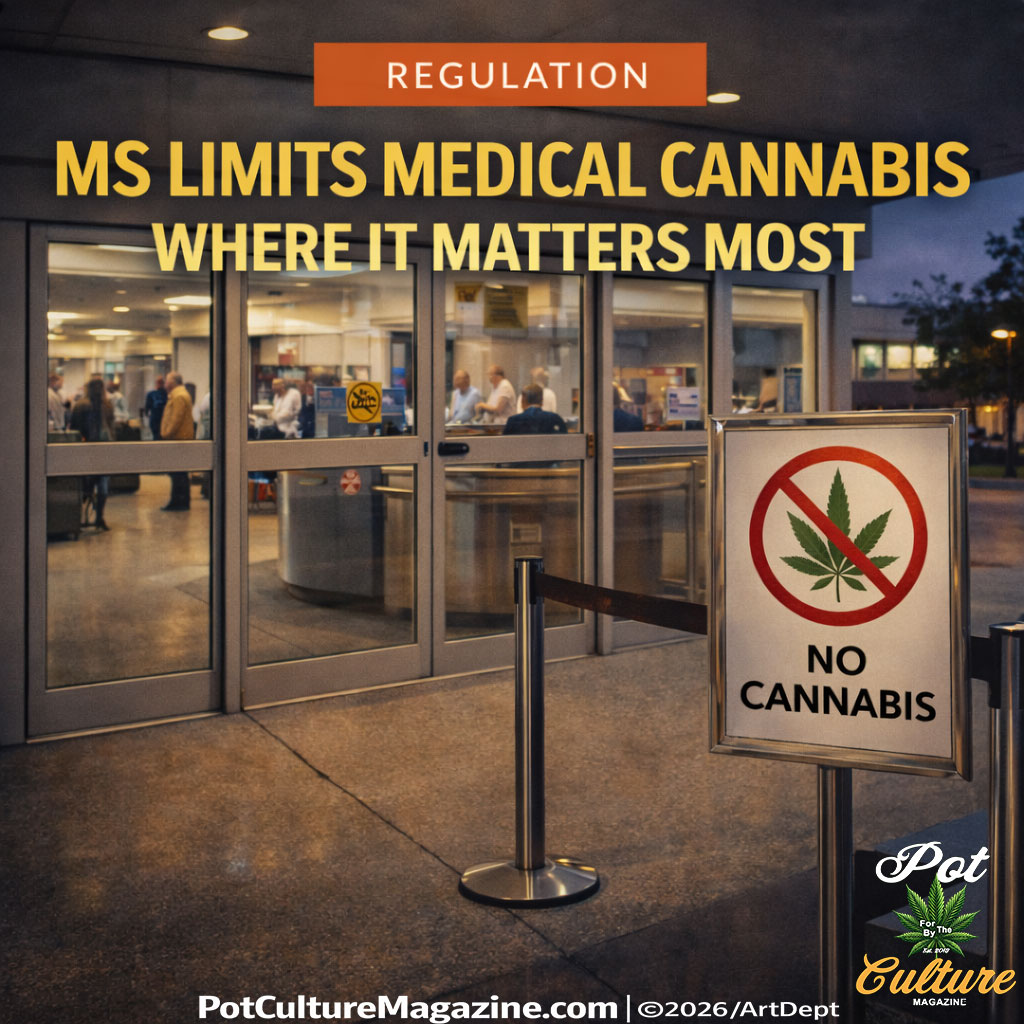
MS LIMITS MEDICAL CANNABIS WHERE IT MATTERS MOST
Mississippi maintains strict limits on medical cannabis after Governor Tate Reeves vetoed expansion bills on March 26, 2026. Patients remain unable to use cannabis in hospitals while eligibility and access rules stay tightly controlled. This feature examines what the veto blocks, how it affects patients, and what it means for the state’s growing cannabis market.

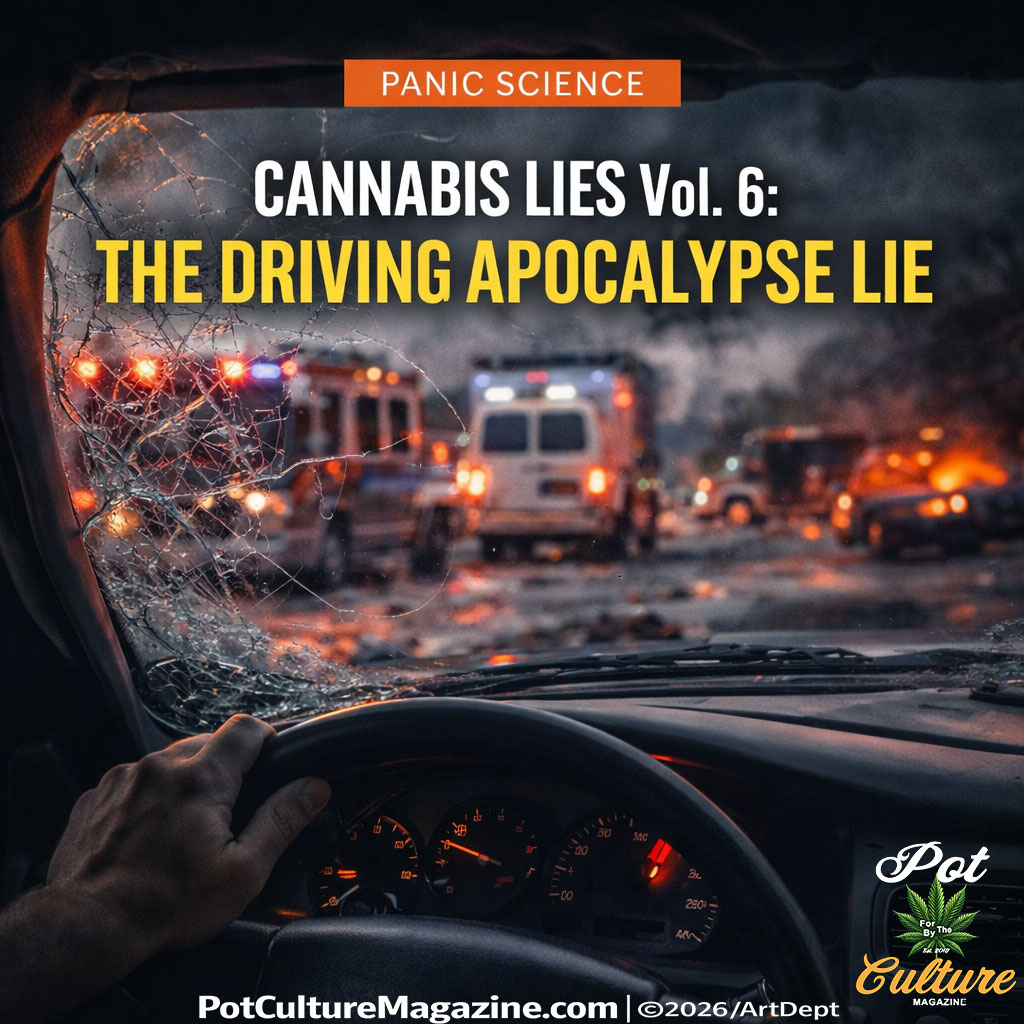
CANNABIS LIES Vol. 6: The Driving Apocalypse Lie
Legal cannabis is often blamed for rising traffic deaths, but federal data tells a more complicated story. NHTSA findings, toxicology limitations, and conflicting crash studies reveal that THC presence is not a reliable measure of impairment. This investigation breaks down how flawed testing and policy shortcuts have shaped the narrative around so-called stoned driving.
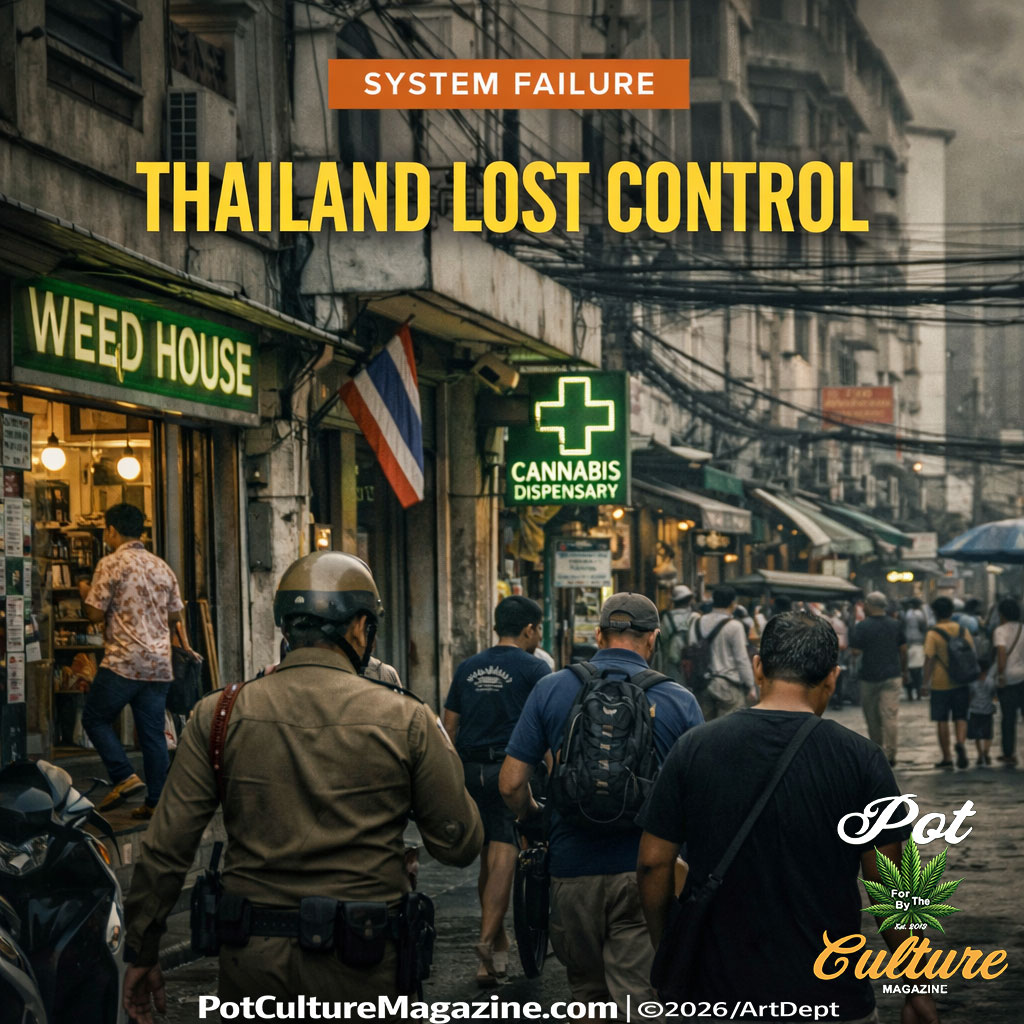
Thailand Lost Control
Thailand blew open its cannabis market, then tried to force it back under control. This feature tracks the country’s shift from prohibition to medical legalization, decriminalization, and regulatory backlash, exposing how weak enforcement, political pressure, and rushed policy turned a reform headline into a live case study in state correction.
Discover more from POT CULTURE MAGAZINE
Subscribe to get the latest posts sent to your email.

Leave a comment