Filed Under: Punished by Classification
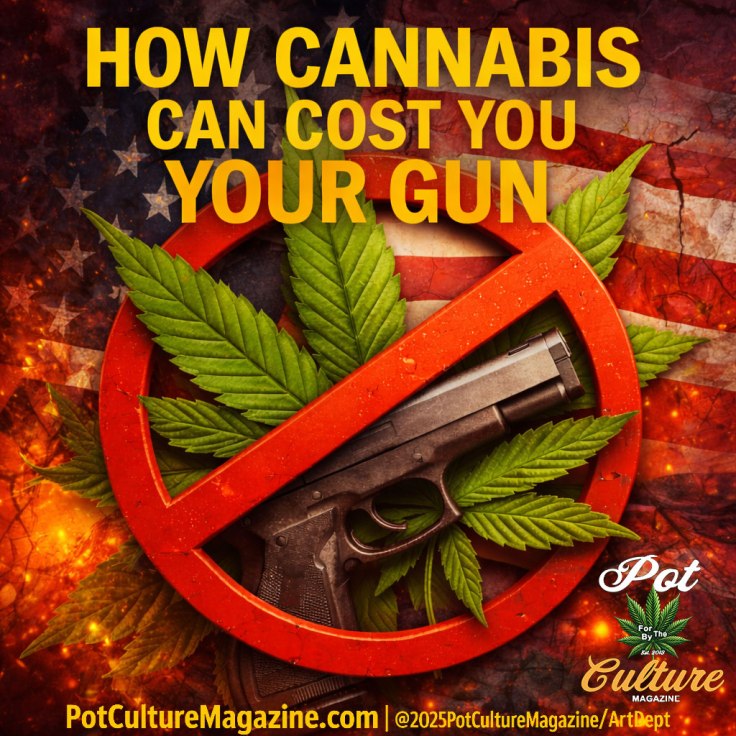
If you use cannabis, the federal government still treats that fact as a reason to take something else away.
Gun ownership sits at the center of the conflict.
Federal law does not hinge this ban on conduct. It hinges on status. Marijuana use functions as a switch, turning lawful gun ownership into a felony without any showing of danger or misuse. Classification alone carries the weight.
Under federal law, anyone deemed an unlawful user of a controlled substance is barred from possessing firearms or ammunition. Cannabis remains illegal at the federal level, even where states have legalized it for medical or adult use. That mismatch between state reality and federal classification is the mechanism that makes the ban work.
If marijuana use and firearm possession overlap, the government claims a felony. The penalty can include federal prison time, permanent loss of firearm rights, and a lifelong felony record. That outcome does not depend on violence or misuse. It depends on the classification.
People have gone to federal prison on that basis. People have lost careers, housing, and civil standing on that basis. Not because something happened, but because the law allowed the government to act first.
That question is now in front of the Supreme Court of the United States.
The case is United States v. Hemani. The Department of Justice is asking the Court to step in after lower courts split over whether Section 922(g)(3) can survive Bruen’s history-and-tradition test. Courts began asking whether the government ever had the authority to impose a categorical ban based solely on marijuana use.
Earlier this year, NORML filed an amicus brief urging the Court to confront that issue directly. The brief focuses on history, not policy. For most of American history, cannabis use did not trigger automatic loss of civil rights. Hemp was cultivated. Cannabis was prescribed. Regulation addressed intoxication when it mattered, not as a permanent mark of status.
The government’s historical examples involve only temporary restrictions tied to intoxication or individualized findings of danger. None supports a permanent ban triggered by past or present use of a substance that millions of Americans now consume legally under state law.
HELP POT CULTURE MAGAZINE STAY ALIVE, AND INDEPENDENT
That distinction matters after New York State Rifle and Pistol Association v. Bruen.
In 2022, the Supreme Court rejected policy-balancing in firearm cases and adopted a history-and-tradition test. Under that framework, modern restrictions must align with limits recognized at the founding. Administrative convenience and public safety narratives are no longer sufficient.
On cannabis, the historical record does not support the federal rule.
Lower courts have said so plainly. In United States v. Daniels, the Fifth Circuit struck down Section 922(g)(3) as applied to a marijuana user, rejecting the government’s historical analogies for disarming someone based on drug-use status alone.
The Eleventh Circuit has allowed medical marijuana users to bring as-applied Second Amendment challenges to the federal “unlawful user” prohibition, rejecting the idea that lawful, state-compliant cannabis use alone automatically establishes dangerousness.
As those rulings accumulated, the Bureau of Alcohol, Tobacco, Firearms, and Explosives began revising its regulatory definition. The agency proposed revising its definition of who qualifies as an unlawful user, signaling that past or occasional cannabis use may no longer be enough to trigger the ban.
The Department of Justice’s push for Supreme Court review followed.
NORML’s Deputy Director Paul Armentano said:
“For too long, the government has treated cannabis consumers like second class citizens. Neither past nor current cannabis use should automatically preclude someone from legal protections explicitly provided by the US Constitution. Responsible cannabis consumers, and particularly those residing in jurisdictions where marijuana is legally regulated, must no longer be threatened with federal prosecution and prison simply for exercising their 2nd Amendment rights.”
The outcome of this case will determine whether marijuana remains a valid shortcut for suspending constitutional rights. Even a narrowed ruling would force prosecutors to prove impairment or danger instead of relying on classification alone. A broader ruling would dismantle one of prohibition’s most durable enforcement tools.
This is not a gun culture dispute. It is a test of whether the federal government can continue punishing people based on status rather than conduct in a country where cannabis is legal in most states and openly used by tens of millions of adults.
Firearms law is where the contradiction finally broke.
©2025 Pot Culture Magazine. All rights reserved. This content is the exclusive property of Pot Culture Magazine and may not be reproduced, distributed, or transmitted in any form or by any means without prior written permission from the publisher, except for brief quotations in critical reviews.
F O R T H E C U L T U R E B Y T H E C U L T U R E
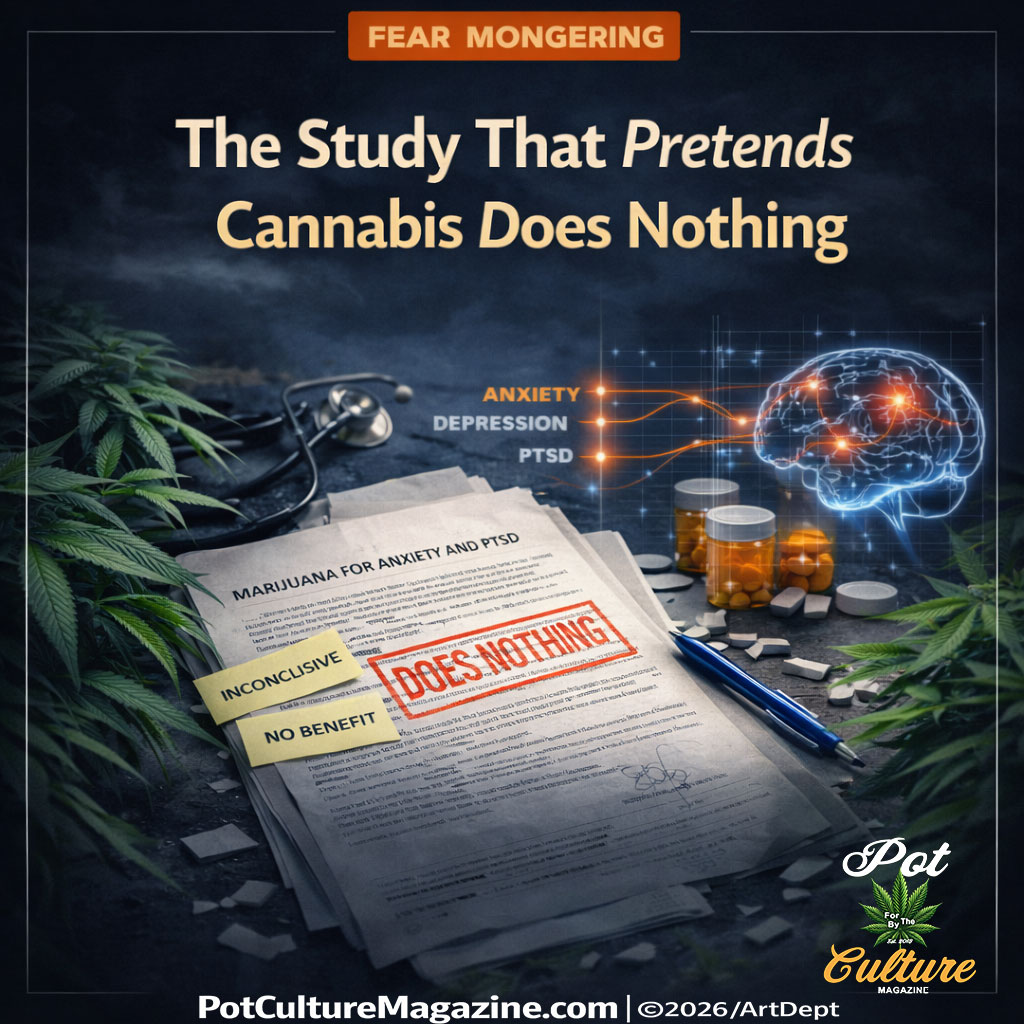
The Study That Pretends Cannabis Does Nothing
A new cannabis study claims marijuana does nothing for anxiety, depression, or PTSD. The reality is far more complicated. Decades of federal restrictions, limited research access, and synthetic substitutes have shaped the science. This breakdown exposes how incomplete data and selective interpretation continue to drive misleading headlines about cannabis and mental health.

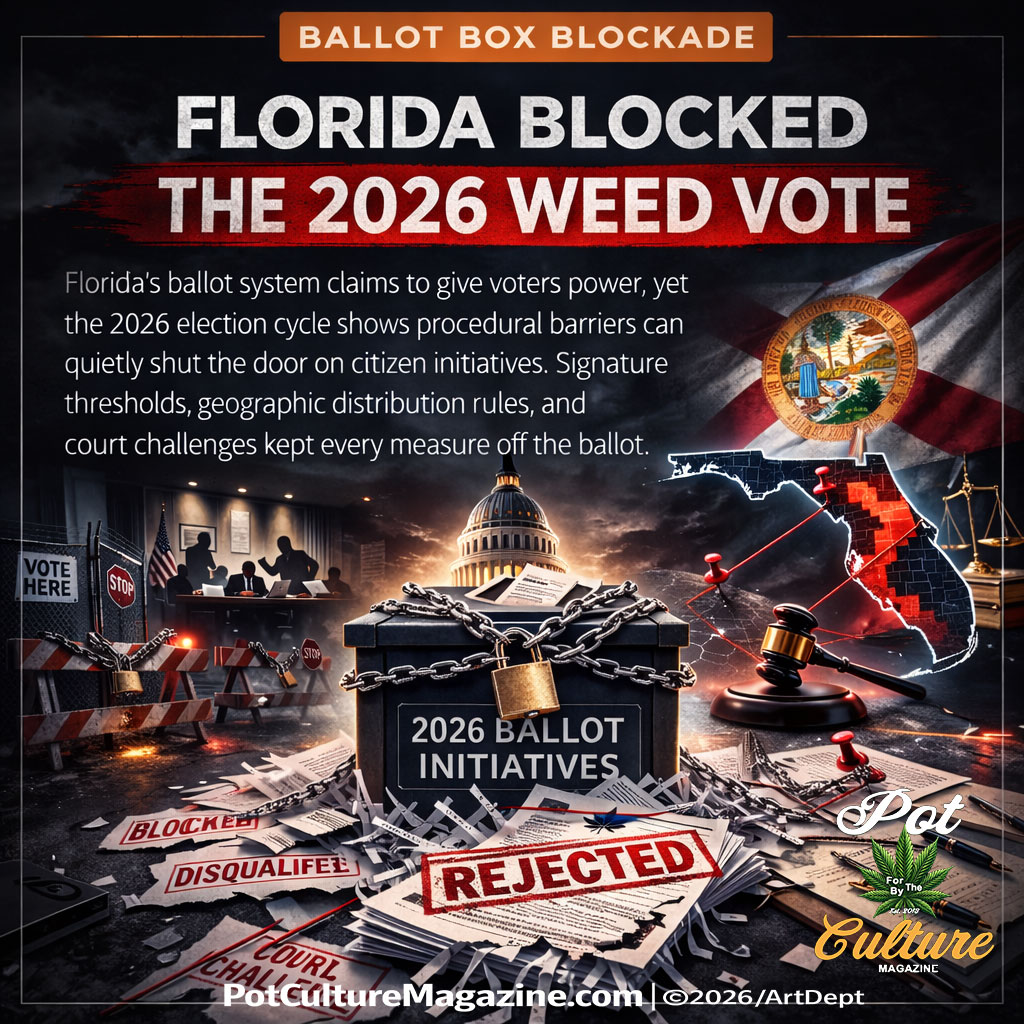
Florida Blocked the 2026 Weed Vote
Florida’s ballot system claims to give voters power, yet the 2026 election cycle shows how procedural barriers can quietly shut the door on citizen initiatives. Signature thresholds, geographic distribution rules, and court challenges blocked every measure from reaching voters, revealing how cannabis legalization fights are often decided by bureaucratic design long before election day.
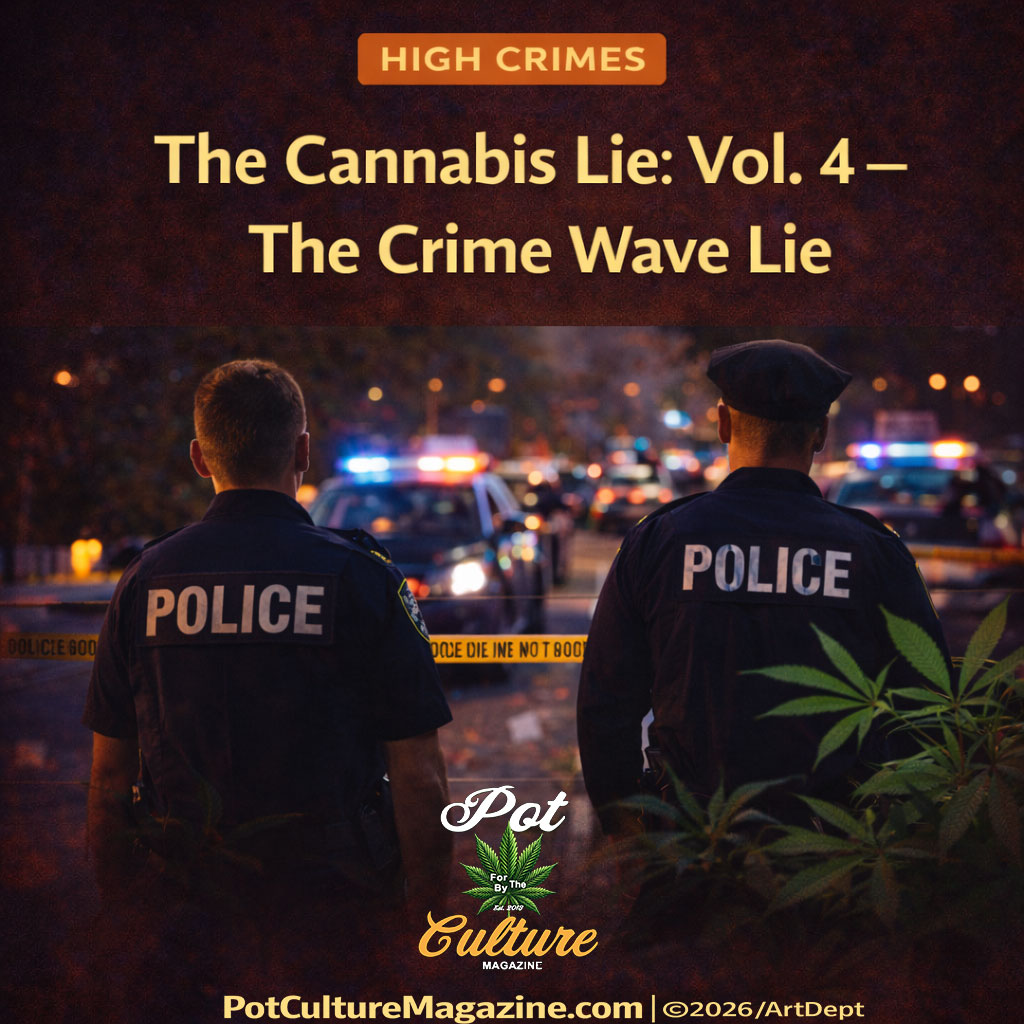
The Cannabis Lie: Vol. 4 — The Crime Wave Lie
Politicians and pundits warned that legal cannabis would unleash a crime wave. The data tell a different story. From Colorado’s violent crime trends to DOJ time-series research and statewide arrest declines, the evidence shows no consistent long-term surge tied to legalization. The numbers never matched the panic.
Discover more from POT CULTURE MAGAZINE
Subscribe to get the latest posts sent to your email.

Leave a comment