Filed Under: Global Prohibition Hangover
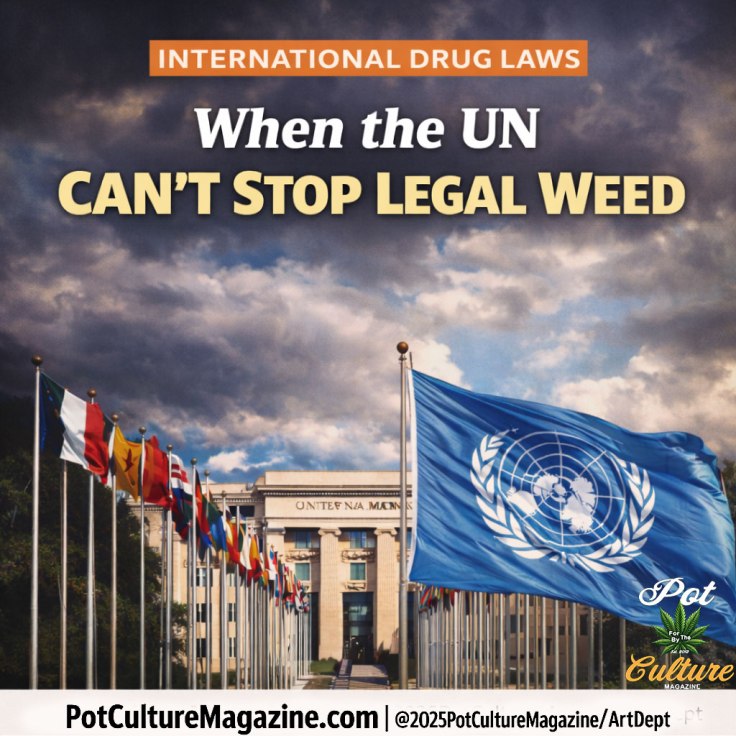
The International Narcotics Control Board wants the world to slow down. Cannabis reform is moving too fast, it warns. Treaties still matter. Commitments still bind. The rules, written decades ago, must still be honored.
The problem is that no one is listening anymore.
As U.S. federal officials continue the cannabis rescheduling process, the International Narcotics Control Board (INCB) has repeatedly reminded governments that international drug control treaties remain in force. The language is polite. The tone is measured. The implication is familiar: legalization risks undermining the global order built around prohibition.
What’s missing from those reminders is any acknowledgment of how little power the board actually has to stop it.
The INCB was built as an independent treaty monitoring body with quasi-judicial functions, designed to oversee treaty compliance through reporting and diplomacy, not force. Its authority rests on a mid twentieth century consensus that drugs should be controlled through criminalization and international coordination. For decades, that system functioned largely because governments agreed to play along.
That consensus is gone.
The legal backbone of the system is the 1961 Single Convention on Narcotic Drugs, as amended by the 1972 Protocol. Drafted at the height of global prohibition policy, the treaty sought to consolidate earlier drug agreements into a single framework. Cannabis and cannabis resin were placed under strict international controls and, for decades, were also listed in Schedule IV, the category reserved for substances considered especially risky and tightly restricted under the treaty framework.
That framing held until it didn’t.
In December 2020, the United Nations Commission on Narcotic Drugs voted to remove cannabis from Schedule IV following a World Health Organization review, formally recognizing medical use while keeping cannabis in Schedule I. The decision cracked the symbolic foundation of global drug control without dismantling the treaty system itself.
Cannabis remained controlled. The architecture stayed intact. Prohibition logic, at least at the treaty level, survived.
This is where the INCB’s problem begins.
The board is technically correct when it points to treaty obligations. The Single Convention still prioritizes medical and scientific use. Non-medical legalization fits uneasily within that language. The INCB is doing what it was designed to do when it raises objections to adult-use cannabis reforms in the United States, Canada, Uruguay, and elsewhere.
But correctness is not the same as control.
HELP POT CULTURE MAGAZINE STAY ALIVE, AND INDEPENDENT
The INCB cannot sanction or prosecute a country. Its leverage is procedural and political: monitoring, public reporting, and escalating compliance measures under the treaties that rely on states choosing to cooperate. That model only works when governments fear the consequences of being seen as non-compliant.
Increasingly, they don’t.
Canada legalized cannabis nationally in 2018 and absorbed INCB criticism without consequence. Uruguay legalized earlier and did the same. Germany has moved into legal adult possession and home cultivation and is building regulated access models, while openly acknowledging treaty tension. U.S. states continue expanding legalization regardless of federal scheduling, while federal agencies quietly adapt policy to political reality.
In none of these cases did INCB objections stop reform.
Instead, the board’s annual reports have taken on a familiar rhythm. Legalization is framed as a public health risk. Treaty coherence is emphasized. Concern is expressed about shifting norms and rising potency. The language is careful, but the underlying anxiety is unmistakable.
This is no longer about health. It is about institutional relevance.
The INCB was not built to evaluate modern regulatory systems, harm reduction outcomes, or consumer safety frameworks. It exists to defend a treaty system rooted in criminal enforcement. As nations move away from that system, the board’s influence shrinks accordingly.
International drug law still matters. Treaties continue to shape policy debates and provide rhetorical cover for opponents of reform. But the gap between treaty language and lived policy reality is widening, and the INCB lacks the tools to close it.
What remains is procedural inertia. Reports are issued. Concerns are logged. Governments proceed anyway.
Cannabis reform is advancing because the world has changed, not because treaties have. The institutions designed to enforce prohibition are being left behind, clinging to language written for a reality that no longer exists.
The INCB can continue to warn about commitments made in another era. It can continue to remind governments of rules they cannot enforce. What it cannot do is stop the shift already underway.
And that may be the clearest signal yet that the global prohibition framework is nearing the end of its usefulness.
©2025, Pot Culture Magazine. All rights reserved. This is the property of Pot Culture Magazine and is protected by U.S. and international copyright laws. Unauthorized reproduction, distribution, or transmission
of this work, in part or in whole, without the express written permission of Pot Culture Magazine is strictly
prohibited.
F O R T H E C U L T U R E B Y T H E C U L T U R E
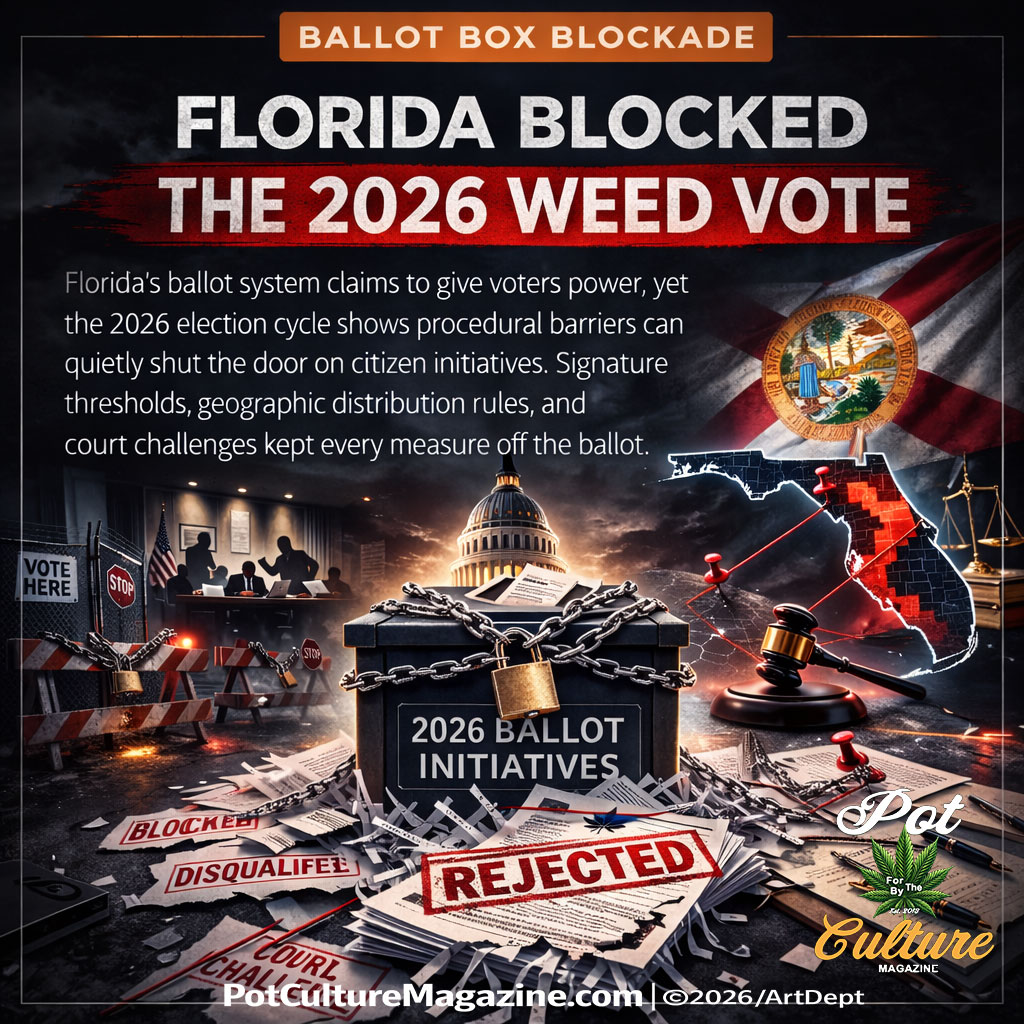
Florida Blocked the 2026 Weed Vote
Florida’s ballot system claims to give voters power, yet the 2026 election cycle shows how procedural barriers can quietly shut the door on citizen initiatives. Signature thresholds, geographic distribution rules, and court challenges blocked every measure from reaching voters, revealing how cannabis legalization fights are often decided by bureaucratic design long before election day.

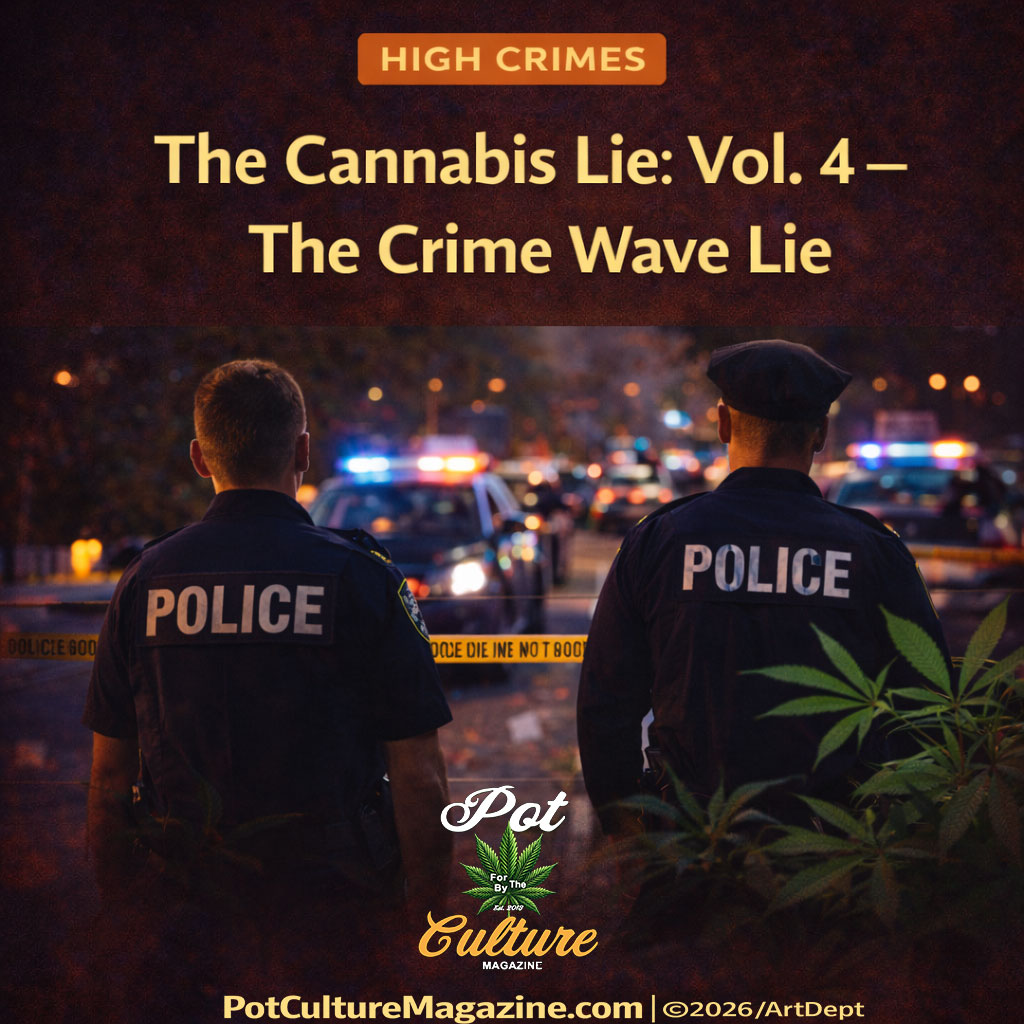
The Cannabis Lie: Vol. 4 — The Crime Wave Lie
Politicians and pundits warned that legal cannabis would unleash a crime wave. The data tell a different story. From Colorado’s violent crime trends to DOJ time-series research and statewide arrest declines, the evidence shows no consistent long-term surge tied to legalization. The numbers never matched the panic.
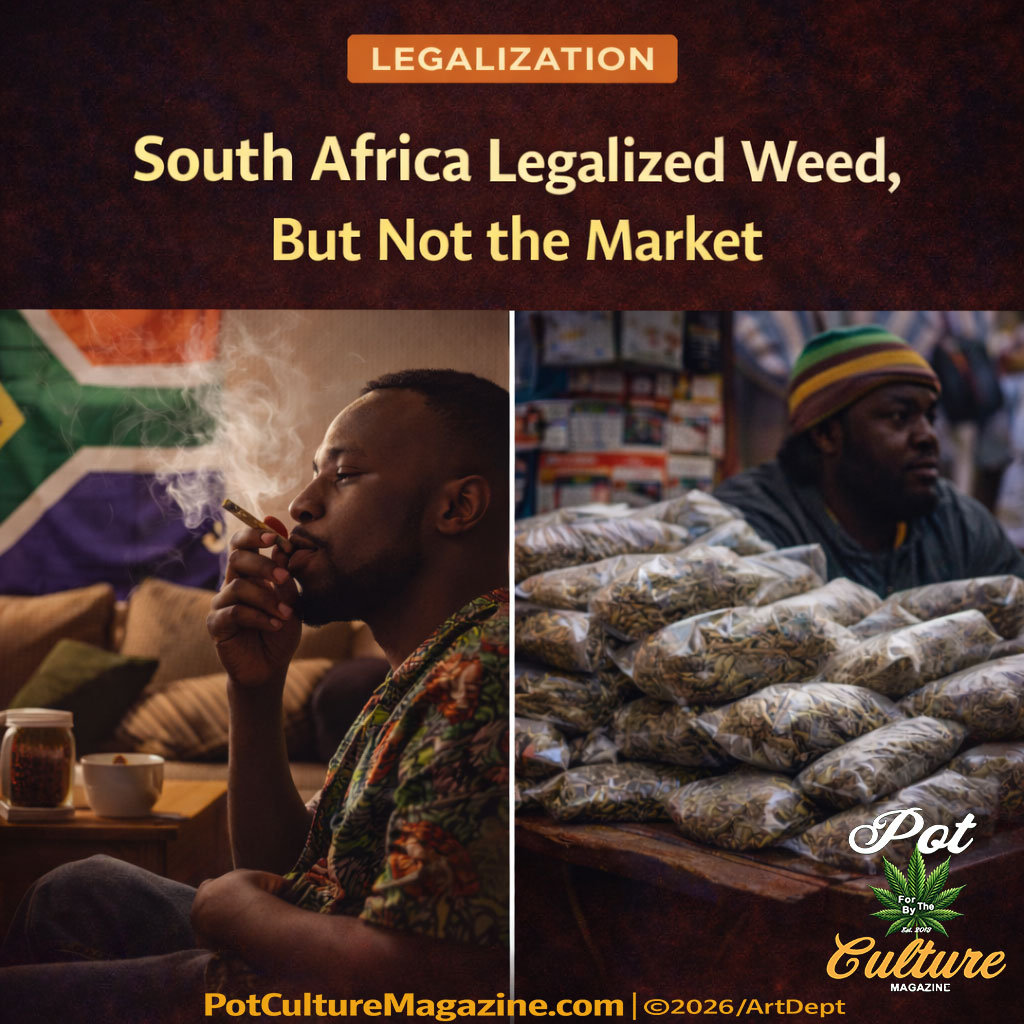
South Africa Legalized Weed, But Not the Market
South Africa recognized private adult cannabis use and home cultivation, but never built a legal domestic market around them. With buying and selling still largely outside the law, the illicit trade remains dominant while regulators scramble to set limits, draft rules, and prepare a broader Cannabis Bill that could finally address commerce.
Discover more from POT CULTURE MAGAZINE
Subscribe to get the latest posts sent to your email.

Leave a comment