Week Ending January 24, 2026
Filed Under: The Week in Weed

This week did not bring collapse. It brought something worse. Normalization. The slow, quiet acceptance that cannabis reform can move backward without consequence. States trimmed programs instead of expanding them. Federal agencies went silent after making noise. Patients were left in the same position they were in before the headlines. Legal weed stayed popular. Legal protections did not.
This is what retreat looks like when no one wants to call it that.
STATEHOUSE HEADLINER

The rollback pattern is no longer theoretical.
Efforts in Massachusetts and Maine continue to push ballot language that would keep cannabis possession legal while dismantling regulated adult use markets. The model is simple. Allow the plant. Remove the system. Oversight disappears. Tax revenue vanishes. Consumer protections fade out. Demand continues untouched.
This is not legalization evolving. It is legalization being hollowed out. Lawmakers know voters support cannabis. They also know voters rarely track regulatory infrastructure. The result is a quiet shift toward deregulation without responsibility.
This is prohibition by subtraction, and it is spreading.
Grade: D

GOVERNMENT CLOWN CAR AWARD
Last week’s rescheduling chatter has already gone cold.
The administration continues publicly signaling support for the Schedule III pathway, but no binding action followed. No rulemaking. No enforcement guidance. No clarity for workers, employers, or states. The Controlled Substances Act remains intact. The risk remains unchanged.
This is the federal playbook in full view. Announce movement. Let headlines do the work. Retreat into process. Leave everyone else holding uncertainty.
It is not leadership. It is a delay masquerading as progress.
Grade: D
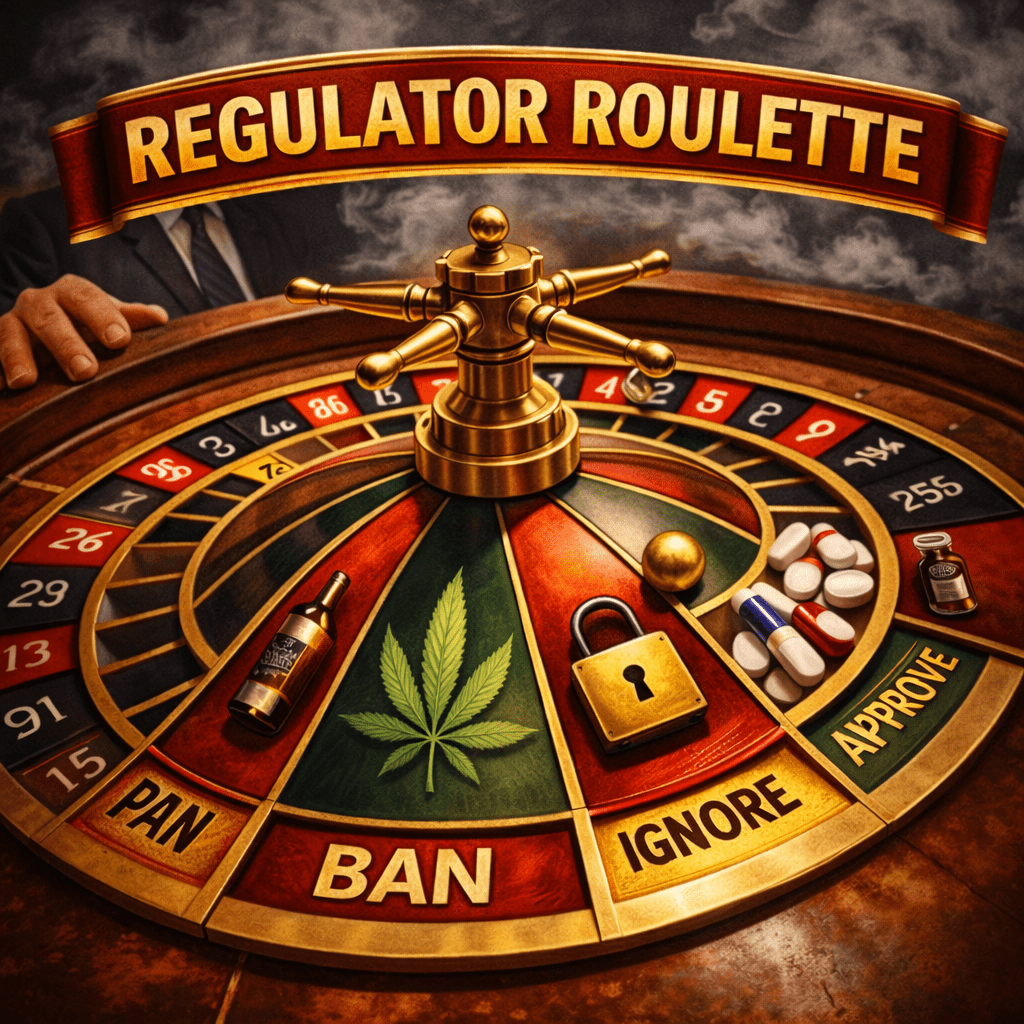
REGULATOR ROULETTE
The potency panic is back.
Public health framing is once again being used to justify tighter controls, caps, and restrictions without addressing alcohol, pharmaceuticals, or enforcement inconsistencies. Regulators talk about safety while ignoring dosage education, consumer literacy, or harm reduction.
This week made one thing clear. When reform stalls, fear fills the gap. And fear is easier to regulate than evidence.
Grade: C-
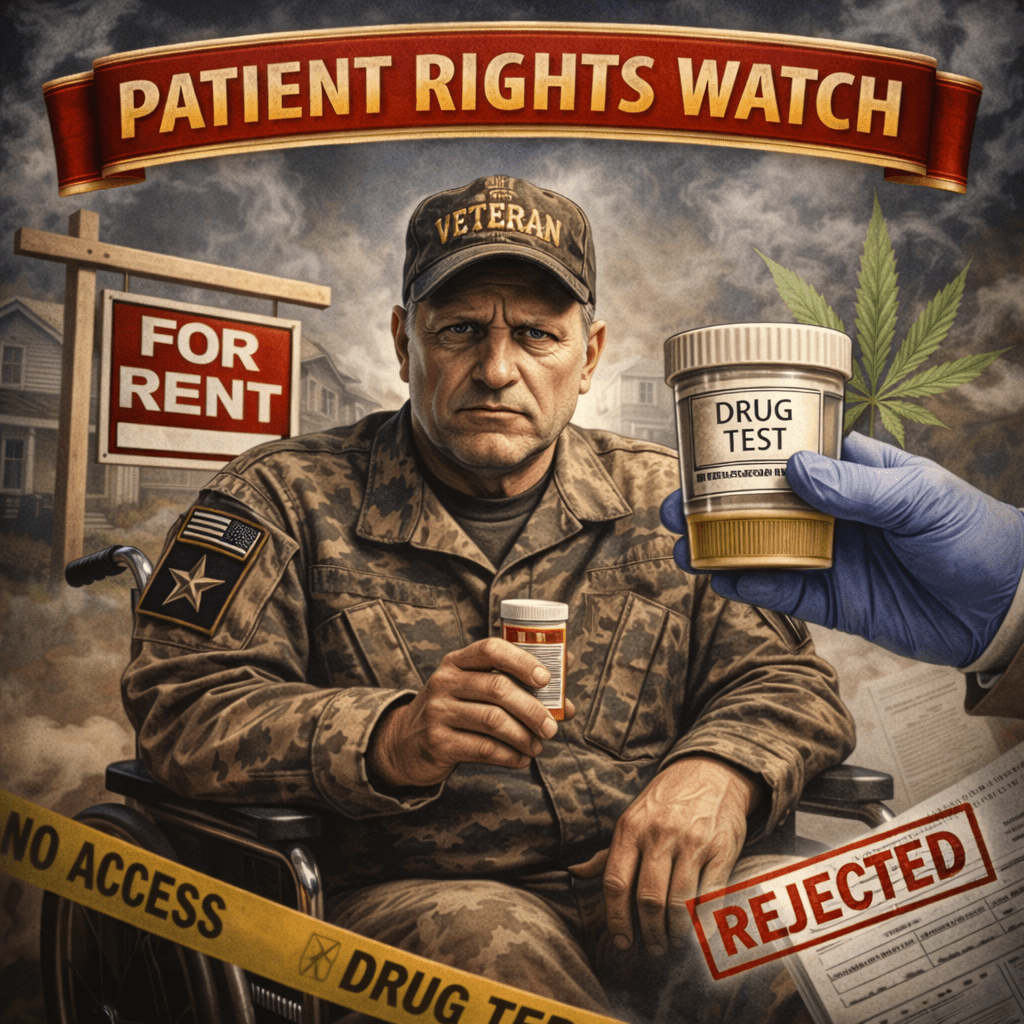
PATIENT RIGHTS WATCH
Patients remain the collateral damage.
Employment drug testing continues to punish legal use. Housing access remains conditional. Veterans continue navigating systems that acknowledge cannabis exists but refuse to accommodate it. Nothing announced this week changed that reality.
Legal on paper does not mean protected in practice. It never has.
Grade: D

INTERNATIONAL HEAT CHECK
Globally, momentum remains cautious.
Germany continues to struggle with implementation. Thailand remains trapped between reform and reversal. Other countries watch the United States closely and see hesitation, not leadership.
When the world’s largest cannabis market cannot commit to its own reforms, nobody else rushes to follow.
Grade: C
FINAL GRADE
This week did not deliver progress. It delivered confirmation.
Legalization is no longer under attack only by prohibitionists. It is being quietly reshaped by regulators, softened by politicians, and hollowed out by inaction. The system is not collapsing. It is retreating in slow motion.
Final Grade: D-
©2026 Pot Culture Magazine. All rights reserved. This content is the exclusive property of Pot Culture Magazine and may not be reproduced, distributed, or transmitted in any form or by any means without prior written permission from the publisher, except for brief quotations in critical reviews.
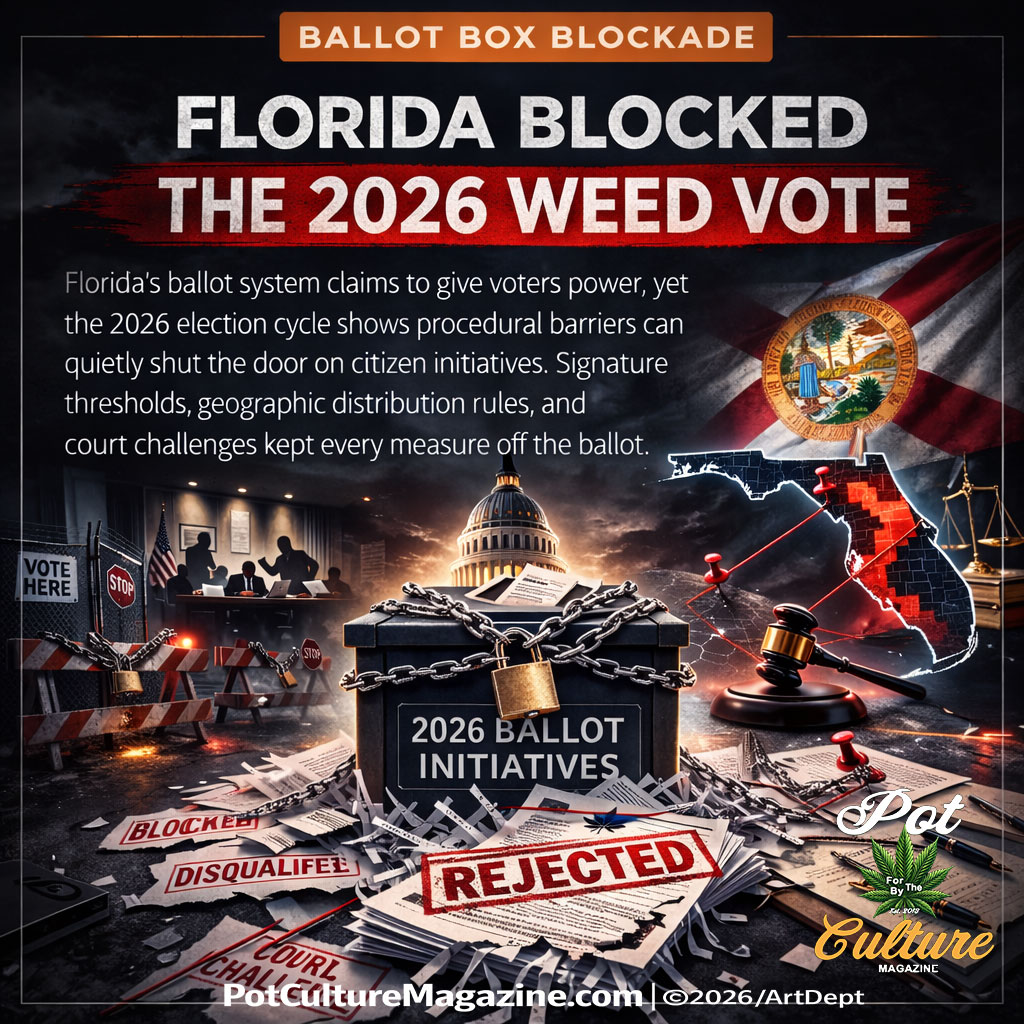
Florida Blocked the 2026 Weed Vote
Florida’s ballot system claims to give voters power, yet the 2026 election cycle shows how procedural barriers can quietly shut the door on citizen initiatives. Signature thresholds, geographic distribution rules, and court challenges blocked every measure from reaching voters, revealing how cannabis legalization fights are often decided by bureaucratic design long before election day.


The Cannabis Lie: Vol. 4 — The Crime Wave Lie
Politicians and pundits warned that legal cannabis would unleash a crime wave. The data tell a different story. From Colorado’s violent crime trends to DOJ time-series research and statewide arrest declines, the evidence shows no consistent long-term surge tied to legalization. The numbers never matched the panic.

South Africa Legalized Weed, But Not the Market
South Africa recognized private adult cannabis use and home cultivation, but never built a legal domestic market around them. With buying and selling still largely outside the law, the illicit trade remains dominant while regulators scramble to set limits, draft rules, and prepare a broader Cannabis Bill that could finally address commerce.
Discover more from POT CULTURE MAGAZINE
Subscribe to get the latest posts sent to your email.

Leave a comment