Week Ending January 10, 2026
Filed Under: The Week in Weed

This was the week cannabis reform got marketed as a label change and sold back to the public as progress. Headlines talked about movement. Politicians talked about momentum. Underneath, the structure of legalization weakened. Demand stayed strong. Oversight grew negotiable. Federal authority remained intact. States watched their own systems get quietly put on the chopping block.
STATEHOUSE HEADLINER

The biggest story of the week was not legalization advancing. It was legalization being hollowed out.
Ballot initiatives in Massachusetts, Maine, and Arizona moved forward with proposals that would keep cannabis possession legal while dismantling regulated adult use markets. The pitch sounds clean. No stores. No licenses. No bureaucracy. What disappears is accountability.
If these measures succeed, worker protections, consumer safety rules, and tax revenue vanish. Demand does not. Cannabis does not stop moving. It simply moves back into a space where no one is responsible, and no one can be held to account.
This is prohibition by subtraction. The plant stays legal. The system that manages it does not.
Grade: D
GOVERNMENT CLOWN CAR AWARD

At the federal level, leadership continued pretending motion equals reform.
The White House signaled and directed agencies to keep pushing the Schedule III track, but the Controlled Substances Act remained intact, and enforcement authority did not vanish. No public-facing final rule appeared that week that would instantly change federal criminal status across the country. What changed was the messaging.
Congress talked. Agencies floated direction. Markets reacted. The law stayed exactly where it has been. This is the federal playbook. Announce progress. Delay consequence. Let states and businesses absorb the risk.
It is not reform. It is a deferral dressed up as action.
Grade: D
REGULATOR ROULETTE

State regulators spent the week staring at their own fragility.
In Maine, the repeal effort itself underscored how vulnerable a voter-approved adult use system can be to a future ballot reversal. In Massachusetts, years of rulemaking now face the possibility of being erased by a single question framed as common sense cleanup. Elsewhere, agencies quietly reviewed what happens if their markets are voted out of existence.
Regulators love the word stability. This week proved how thin that stability really is when political will disappears.
Grade: C minus
PATIENT RIGHTS WATCH
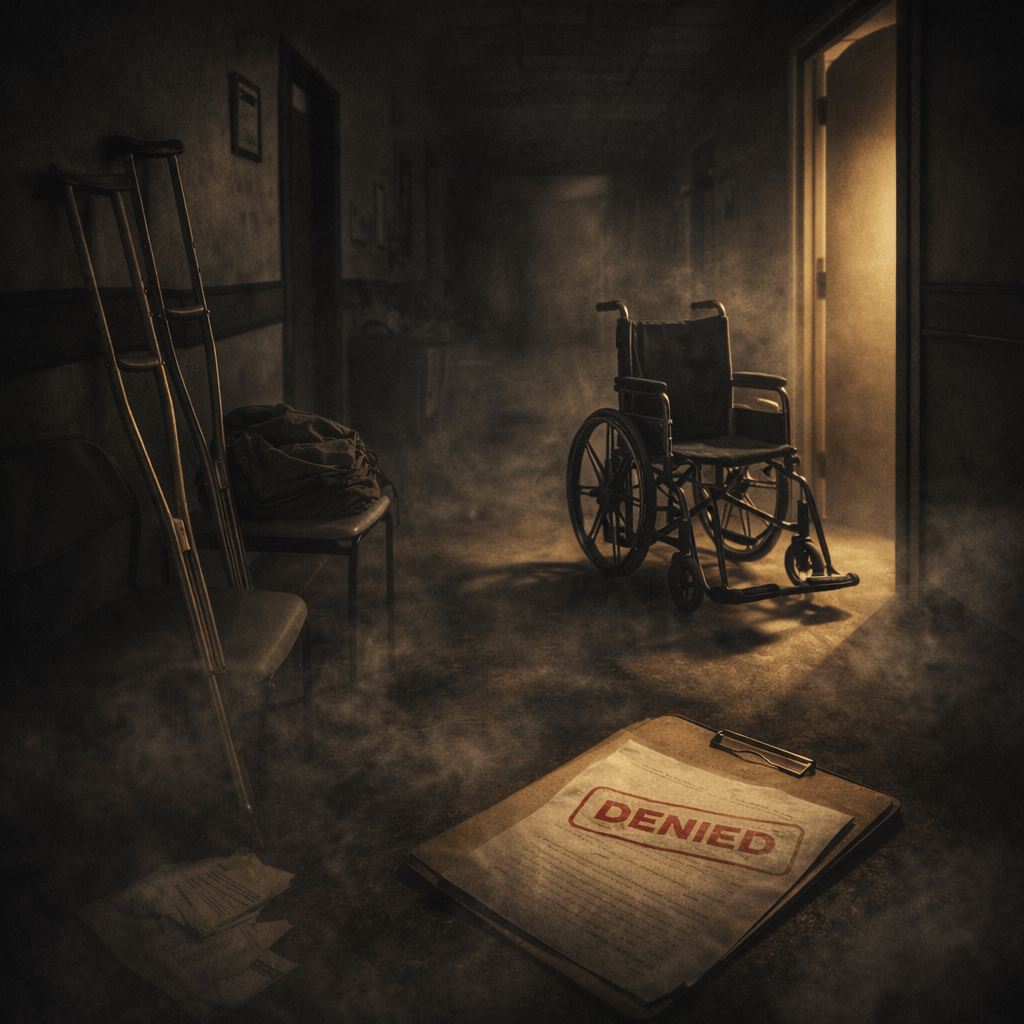
Patients and workers paid the price for ambiguity.
Federal immigration exposure, federal housing restrictions, and benefits complications remain part of the federal prohibition landscape. Medical users continue navigating legal use alongside employment punishment, as THC testing still cannot distinguish impairment from lawful consumption. Veterans remain stuck between agency caution and real-world need.
Legal cannabis without reliable access is not compassion. It is negligence with better branding.
Grade: D
INTERNATIONAL HEAT CHECK

Globally, the contrast sharpened.
Other countries continue experimenting with regulated models, often clumsily, but rarely retreating into chaos. International observers watched the United States flirt with deregulation without responsibility and took notes. Where oversight exists, problems can be corrected. Where it disappears, black markets fill the vacuum.
The lesson is not subtle. The U.S. just keeps refusing to learn it.
Grade: C
FINAL GRADE
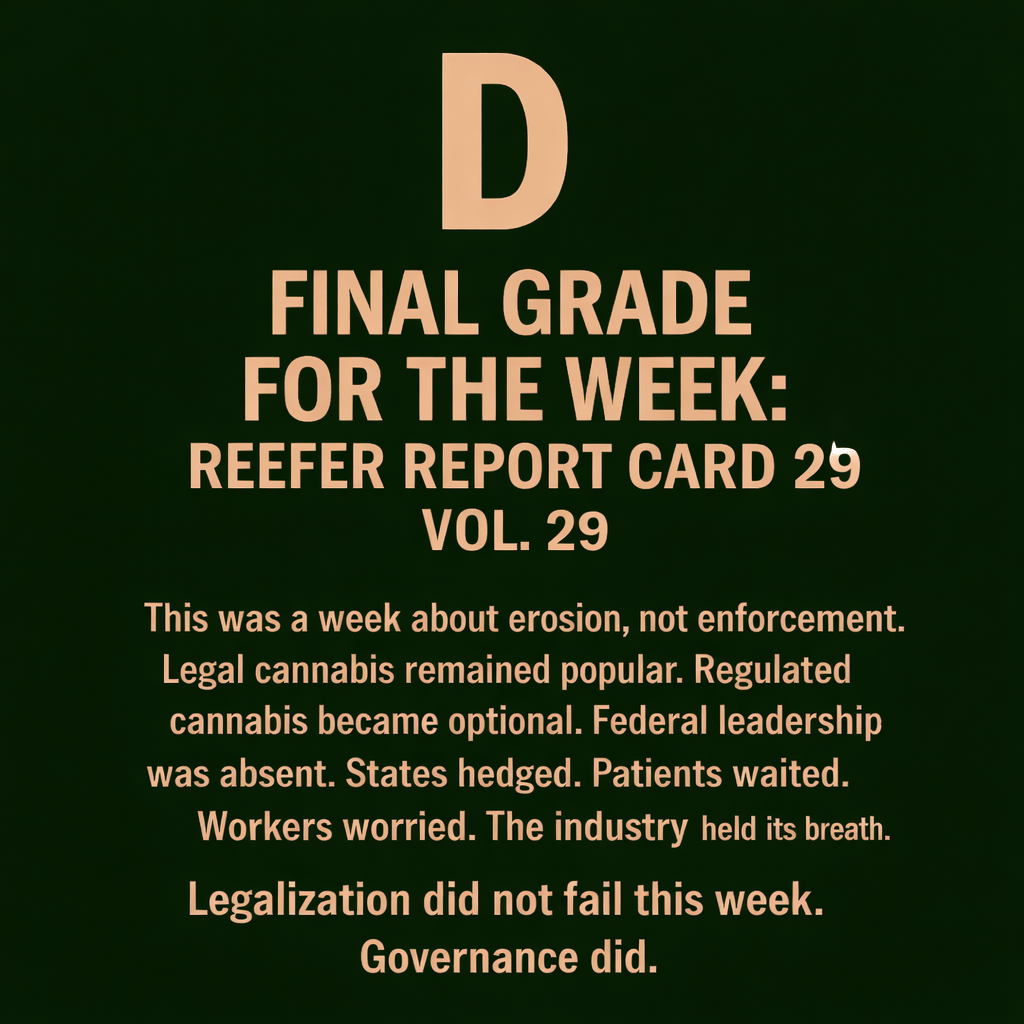
This was a week about erosion, not enforcement. Legal cannabis remained popular. Regulated cannabis became optional. Federal leadership was absent. States hedged. Patients waited. Workers worried. The industry held its breath.
Legalization did not fail this week. Governance did.
Final Grade: D
©2025 Pot Culture Magazine. All rights reserved. This content is the exclusive property of Pot Culture Magazine and may not be reproduced, distributed, or transmitted in any form or by any means without prior written permission from the publisher, except for brief quotations in critical reviews.
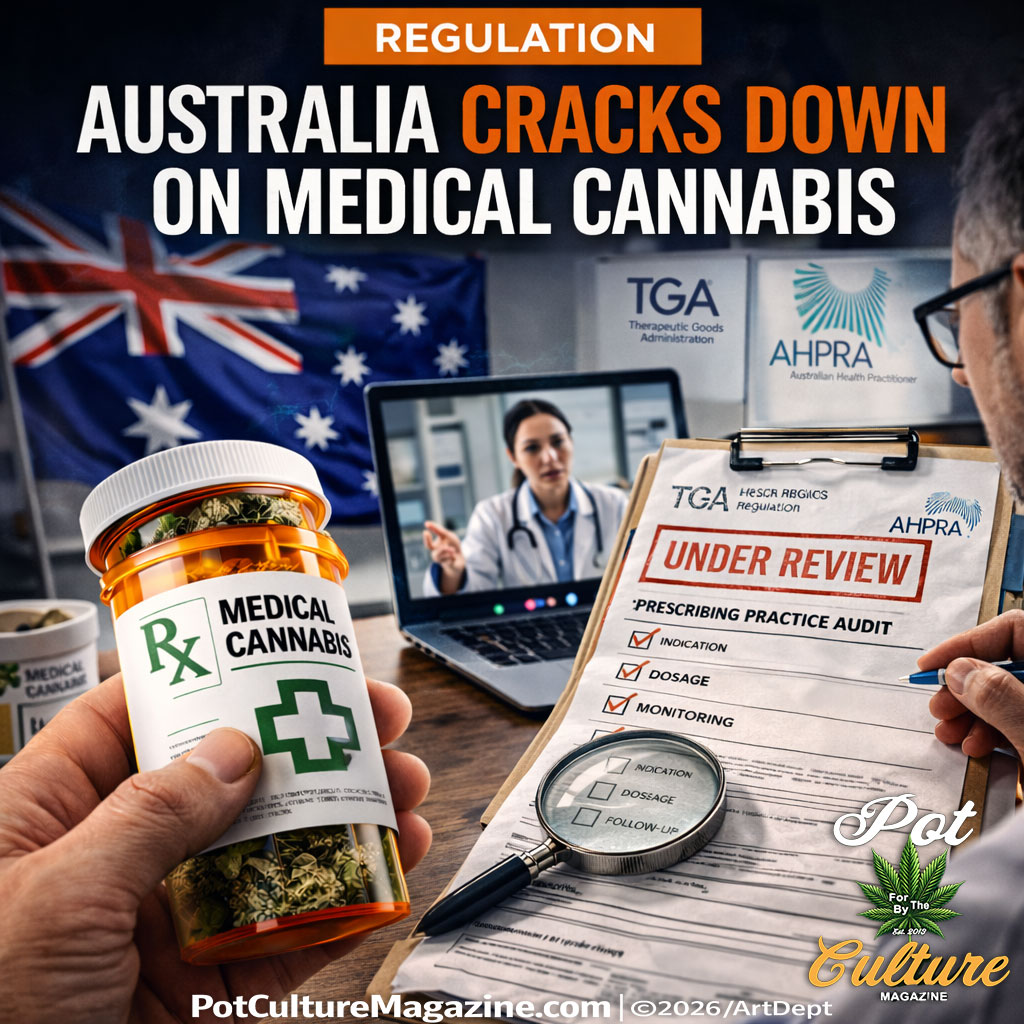
Australia Cracks Down on Medical Cannabis
Australia’s medical cannabis system expanded rapidly through telehealth and high-volume prescribing. Now regulators are tightening oversight. The TGA and AHPRA are increasing scrutiny on prescribing practices, signaling a shift from rapid patient access toward stricter clinical control that could reshape how doctors prescribe and how patients obtain treatment.


Missouri Tightens Grip On Hemp Sales
Missouri legalized cannabis, then moved to squeeze intoxicating hemp into the dispensary system. HB 2641 is being sold as consumer protection, but critics say it protects licensed marijuana operators while threatening hemp retailers, growers, and small businesses across the state.
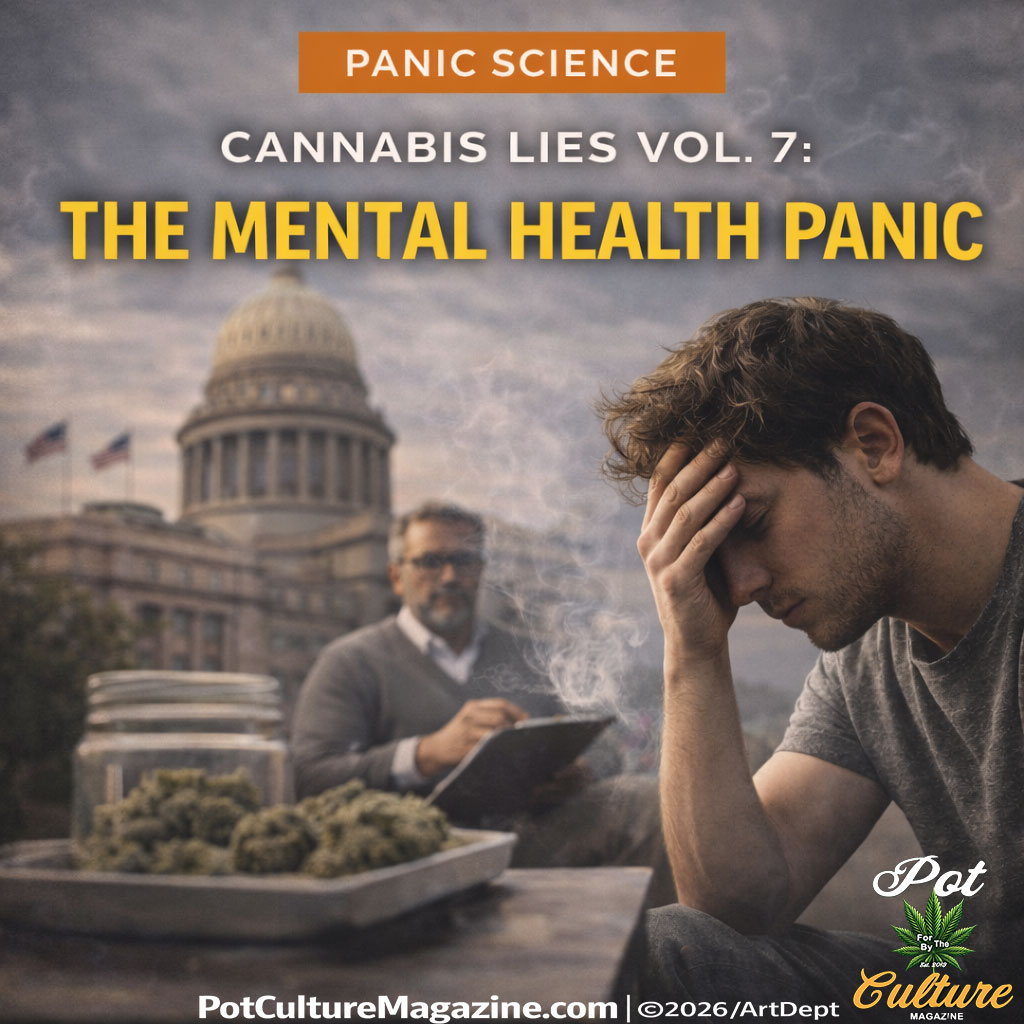
CANNABIS LIES Vol. 7: The Mental Health Panic
Cannabis and mental health risks are often overstated in public debate. Research shows heavy use and high THC exposure can increase psychosis risk in vulnerable individuals, but widespread claims of a mental health crisis lack strong evidence. This piece examines the data, separates correlation from causation, and breaks down what cannabis users need to know.
Discover more from POT CULTURE MAGAZINE
Subscribe to get the latest posts sent to your email.

Leave a comment