Filed Under: Zoning Theater
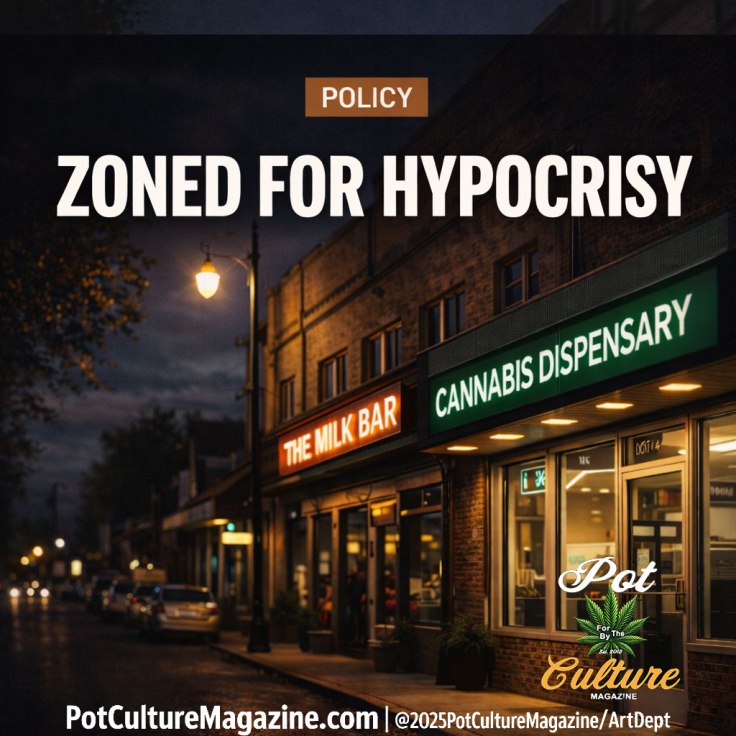
The word being used is “controversial.”
That’s how a newly opened cannabis dispensary on South Carrollton Avenue in New Orleans is being described. Not illegal. Not unlicensed. Not operating outside the state’s tightly controlled medical marijuana framework. Just “controversial.”
That label does a lot of work. It implies risk without naming harm. It signals concern without evidence. It invites moral panic while avoiding specifics.
And it seeps into the conversation immediately. Proximity. Zoning. Children. A familiar script.
South Carrollton is not an abstract space. It is a dense commercial corridor. Bars operate within steps. Gas stations sell alcohol and cigarettes. Corner stores move nicotine and lottery tickets all day long. These uses are normalized. Licensed. Longstanding. Rarely questioned.
Yet cannabis, even inside Louisiana’s medical system, triggers a different reaction.
The concern being raised is not subtle. What about the kids? What about nearby institutions? What message does this send?
Those questions would carry more weight if they were applied consistently.
There is a public library near the corridor. Schools within reach. Daily foot traffic that includes families and students. None of that prevented alcohol licenses from being granted. None of it forced cigarette sales behind closed doors. None of it sparked zoning outrage when gambling signage went up.
Cannabis alone is framed as a moral intrusion.
That distinction did not appear by accident. It is a holdover. A reflex carried forward from prohibition, repackaged for the post legalization era. The substance changed legal status. The cultural suspicion did not.
Louisiana’s medical cannabis program is among the most tightly restricted in the country. Limited licenses. Controlled supply. Physician gatekeeping. Extensive regulation from seed to sale. This is not an open retail market. It is a medical system by design.
Still, the dispensary is treated as a threat in a way no liquor store is.
That contradiction is the story.
On South Carrollton Avenue, a new medical cannabis dispensary is being treated like a public threat. Neighbors are upset. Officials are cautious. Headlines lean into the word controversial. The implication is familiar. Cannabis is somehow out of place here, incompatible with the community, uniquely dangerous when placed too close to everyday life.
That framing collapses the moment you look at the block.
Within walking distance of the dispensary site are bars, corner stores, gas stations, and retail outlets that sell alcohol, nicotine, and lottery tickets daily. Products that are proven contributors to addiction, liver disease, overdose, and long-term public health harm are not just tolerated. They are routine. Their zoning status is rarely debated with the same intensity. Their presence is treated as normal commerce.
Cannabis, meanwhile, is singled out.
This is not new. It is a pattern.
The controversy surrounding the South Carrollton dispensary does not exist in a vacuum. It exists inside a zoning system that treats cannabis as both legal and perpetually suspect. Allowed in theory. Contested in practice. Approved at the state level. Obstructed block by block.
That contradiction is the story.
As documented in local reporting on cannabis zoning in New Orleans, the city’s regulatory framework has produced outcomes that look less like public safety and more like selective enforcement. Zoning rules are applied inconsistently. Public meetings are framed around fear rather than data. The same concerns are recycled regardless of location or context. Cannabis becomes a proxy issue, absorbing anxieties that zoning officials do not apply elsewhere.
The South Carrollton debate fits that pattern precisely.
Opponents raise concerns about proximity to schools, churches, and residential life, even as alcohol retailers operate nearby with little scrutiny. Cigarettes are sold legally within the same radius. Prescription opioids are dispensed daily across the city. None of these triggers emergency zoning conversations framed around moral risk.
Only cannabis does.
This selective alarm is not rooted in evidence. It is rooted in legacy stigma.
What makes the situation more revealing is not just who is objecting, but who already operates within the system. Louisiana’s medical cannabis market is tightly controlled, vertically integrated, and politically connected. Production is limited. Distribution is capped. Dispensaries operate under state license, not casual retail permission.
HELP POT CULTURE MAGAZINE STAY ALIVE, AND INDEPENDENT
Despite this, local zoning fights continue as if cannabis storefronts are rogue operations instead of some of the most regulated businesses in the state.
That disconnect exposes the real issue.
Zoning debates are not about safety. They are about comfort. About who is allowed to exist openly and who must remain discreet, regardless of legality.
New Orleans is not alone in this.
In New York, legal cannabis retailers have faced similar zoning fights, community pushback, and selective enforcement, even as liquor stores continue to operate unchallenged in the same neighborhoods. Different city. Same logic. Cannabis is still treated as something that must be contained, distanced, and apologized for.
The result is a cannabis market that is legal on paper but treated as provisional in real life.
South Carrollton is simply the latest flashpoint.
What makes this moment worth documenting is not whether the dispensary ultimately opens. It is the way cannabis continues to be framed as an exception. A problem to manage rather than a regulated business operating alongside far more harmful products.
If zoning were truly about harm reduction, the conversation would look very different. Alcohol density would be scrutinized. Tobacco sales would face renewed limits. Gambling saturation would enter the discussion. Instead, cannabis absorbs the entire burden of moral panic.
That imbalance tells you everything.
Cannabis did not suddenly become visible on South Carrollton. It became licensed.
The discomfort that followed says more about the system than the storefront.
South Carrollton does not represent a crisis. It represents a test. Not of cannabis, but of whether cities are willing to apply their rules consistently, or whether stigma will continue to override logic.
The block already contains substances that harm.
The dispensary sells one that does not belong in the same category.
Treating them differently is not public safety.
It is theater.
And New Orleans has seen enough of that already.
©2026 Pot Culture Magazine. All rights reserved. This content is the exclusive property of Pot Culture Magazine and may not be reproduced, distributed, or transmitted in any form or by any means without prior written permission from the publisher, except for brief quotations in critical reviews.
F O R T H E C U L T U R E B Y T H E C U L T U R E

Missouri Tightens Grip On Hemp Sales
Missouri legalized cannabis, then moved to squeeze intoxicating hemp into the dispensary system. HB 2641 is being sold as consumer protection, but critics say it protects licensed marijuana operators while threatening hemp retailers, growers, and small businesses across the state.

CANNABIS LIES Vol. 7: The Mental Health Panic
Cannabis and mental health risks are often overstated in public debate. Research shows heavy use and high THC exposure can increase psychosis risk in vulnerable individuals, but widespread claims of a mental health crisis lack strong evidence. This piece examines the data, separates correlation from causation, and breaks down what cannabis users need to know.

IDAHO TRIES TO STOP A VOTE BEFORE IT STARTS
Idaho lawmakers passed a resolution urging voters to reject a medical cannabis initiative before it reaches the ballot. The move highlights how officials are shaping public opinion ahead of a vote, while maintaining strict prohibition and blocking even limited access for patients.
Discover more from POT CULTURE MAGAZINE
Subscribe to get the latest posts sent to your email.

Leave a comment