Filed Under: Policy Theater

Massachusetts walked into a storm this week when a law enforcement group announced that THC percentages on legal cannabis labels might be inaccurate. They said the dispensary products tested lower than advertised. They treated that gap like a scandal. They framed it like a discovery that should shake the market. The claim is sharp, but the evidence behind it remains limited. What the claim actually exposes is the gap between how cannabis is sold and how cannabis works.
People talk about THC as if it were an exact measurement of strength. It is not. No plant produces uniform potency across every flower. Sunlight can change concentration, airflow can change concentration, and genetics can shift expression from one harvest to the next. Even two buds on the same branch can test differently. Testing was created to average those differences into a number that is usable on a label. That number was never meant to be treated as the absolute truth. It became an absolute truth only because the market needed something simple to sell.
The public rarely sees how the system functions. A licensed lab receives a sample meant to represent an entire batch. The lab grinds it, homogenizes it, and measures its chemistry using certified equipment. That single result becomes the THC percentage printed on the label. It is legal, it is standard, and it is limited, because no single sample can reflect the exact chemistry of every bud that reaches a consumer. This is not fraud. This is agriculture filtered through regulation.
HELP POT CULTURE MAGAZINE STAY ALIVE, AND INDEPENDENT
The Massachusetts allegation comes from the New England Narcotic Officers Enforcement Association, a regional law enforcement group that claims its field testing found THC levels far below what product labels list.
“What they are doing is they are ripping off the consumer,” said Matt Gutwill, president of the association.”
The allegation hinges on a different kind of test. The New England Narcotic Officers Enforcement Association used a handheld scanner. Those devices can screen for patterns, but they do not replace certified lab methods. They do not determine legal potency. They offer approximations that can signal a discrepancy, but approximations alone do not prove wrongdoing. Regulators have not confirmed the group’s findings, and no lab has been accused of manipulating numbers. The only proven violations in the state involved labs failing to report contamination, not falsifying potency. More than 7,000 products were flagged for contamination earlier this year, and a lab was reinstated under conditions shortly before an audit exposed deeper operational failures.
Still, the allegation from the New England Narcotic Officers Enforcement Association hits a nerve because THC numbers carry weight they were never designed to carry. Consumers chase the highest percentage on the shelf even though the relationship between THC and perceived strength is weak at best. Terpenes and minor cannabinoids shape a person’s experience far more than THC percentage alone. Two strains with identical percentages can feel completely different once consumed. Pot Culture Magazine reported this months ago when we showed how THC became a marketing shortcut that replaced true understanding of the plant.
The industry helped build that culture. Retailers know high numbers sell fast. Growers know high numbers attract buyers. Labs know clients expect results that make products competitive. This is not proof of conspiracy. It is proof of incentive. When a market rewards a specific outcome, pressure collects around the path that leads to it. That pressure has shaped expectations so thoroughly that people treat the number on the label like a promise, even though science never offered that promise.
Advertisement
F O R T H E C U L T U R E B Y T H E C U L T U R E
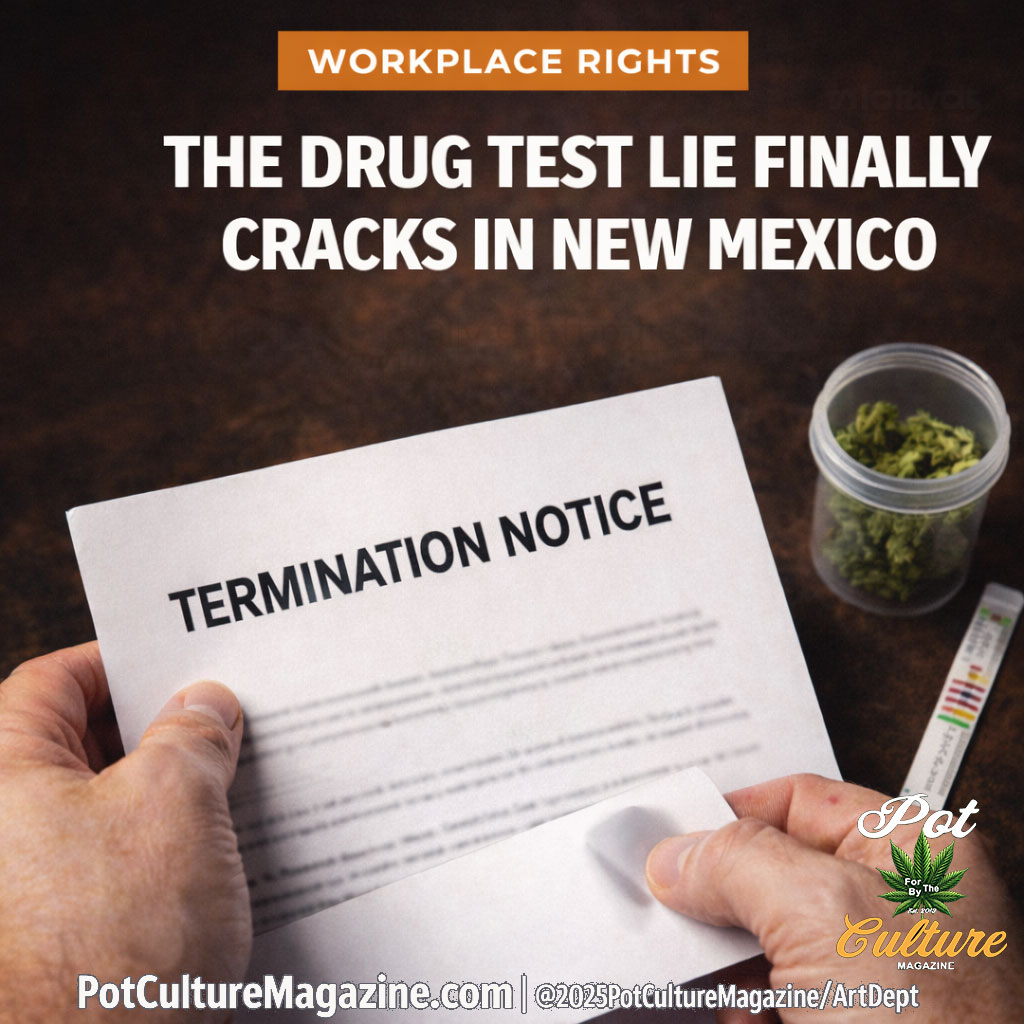
The Drug Test Lie Finally Cracks in New Mexico
New Mexico’s Senate Bill 129 challenges the long standing assumption that a positive cannabis test equals impairment. By separating outdated drug testing from actual workplace safety, the bill aims to protect medical cannabis patients from job discrimination while preserving employer authority over real on the job risk and misconduct.


How Cannabis Can Cost You Your Gun
Federal law still allows cannabis use to strip Americans of firearm rights without proof of danger or misuse. As the Supreme Court weighs United States v. Hemani, courts are confronting whether the government can continue punishing people based on status rather than conduct in a country where cannabis is legal in most states.
Advertisement
A deeper context rests in the history of the regulator itself, which has been unraveling for months, as documented in our earlier report on the Commission’s internal breakdown. A state audit found missing revenues, unenforced rules, absent internal controls, and delays in resolving violations because the agency lacked a designated hearing officer. Verbal exceptions functioned like policy. Host Community Agreements went unreviewed, letting towns extract unregulated fees from smaller operators. Observers described the internal culture as toxic, with high turnover, infighting, and uncertainty about who was actually in control. Trust in potency numbers depends on trust in the system that enforces them. Massachusetts does not currently have that luxury.
CCC Commissioner Kimberly Roy acknowledged these gaps when she stated that “there is more to do,” referring to the need for an independent reference lab and stronger verification.
The allegation also landed in a climate of public confusion. The state recently fueled a moral panic over hemp products, focusing on kids, storefronts, and convenience shops instead of acknowledging its own lack of clear rules. We covered that moment in our analysis of the hemp panic, which showed a regulator more comfortable searching for villains than solutions. That same environment now shapes how people interpret the potency story.
The Massachusetts allegation will move through the stages every cannabis testing controversy follows. Suspicion lands. The industry insists the variance is natural. Regulators say their process is working as intended. Consumers wonder who is telling the truth. The answer is usually simpler than the debate. Testing measures a moment, not an identity. A label reflects the sample submitted. The buds in a jar reflect the realities of farming, curing, and storage. When those realities collide with expectation, the label always looks like it failed even when it did not.
What matters now is clarity. If the handheld scanner results are correct, regulators can respond with targeted enforcement. If they are flawed, regulators can explain why. Either outcome demands transparency. The public needs to understand that accuracy has limits. The plant evolves from seed to shelf. The test does not follow every step. No lab can guarantee that one number applies perfectly across thousands of individual buds. The science behind testing acknowledges this. The legal system does not always communicate it.
Consumers deserve honesty about what a THC percentage can and cannot tell them. It can estimate potency. It cannot predict sensation. It can guide expectations. It cannot define experience. A number cannot capture aroma, feel, effect, or the chemical interplay that creates the high. cannabis was never meant to be reduced to a single metric, yet the legal market relies on that metric as if it is the whole story. When that story cracks, people treat the crack like a scandal instead of the natural limit of the system.
Massachusetts did not uncover a new truth. It stumbled into one the culture already knew. THC percentages are imperfect. Testing is imperfect. Labels are imperfect. The plant is complex. The market treats none of this as true. That is the real problem. When a system promises precision that science cannot deliver, trust erodes the moment someone questions the promise.
If the state wants to rebuild that trust, it needs stronger verification, clearer communication, and a public that understands what the THC number actually represents. Not a promise. Not a guarantee. Not a fraud. A measurement of a sample trying to stand in for a whole. The legal market built itself on that measurement because it needed something simple to hold up. Now the simplicity is collapsing under scrutiny.
The plant never lied. The number was never the truth. The market treated it like gospel anyway, and Massachusetts is learning what happens when belief runs ahead of reality.
©2025 Pot Culture Magazine. All rights reserved. This content is the exclusive property of Pot Culture Magazine and may not be reproduced, distributed, or transmitted in any form or by any means without prior written permission from the publisher, except for brief quotations in critical reviews.
F O R T H E C U L T U R E B Y T H E C U L T U R E
Reefer Report Card Vol. 32: Kicking the Can Again
This week’s Reefer Report Card tracks a familiar pattern in cannabis policy: delay dressed as progress. Federal lawmakers punted again on hemp regulation, states flirted with dismantling legal markets, and patients were left waiting. Oversight weakened, accountability faded, and reform stalled. Another week in weed, graded.

WHEN THE UN CAN’T STOP LEGAL WEED
As cannabis reform accelerates worldwide, the UN’s International Narcotics Control Board continues warning that decades old drug treaties still apply. This feature examines the INCB’s actual authority, the limits of treaty enforcement, and why global legalization is advancing despite institutional resistance rooted in prohibition era frameworks.
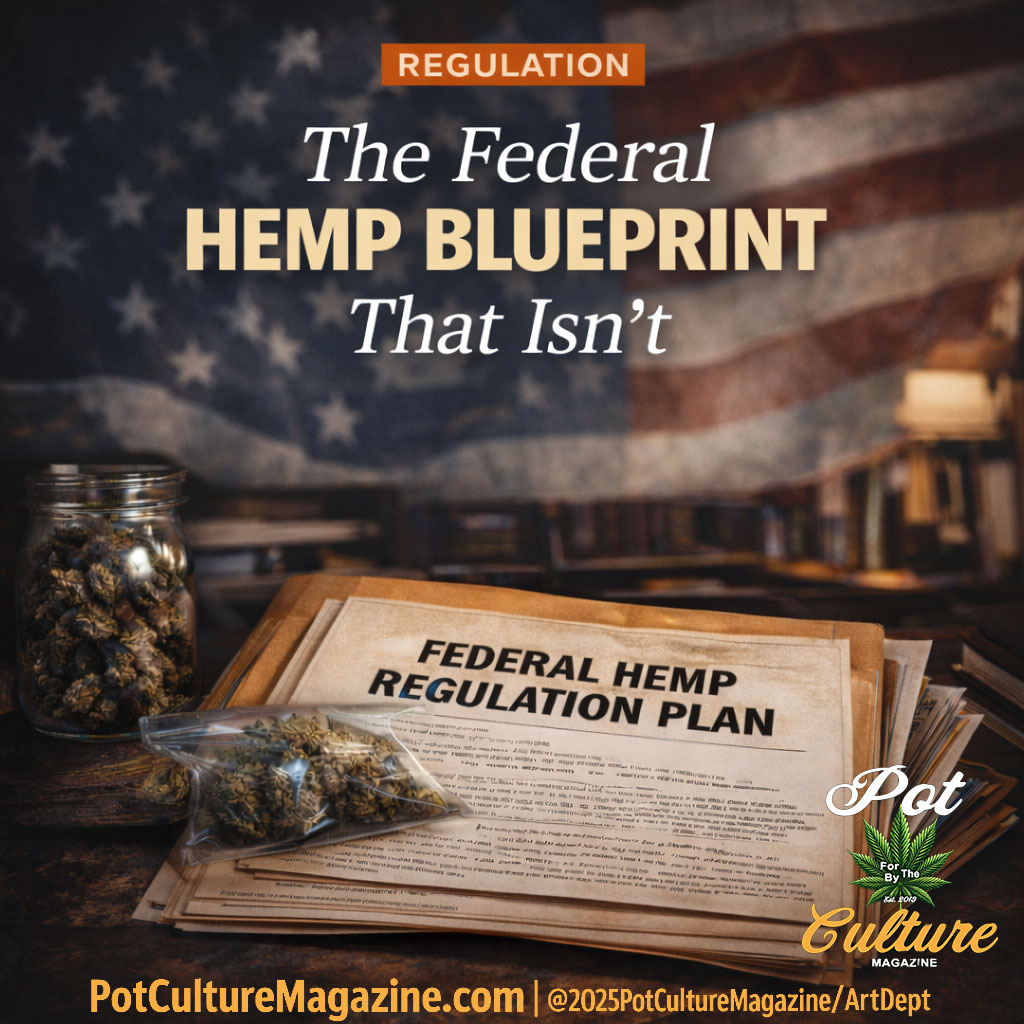
The Federal Hemp Blueprint That Isn’t
A proposed federal hemp framework is being sold as long overdue clarity for a chaotic market. But beneath the promise of order, the structure reveals rigid caps, unresolved enforcement questions, and a quiet shift of power away from states and smaller producers. We break down what the proposal does, what it avoids, and why the…
Discover more from POT CULTURE MAGAZINE
Subscribe to get the latest posts sent to your email.

Leave a comment