Filed Under: Power Trips Exposed
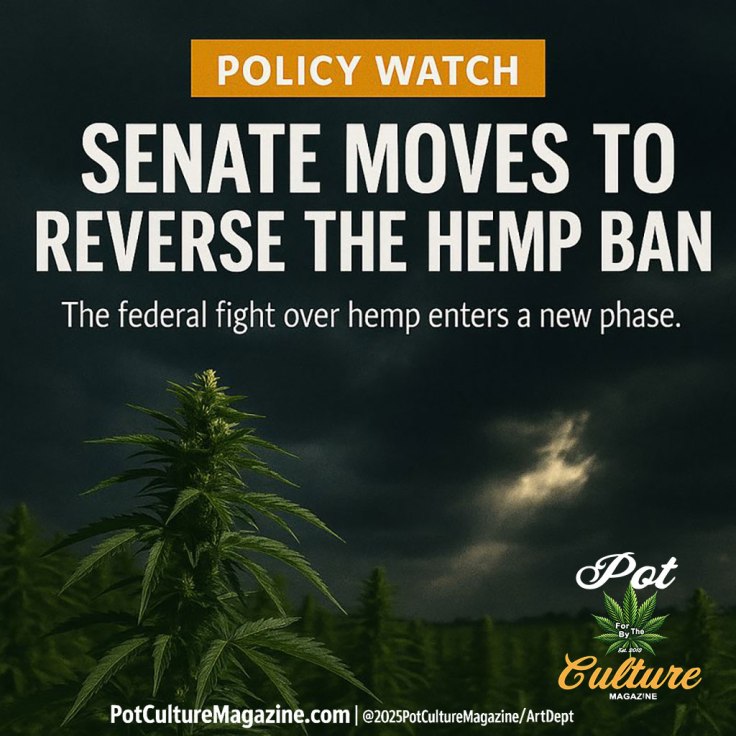
Congress triggered a national crisis when it passed a shutdown bill that re-criminalized nearly every hemp product in the country. 99% of the market was pushed toward extinction** without debate, without public notice, and without any understanding of the people who rely on these products every day. That move created chaos for farmers, manufacturers, retailers, and millions of consumers who depend on hemp-derived cannabinoids for sleep, pain relief, anxiety support, and alcohol alternatives. Congress created the crisis, and the country felt the shock.
Today, the political ground moved again. **Senators Ron Wyden and Jeff Merkley introduced the Cannabinoid Safety and Regulation Act, a bill designed to replace prohibition with regulation. This bill exists because the public exploded after learning what Congress buried inside the budget bill. People called. People emailed. People demanded answers. Washington expected silence. Washington got fire, and the first sign of retreat arrived in the form of this new bill.
The Cannabinoid Safety and Regulation Act sets product testing rules. It sets age limits. It sets packaging standards. It gives the Food and Drug Administration a clear mandate to regulate hemp-derived cannabinoids rather than ignore them. Nothing in the bill is extreme. Nothing in it suggests a free pass. It creates the framework that Congress should have written years ago instead of forcing the industry to operate inside legal gray zones. The only reason this bill exists is that lawmakers felt the pressure they tried to dodge.
HELP POT CULTURE MAGAZINE STAY ALIVE, AND INDEPENDENT
The U.S. Hemp Roundtable did not hesitate to comment. Their General Counsel, Jonathan Miller, said they are deeply grateful for the leadership of Wyden and Merkley. He called the bill a key first step toward building consensus around a real regulatory system that could replace the looming ban. He also said something Congress must face. The moratorium needs to be extended for at least another year. Without that extension, the industry cannot prepare. Without that extension, the countdown continues toward a mass shutdown that lawmakers created with no public discussion.
The Hemp Beverage Alliance, representing more than 375 members, stepped forward with its own statement. Christopher Lackner said the Alliance applauds Wyden and Merkley for championing sensible regulations. He said the bill protects children, strengthens testing, improves transparency, and allows the hemp beverage industry to keep serving adults who want something other than alcohol. The Alliance has supported testing, labeling, responsible THC levels, and age gating since the day it was founded. They never asked Congress to loosen the rules. They asked Congress to make real rules. Today was the first sign that someone listened.
The Alliance also said something Congress cannot ignore. Hemp beverages are incredibly popular with adults. People want choices. They want something clean and predictable. They want something that does not wreck their liver or their sleep. This bill lets that demand continue to grow. The Alliance made it clear that they will work with lawmakers to promote the bill and build a thriving hemp beverage category in 2026 and beyond.
NORML has not issued a formal statement today, but its position is consistent and grounded in decades of advocacy. Regulation must reflect science, not fear. Regulation must not disguise prohibition. Regulation must protect consumers, not criminalize them. They have spent years watching lawmakers misuse safety language to justify restrictions that ignore real data. Their involvement ensures that any regulatory framework is based on evidence, not panic.
Advertisement
F O R T H E C U L T U R E B Y T H E C U L T U R E
CANNABIS LIES Vol. 5: The Gateway Lie
For decades, politicians have claimed marijuana is a gateway to heroin and harder drugs. Federal youth surveys, NSDUH data, and NIDA’s own language tell a different story. Cannabis use is widespread, hard drug use remains rare, and most users do not progress. The data dismantles one of prohibition’s most durable fear narratives.

The Study That Pretends Cannabis Does Nothing
A new cannabis study claims marijuana does nothing for anxiety, depression, or PTSD. The reality is far more complicated. Decades of federal restrictions, limited research access, and synthetic substitutes have shaped the science. This breakdown exposes how incomplete data and selective interpretation continue to drive misleading headlines about cannabis and mental health.
Advertisement
Every fact in these statements points back to one truth. Congress created a national crisis by inserting hemp language into a spending bill without debate. That decision destabilized a 28 billion dollar industry. It shook farmers who planned planting seasons around hemp contracts. It rattled manufacturers who invested in equipment and workforce. It endangered retailers who rely on hemp-derived beverages and products for daily revenue. It hit consumers who rebuilt their lives with these products after traditional medicine and alcohol failed them. It put everyone on a clock they never asked for.
The new Senate bill does not erase what Congress did, but it acknowledges the damage. It is political backtracking under pressure. It is a public admission that the shutdown bill reached far beyond anything lawmakers understood. It is also a sign that calls, messages, and public heat work. Senators do not introduce corrective legislation unless they know the backlash is real.
None of this means the crisis is over. The shutdown bill is still law. The ban is still scheduled for November 2026. The industry is still staring at an artificial cliff built by Congress. The new legislation begins a path out, but the country cannot slow down. Bills fail. Bills stall. Bills die in committee. Bills get stripped. Bills get rewritten. Bills get traded for political favors. Only one thing matters now. The moratorium must be extended. Without that extension, the clock continues to tick while Congress debates the regulations it should have passed years ago.
Production continues. Retail continues. Distribution continues. Farmers are watching the weather and preparing next year’s fields. Consumers are buying the same products they bought yesterday. But everyone understands the truth. Stability depends on action. Without it, the collapse returns.
What happened today is simple. Washington felt pressure and moved. The industry spoke, and Washington listened. Advocacy groups responded, and Washington listened. Consumers raised their voices, and Washington listened. That is not a sign to relax. That is a sign to push harder.
The public forced Congress to blink. Now they must force Congress to act.
©2025, Pot Culture Magazine. All rights reserved. This is the property of Pot Culture Magazine and is protected by U.S. and international copyright laws. Unauthorized reproduction, distribution, or transmission of this work, in part or in whole, without the express written permission of Pot Culture Magazine is strictly prohibited.
F O R T H E C U L T U R E B Y T H E C U L T U R E
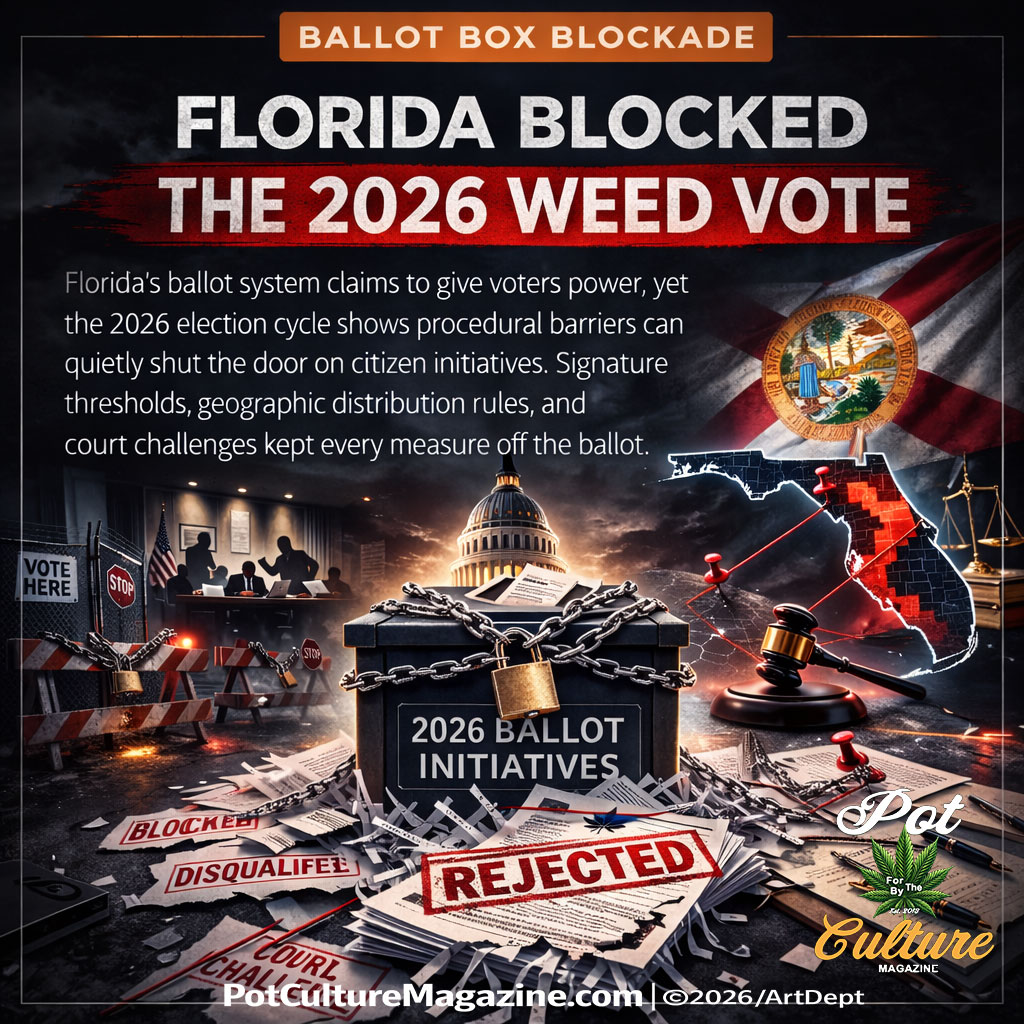
Florida Blocked the 2026 Weed Vote
Florida’s ballot system claims to give voters power, yet the 2026 election cycle shows how procedural barriers can quietly shut the door on citizen initiatives. Signature thresholds, geographic distribution rules, and court challenges blocked every measure from reaching voters, revealing how cannabis legalization fights are often decided by bureaucratic design long before election day.

The Cannabis Lie: Vol. 4 — The Crime Wave Lie
Politicians and pundits warned that legal cannabis would unleash a crime wave. The data tell a different story. From Colorado’s violent crime trends to DOJ time-series research and statewide arrest declines, the evidence shows no consistent long-term surge tied to legalization. The numbers never matched the panic.

South Africa Legalized Weed, But Not the Market
South Africa recognized private adult cannabis use and home cultivation, but never built a legal domestic market around them. With buying and selling still largely outside the law, the illicit trade remains dominant while regulators scramble to set limits, draft rules, and prepare a broader Cannabis Bill that could finally address commerce.
Discover more from POT CULTURE MAGAZINE
Subscribe to get the latest posts sent to your email.

Leave a comment